Lee Eun-Jung, Kim Hee-Sun
Department of Molecular Medicine and Global Top5 Research Program, Tissue Injury Defense Research Center, School of Medicine, Ewha Womans University, Mok-6-dong 911-1, Yangchun-Ku, 158-710 Seoul, South Korea.
J Neuroinflammation. 2014 Jun 27;11:116. doi: 10.1186/1742-2094-11-116.
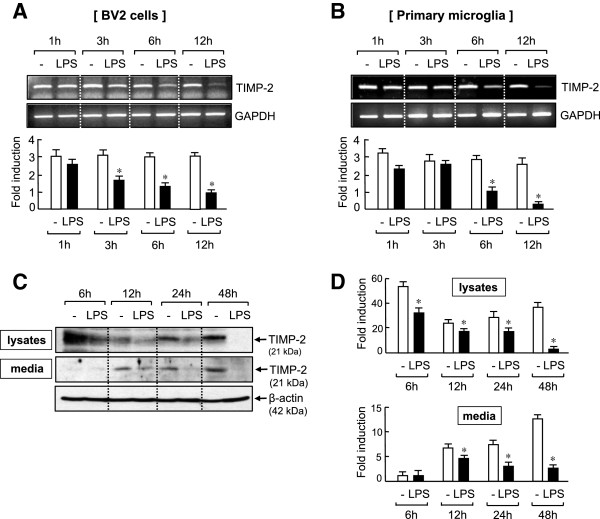
Tissue inhibitors of metalloproteinases (TIMPs) are known to be endogenous inhibitors of matrix metalloproteinases (MMPs). Our preliminary study showed that TIMP-2 is constitutively expressed in microglia but significantly inhibited by lipopolysaccharide (LPS) treatment. The current study was undertaken to investigate the role of TIMP-2 in microglia.
The expression of TIMP-2 was evaluated in the BV2 mouse microglial cell line and rat primary cultured microglia. To investigate the role of TIMP-2, a TIMP-2 expression plasmid or small interfering RNA (siRNA) was introduced into BV2 cells by transient transfection, and their effects on LPS-induced inflammatory reactions were examined. We further analyzed the molecular mechanism underlying the anti-inflammatory effects of TIMP-2 by electrophoretic mobility shift assay (EMSA), a reporter gene assay and Western blot analysis.
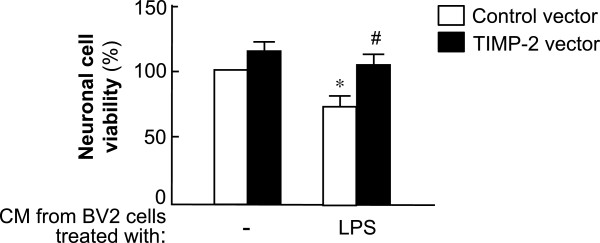
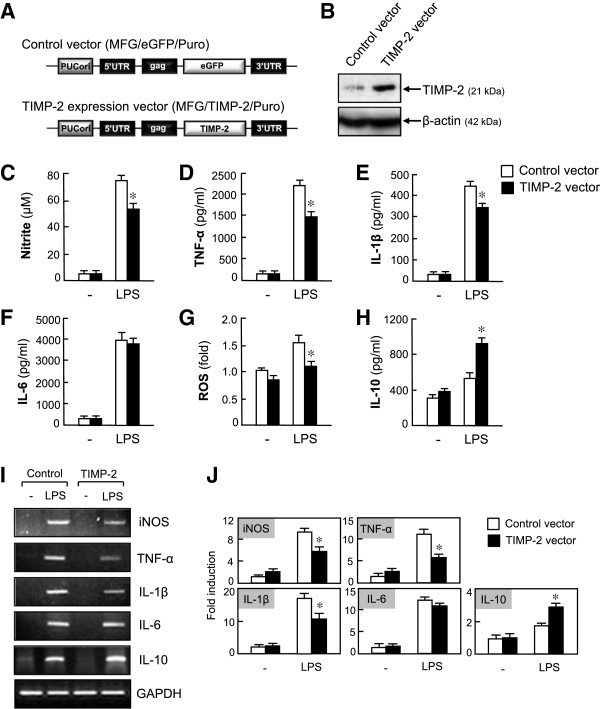
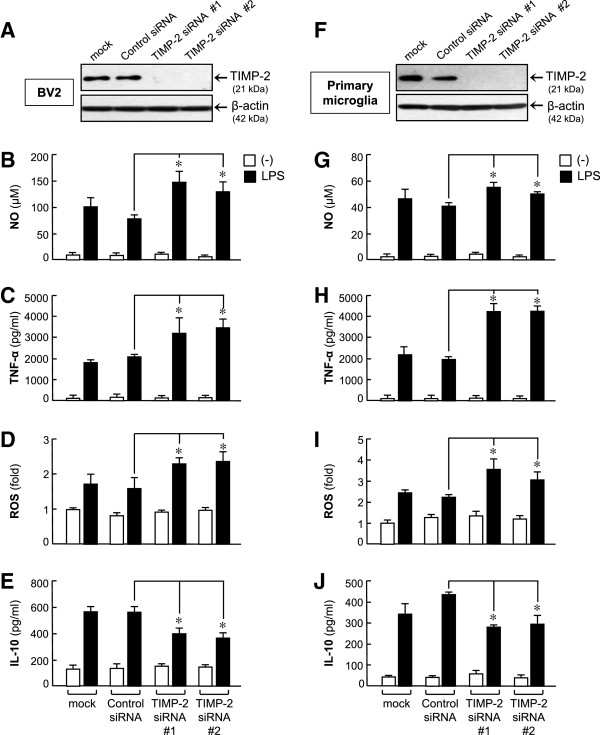
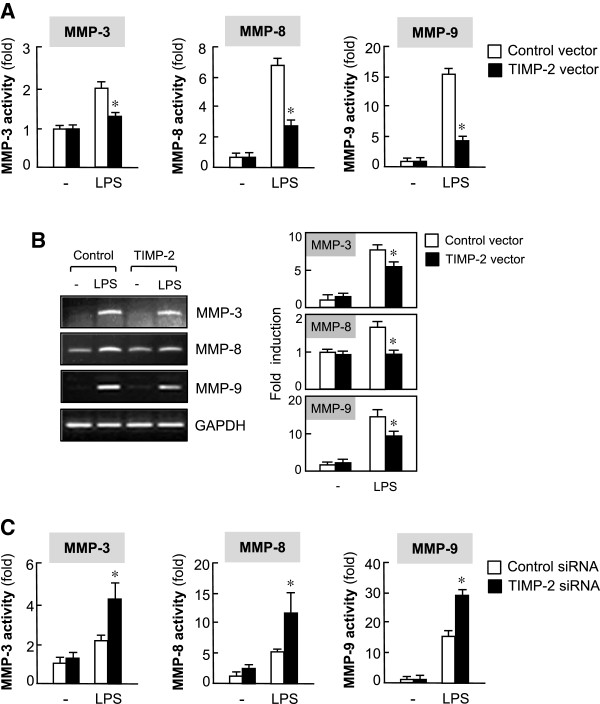
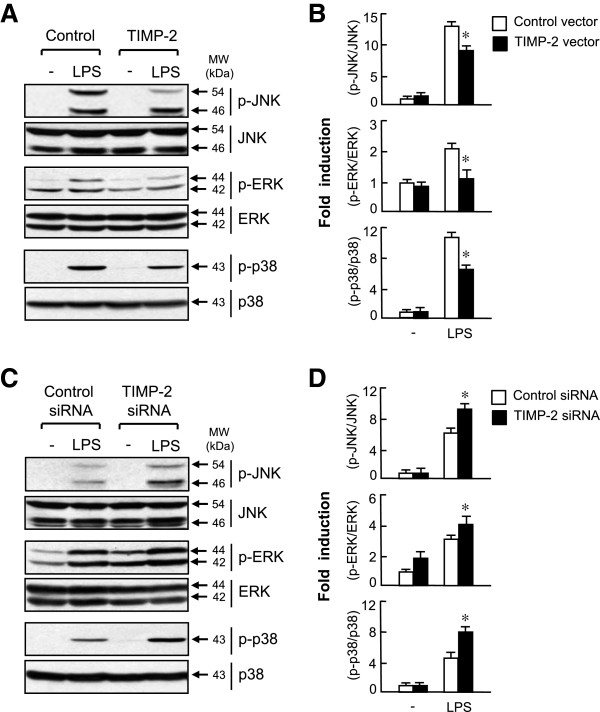
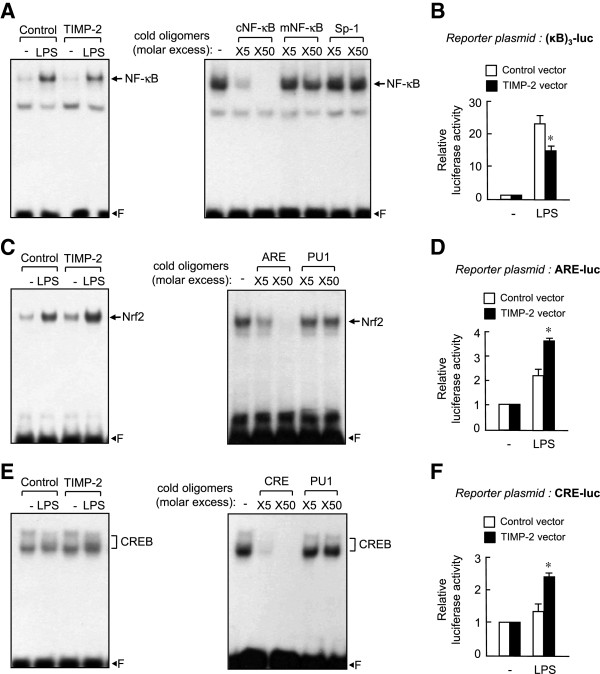
Overexpression of TIMP-2 significantly inhibited the production of nitric oxide (NO), TNF-α, IL-1β, and reactive oxygen species (ROS), while increasing anti-inflammatory IL-10 production. On the other hand, knockdown of TIMP-2 augmented the production of pro-inflammatory molecules and downregulated IL-10 in LPS-stimulated BV2 cells. The results suggest that endogenously expressed TIMP-2 plays an anti-inflammatory role. Further mechanistic studies revealed that overexpression of TIMP-2 suppresses microglial activation via inhibition of the activity of mitogen-activated protein kinases (MAPKs) and NF-κB with enhancement of the activity of anti-inflammatory Nrf2 and cAMP-response element binding protein (CREB) transcription factors. TIMP-2 also inhibited the activity and expression of LPS-induced MMP-3, -8, and -9. Finally, we demonstrated that TIMP-2 exerts a neuroprotective effect via the inhibition of microglial activation.
Enhancement of TIMP-2 expression may be a potential therapeutic target for neuroinflammatory disorders.
金属蛋白酶组织抑制剂(TIMPs)是已知的基质金属蛋白酶(MMPs)的内源性抑制剂。我们的初步研究表明,TIMP-2在小胶质细胞中组成性表达,但脂多糖(LPS)处理可显著抑制其表达。本研究旨在探讨TIMP-2在小胶质细胞中的作用。
在BV2小鼠小胶质细胞系和大鼠原代培养的小胶质细胞中评估TIMP-2的表达。为了研究TIMP-2的作用,通过瞬时转染将TIMP-2表达质粒或小干扰RNA(siRNA)导入BV2细胞,并检测它们对LPS诱导的炎症反应的影响。我们通过电泳迁移率变动分析(EMSA)、报告基因分析和蛋白质印迹分析进一步分析了TIMP-2抗炎作用的分子机制。
TIMP-2的过表达显著抑制一氧化氮(NO)、肿瘤坏死因子-α(TNF-α)、白细胞介素-1β(IL-1β)和活性氧(ROS)的产生,同时增加抗炎性白细胞介素-10的产生。另一方面,在LPS刺激的BV2细胞中,TIMP-2的敲低增加了促炎分子的产生并下调了IL-10。结果表明内源性表达的TIMP-2发挥抗炎作用。进一步的机制研究表明,TIMP-2的过表达通过抑制丝裂原活化蛋白激酶(MAPKs)和核因子-κB(NF-κB)的活性并增强抗炎性核因子E2相关因子2(Nrf2)和环磷腺苷效应元件结合蛋白(CREB)转录因子的活性来抑制小胶质细胞活化。TIMP-2还抑制LPS诱导的MMP-3、-8和-9的活性和表达。最后,我们证明TIMP-2通过抑制小胶质细胞活化发挥神经保护作用。
增强TIMP-2表达可能是神经炎症性疾病的潜在治疗靶点。