Kim Dong-Gun, Jung Kyung Hee, Lee Da-Gyum, Yoon Jung-Ho, Choi Kyeong Sook, Kwon Sung Won, Shen Han-Ming, Morgan Michael J, Hong Soon-Sun, Kim You-Sun
Department of Biochemistry and Department of Biomedical Sciences, Ajou University School of Medicine, Suwon.
College of Medicine, Inha University, Incheon.
Oncotarget. 2014 Jun 30;5(12):4438-51. doi: 10.18632/oncotarget.2034.
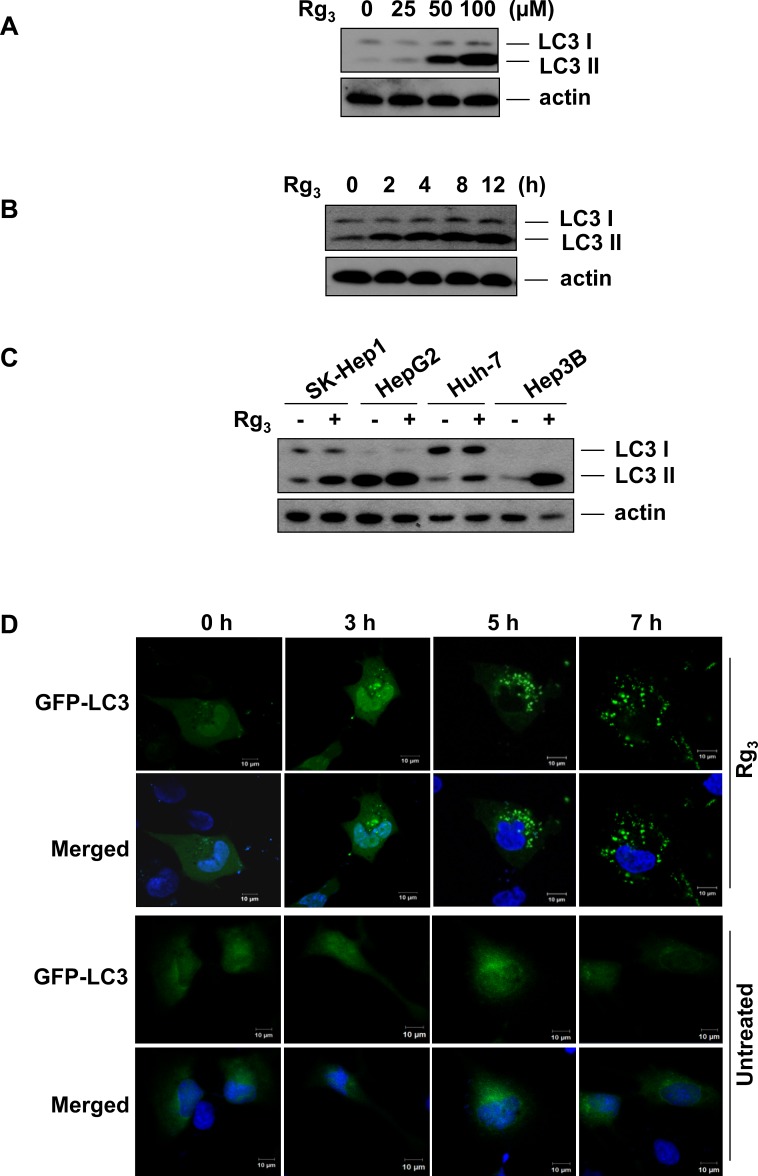
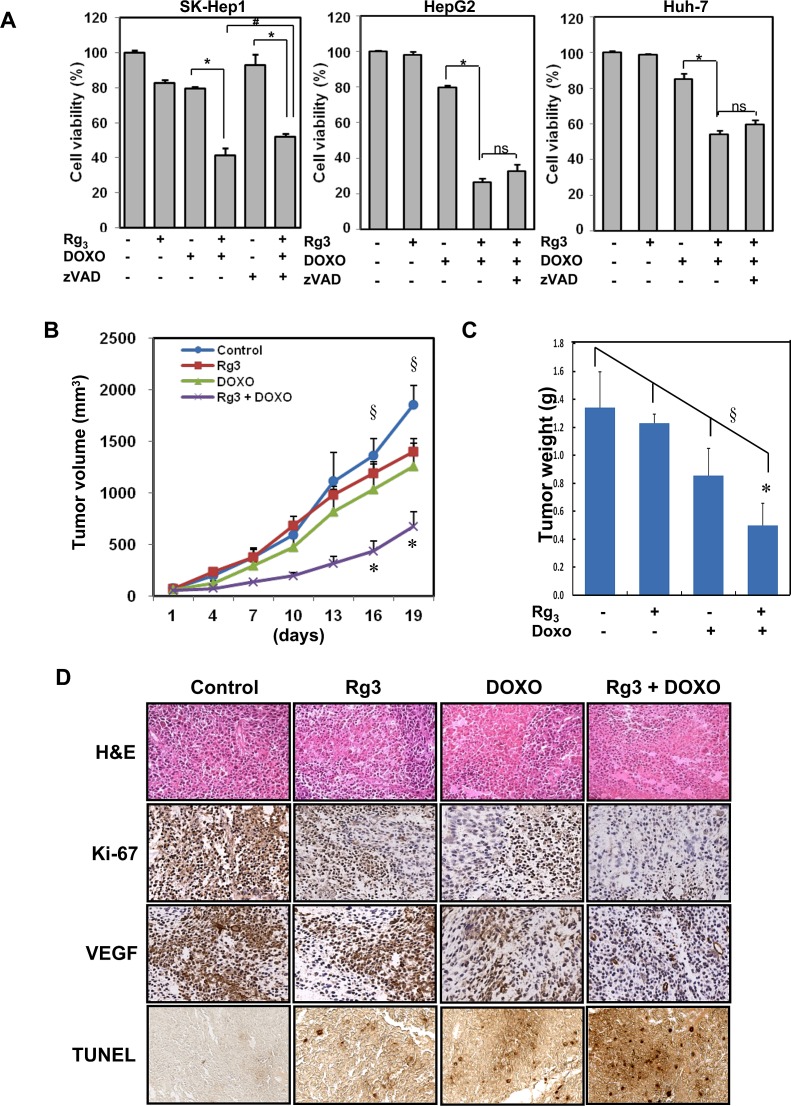
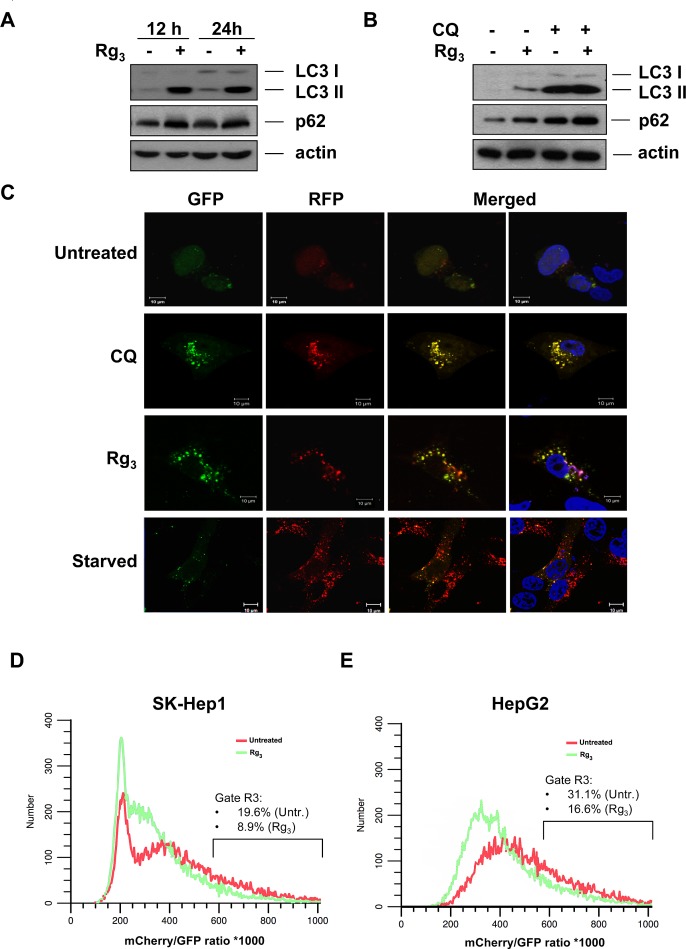
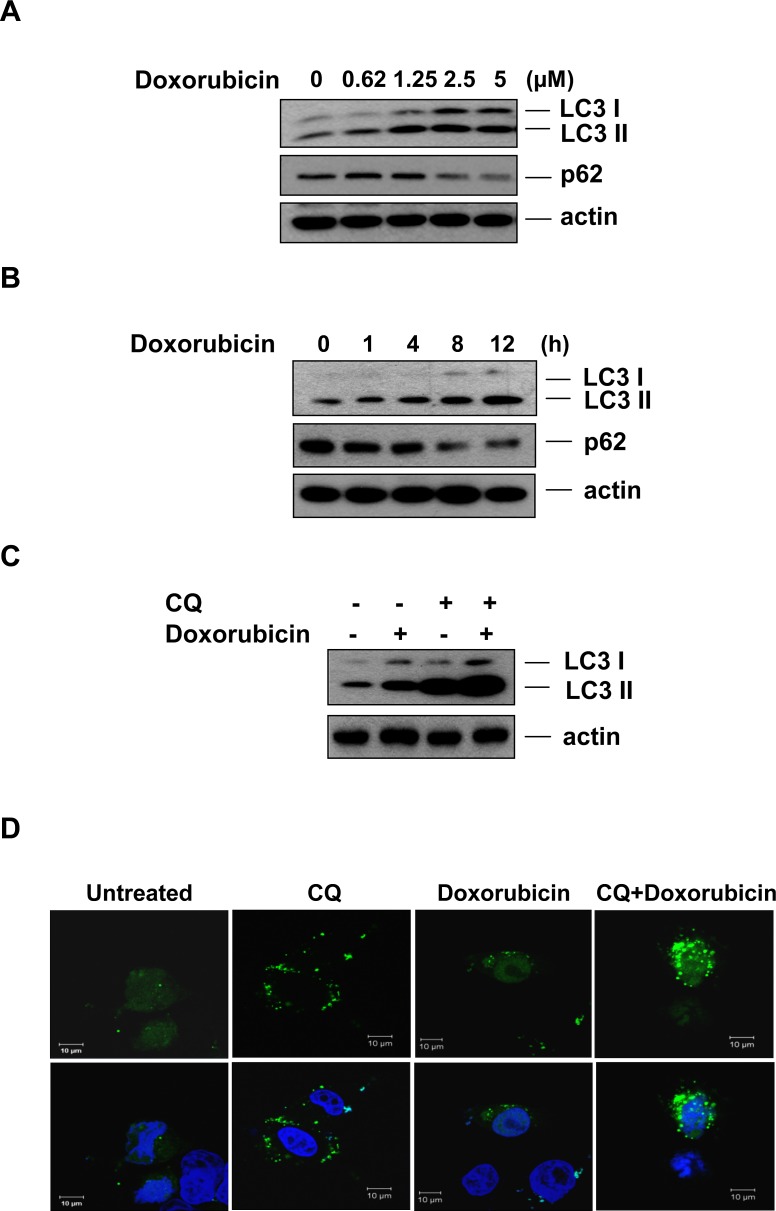
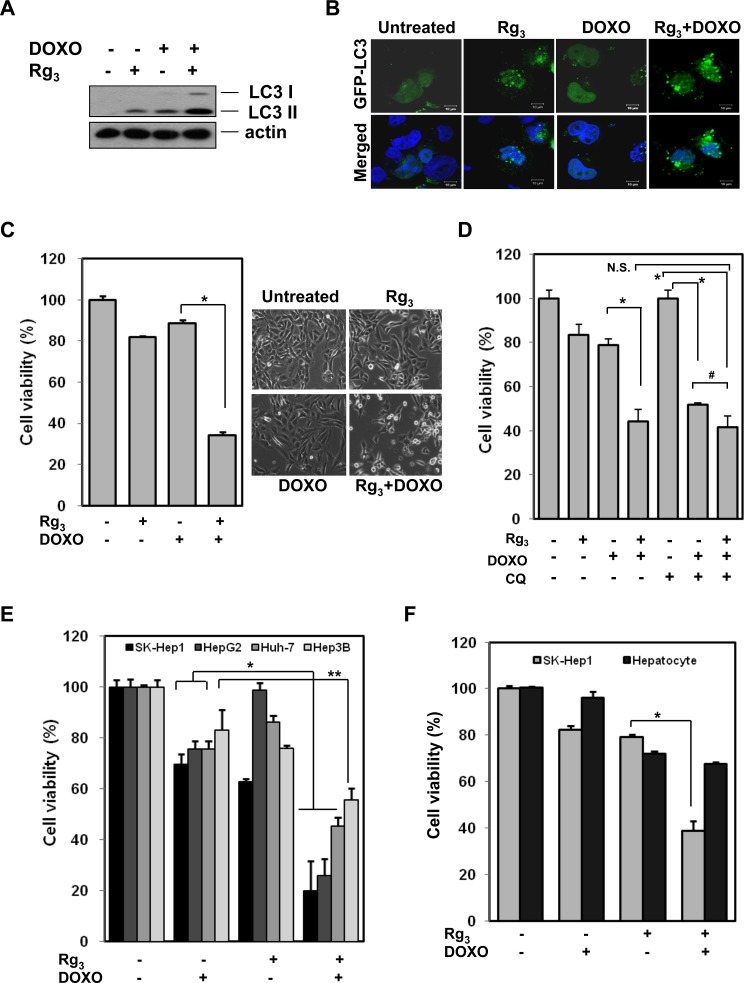
Hepatocellular carcinoma (HCC) is the third leading cause of cancer-related deaths worldwide. High mortality from HCC is mainly due to widespread prevalence and the lack of effective treatment, since systemic chemotherapy is ineffective, while the targeted agent Sorafenib extends median survival only briefly. The steroidal saponin 20(S)-ginsenoside Rg3 from Panax ginseng C.A. Meyer is proposed to chemosensitize to various therapeutic drugs through an unknown mechanism. Since autophagy often serves as cell survival mechanism in cancer cells exposed to chemotherapeutic agents, we examined the ability of Rg3 to inhibit autophagy and chemosensitize HCC cell lines to doxorubicin in vitro. We show that Rg3 inhibits late stage autophagy, possibly through changes in gene expression. Doxorubicin-induced autophagy plays a protective role in HCC cells, and therefore Rg3 treatment synergizes with doxorubicin to kill HCC cell lines, but the combination is relatively nontoxic in normal liver cells. In addition, Rg3 was well-tolerated in mice and synergized with doxorubicin to inhibit tumor growth in HCC xenografts in vivo. Since novel in vivo inhibitors of autophagy are desirable for clinical use, we propose that Rg3 is such a compound, and that combination therapy with classical chemotherapeutic drugs may represent an effective therapeutic strategy for HCC treatment.
肝细胞癌(HCC)是全球癌症相关死亡的第三大主要原因。HCC的高死亡率主要归因于其广泛流行以及缺乏有效治疗方法,因为全身化疗无效,而靶向药物索拉非尼仅能短暂延长中位生存期。人参(Panax ginseng C.A. Meyer)中的甾体皂苷20(S)-人参皂苷Rg3被认为可通过未知机制使癌细胞对多种治疗药物产生化学增敏作用。由于自噬在暴露于化疗药物的癌细胞中常作为细胞存活机制,我们研究了Rg3在体外抑制自噬并使肝癌细胞系对阿霉素产生化学增敏作用的能力。我们发现Rg3可能通过基因表达的变化抑制晚期自噬。阿霉素诱导的自噬在肝癌细胞中起保护作用,因此Rg3治疗与阿霉素协同作用可杀死肝癌细胞系,但该联合用药对正常肝细胞相对无毒。此外,Rg3在小鼠中耐受性良好,并与阿霉素协同作用在体内抑制肝癌异种移植瘤的生长。由于新型自噬体内抑制剂有望用于临床,我们认为Rg3就是这样一种化合物,与经典化疗药物联合治疗可能是肝癌治疗的一种有效策略。