Asnani Aarti, Peterson Randall T
Massachusetts General Hospital Cardiovascular Research Center, Harvard Medical School, Charlestown, MA 02129, USA.
Dis Model Mech. 2014 Jul;7(7):763-7. doi: 10.1242/dmm.016170.
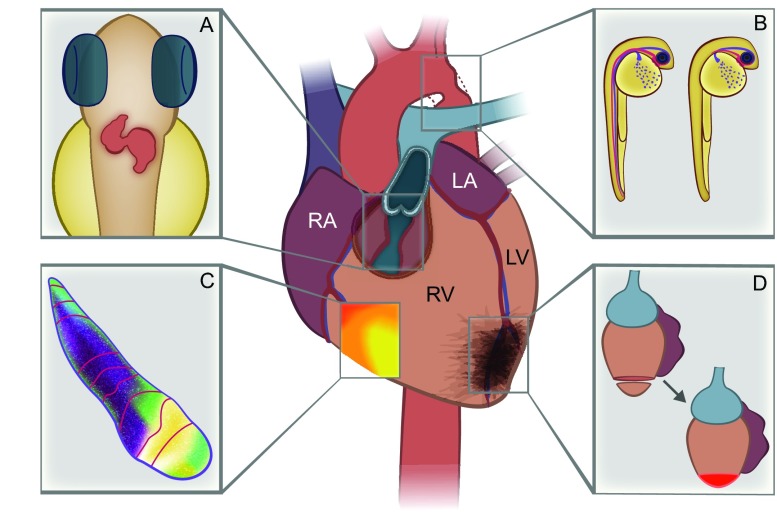
Over the past decade, the zebrafish has become an increasingly popular animal model for the study of human cardiovascular disease. Because zebrafish embryos are transparent and their genetic manipulation is straightforward, the zebrafish has been used to recapitulate a number of cardiovascular disease processes ranging from congenital heart defects to arrhythmia to cardiomyopathy. The use of fluorescent reporters has been essential to identify two discrete phases of cardiomyocyte differentiation necessary for normal cardiac development in the zebrafish. These phases are analogous to the differentiation of the two progenitor heart cell populations in mammals, termed the first and second heart fields. The small size of zebrafish embryos has enabled high-throughput chemical screening to identify small-molecule suppressors of fundamental pathways in vasculogenesis, such as the BMP axis, as well as of common vascular defects, such as aortic coarctation. The optical clarity of zebrafish has facilitated studies of valvulogenesis as well as detailed electrophysiological mapping to characterize the early cardiac conduction system. One unique aspect of zebrafish larvae is their ability to oxygenate through diffusion alone, permitting the study of mutations that cause severe cardiomyopathy phenotypes such as silent heart and pickwick(m171), which mimic titin mutations observed in human dilated cardiomyopathy. Above all, the regenerative capacity of zebrafish presents a particularly exciting opportunity to discover new therapies for cardiac injury, including scar formation following myocardial infarction. This Review will summarize the current state of the field and describe future directions to advance our understanding of human cardiovascular disease.
在过去十年中,斑马鱼已成为研究人类心血管疾病越来越受欢迎的动物模型。由于斑马鱼胚胎是透明的,并且其基因操作简单直接,斑马鱼已被用于重现从先天性心脏缺陷到心律失常再到心肌病等多种心血管疾病过程。荧光报告基因的使用对于识别斑马鱼正常心脏发育所需的心肌细胞分化的两个不同阶段至关重要。这些阶段类似于哺乳动物中两个祖心脏细胞群体的分化,即第一和第二心脏场。斑马鱼胚胎的小尺寸使得高通量化学筛选能够识别血管生成基本途径的小分子抑制剂,如骨形态发生蛋白(BMP)轴,以及常见血管缺陷的抑制剂,如主动脉缩窄。斑马鱼的光学清晰度促进了瓣膜发生的研究以及详细的电生理图谱绘制,以表征早期心脏传导系统。斑马鱼幼虫的一个独特之处在于它们仅通过扩散进行氧合的能力,这使得能够研究导致严重心肌病表型的突变,如沉默心脏和匹克威克(m171),这些表型模拟了人类扩张型心肌病中观察到的肌联蛋白突变。最重要的是,斑马鱼的再生能力为发现心脏损伤的新疗法提供了特别令人兴奋的机会,包括心肌梗死后的瘢痕形成。本综述将总结该领域的现状,并描述未来的方向,以增进我们对人类心血管疾病的理解。