Cao Meng-Li, Meng Qing-Hao, Zeng Ming, Sun Biao, Li Wei, Ding Cheng-Jun
Institute of Robotics and Autonomous Systems, Tianjin Key Laboratory of Process Measurement and Control, School of Electrical Engineering and Automation, Tianjin University, No. 92, Weijin Road, Tianjin 300072, China.
School of Mechanical Engineering, Hebei University of Technology, Dingzigu Road No.1, Tianjin 300130, China.
Sensors (Basel). 2014 Jun 27;14(7):11444-66. doi: 10.3390/s140711444.
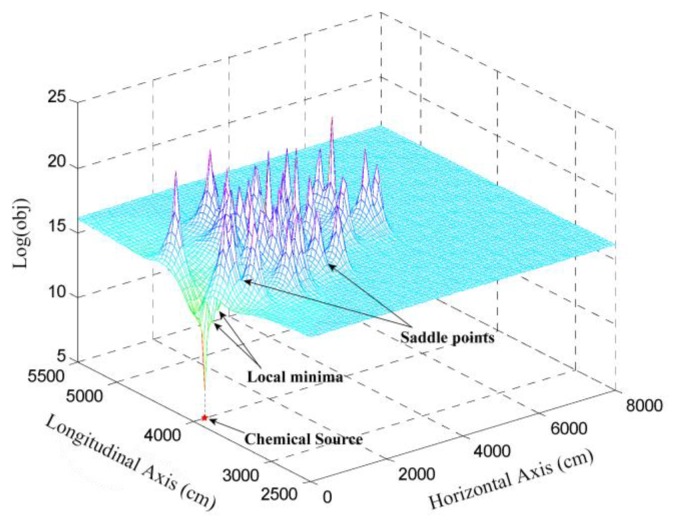
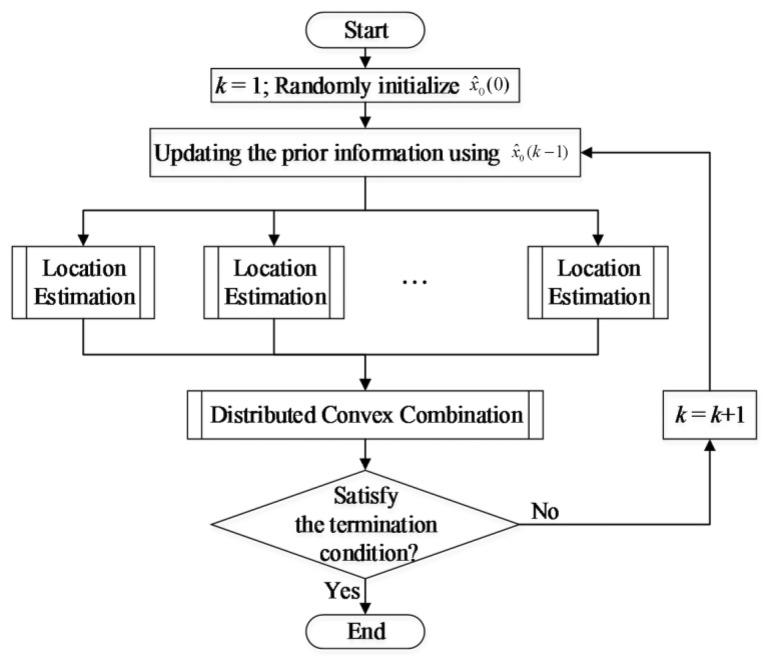
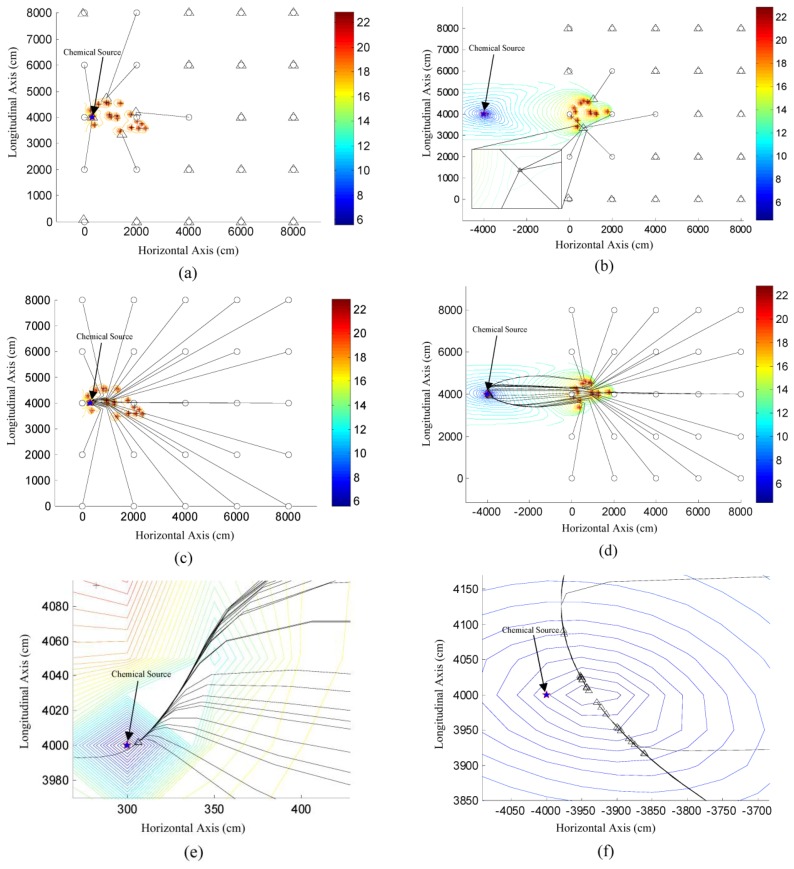
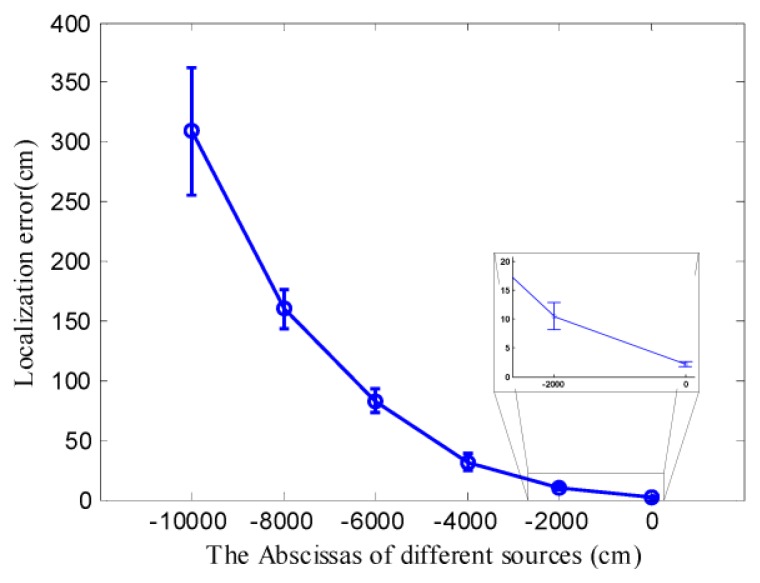
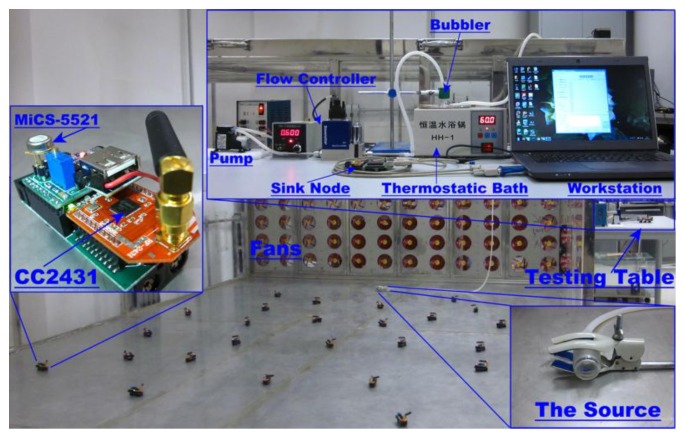
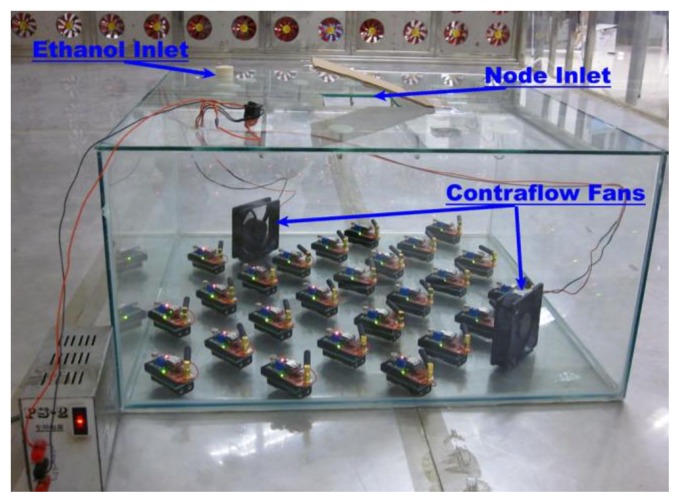
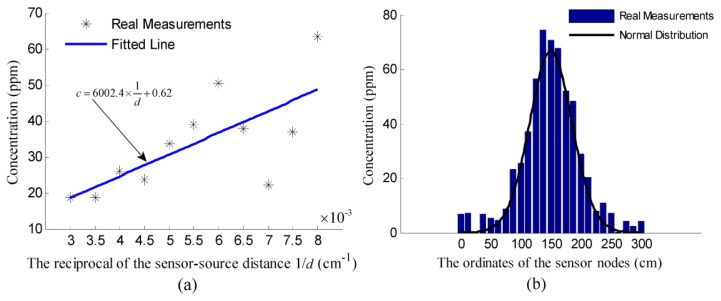
This paper investigates the problem of locating a continuous chemical source using the concentration measurements provided by a wireless sensor network (WSN). Such a problem exists in various applications: eliminating explosives or drugs, detecting the leakage of noxious chemicals, etc. The limited power and bandwidth of WSNs have motivated collaborative in-network processing which is the focus of this paper. We propose a novel distributed least-squares estimation (DLSE) method to solve the chemical source localization (CSL) problem using a WSN. The DLSE method is realized by iteratively conducting convex combination of the locally estimated chemical source locations in a distributed manner. Performance assessments of our method are conducted using both simulations and real experiments. In the experiments, we propose a fitting method to identify both the release rate and the eddy diffusivity. The results show that the proposed DLSE method can overcome the negative interference of local minima and saddle points of the objective function, which would hinder the convergence of local search methods, especially in the case of locating a remote chemical source.
本文研究了利用无线传感器网络(WSN)提供的浓度测量值来定位连续化学源的问题。此类问题存在于各种应用中:消除爆炸物或毒品、检测有害化学物质泄漏等。WSN有限的功率和带宽促使了网络内协作处理,这也是本文的重点。我们提出了一种新颖的分布式最小二乘估计(DLSE)方法,用于使用WSN解决化学源定位(CSL)问题。DLSE方法通过以分布式方式迭代地对局部估计的化学源位置进行凸组合来实现。我们通过仿真和实际实验对该方法进行了性能评估。在实验中,我们提出了一种拟合方法来确定释放速率和涡扩散率。结果表明,所提出的DLSE方法能够克服目标函数局部最小值和鞍点的负面干扰,这些干扰会阻碍局部搜索方法的收敛,尤其是在定位远程化学源的情况下。