Li Tao, Blande James D, Gundel Pedro E, Helander Marjo, Saikkonen Kari
Department of Environmental Science, University of Eastern Finland, Kuopio, Finland.
Plant Production Research, MTT Agrifood Research Finland, Jokioinen, Finland.
PLoS One. 2014 Jun 30;9(6):e101331. doi: 10.1371/journal.pone.0101331. eCollection 2014.
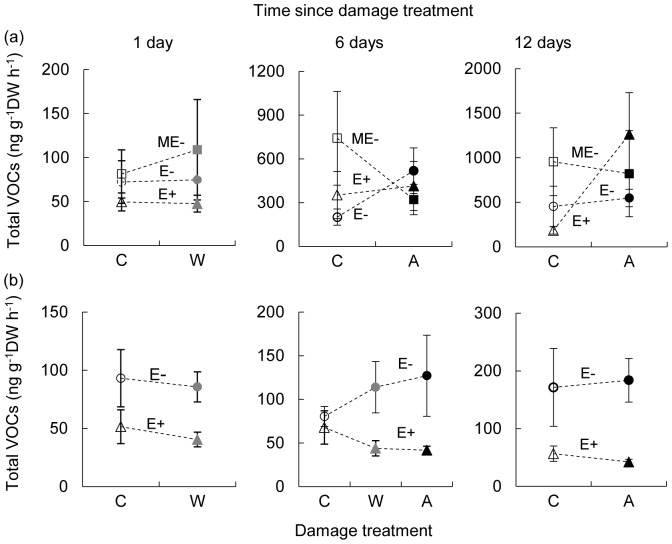
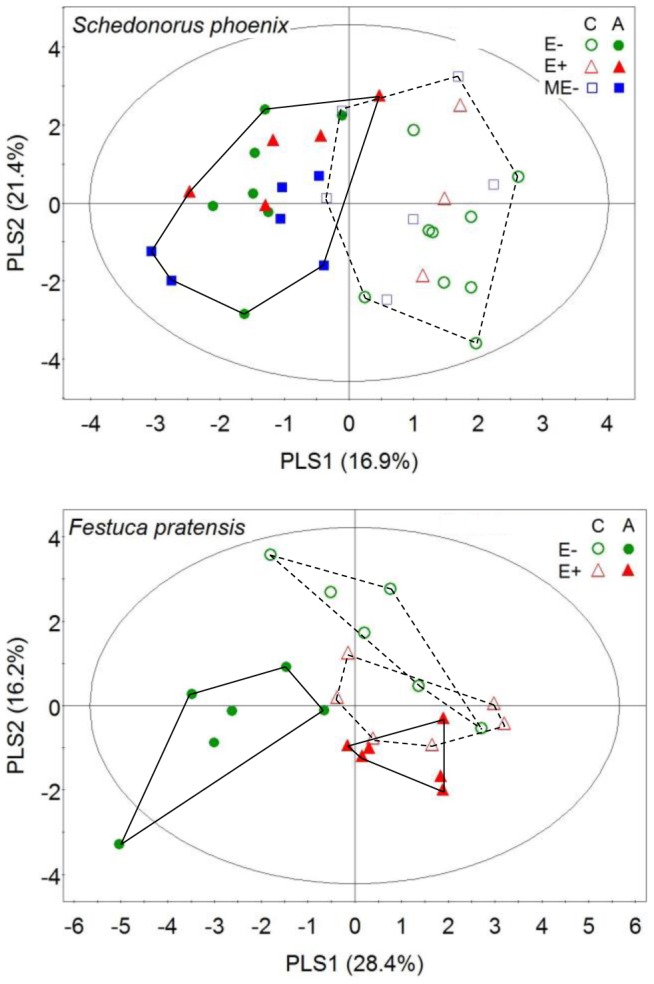
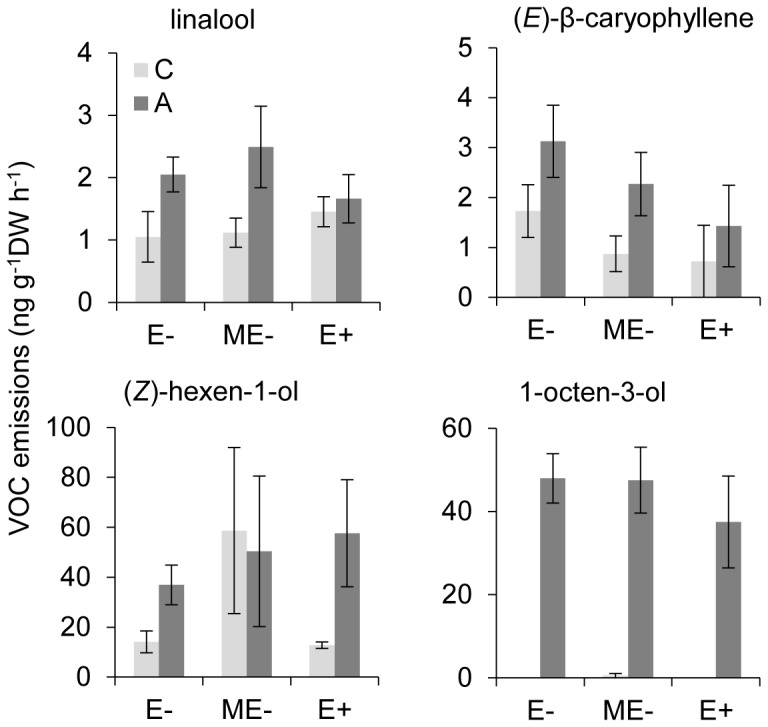
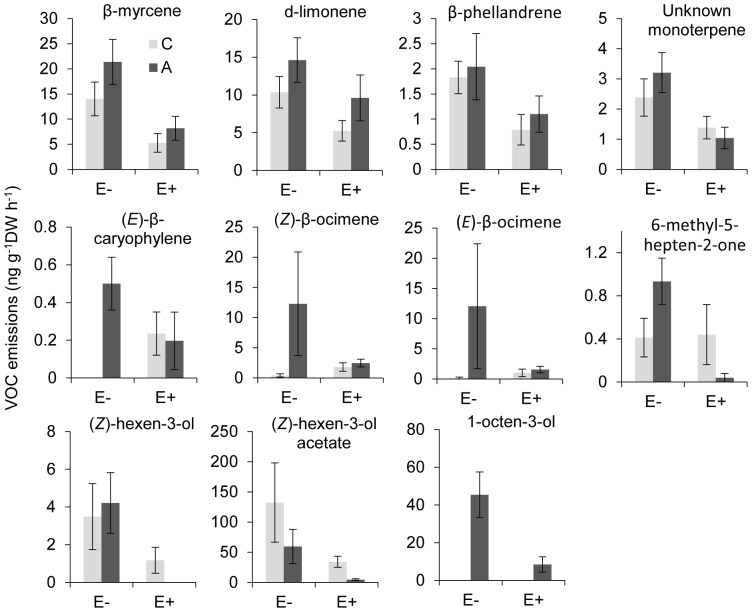
Epichloë endophytes are common symbionts living asymptomatically in pooid grasses and may provide chemical defences against herbivorous insects. While the mechanisms underlying these fungal defences have been well studied, it remains unknown whether endophyte presence affects the host's own defences. We addressed this issue by examining variation in the impact of Epichloë on constitutive and herbivore-induced emissions of volatile organic compounds (VOC), a well-known indirect plant defence, between two grass species, Schedonorus phoenix (ex. Festuca arundinacea; tall fescue) and Festuca pratensis (meadow fescue). We found that feeding by a generalist aphid species, Rhopalosiphum padi, induced VOC emissions by uninfected plants of both grass species but to varying extents, while mechanical wounding failed to do so in both species after one day of damage. Interestingly, regardless of damage treatment, Epichloë uncinata-infected F. pratensis emitted significantly lower quantities of VOCs than their uninfected counterparts. In contrast, Epichloë coenophiala-infected S. phoenix did not differ from their uninfected counterparts in constitutive VOC emissions but tended to increase VOC emissions under intense aphid feeding. A multivariate analysis showed that endophyte status imposed stronger differences in VOC profiles of F. pratensis than damage treatment, while the reverse was true for S. phoenix. Additionally, both endophytes inhibited R. padi population growth as measured by aphid dry biomass, with the inhibition appearing greater in E. uncinata-infected F. pratensis. Our results suggest, not only that Epichloë endophytes may play important roles in mediating host VOC responses to herbivory, but also that the magnitude and direction of such responses may vary with the identity of the Epichloë-grass symbiosis. Whether Epichloë-mediated host VOC responses will eventually translate into effects on higher trophic levels merits future investigation.
内生真菌Epichloë是常见的共生体,无症状地生活在早熟禾亚科的禾本科植物中,并可能提供针对食草昆虫的化学防御。虽然这些真菌防御的潜在机制已得到充分研究,但内生真菌的存在是否会影响宿主自身的防御仍不清楚。我们通过研究Epichloë对两种禾本科植物,即高羊茅(Schedonorus phoenix,原名Festuca arundinacea)和草地羊茅(Festuca pratensis)的组成型和草食动物诱导的挥发性有机化合物(VOC)排放(一种众所周知的间接植物防御)影响的差异,来解决这个问题。我们发现,一种多食性蚜虫物种——禾谷缢管蚜(Rhopalosiphum padi)的取食会诱导这两种禾本科植物未感染植株释放VOC,但程度不同,而在损伤一天后,机械损伤在这两个物种中均未能诱导VOC释放。有趣的是,无论损伤处理如何,感染Epichloë uncinata的草地羊茅释放的VOC量均显著低于未感染的同类植株。相比之下,感染Epichloë coenophiala的高羊茅在组成型VOC排放方面与未感染的同类植株没有差异,但在蚜虫大量取食时倾向于增加VOC排放。多变量分析表明,内生真菌状态对草地羊茅VOC谱的差异影响比损伤处理更强,而对高羊茅而言则相反。此外,通过蚜虫干生物量测量发现,两种内生真菌均抑制了禾谷缢管蚜的种群增长,在感染Epichloë uncinata的草地羊茅中抑制作用似乎更大。我们的结果表明,Epichloë内生真菌不仅可能在介导宿主对食草动物的VOC反应中发挥重要作用,而且这种反应的程度和方向可能因Epichloë - 禾本科植物共生体的身份而异。Epichloë介导的宿主VOC反应最终是否会转化为对更高营养级的影响值得未来研究。