Dewar Meagan L, Arnould John P Y, Krause Lutz, Trathan Phil, Dann Peter, Smith Stuart C
School of Exercise and Nutritional Sciences, Deakin University, Burwood, Australia.
School of Life and Environmental Sciences, Deakin University, Burwood, Australia.
PLoS One. 2014 Jun 30;9(6):e99996. doi: 10.1371/journal.pone.0099996. eCollection 2014.
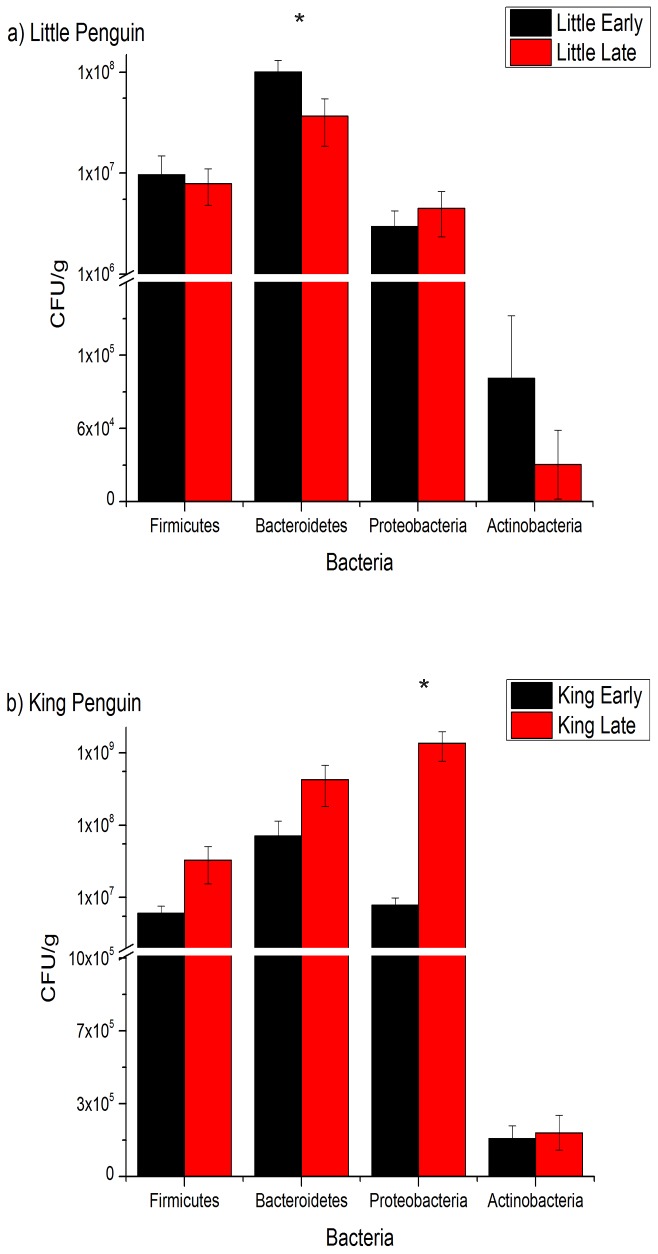
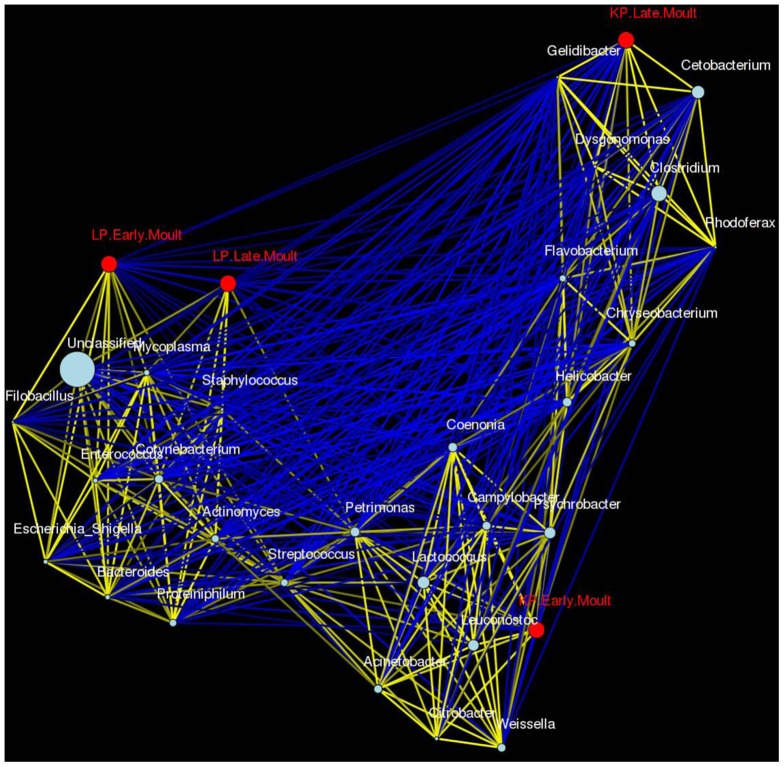
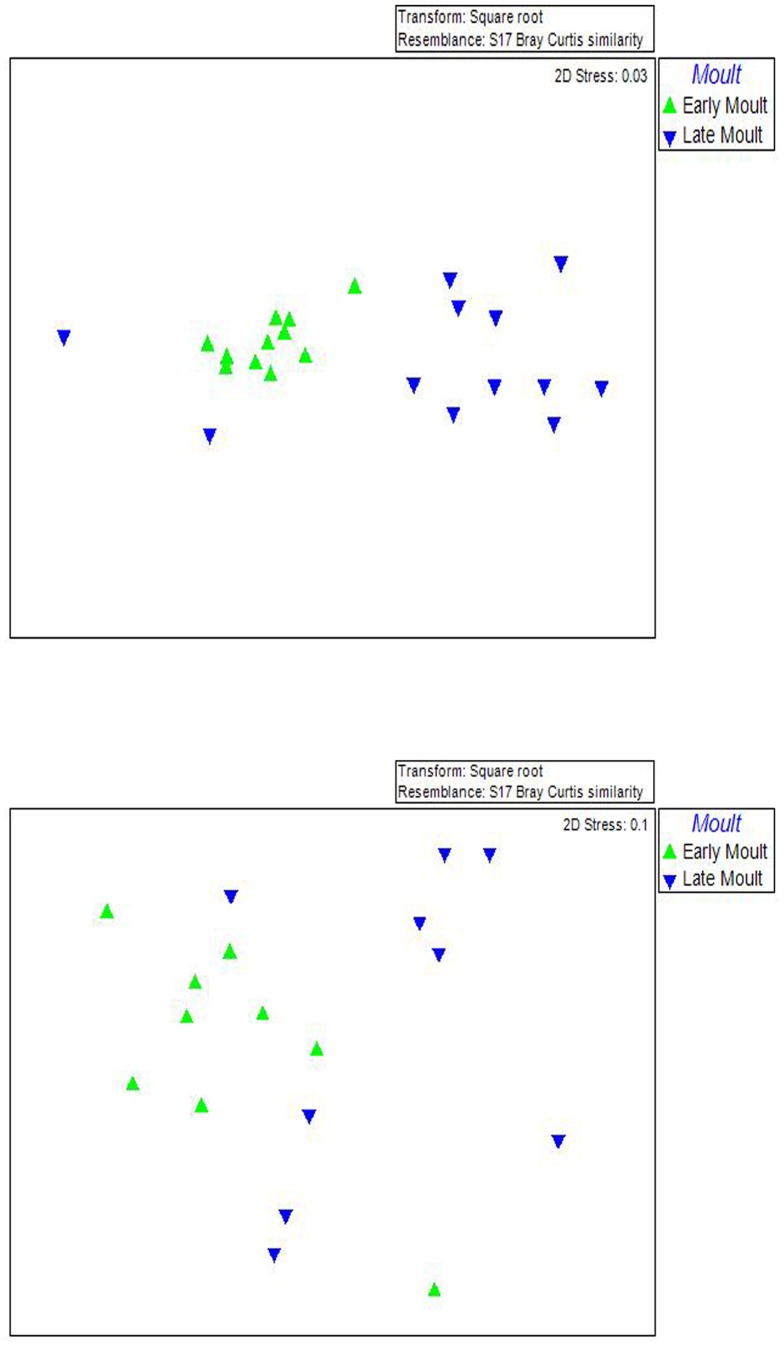
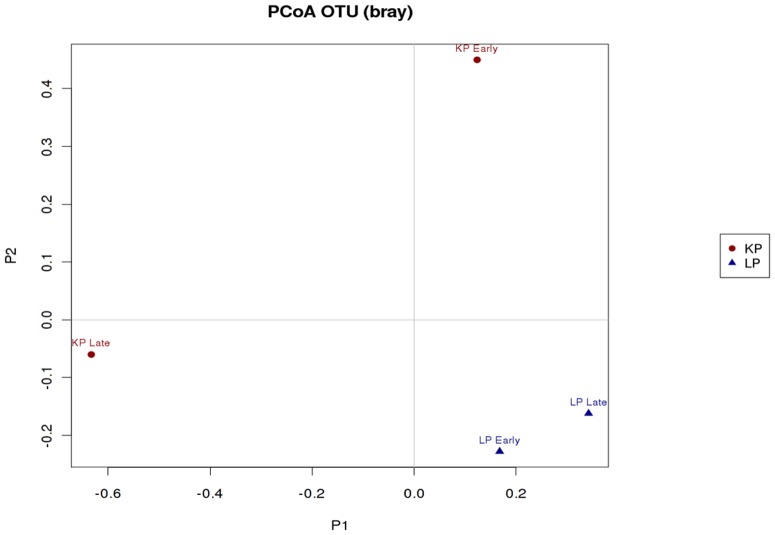
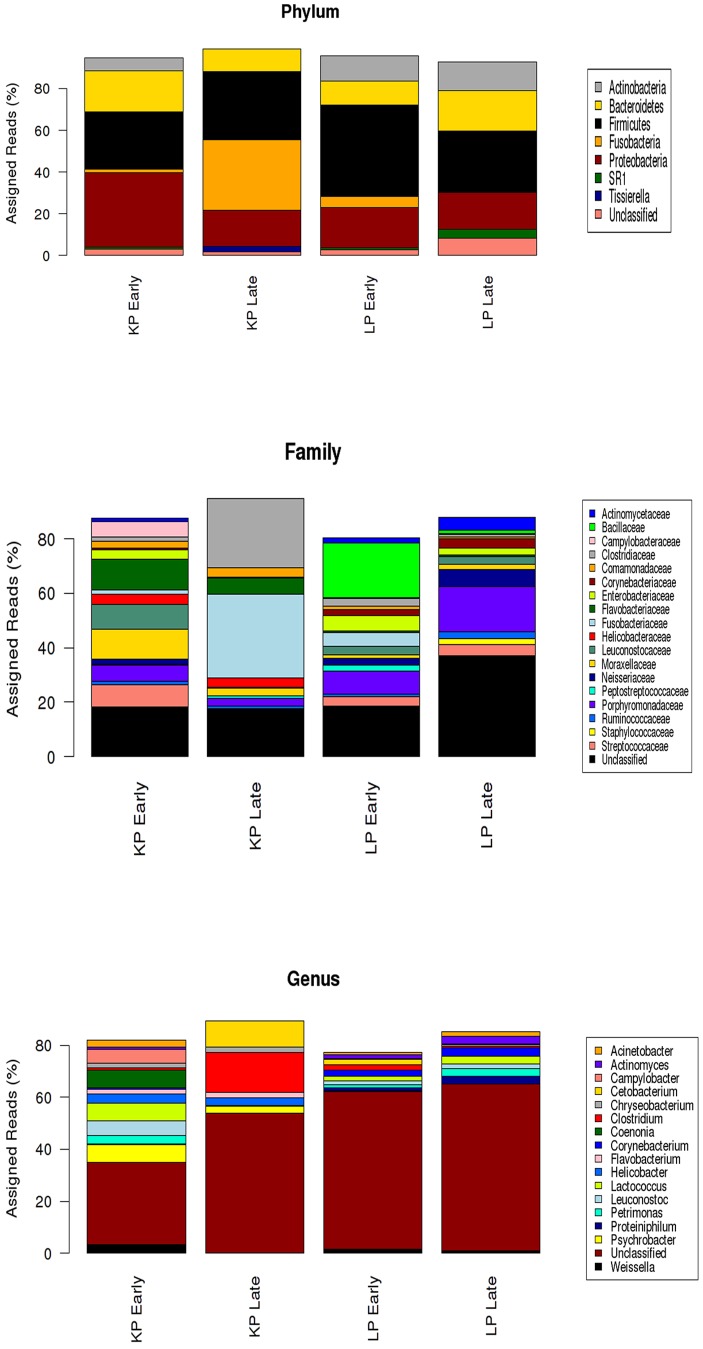
Many seabirds including penguins are adapted to long periods of fasting, particularly during parts of the reproductive cycle and during moult. However, the influence of fasting on the gastrointestinal (GI) microbiota has not been investigated in seabirds. Therefore, the present study aimed to examine the microbial composition and diversity of the GI microbiota of fasting little (Eudyptula minor) and king penguins (Aptenodytes patagonicus) penguins during early and late moult. The results from this study indicated that there was little change in the abundance of the major phyla during moult, except for a significant increase in the level of Proteobacteria in king penguins. In king penguins the abundance of Fusobacteria increases from 1.73% during early moult to 33.6% by late moult, whilst the abundance of Proteobacteria (35.7% to 17.2%) and Bacteroidetes (19.5% to 11%) decrease from early to late moult. In little penguins, a decrease in the abundances of Firmicutes (44% to 29%) and an increase in the abundance of Bacteroidetes (11% to 20%) were observed from early to late moult respectively. The results from this study indicate that the microbial composition of both king and little penguins alters during fasting. However, it appears that the microbial composition of king penguins is more affected by fasting than little penguins with the length of fast the most probable cause for this difference.
包括企鹅在内的许多海鸟都适应了长时间的禁食,尤其是在繁殖周期的某些阶段和换羽期间。然而,禁食对海鸟胃肠道(GI)微生物群的影响尚未得到研究。因此,本研究旨在检查小企鹅(小企鹅属)和帝企鹅(阿德利企鹅属)在换羽早期和晚期禁食期间胃肠道微生物群的组成和多样性。这项研究的结果表明,除了帝企鹅中变形菌门水平显著增加外,换羽期间主要门类的丰度变化不大。在帝企鹅中,梭杆菌门的丰度从换羽早期的1.73%增加到换羽后期的33.6%,而变形菌门(从35.7%降至17.2%)和拟杆菌门(从19.5%降至11%)的丰度从换羽早期到后期有所下降。在小企鹅中,从换羽早期到后期分别观察到厚壁菌门丰度下降(从44%降至29%)和拟杆菌门丰度增加(从11%升至20%)。这项研究的结果表明,帝企鹅和小企鹅在禁食期间微生物组成都会发生变化。然而,帝企鹅的微生物组成似乎比小企鹅更容易受到禁食的影响,禁食时间长短很可能是造成这种差异的原因。