Silva Paulo A, Monnerat-Cahli Gustavo, Pereira-Acácio Amaury, Luzardo Ricardo, Sampaio Luzia S, Luna-Leite Marcia A, Lara Lucienne S, Einicker-Lamas Marcelo, Panizzutti Rogério, Madeira Caroline, Vieira-Filho Leucio D, Castro-Chaves Carmen, Ribeiro Valdilene S, Paixão Ana D O, Medei Emiliano, Vieyra Adalberto
Carlos Chagas Filho Institute of Biophysics, Federal University of Rio de Janeiro, Rio de Janeiro, Brazil; National Institute of Science and Technology for Structural Biology and Bioimaging, Rio de Janeiro, Brazil.
Carlos Chagas Filho Institute of Biophysics, Federal University of Rio de Janeiro, Rio de Janeiro, Brazil.
PLoS One. 2014 Jul 1;9(7):e100410. doi: 10.1371/journal.pone.0100410. eCollection 2014.
Several studies have correlated protein restriction associated with other nutritional deficiencies with the development of cardiovascular and renal diseases. The driving hypothesis for this study was that Ang II signaling pathways in the heart and kidney are affected by chronic protein, mineral and vitamin restriction.
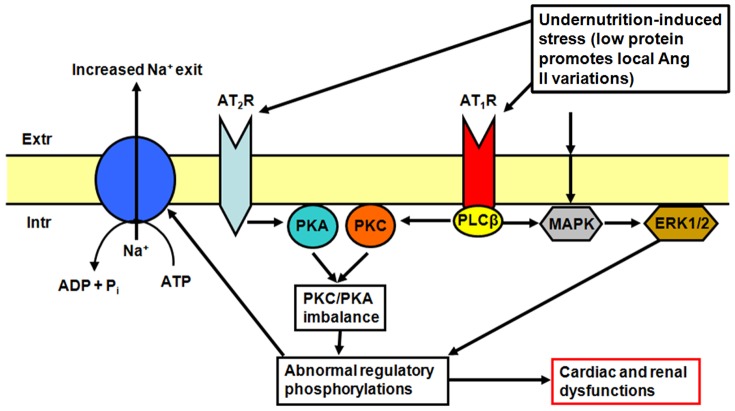
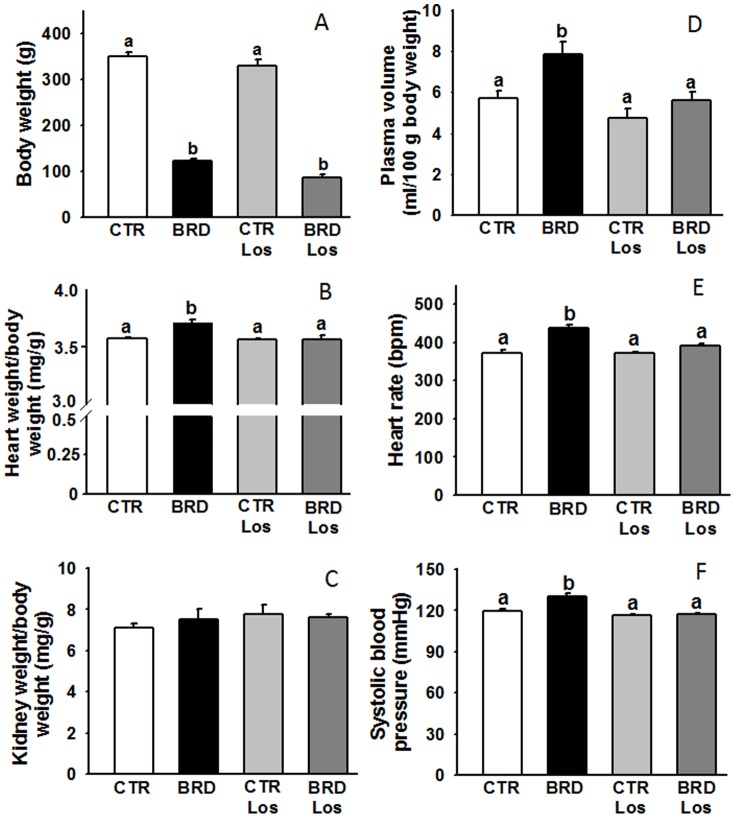
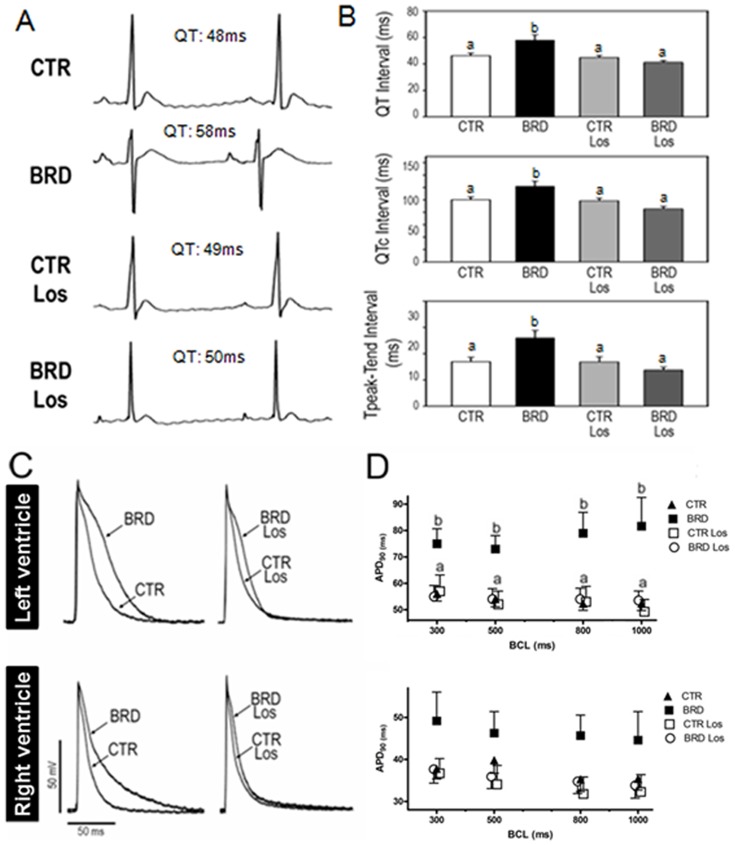
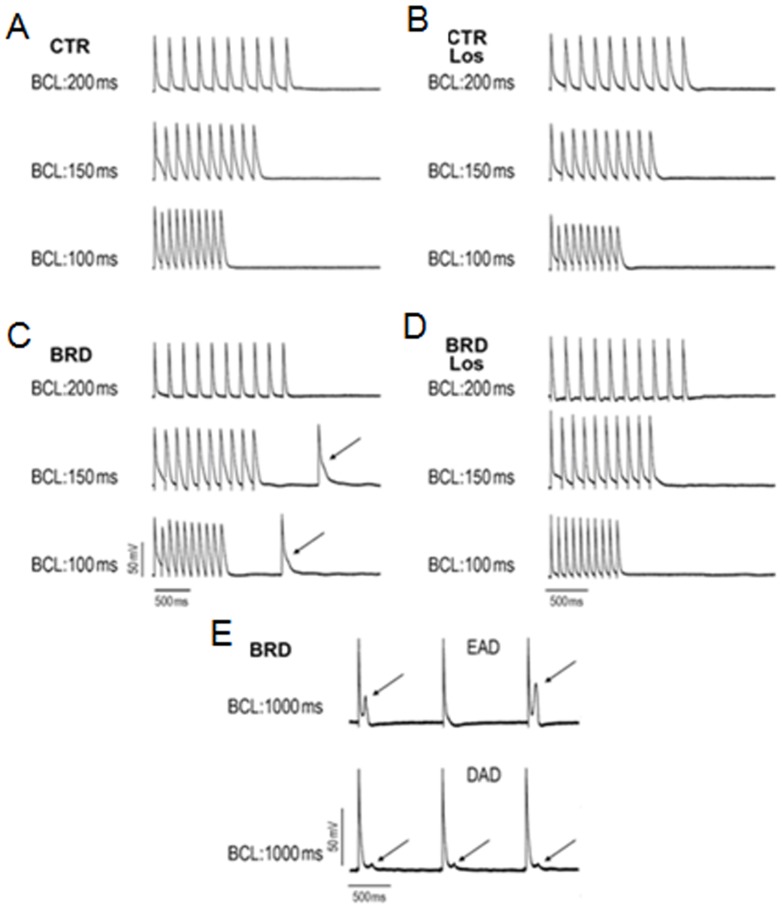
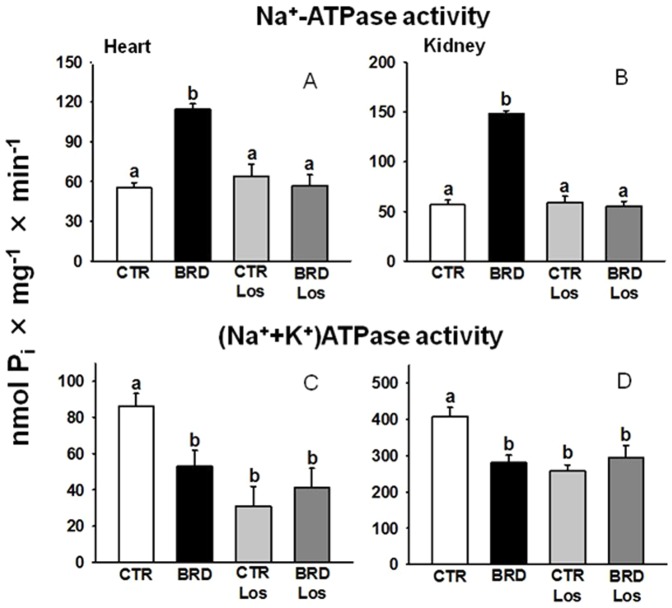
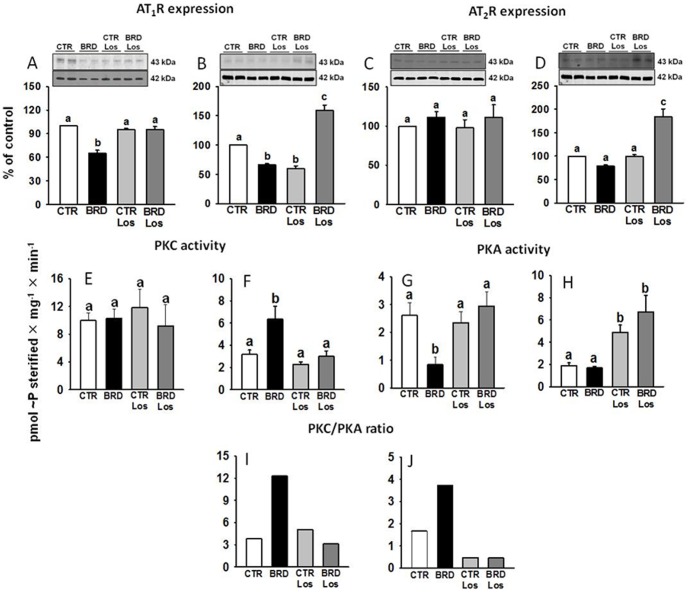
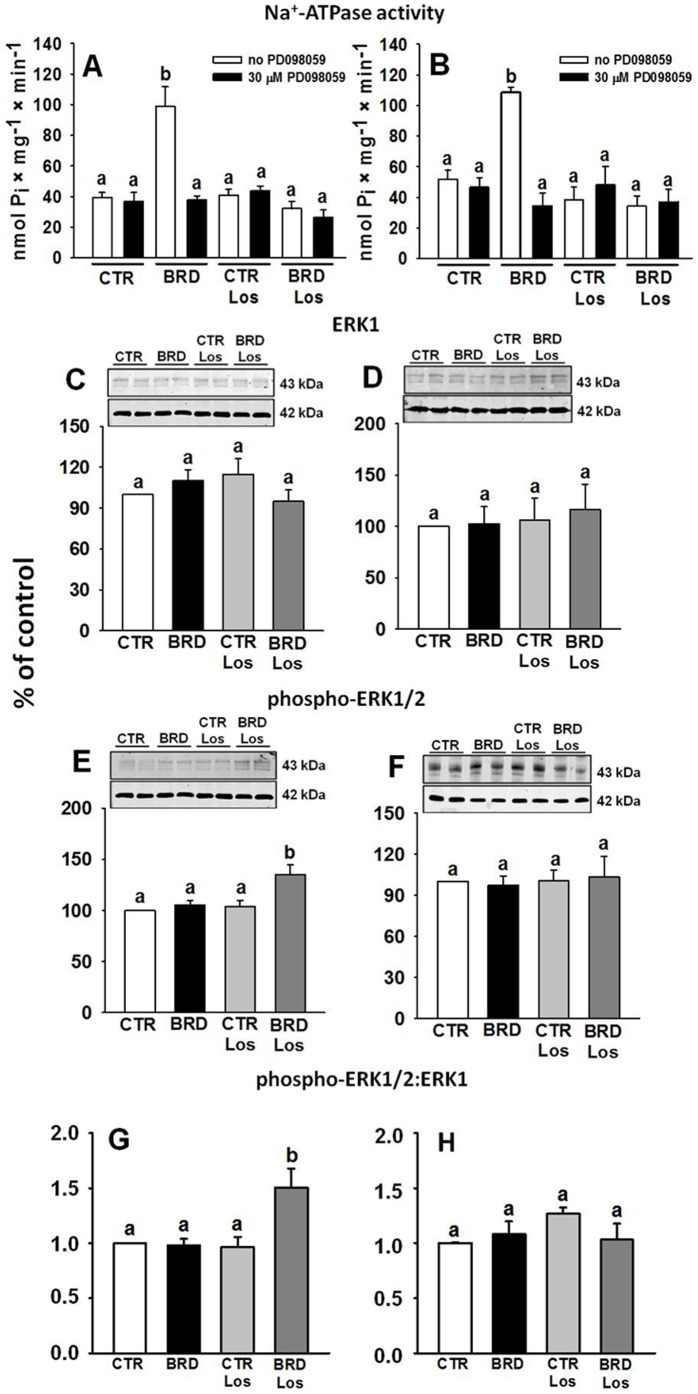
METHODOLOGY/PRINCIPAL FINDINGS: Wistar rats aged 90 days were fed from weaning with either a control or a deficient diet that mimics those used in impoverished regions worldwide. Such restriction simultaneously increased ouabain-insensitive Na+-ATPase and decreased (Na++K+)ATPase activity in the same proportion in cardiomyocytes and proximal tubule cells. Type 1 angiotensin II receptor (AT1R) was downregulated by that restriction in both organs, whereas AT2R decreased only in the kidney. The PKC/PKA ratio increased in both tissues and returned to normal values in rats receiving Losartan daily from weaning. Inhibition of the MAPK pathway restored Na+-ATPase activity in both organs. The undernourished rats presented expanded plasma volume, increased heart rate, cardiac hypertrophy, and elevated systolic pressure, which also returned to control levels with Losartan. Such restriction led to electrical cardiac remodeling represented by prolonged ventricular repolarization parameters, induced triggered activity, early after-depolarization and delayed after-depolarization, which were also prevented by Losartan.
CONCLUSION/SIGNIFICANCE: The mechanisms responsible for these alterations are underpinned by an imbalance in the PKC- and PKA-mediated pathways, with participation of angiotensin receptors and by activation of the MAPK/ERK1/2 pathway. These cellular and molecular alterations culminate in cardiac electric remodeling and in the onset of hypertension in adulthood.
多项研究已将与其他营养缺乏相关的蛋白质限制与心血管疾病和肾脏疾病的发展联系起来。本研究的主要假设是,心脏和肾脏中的血管紧张素II信号通路受慢性蛋白质、矿物质和维生素限制的影响。
方法/主要发现:90日龄的Wistar大鼠从断奶开始分别喂食对照饮食或模拟全球贫困地区使用的缺乏饮食。这种限制同时增加了哇巴因不敏感的钠钾ATP酶,并使心肌细胞和近端小管细胞中的(钠+ +钾+)ATP酶活性以相同比例降低。1型血管紧张素II受体(AT1R)在两个器官中均因这种限制而下调,而AT2R仅在肾脏中减少。PKC/PKA比值在两个组织中均升高,并且在从断奶开始每天接受氯沙坦治疗的大鼠中恢复到正常值。抑制MAPK途径可恢复两个器官中的钠钾ATP酶活性。营养不良的大鼠出现血浆容量增加、心率加快、心脏肥大和收缩压升高,使用氯沙坦后这些指标也恢复到对照水平。这种限制导致心脏电重构,表现为心室复极参数延长、诱发触发活动、早期后去极化和延迟后去极化,氯沙坦也可预防这些情况。
结论/意义:这些改变的机制是由PKC和PKA介导的途径失衡、血管紧张素受体的参与以及MAPK/ERK1/2途径的激活所支撑的。这些细胞和分子改变最终导致心脏电重构和成年期高血压的发生。