Armstrong David, Dregan Alex
King's College London, Department of Primary Care and Public Health Sciences, London, United Kingdom.
King's College London, Department of Primary Care and Public Health Sciences, London, United Kingdom, and National Institute for Health Research Biomedical Research Centre at Guy's and St Thomas' National Health Service Foundation Trust, London, United Kingdom.
PLoS One. 2014 Jul 1;9(7):e101368. doi: 10.1371/journal.pone.0101368. eCollection 2014.
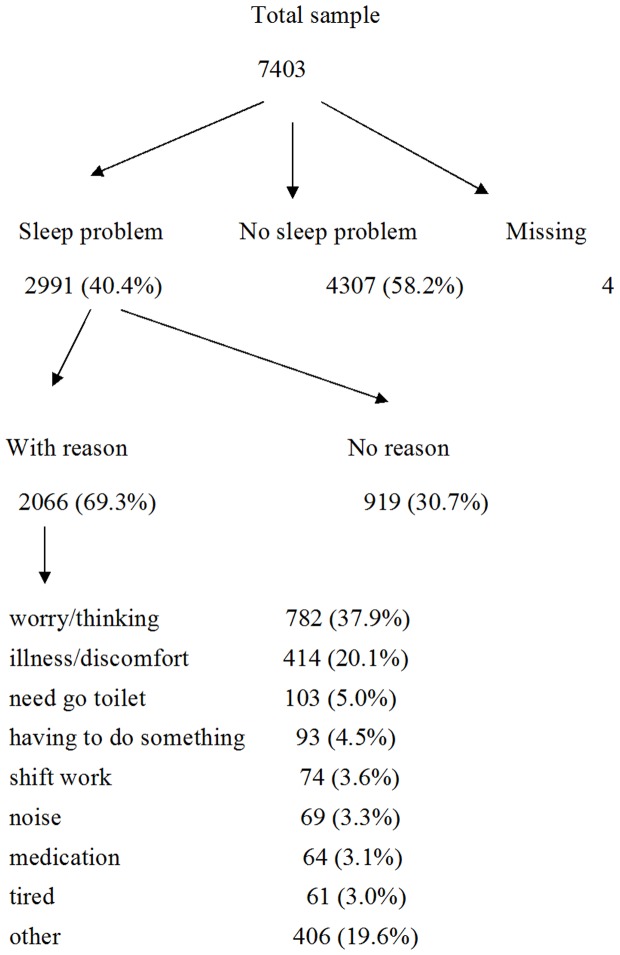
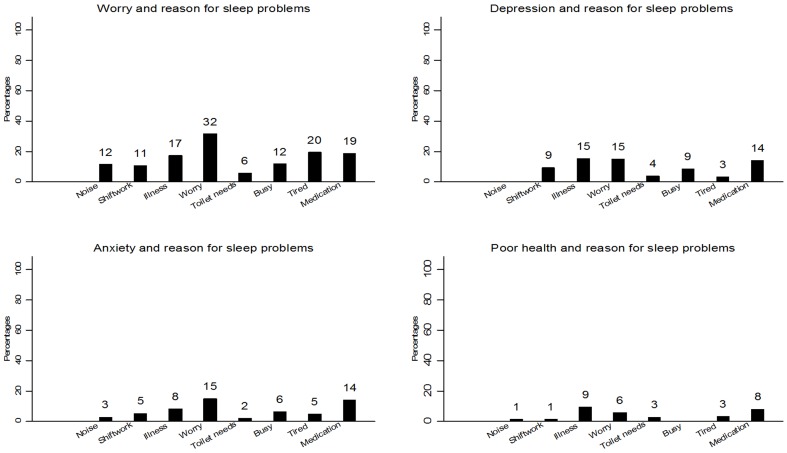
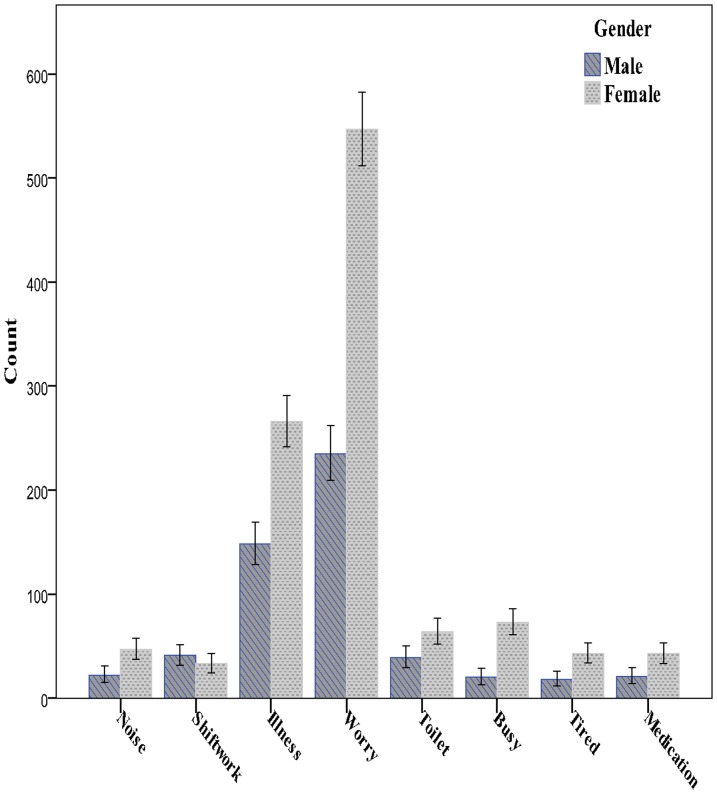
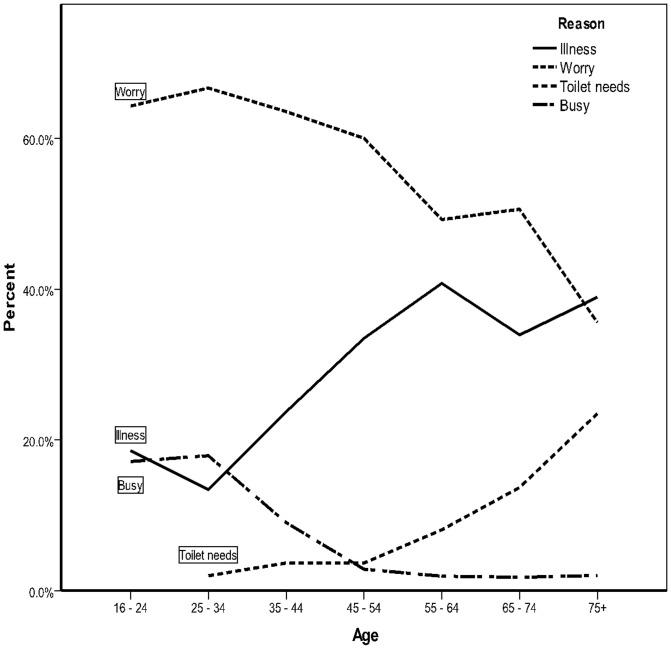
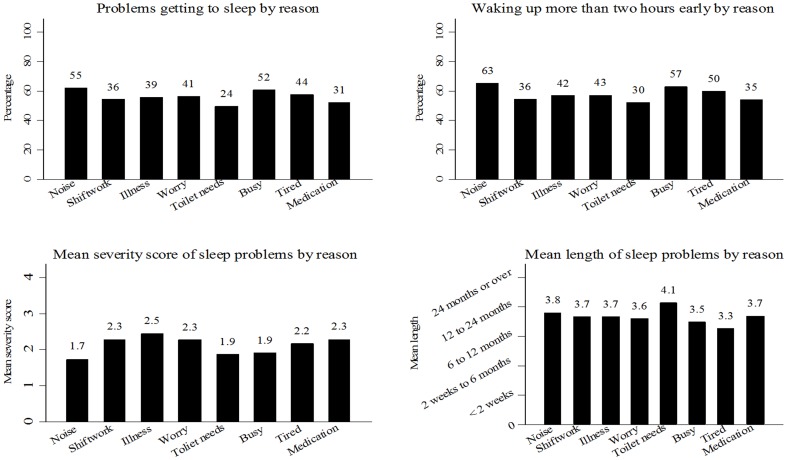
Typologies of sleep problems have usually relied on identifying underlying causes or symptom clusters. In this study the value of using the patient's own reasons for sleep disturbance are explored. Using secondary data analysis of a nationally representative psychiatric survey the patterning of the various reasons respondents provided for self-reported sleep problems were examined. Over two thirds (69.3%) of respondents could identify a specific reason for their sleep problem with worry (37.9%) and illness (20.1%) representing the most commonly reported reasons. And while women reported more sleep problems for almost every reason compared with men, the patterning of reasons by age showed marked variability. Sleep problem symptoms such as difficulty getting to sleep or waking early also showed variability by different reasons as did the association with major correlates such as worry, depression, anxiety and poor health. While prevalence surveys of 'insomnia' or 'poor sleep' often assume the identification of an underlying homogeneous construct there may be grounds for recognising the existence of different sleep problem types particularly in the context of the patient's perceived reason for the problem.
睡眠问题的类型通常依赖于识别潜在原因或症状群。在本研究中,探讨了使用患者自身睡眠障碍原因的价值。通过对一项具有全国代表性的精神病学调查进行二次数据分析,研究了受访者为自我报告的睡眠问题提供的各种原因的模式。超过三分之二(69.3%)的受访者能够确定其睡眠问题的具体原因,其中担忧(37.9%)和疾病(20.1%)是最常报告的原因。虽然与男性相比,女性几乎在每种原因下报告的睡眠问题都更多,但按年龄划分的原因模式显示出明显的差异。入睡困难或早醒等睡眠问题症状也因不同原因而有所不同,与担忧、抑郁、焦虑和健康状况不佳等主要相关因素的关联也是如此。虽然“失眠”或“睡眠不佳”的患病率调查通常假定存在一个潜在的同质结构,但有理由认识到不同睡眠问题类型的存在,特别是在考虑患者对问题的感知原因的情况下。