Wang Chun, Zhang Zhi-Ming, Xu Can-Xin, Tischkau Shelley A
Department of Pharmacology, Southern Illinois University School of Medicine, Springfield, IL 62702, USA.
Department of Anesthesiology, Institute of Translation Medicine, the First People's Hospital of Chenzhou, Chenzhou 423000, China.
Int J Mol Sci. 2014 Jul 1;15(7):11700-12. doi: 10.3390/ijms150711700.
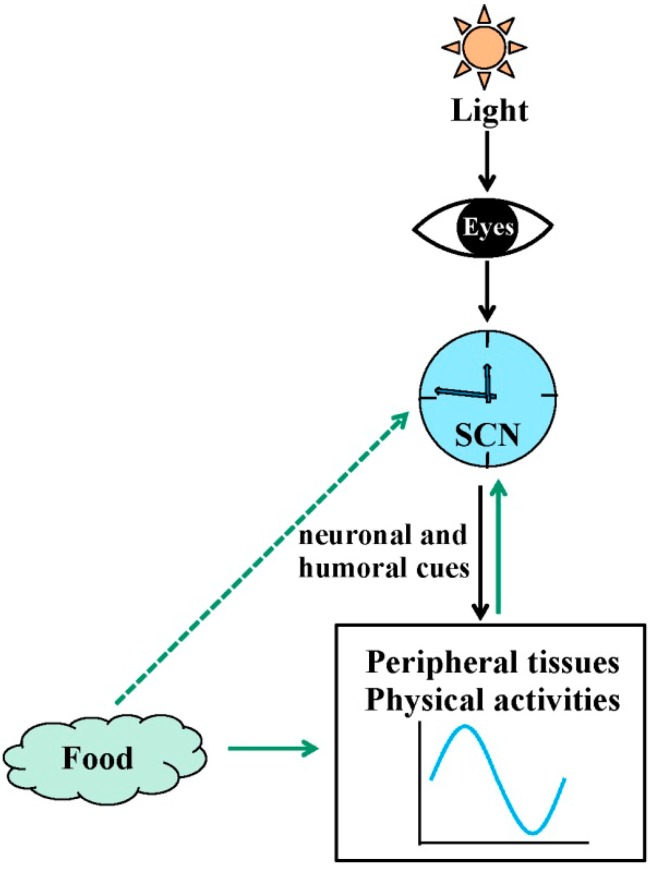
The rotation of the earth on its axis creates the environment of a 24 h solar day, which organisms on earth have used to their evolutionary advantage by integrating this timing information into their genetic make-up in the form of a circadian clock. This intrinsic molecular clock is pivotal for maintenance of synchronized homeostasis between the individual organism and the external environment to allow coordinated rhythmic physiological and behavioral function. Aryl hydrocarbon receptor (AhR) is a master regulator of dioxin-mediated toxic effects, and is, therefore, critical in maintaining adaptive responses through regulating the expression of phase I/II drug metabolism enzymes. AhR expression is robustly rhythmic, and physiological cross-talk between AhR signaling and circadian rhythms has been established. Increasing evidence raises a compelling argument that disruption of endogenous circadian rhythms contributes to the development of disease, including sleep disorders, metabolic disorders and cancers. Similarly, exposure to environmental pollutants through air, water and food, is increasingly cited as contributory to these same problems. Thus, a better understanding of interactions between AhR signaling and the circadian clock regulatory network can provide critical new insights into environmentally regulated disease processes. This review highlights recent advances in the understanding of the reciprocal interactions between dioxin-mediated AhR signaling and the circadian clock including how these pathways relate to health and disease, with emphasis on the control of metabolic function.
地球绕轴自转创造了24小时太阳日的环境,地球上的生物通过将这个时间信息以昼夜节律钟的形式整合到它们的基因组成中,从而利用这一环境实现了进化优势。这个内在的分子钟对于维持个体生物体与外部环境之间同步的内稳态至关重要,以实现协调的节律性生理和行为功能。芳烃受体(AhR)是二噁英介导的毒性作用的主要调节因子,因此,通过调节I/II期药物代谢酶的表达,在维持适应性反应方面至关重要。AhR的表达具有强烈的节律性,并且已经建立了AhR信号与昼夜节律之间的生理相互作用。越来越多的证据有力地表明,内源性昼夜节律的破坏会导致包括睡眠障碍、代谢紊乱和癌症在内的疾病的发生。同样,通过空气、水和食物接触环境污染物,越来越多地被认为是导致这些相同问题的原因。因此,更好地理解AhR信号与昼夜节律调节网络之间的相互作用,可以为环境调节的疾病过程提供关键的新见解。这篇综述重点介绍了在理解二噁英介导的AhR信号与昼夜节律之间的相互作用方面的最新进展,包括这些途径如何与健康和疾病相关,重点是代谢功能的控制。