Jonas Anna, Sumbi Victor, Mwinga Samson, DeKlerk Michael, Tjituka Francina, Penney Scott, Jordan Michael R, Desta Tiruneh, Tang Alice M, Hong Steven Y
Directorate of Special Programmes, Republic of Namibia Ministry of Health and Social Services, Windhoek, Namibia.
Strengthening Pharmaceutical Systems, Management Sciences for Health, Windhoek, Namibia.
PLoS One. 2014 Jul 2;9(7):e100539. doi: 10.1371/journal.pone.0100539. eCollection 2014.
In response to concerns about the emergence of HIV drug resistance (HIVDR), the World Health Organization (WHO) has developed a comprehensive set of early warning indicators (EWIs) to monitor HIV drug resistance and good programme practice at antiretroviral therapy (ART) sites.
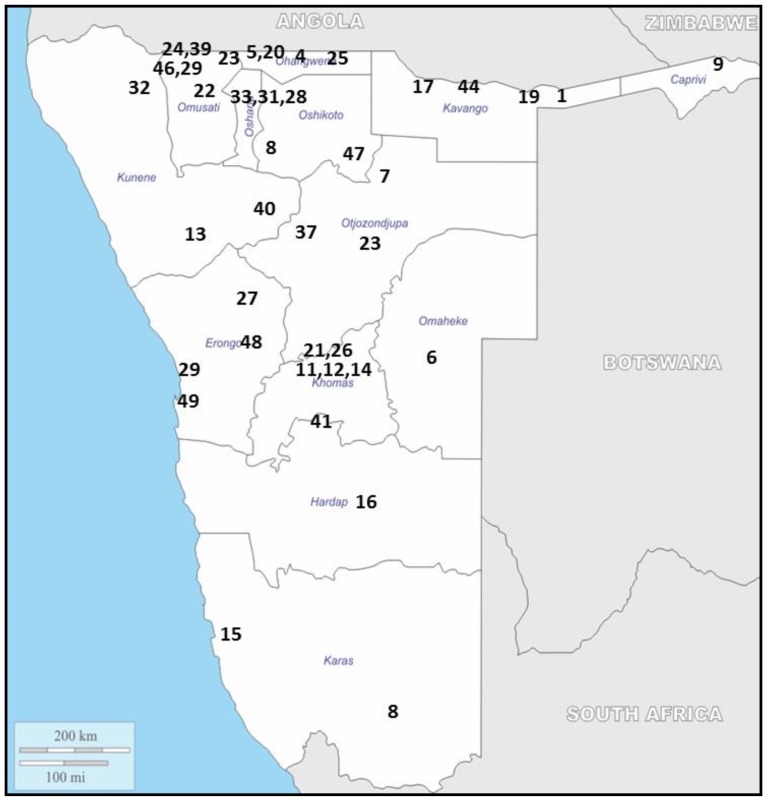
In 2012, Namibia utilized the updated WHO EWI guidance and abstracted data from adult and pediatric patients from 50 ART sites for the following EWIs: 1. On-time Pill Pick-up, 2. Retention in Care, 3. Pharmacy Stock-outs, 4. Dispensing Practices, and 5. Virological Suppression.
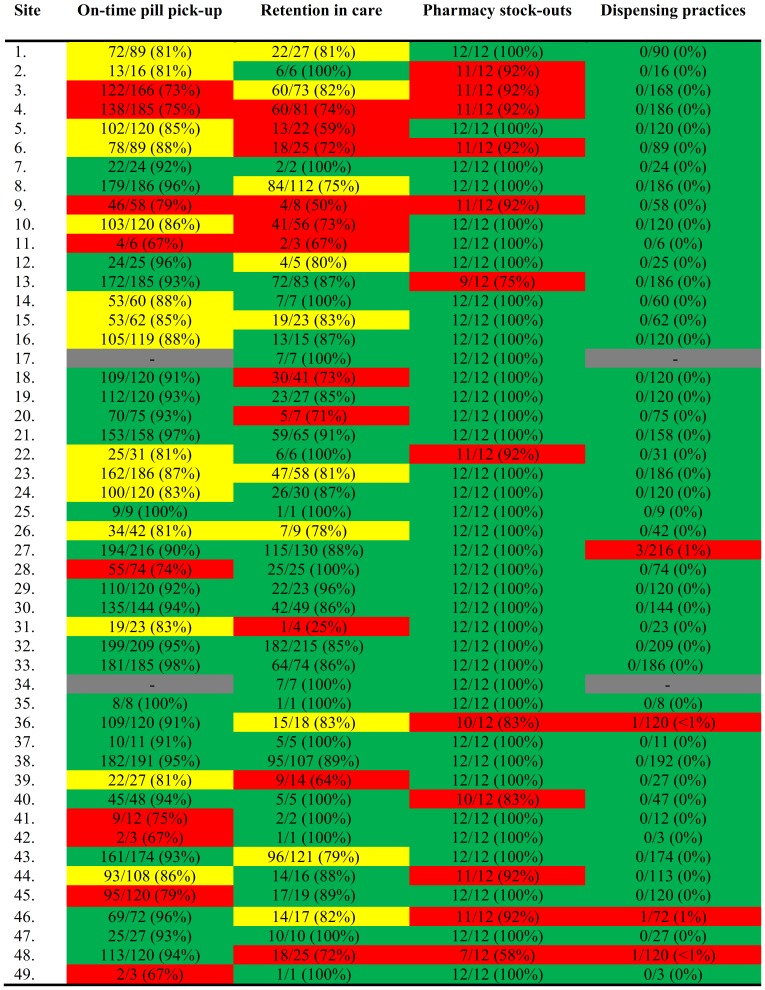
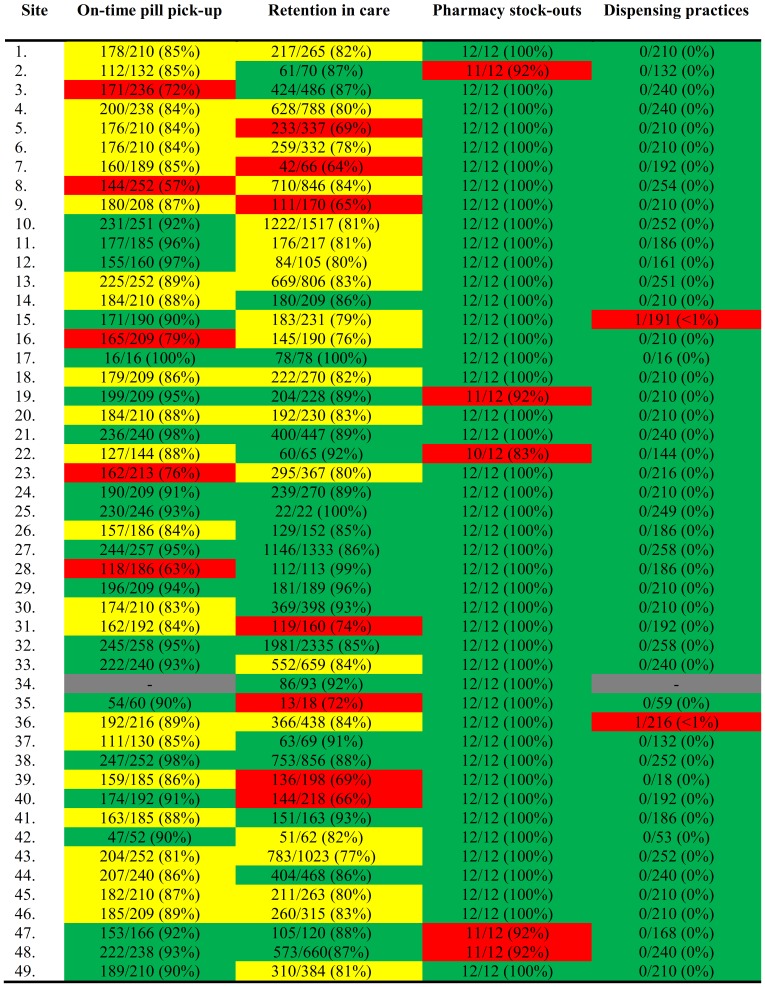
Data for EWIs one through four were abstracted and validated. EWI 5--Virological Suppression was not included due to poor data entry at many sites. On-time Pill Pick-up national estimate was 87.9% (87.2-88.7) of patients picking up pills on time for adults and 90.0% (88.9-90.9) picking up pills on time for pediatrics. Retention in Care national estimate was 82% of patients retained on ART after 12 months for adults and 83% for pediatrics. Pharmacy Stock-outs national estimate was 99% of months without a stock-out for adults and 97% for pediatrics. Dispensing Practices national estimate was 0.01% (0.003-0.064) of patients dispensed mono- or dual-therapy for adults and 0.25% (0.092-0.653) for pediatrics.
The successful 2012 EWI exercise provides Namibia a solid evidence base, which can be used to make national statements about programmatic functioning and possible HIVDR. This evidence base will serve to contextualize results from Namibia's surveys of HIVDR, which involves genotype testing. EWI abstraction has prompted the national program and its counterparts to engage sites in dialogue regarding the need to strengthen adherence and retention of patients on ART. The EWI collection process and EWI results will serve to optimize patient care and support Namibia in making evidence-based recommendations and take action to minimize the emergence of preventable HIVDR.
为应对对艾滋病毒耐药性(HIVDR)出现的担忧,世界卫生组织(WHO)制定了一套全面的早期预警指标(EWIs),以监测抗逆转录病毒治疗(ART)场所的艾滋病毒耐药性及良好的项目实践情况。
2012年,纳米比亚采用了更新后的世卫组织早期预警指标指南,并从50个抗逆转录病毒治疗场所的成人和儿童患者中提取了以下早期预警指标的数据:1. 按时取药;2. 坚持治疗;3. 药房缺货情况;4. 配药实践;5. 病毒学抑制。
提取并验证了早期预警指标1至4的数据。由于许多场所数据录入不佳,未纳入早期预警指标5——病毒学抑制。按时取药的全国估计数为:成人按时取药的患者占87.9%(87.2 - 88.7),儿童按时取药的患者占90.0%(88.9 - 90.9)。坚持治疗的全国估计数为:成人接受抗逆转录病毒治疗12个月后仍坚持治疗的患者占82%,儿童占83%。药房缺货的全国估计数为:成人无缺货的月份占99%,儿童占97%。配药实践的全国估计数为:成人接受单药或双药治疗的患者占0.01%(0.003 - 0.064),儿童占0.25%(0.092 - 0.653)。
2012年成功开展的早期预警指标工作为纳米比亚提供了坚实的证据基础,可用于就项目运作情况及可能的艾滋病毒耐药性发表全国性声明。这一证据基础将有助于阐释纳米比亚艾滋病毒耐药性调查的结果,该调查涉及基因分型检测。早期预警指标的提取促使国家项目及其对应方就加强患者对抗逆转录病毒治疗的依从性和坚持治疗的必要性与各场所进行对话。早期预警指标的收集过程和结果将有助于优化患者护理,并支持纳米比亚提出基于证据的建议并采取行动,以尽量减少可预防的艾滋病毒耐药性的出现。