Quan F, Wolfgang W J, Forte M A
Vollum Institute for Advanced Biomedical Research, Oregon Health Sciences University, Portland 97201.
Proc Natl Acad Sci U S A. 1989 Jun;86(11):4321-5. doi: 10.1073/pnas.86.11.4321.
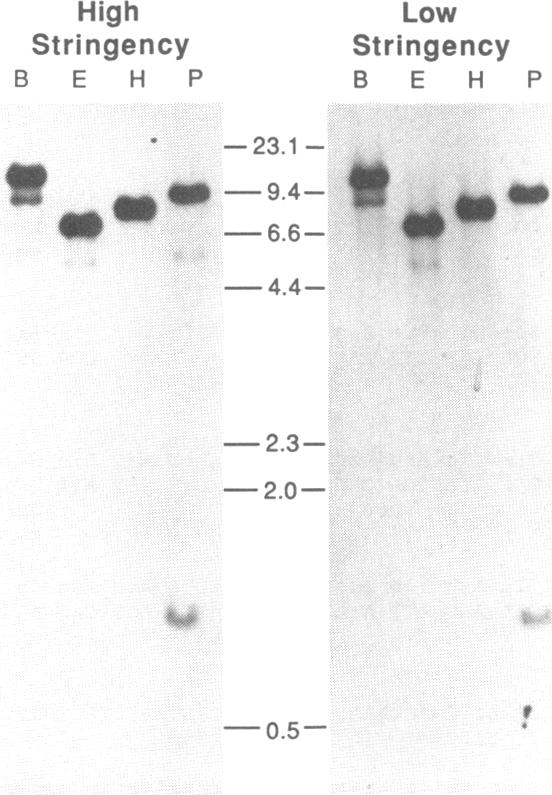
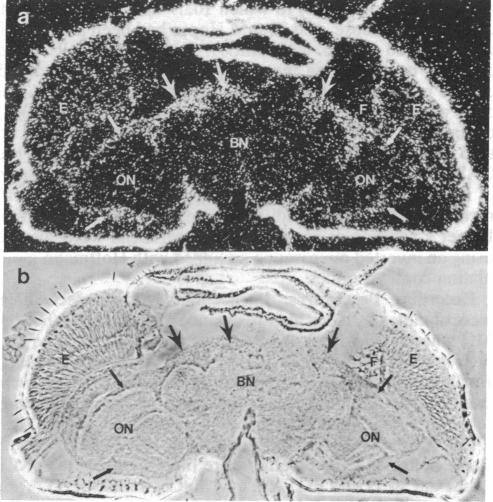
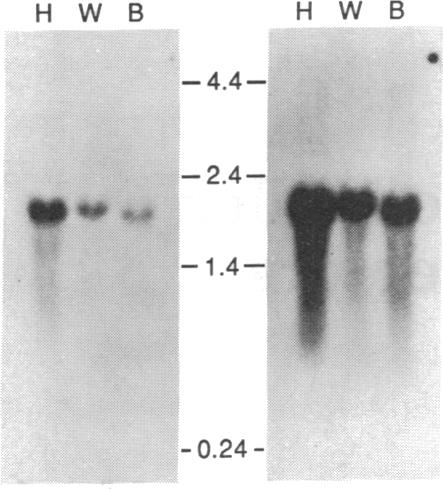
In mammals, the alpha subunit of the stimulatory guanine nucleotide-binding protein (Gs alpha) functions to couple a variety of extracellular membrane receptors to adenylate cyclase. Activation of Gs alpha results in the stimulation of adenylate cyclase and an increase in the second messenger cAMP. A 1.7-kilobase cDNA has been identified and characterized from Drosophila that codes for a protein 71% identical to bovine Gs alpha. The similarity is most striking in the regions thought to be responsible for the interactions with receptors and effectors, suggesting that the basic components of this signal-transduction pathway have been conserved through evolution. RNA blot hybridization and DNA sequence analysis suggest that a single transcript, expressed predominantly in the head, is present in Drosophila. In situ hybridization studies indicate that the Drosophila Gs alpha transcript is localized primarily in the cells of the central nervous system and in the eyes.
在哺乳动物中,刺激性鸟嘌呤核苷酸结合蛋白(Gsα)的α亚基起着将多种细胞外膜受体与腺苷酸环化酶偶联的作用。Gsα的激活会刺激腺苷酸环化酶,并使第二信使环磷酸腺苷(cAMP)增加。已从果蝇中鉴定并表征了一个1.7千碱基的cDNA,它编码的蛋白质与牛Gsα有71%的同源性。在被认为负责与受体和效应器相互作用的区域,这种相似性最为显著,这表明该信号转导途径的基本组成部分在进化过程中得以保留。RNA印迹杂交和DNA序列分析表明,果蝇中存在一种主要在头部表达的单一转录本。原位杂交研究表明,果蝇Gsα转录本主要定位于中枢神经系统的细胞和眼睛中。