Bonanno Angelo, Giannoulaki Marianna, Barra Marco, Basilone Gualtiero, Machias Athanassios, Genovese Simona, Goncharov Sergey, Popov Sergey, Rumolo Paola, Di Bitetto Massimiliano, Aronica Salvatore, Patti Bernardo, Fontana Ignazio, Giacalone Giovanni, Ferreri Rosalia, Buscaino Giuseppa, Somarakis Stylianos, Pyrounaki Maria-Myrto, Tsoukali Stavroula, Mazzola Salvatore
Consiglio Nazionale delle Ricerche, Institute for Coastal and Marine Environment (IAMC), Detached Units of Capo Granitola (TP), Mazara del Vallo (TP) and Naples, Italy.
Hellenic Centre for Marine Research, Institute of Marine Biological Resources, Iraklion, Greece.
PLoS One. 2014 Jul 3;9(7):e101498. doi: 10.1371/journal.pone.0101498. eCollection 2014.
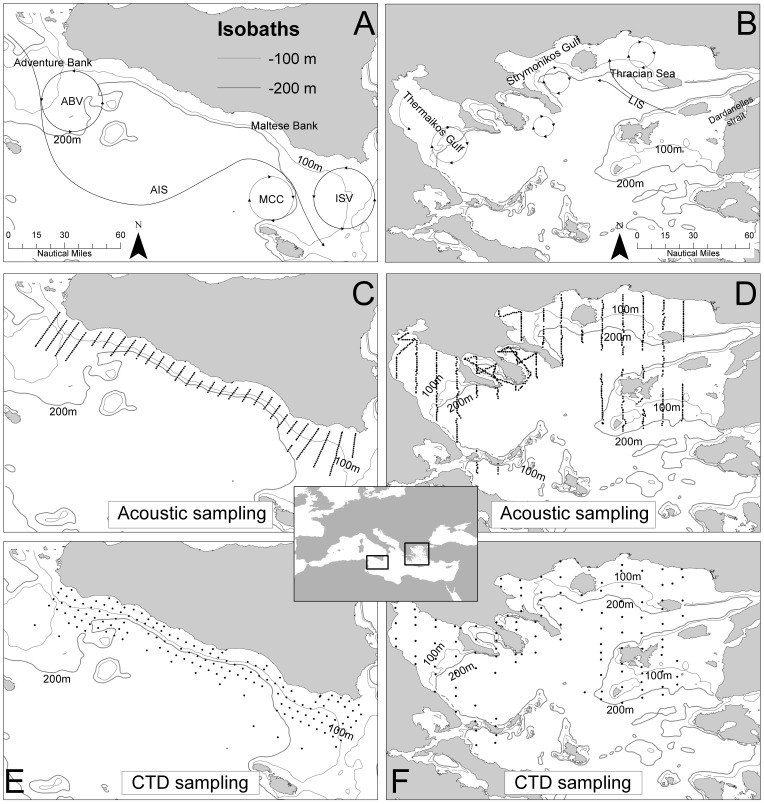
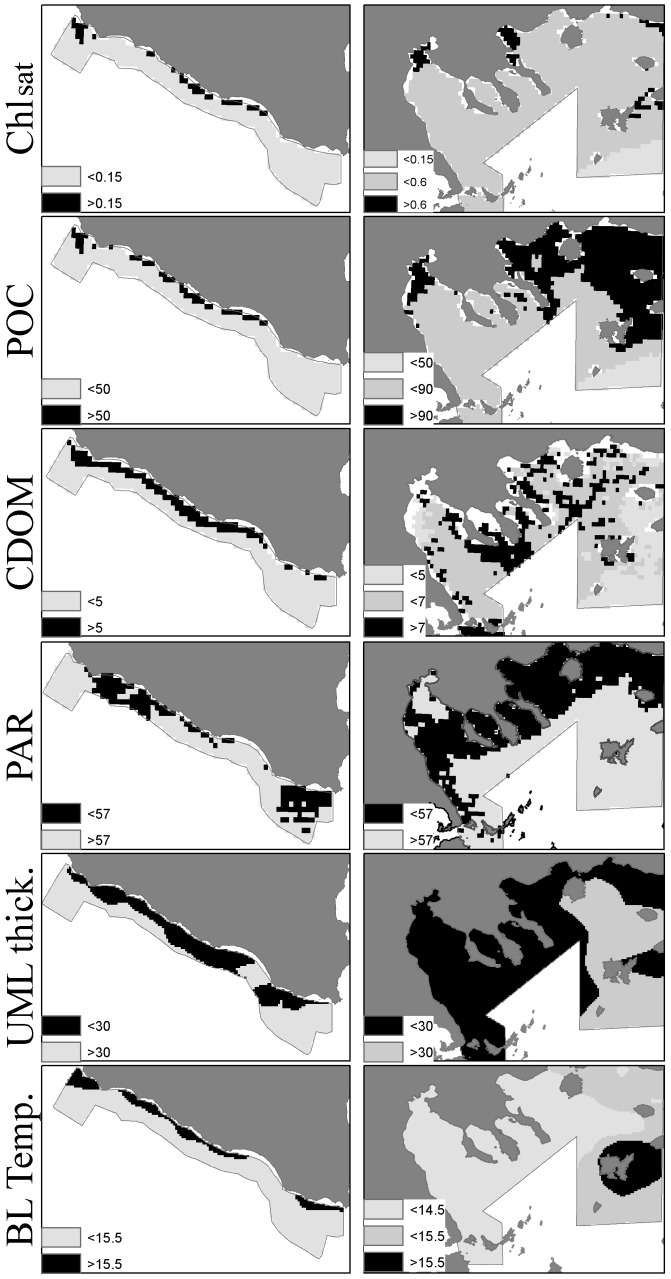
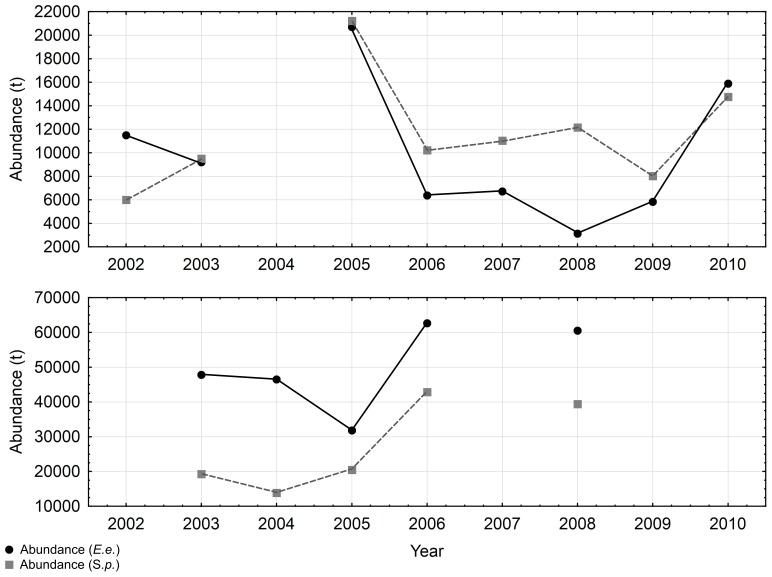
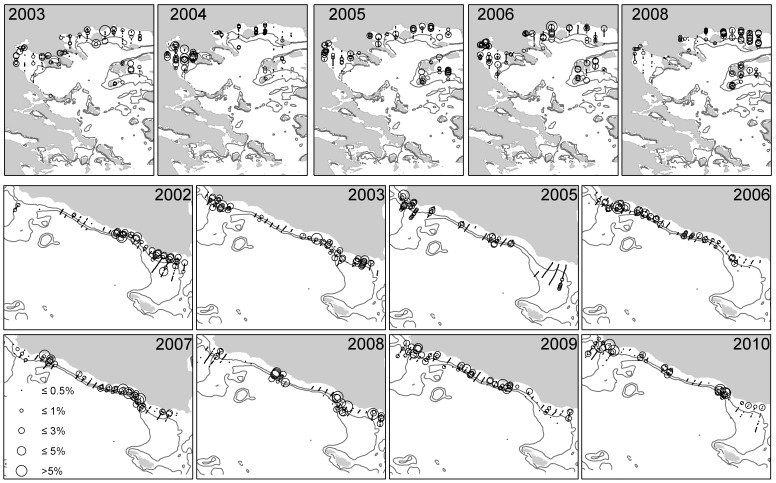
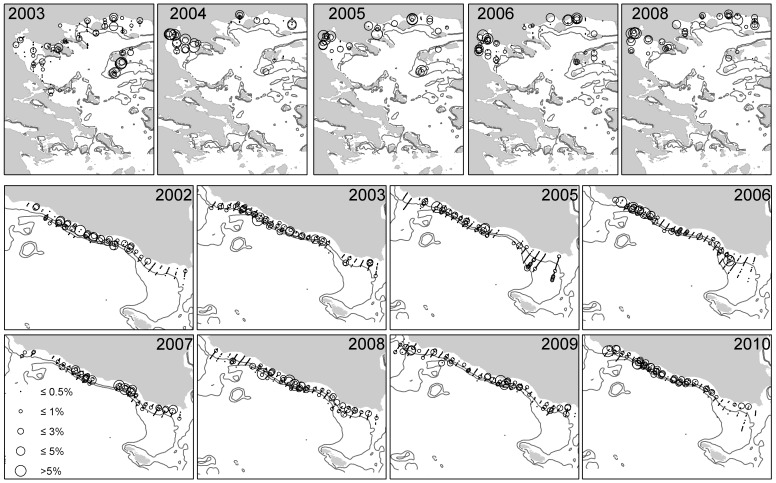
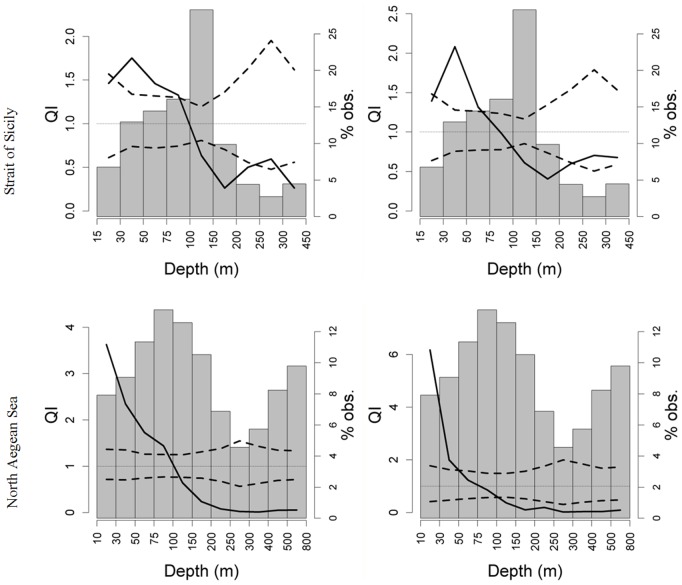
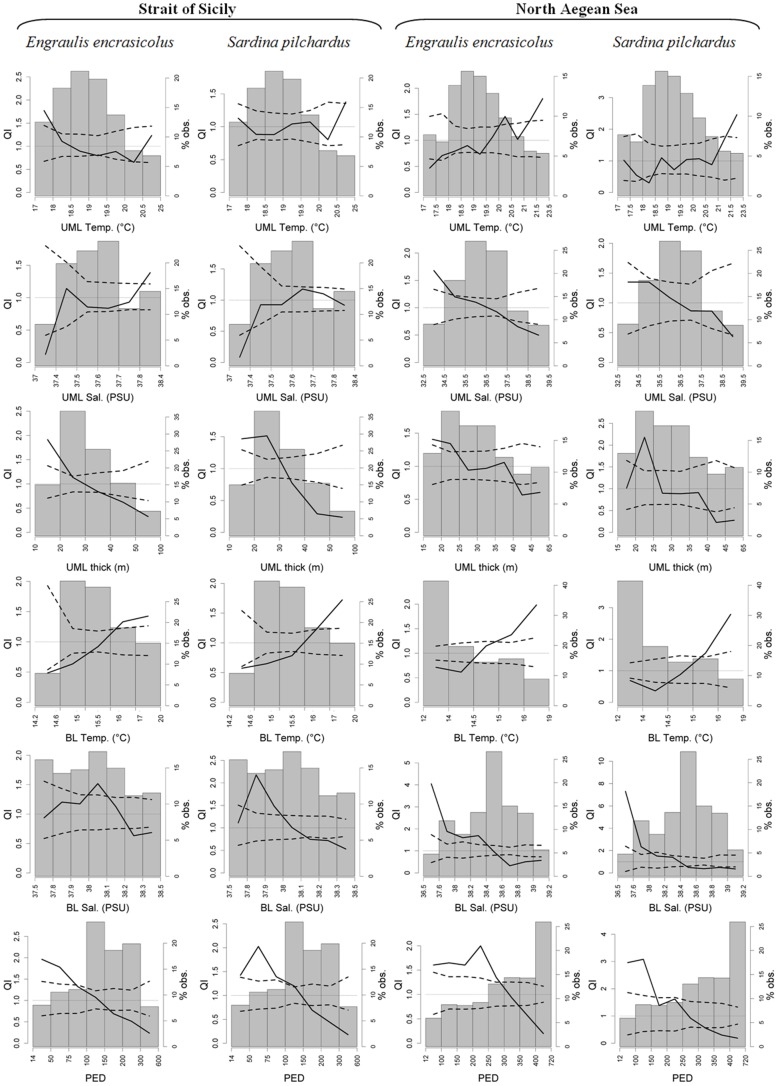
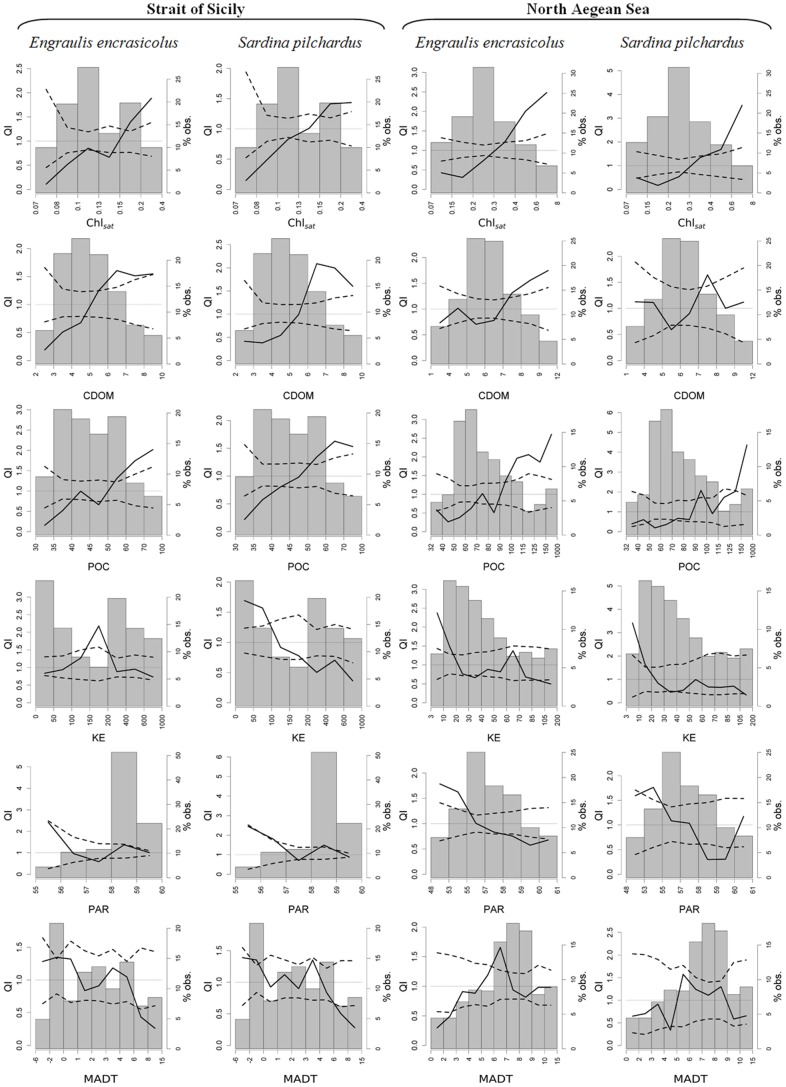
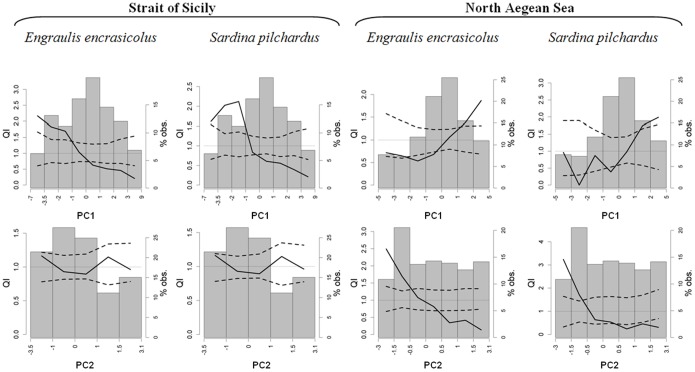
A number of scientific papers in the last few years singled out the influence of environmental conditions on the spatial distribution of fish species, highlighting the need for the fisheries scientific community to investigate, besides biomass estimates, also the habitat selection of commercially important fish species. The Mediterranean Sea, although generally oligotrophic, is characterized by high habitat variability and represents an ideal study area to investigate the adaptive behavior of small pelagics under different environmental conditions. In this study the habitat selection of European anchovy Engraulis encrasicolus and European sardine Sardina pilchardus is analyzed in two areas of the Mediterranean Sea that largely differentiate in terms of environmental regimes: the Strait of Sicily and the North Aegean Sea. A number of environmental parameters were used to investigate factors influencing anchovy and sardine habitat selection. Acoustic surveys data, collected during the summer period 2002-2010, were used for this purpose. The quotient analysis was used to identify the association between high density values and environmental variables; it was applied to the entire dataset in each area in order to identify similarities or differences in the "mean" spatial behavioral pattern for each species. Principal component analysis was applied to selected environmental variables in order to identify those environmental regimes which drive each of the two ecosystems. The analysis revealed the effect of food availability along with bottom depth selection on the spatial distribution of both species. Furthermore PCA results highlighted that observed selectivity for shallower waters is mainly associated to specific environmental processes that locally increase productivity. The common trends in habitat selection of the two species, as observed in the two regions although they present marked differences in hydrodynamics, seem to be driven by the oligotrophic character of the study areas, highlighting the role of areas where the local environmental regimes meet 'the ocean triad hypothesis'.
过去几年里,许多科学论文指出了环境条件对鱼类物种空间分布的影响,强调渔业科学界除了估计生物量外,还需要研究具有商业重要性的鱼类物种的栖息地选择。地中海虽然总体上是贫营养的,但具有高度的栖息地变异性,是研究小型中上层鱼类在不同环境条件下适应性行为的理想研究区域。在本研究中,对欧洲鳀鱼和欧洲沙丁鱼在环境状况差异很大的地中海两个区域的栖息地选择进行了分析:西西里海峡和北爱琴海。使用了一些环境参数来研究影响鳀鱼和沙丁鱼栖息地选择的因素。为此,使用了2002 - 2010年夏季期间收集的声学调查数据。商数分析用于确定高密度值与环境变量之间的关联;它被应用于每个区域的整个数据集,以识别每个物种“平均”空间行为模式中的相似性或差异。主成分分析应用于选定的环境变量,以识别驱动这两个生态系统的环境状况。分析揭示了食物可用性以及底质深度选择对这两个物种空间分布的影响。此外,主成分分析结果突出表明,观察到的对较浅水域的选择性主要与局部提高生产力的特定环境过程有关。尽管这两个区域在水动力方面存在显著差异,但在这两个区域观察到的这两个物种栖息地选择的共同趋势似乎是由研究区域的贫营养特征驱动的,突出了局部环境状况符合“海洋三联假说”的区域的作用。