González-Rodríguez Águeda, Reibert Bjorn, Amann Thomas, Constien Rainier, Rondinone Cristina M, Valverde Ángela M
Centro de Investigación Biomédica en Red de Diabetes y Enfermedades Metabólicas Asociadas (CIBERDEM), Instituto de Salud Carlos III, Spain Instituto de Investigaciones Biomédicas "Alberto Sols" (Consejo Superior de Investigaciones Científicas/Universidad Autónoma de Madrid), 28029 Madrid, Spain
Roche Kulmbach GmbH, Kulmbach, D 95326, Germany.
Dis Model Mech. 2014 Sep;7(9):1093-100. doi: 10.1242/dmm.015537. Epub 2014 Jul 4.
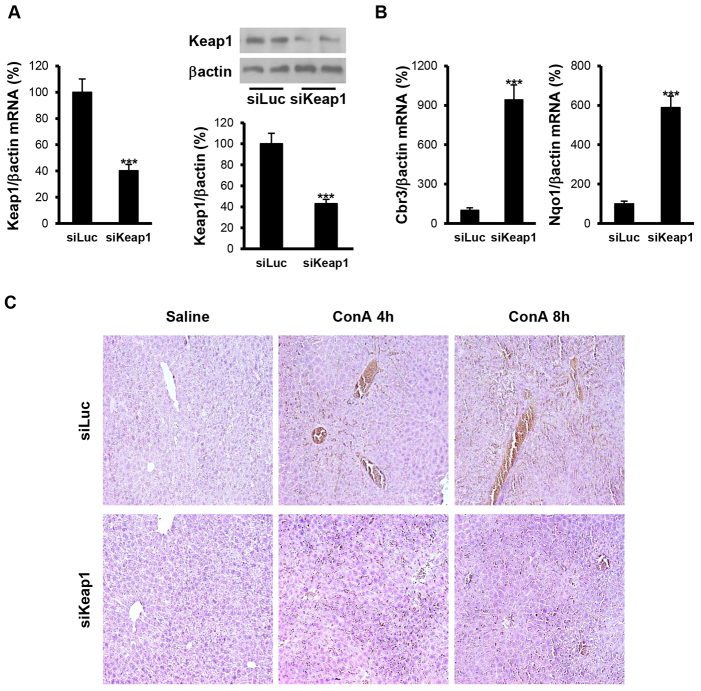
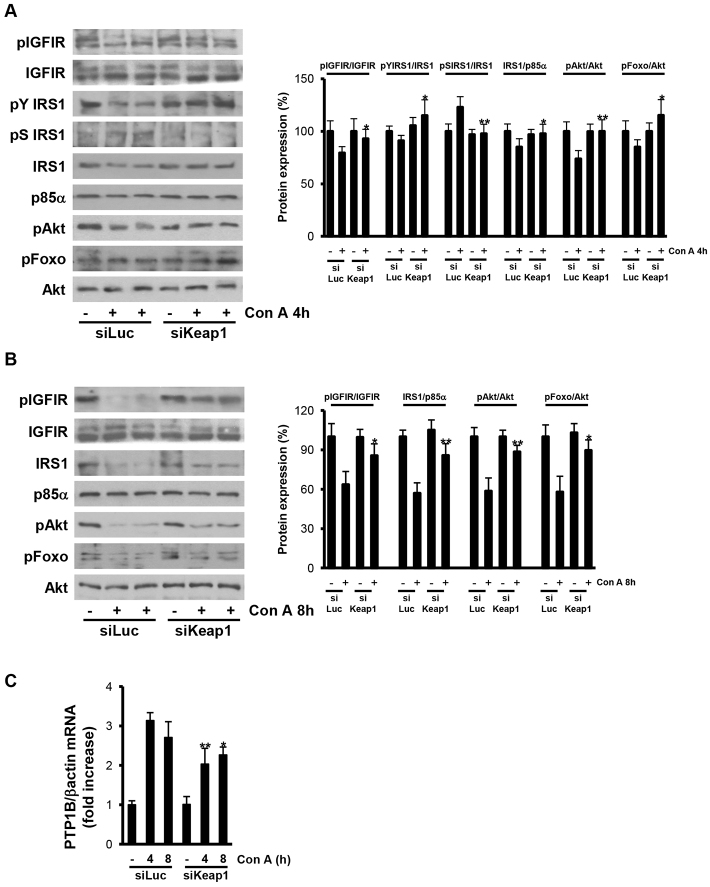
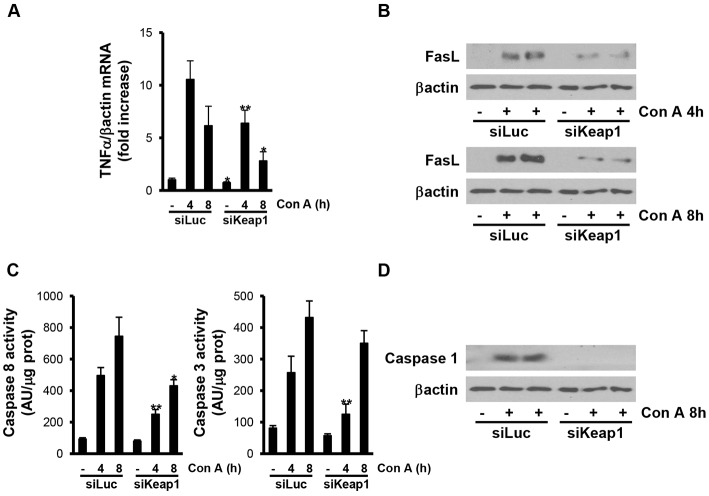
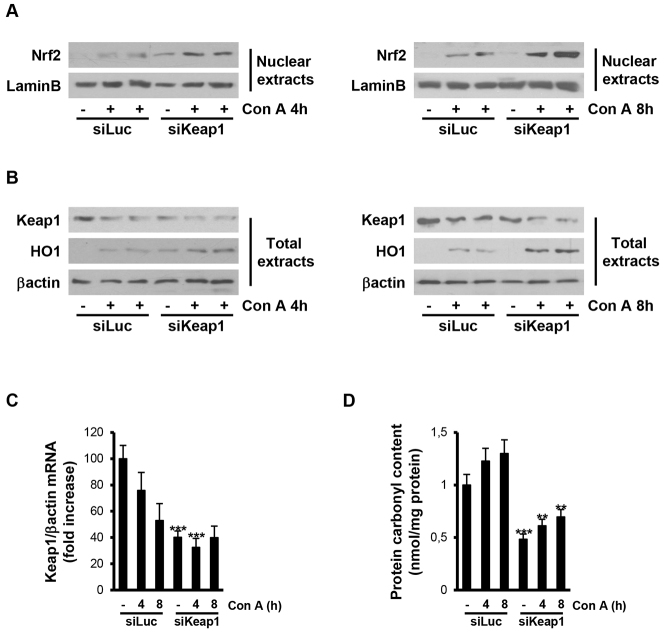
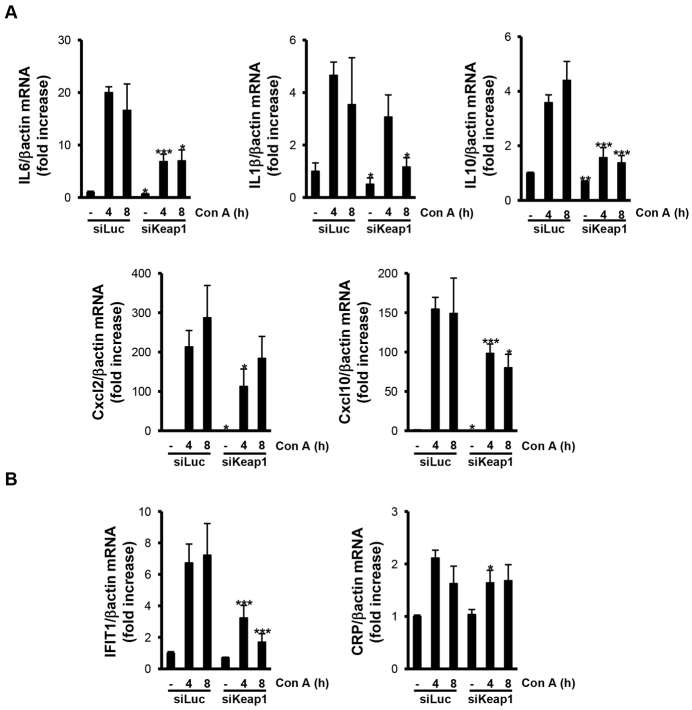
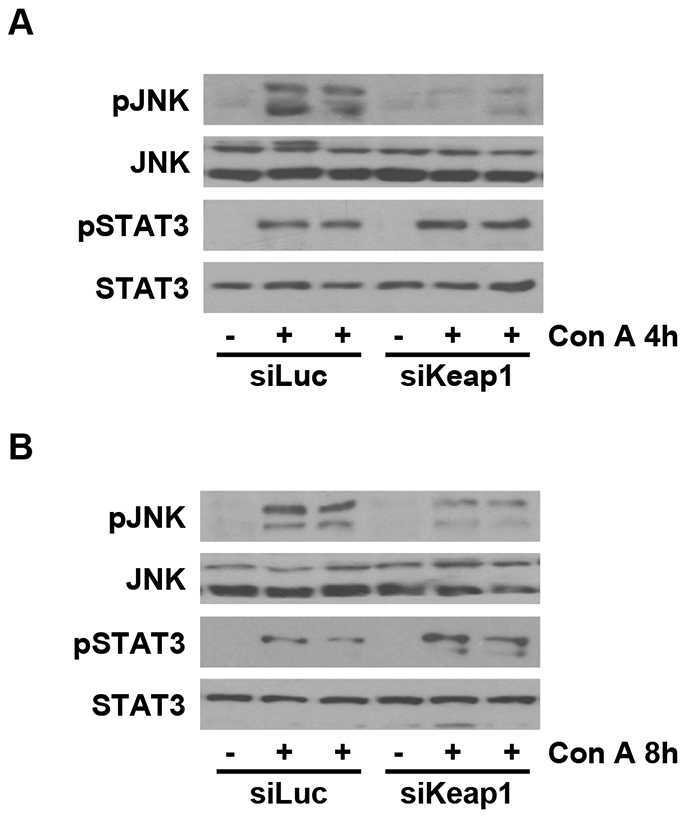
Oxidative stress contributes to the progression of acute liver failure (ALF). Transcription factor nuclear factor-erythroid 2-related factor (Nrf2) serves as an endogenous regulator by which cells combat oxidative stress. We have investigated liver damage and the balance between death and survival signaling pathways in concanavalin A (ConA)-mediated ALF using in vivo siRNA delivery targeting Keap1 in hepatocytes. For that goal, mice were injected with Keap1- or luciferase-siRNA-containing liposomes via the tail vein. After 48 hours, ALF was induced by ConA. Liver histology, pro-inflammatory mediators, antioxidant responses, cellular death, and stress and survival signaling were assessed. Keap1 mRNA and protein levels significantly decreased in livers of Keap1-siRNA-injected mice. In these animals, histological liver damage was less evident than in control mice when challenged with ConA. Likewise, markers of cellular death (FasL and caspases 8, 3 and 1) decreased at 4 and 8 hours post-injection. Nuclear Nrf2 and its target, hemoxygenase 1 (HO1), were elevated in Keap1-siRNA-injected mice compared with control animals, resulting in reduced oxidative stress in the liver. Similarly, mRNA levels of pro-inflammatory cytokines were reduced in livers from Keap1-siRNA-injected mice. At the molecular level, activation of c-jun (NH2) terminal kinase (JNK) was ameliorated, whereas the insulin-like growth factor I receptor (IGFIR) survival pathway was maintained upon ConA injection in Keap1-siRNA-treated mice. In conclusion, our results have revealed a potential therapeutic use of in vivo siRNA technology targeted to Keap1 to combat oxidative stress by modulating Nrf2-mediated antioxidant responses and IGFIR survival signaling during the progression of ALF.
氧化应激促进急性肝衰竭(ALF)的进展。转录因子核因子-红系2相关因子(Nrf2)作为细胞对抗氧化应激的内源性调节因子。我们使用针对肝细胞中Keap1的体内小干扰RNA(siRNA)递送,研究了刀豆蛋白A(ConA)介导的ALF中的肝损伤以及死亡和生存信号通路之间的平衡。为此,通过尾静脉给小鼠注射含Keap1或荧光素酶siRNA的脂质体。48小时后,用ConA诱导ALF。评估肝脏组织学、促炎介质、抗氧化反应、细胞死亡以及应激和生存信号。注射Keap1-siRNA的小鼠肝脏中Keap1 mRNA和蛋白水平显著降低。在这些动物中,用ConA攻击时,肝脏组织学损伤比对照小鼠轻。同样,细胞死亡标志物(FasL和半胱天冬酶8、3和1)在注射后4小时和8小时降低。与对照动物相比,注射Keap1-siRNA的小鼠中核Nrf2及其靶标血红素加氧酶1(HO1)升高,导致肝脏氧化应激降低。同样,注射Keap1-siRNA的小鼠肝脏中促炎细胞因子的mRNA水平降低。在分子水平上,c-jun(NH2)末端激酶(JNK)的激活得到改善,而在注射Keap1-siRNA的小鼠中注射ConA后胰岛素样生长因子I受体(IGFIR)生存通路得以维持。总之,我们的结果揭示了靶向Keap1的体内siRNA技术在ALF进展过程中通过调节Nrf2介导的抗氧化反应和IGFIR生存信号来对抗氧化应激的潜在治疗用途。