Lee Dong-Hun, Park Jae-Keun, Song Chang-Seon
Avian Disease Laboratory, College of Veterinary Medicine, Konkuk University, Seoul, Korea.
Clin Exp Vaccine Res. 2014 Jul;3(2):133-9. doi: 10.7774/cevr.2014.3.2.133. Epub 2014 Jun 20.
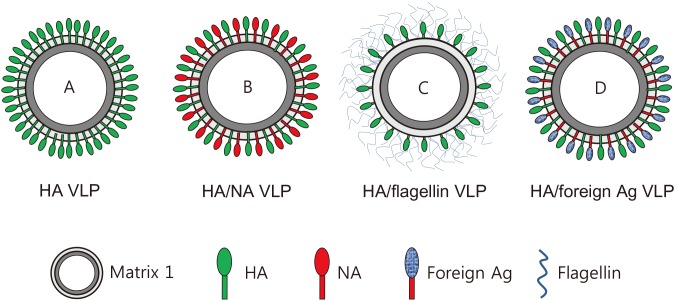
Virus-like particles (VLPs), which resemble infectious virus particles in structure and morphology, have been proposed to provide a new generation of vaccine candidates against various viral infections. As effective immunogens, characterized by high immunogenicity and safety, VLPs have been employed in the development of human influenza vaccines. Recently, several influenza VLP vaccines have been developed for veterinary use and successfully evaluated in swine, canine, duck, and chicken models. These VLP vaccine candidates induced protective immune responses and enabled serological differentiation between vaccinated and infected animals in conjunction with a diagnostic test. Here, we review the current progress of influenza VLP development as a next-generation vaccine technology in the veterinary field and discuss the challenges and future direction of this technology.
病毒样颗粒(VLPs)在结构和形态上类似于感染性病毒颗粒,已被提议作为针对各种病毒感染的新一代候选疫苗。作为有效的免疫原,VLPs具有高免疫原性和安全性的特点,已被用于人类流感疫苗的研发。最近,几种流感VLP疫苗已被开发用于兽医领域,并在猪、犬、鸭和鸡模型中成功进行了评估。这些候选VLP疫苗诱导了保护性免疫反应,并结合诊断测试实现了接种动物和感染动物之间的血清学区分。在此,我们综述了流感VLP作为兽医领域下一代疫苗技术的当前进展,并讨论了该技术面临的挑战和未来方向。