Theodore Shaniece C, Davis Melissa, Zhao Fu, Wang Honghe, Chen Dongquan, Rhim Johng, Dean-Colomb Windy, Turner Timothy, Ji Weidong, Zeng Guohua, Grizzle William, Yates Clayton
Department of Biology and Center for Cancer Research, Tuskegee University, Tuskegee, AL.
Oncotarget. 2014 Jun 15;5(11):3512-25. doi: 10.18632/oncotarget.1953.
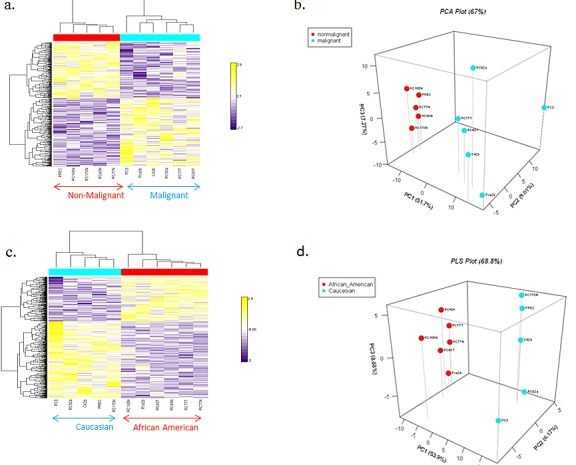
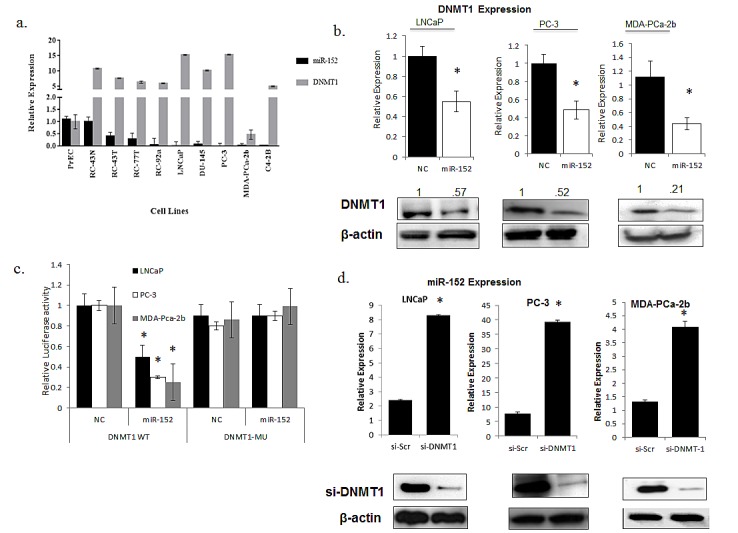
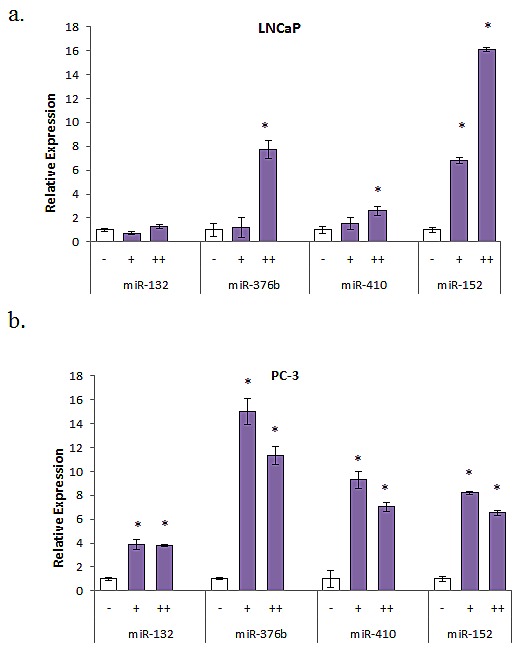
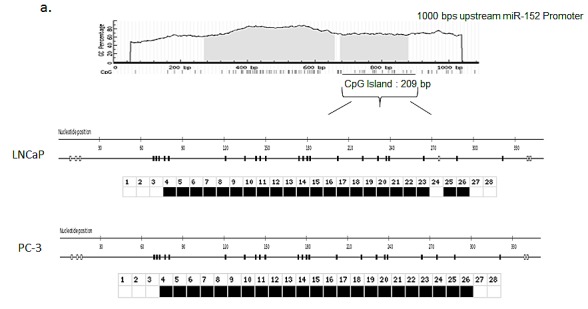
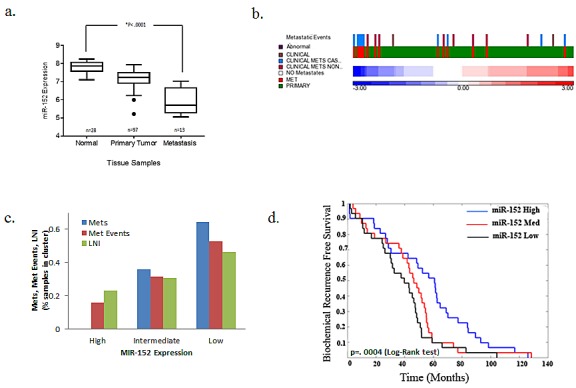
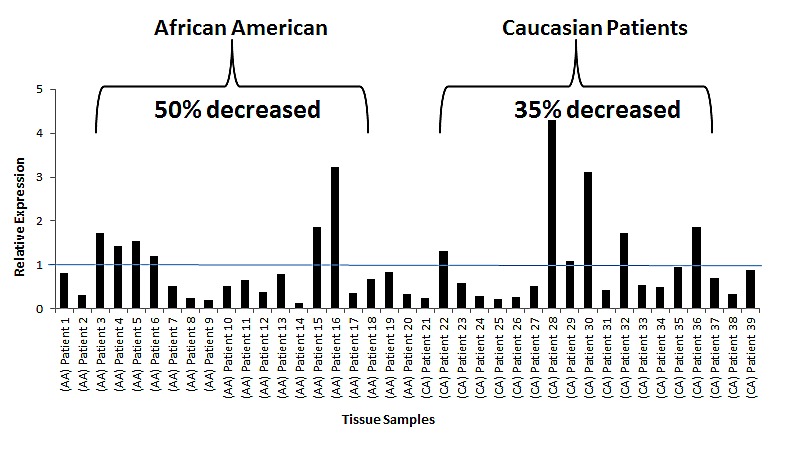
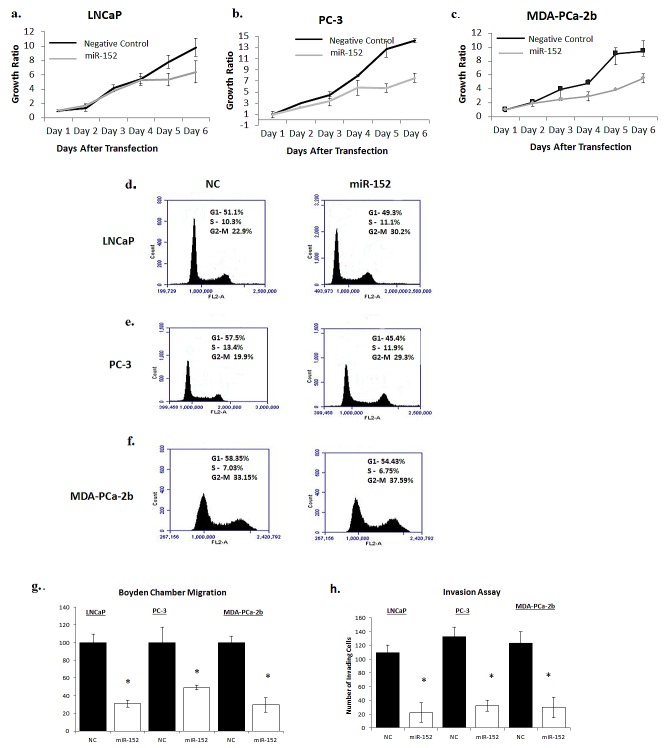
miRNA expression in African American compared to Caucasian PCa patients has not been widely explored. Herein, we probed the miRNA expression profile of novel AA and CA derived prostate cancer cell lines. We found a unique miRNA signature associated with AA cell lines, independent of tumor status. Evaluation of the most differentially expressed miRNAs showed that miR-132, miR-367b, miR-410, and miR-152 were decreased in more aggressive cells, and this was reversed after treatment of the cells with 5-aza-2'-deoxycytidine. Sequencing of the miR-152 promoter confirmed that it was highly methylated. Ectopic expression of miR-152 resulted in decreased growth, migration, and invasion. Informatics analysis of a large patient cohort showed that decreased miR-152 expression correlated with increased metastasis and a decrease in biochemical recurrence free survival. Analysis of 39 prostate cancer tissues with matched controls (20 AA and 19 CA), showed that 50% of AA patients had statistically significant lower miR-152 expression compared to only 35% of CA patients. Ectopic expression of miR-152 in LNCaP, PC-3, and MDA-PCa-2b cells down-regulated DNA (cytosine-5)-methyltransferase 1 (DNMT1) through direct binding in the DNMT1 3'UTR. There appeared to be a reciprocal regulatory relationship of miR-152/DNMT1 expression, as cells treated with siRNA DNMT1 caused miR-152 to be re-expressed in all cell lines. In summary, these results demonstrate that epigenetic regulation of miR-152/DNMT1 may play an important role in multiple events that contribute to the aggressiveness of PCa tumors, with an emphasis on AA PCa patients .
与高加索裔前列腺癌患者相比,非裔美国前列腺癌患者中的miRNA表达尚未得到广泛研究。在此,我们探究了源自非裔美国人和高加索裔的新型前列腺癌细胞系的miRNA表达谱。我们发现了一种与非裔美国人细胞系相关的独特miRNA特征,与肿瘤状态无关。对差异表达最显著的miRNA的评估表明,在侵袭性更强的细胞中,miR-132、miR-367b、miR-410和miR-152表达降低,在用5-氮杂-2'-脱氧胞苷处理细胞后这种情况发生了逆转。miR-152启动子测序证实其高度甲基化。miR-152的异位表达导致细胞生长、迁移和侵袭能力下降。对一大群患者的信息学分析表明,miR-152表达降低与转移增加及无生化复发生存期缩短相关。对39例前列腺癌组织及其匹配对照(20例非裔美国人组织和19例高加索裔组织)的分析表明,50%的非裔美国患者的miR-152表达在统计学上显著低于仅35%的高加索裔患者。在LNCaP、PC-3和MDA-PCa-2b细胞中miR-152的异位表达通过直接结合DNMT1 3'UTR下调了DNA(胞嘧啶-5)-甲基转移酶1(DNMT1)。miR-152/DNMT1表达似乎存在相互调节关系,因为用siRNA DNMT1处理的细胞导致miR-152在所有细胞系中重新表达。总之,这些结果表明miR-152/DNMT1的表观遗传调控可能在导致前列腺癌肿瘤侵袭性的多个事件中起重要作用,尤其在非裔美国前列腺癌患者中。