Wang Bi-Dar, Ceniccola Kristin, Yang Qi, Andrawis Ramez, Patel Vyomesh, Ji Youngmi, Rhim Johng, Olender Jacqueline, Popratiloff Anastas, Latham Patricia, Lai Yinglei, Patierno Steven R, Lee Norman H
Department of Pharmacology and Physiology, The George Washington University School of Medicine and Health Sciences, Washington, District of Columbia.
Medical Faculty Associates, The George Washington University School of Medicine and Health Sciences, Washington, District of Columbia.
Clin Cancer Res. 2015 Nov 1;21(21):4970-84. doi: 10.1158/1078-0432.CCR-14-1566. Epub 2015 Jun 18.
African Americans (AA) exhibit higher rates of prostate cancer incidence and mortality compared with European American (EA) men. In addition to socioeconomic influences, biologic factors are believed to play a critical role in prostate cancer disparities. We investigated whether population-specific and -enriched miRNA-mRNA interactions might contribute to prostate cancer disparities.
Integrative genomics was used, combining miRNA and mRNA profiling, miRNA target prediction, pathway analysis, and functional validation, to map miRNA-mRNA interactions associated with prostate cancer disparities.
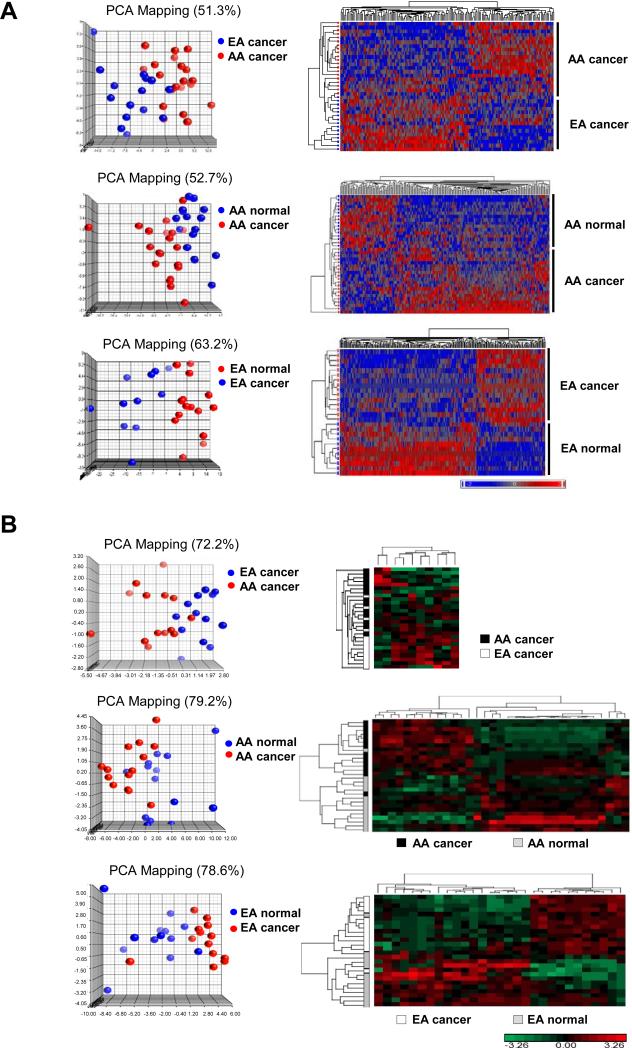
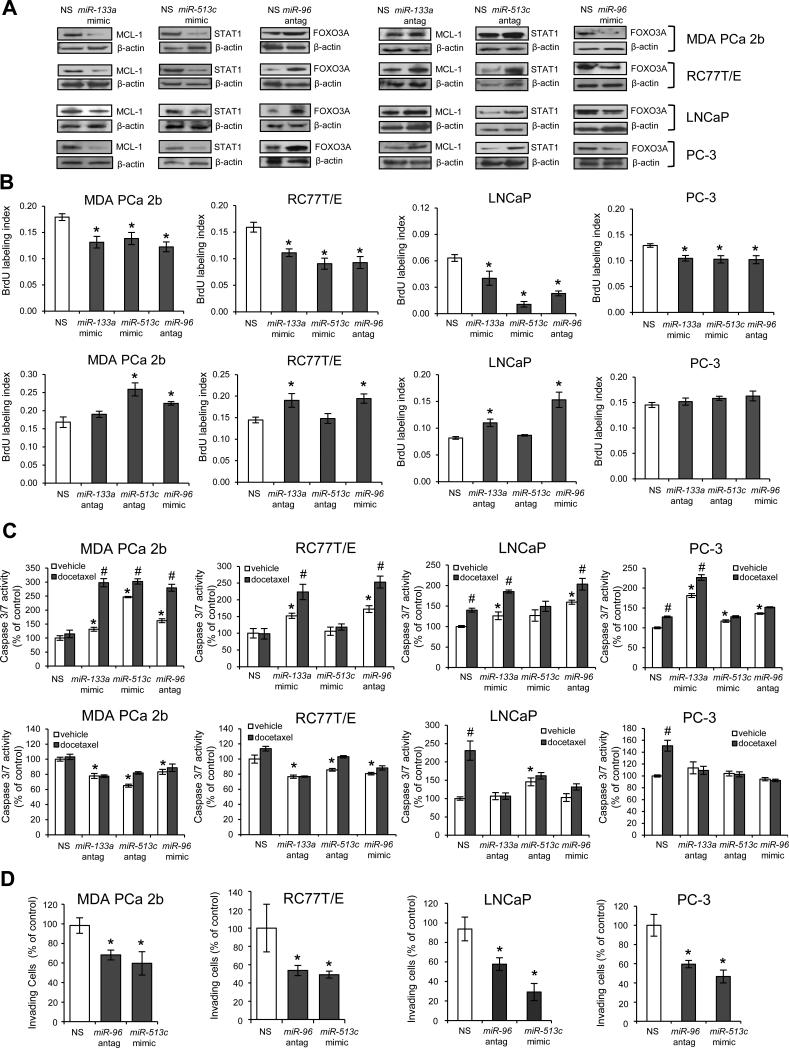
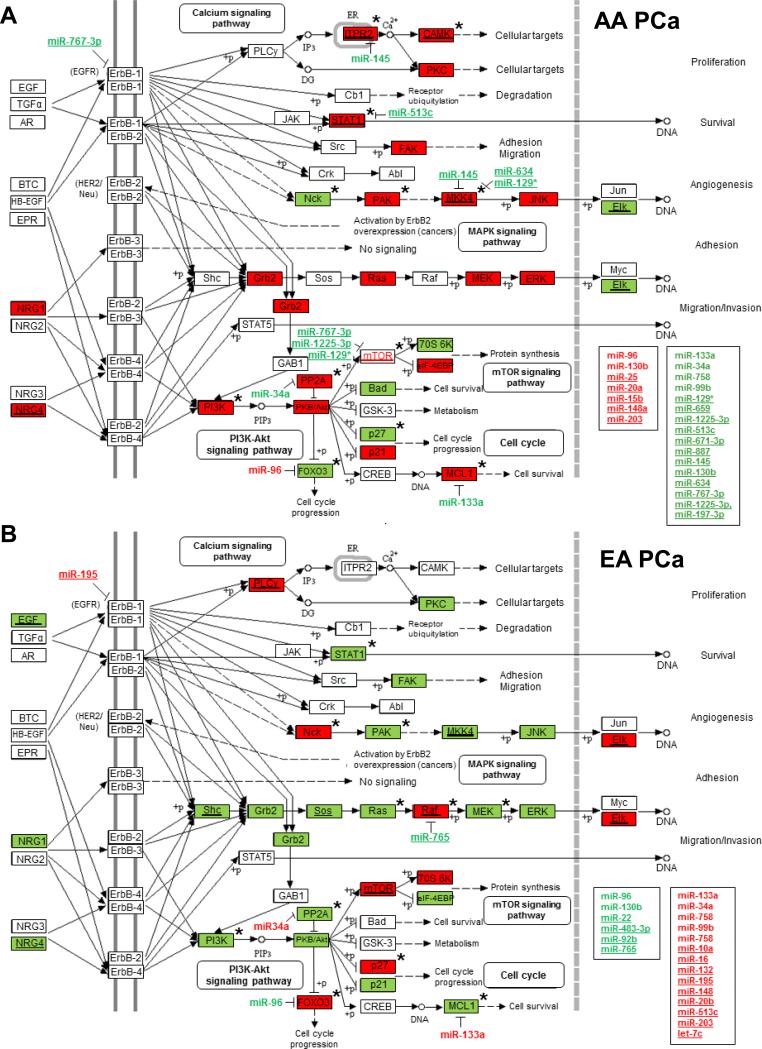
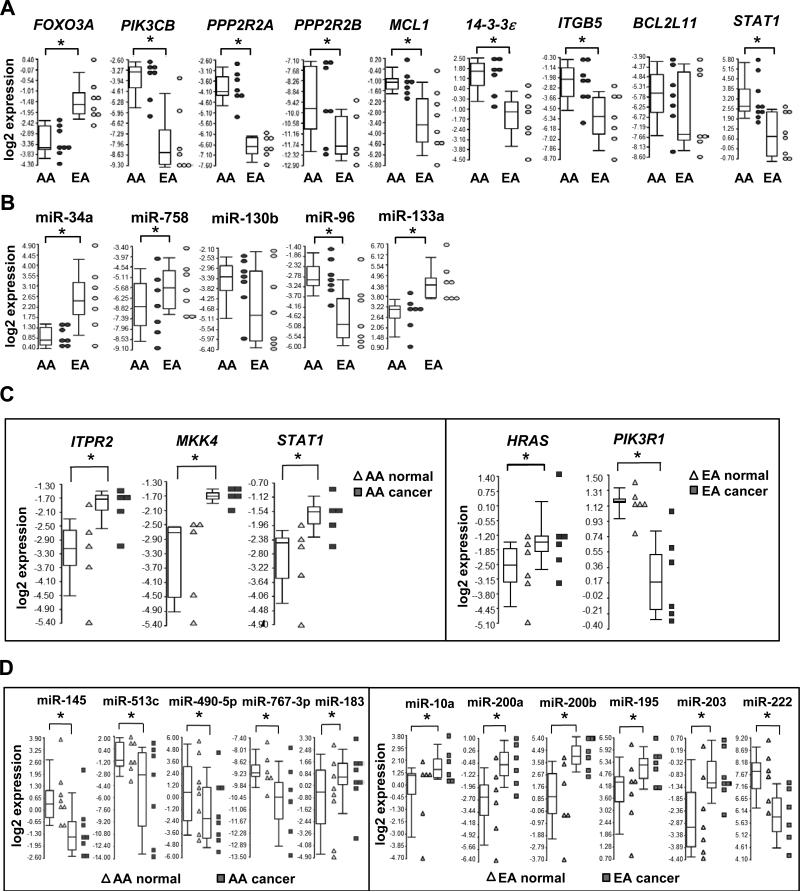
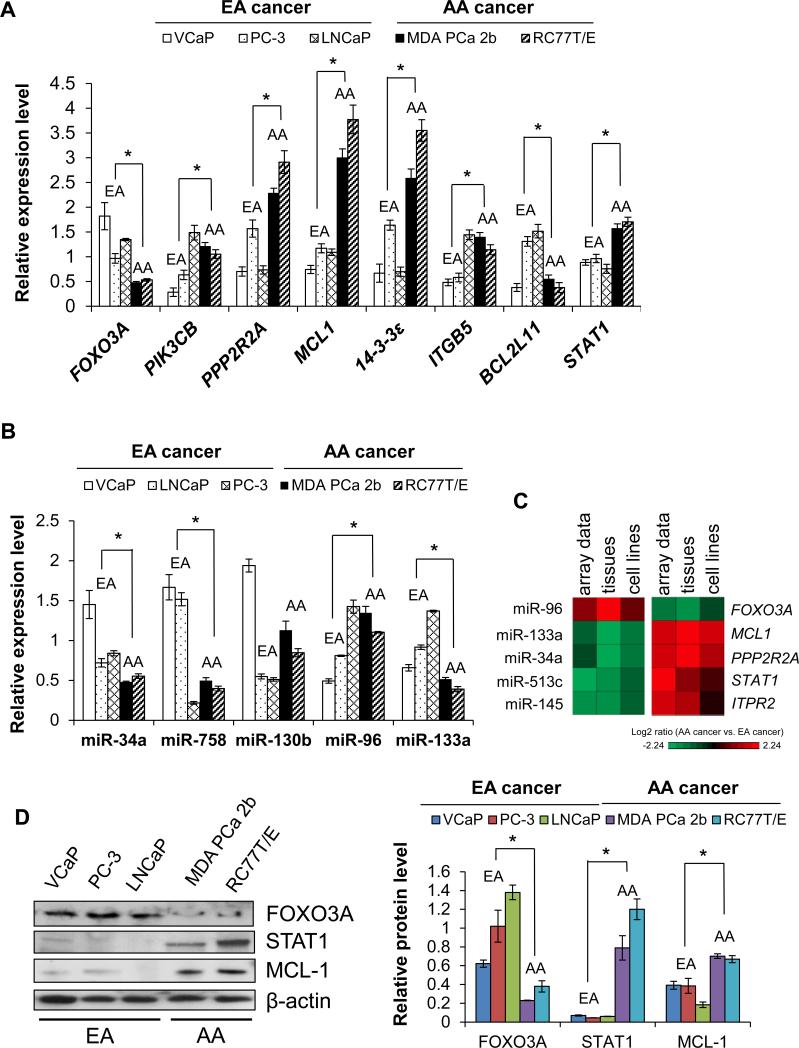
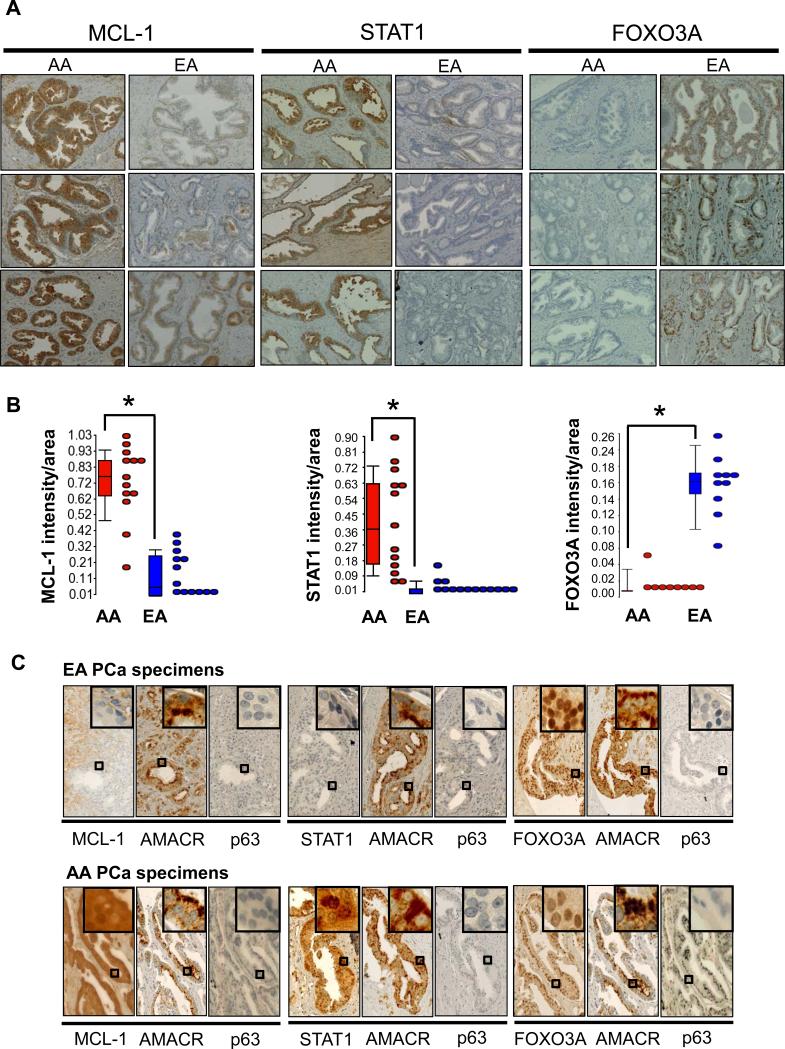
We identified 22 AA-specific and 18 EA-specific miRNAs in prostate cancer versus patient-matched normal prostate, and 10 "AA-enriched/-depleted" miRNAs in AA prostate cancer versus EA prostate cancer comparisons. Many of these population-specific/-enriched miRNAs could be paired with target mRNAs that exhibited an inverse pattern of differential expression. Pathway analysis revealed EGFR (or ERBB) signaling as a critical pathway significantly regulated by AA-specific/-enriched mRNAs and miRNA-mRNA pairings. Novel miRNA-mRNA pairings were validated by qRT-PCR, Western blot, and/or IHC analyses in prostate cancer specimens. Loss/gain of function assays performed in population-specific prostate cancer cell lines confirmed miR-133a/MCL1, miR-513c/STAT1, miR-96/FOXO3A, miR-145/ITPR2, and miR-34a/PPP2R2A as critical miRNA-mRNA pairings driving oncogenesis. Manipulating the balance of these pairings resulted in decreased proliferation and invasion, and enhanced sensitization to docetaxel-induced cytotoxicity in AA prostate cancer cells.
Our data suggest that AA-specific/-enriched miRNA-mRNA pairings may play a critical role in the activation of oncogenic pathways in AA prostate cancer. Our findings also suggest that miR-133a/MCL1, miR-513c/STAT1, and miR-96/FOXO3A may have clinical significance in the development of novel strategies for treating aggressive prostate cancer.
与欧美裔男性相比,非裔美国人(AA)的前列腺癌发病率和死亡率更高。除社会经济影响外,生物学因素被认为在前列腺癌差异中起关键作用。我们研究了特定人群和富集的miRNA-mRNA相互作用是否可能导致前列腺癌差异。
采用整合基因组学,结合miRNA和mRNA谱分析、miRNA靶标预测、通路分析和功能验证,以绘制与前列腺癌差异相关的miRNA-mRNA相互作用图谱。
在前列腺癌与患者匹配的正常前列腺中,我们鉴定出22个AA特异性和18个欧美裔(EA)特异性miRNA,在AA前列腺癌与EA前列腺癌比较中鉴定出10个“AA富集/耗尽”miRNA。这些特定人群/富集的miRNA中有许多可与表现出差异表达相反模式的靶标mRNA配对。通路分析显示表皮生长因子受体(EGFR,或ERBB)信号通路是由AA特异性/富集的mRNA和miRNA-mRNA配对显著调控的关键通路。通过qRT-PCR、蛋白质印迹和/或免疫组化分析在前列腺癌标本中验证了新的miRNA-mRNA配对。在特定人群的前列腺癌细胞系中进行的功能丧失/获得实验证实miR-133a/MCL1、miR-513c/STAT1、miR-96/FOXO3A、miR-145/ITPR2和miR-34a/PPP2R2A是驱动肿瘤发生的关键miRNA-mRNA配对。调节这些配对的平衡导致AA前列腺癌细胞增殖和侵袭减少,并增强对多西他赛诱导的细胞毒性的敏感性。
我们的数据表明,AA特异性/富集的miRNA-mRNA配对可能在AA前列腺癌致癌通路的激活中起关键作用。我们的研究结果还表明,miR-133a/MCL1、miR-513c/STAT1和miR-96/FOXO3A在开发治疗侵袭性前列腺癌的新策略中可能具有临床意义。