Tsimokha Anna S, Kulichkova Valentina A, Karpova Elena V, Zaykova Julia J, Aksenov Nikolai D, Vasilishina Anastasia A, Kropotov Andrei V, Antonov Alexey, Barlev Nikolai A
Institute of Cytology, Russian Academy of Sciences, 194064 St. Petersburg, Russia.
Institute of Cytology, Russian Academy of Sciences, 194064 St. Petersburg, Russia; Department of Biochemistry, University of Leicester, Leicester, LE1 9HN; Molecular Pharmacology laboratory, Saint-Petersburg Institute of Technology, Saint-Petersburg 190013, Russia.
Oncotarget. 2014 Jun 15;5(11):3555-67. doi: 10.18632/oncotarget.1957.
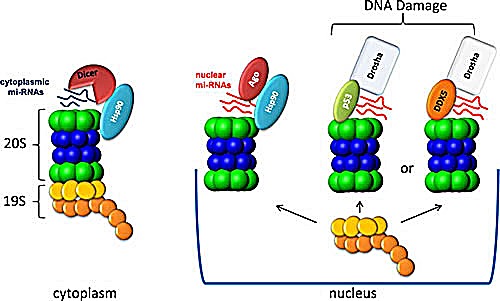
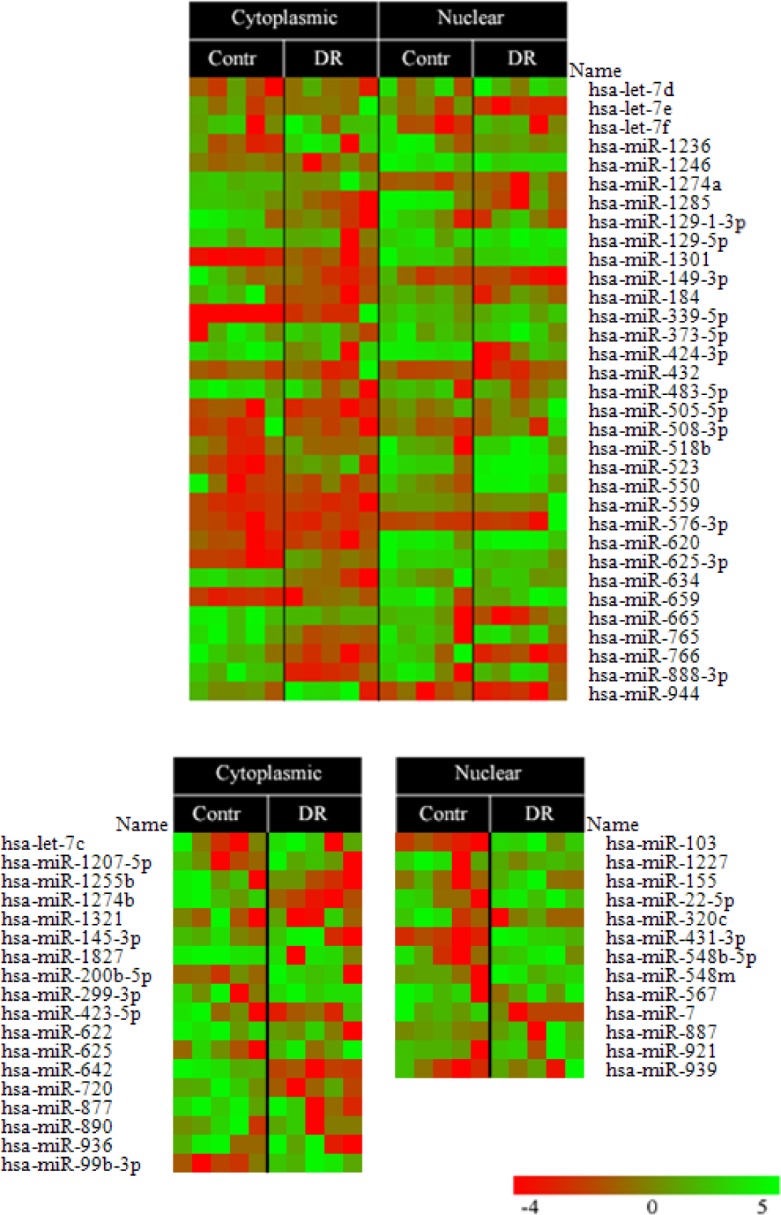
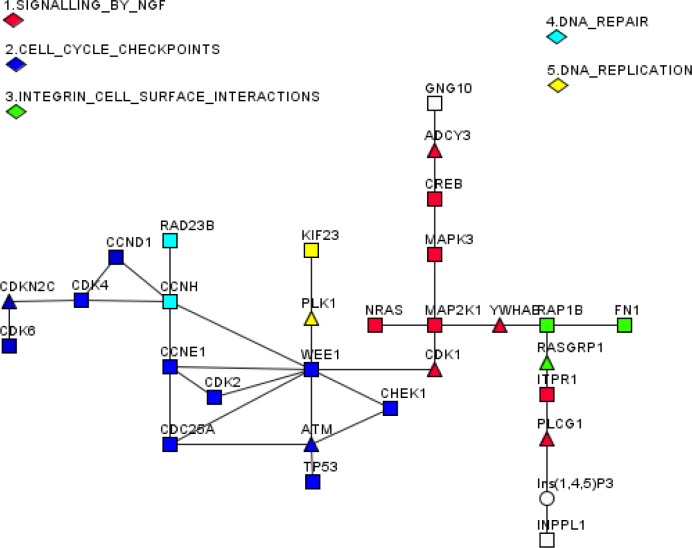
26S proteasomes are known as major non-lysosomal cellular machines for coordinated and specific destruction of ubiquitinylated proteins. The proteolytic activities of proteasomes are controlled by various post-translational modifications in response to environmental cues, including DNA damage. Besides proteolysis, proteasomes also associate with RNA hydrolysis and splicing. Here, we extend the functional diversity of proteasomes by showing that they also dynamically associate with microRNAs (miRNAs) both in the nucleus and cytoplasm of cells. Moreover, DNA damage induced by an anti-cancer drug, doxorubicin, alters the repertoire of proteasome-associated miRNAs, enriching the population of miRNAs that target cell cycle checkpoint regulators and DNA repair proteins. Collectively, these data uncover yet another potential mode of action for proteasomes in the cell via their dynamic association with microRNAs.
26S蛋白酶体是已知的主要非溶酶体细胞机器,用于协调和特异性降解泛素化蛋白。蛋白酶体的蛋白水解活性受各种翻译后修饰的控制,以响应包括DNA损伤在内的环境信号。除了蛋白水解作用外,蛋白酶体还与RNA水解和剪接相关。在这里,我们通过表明蛋白酶体在细胞核和细胞质中均与微小RNA(miRNA)动态结合,扩展了蛋白酶体的功能多样性。此外,抗癌药物阿霉素诱导的DNA损伤改变了蛋白酶体相关miRNA的种类,增加了靶向细胞周期检查点调节因子和DNA修复蛋白的miRNA数量。总体而言,这些数据揭示了蛋白酶体通过与微小RNA的动态结合在细胞中的另一种潜在作用方式。