Shuvalov Oleg, Kizenko Alyona, Petukhov Alexey, Aksenov Nickolai, Fedorova Olga, Vorobev Mikhail, Daks Alexandra, Barlev Nickolai
Institute of cytology RAS, St-Petersburg, Russia.
Almazov National Medical Research Centre, St-Petersburg, Russia.
Cell Death Discov. 2020 Oct 22;6:108. doi: 10.1038/s41420-020-00336-5. eCollection 2020.
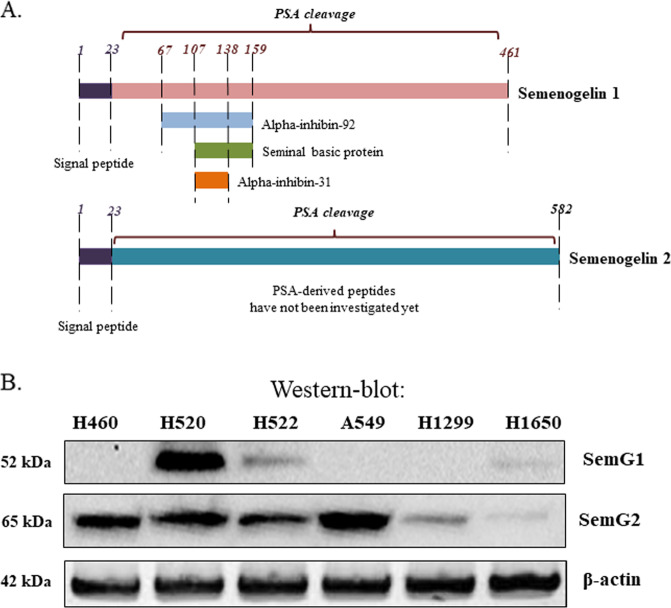
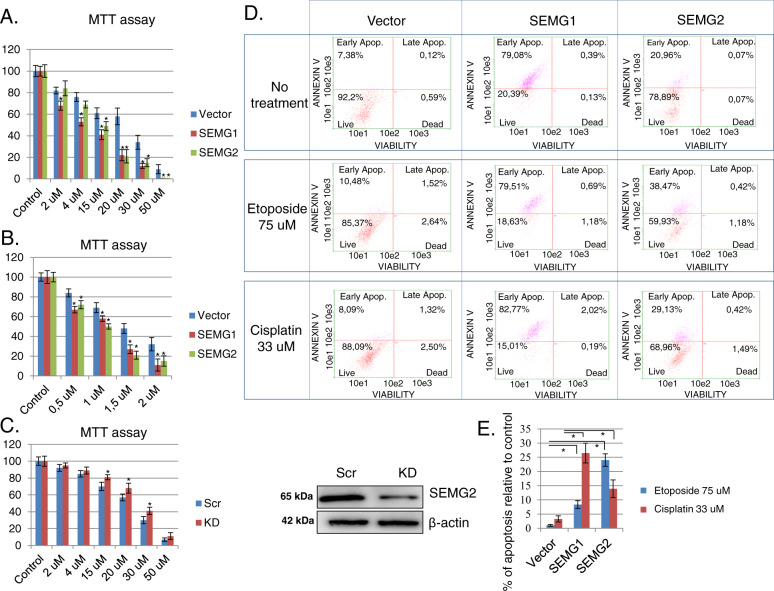
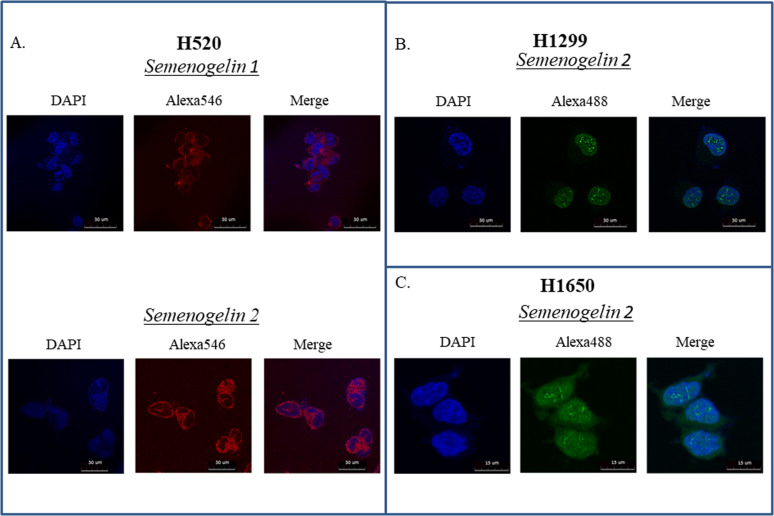
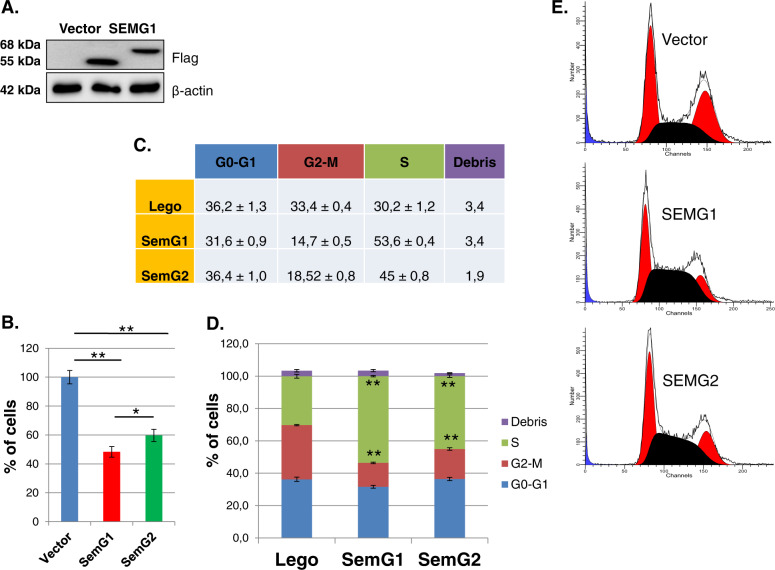
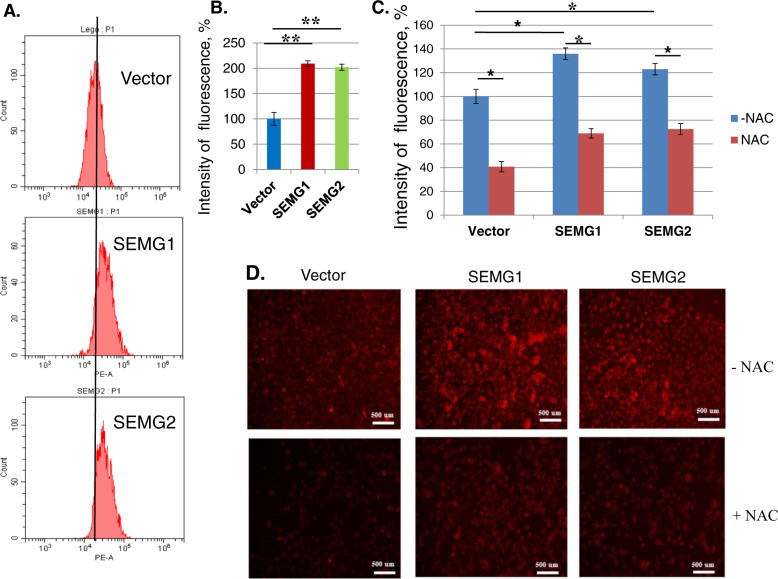
Сancer-testis antigens (CTAs) comprise proteins which are aberrantly expressed in various malignancies, yet under normal situation are restricted to only germ cells. Semenogelins 1 and 2 (SEMG1 and 2, respectively) belong to the family of non-X-linked (autosomal) cancer-testis antigens. They are the major protein ingredients of human semen and share 78% of similarity between them on the gene level. SEMG1/2 gene products regulate the motility and fertility of sperm, as well as provide sperm the antibacterial defense. Besides, SEMG1 and SEMG2 were detected in various malignancies including small cell lung cancer (SCLC). However, the biological role of both SEMG1 and 2 proteins in tumorigenesis has not been fully understood. We demonstrate here that SEMG1 and SEMG2 (SEMGs) exhibit different patterns of expression and sub-cellular localization in non-small cell lung cancer (NSCLC) cell lines. To elucidate the biological properties of SEMGs in NSCLC, we established H1299 cell lines that were stably transduced with either SEMGs-overexpressing or knockdown vectors, respectively. Using fluorescence-based dihydroethidium (DHE) assay we showed that both SEMGs augmented the production of reactive oxygen species (ROS) up to 2 times. Moreover, SEMGs (especially SEMG1) strongly increased the number of Annexin V-positive apoptotic cells manifesting an increased sensitivity to genotoxic drugs including doxorubicin, etoposide, and cisplatin. Taken our results together, SEMGs may arguably play a positive role in tumorigenesis by sensitizing NSCLCs to genotoxic therapy.
癌-睾丸抗原(CTAs)由在各种恶性肿瘤中异常表达但在正常情况下仅局限于生殖细胞的蛋白质组成。精液凝胶蛋白1和2(分别为SEMG1和SEMG2)属于非X连锁(常染色体)癌-睾丸抗原家族。它们是人类精液的主要蛋白质成分,在基因水平上彼此具有78%的相似性。SEMG1/2基因产物调节精子的运动性和生育能力,并为精子提供抗菌防御。此外,在包括小细胞肺癌(SCLC)在内的各种恶性肿瘤中检测到了SEMG1和SEMG2。然而,SEMG1和2蛋白在肿瘤发生中的生物学作用尚未完全了解。我们在此证明,SEMG1和SEMG2(SEMGs)在非小细胞肺癌(NSCLC)细胞系中表现出不同的表达模式和亚细胞定位。为了阐明SEMGs在NSCLC中的生物学特性,我们分别建立了稳定转导SEMGs过表达或敲低载体的H1299细胞系。使用基于荧光的二氢乙锭(DHE)测定法,我们表明两种SEMGs都将活性氧(ROS)的产生增加了2倍。此外,SEMGs(尤其是SEMG1)强烈增加了膜联蛋白V阳性凋亡细胞的数量,表明对包括阿霉素、依托泊苷和顺铂在内的基因毒性药物的敏感性增加。综合我们的结果,SEMGs可能通过使NSCLCs对基因毒性治疗敏感而在肿瘤发生中发挥积极作用。