Keshavmurthy Shashank, Fontana Silvia, Mezaki Takuma, González Laura del Caño, Chen Chaolun Allen
1] Biodiversity Research Center, Academia Sinica, Taipei, 11529, Taiwan [2].
1] Biodiversity Research Center, Academia Sinica, Taipei, 11529, Taiwan [2] Taiwan International Graduate Program - Biodiversity, Academia Sinica, Taipei, 11529, Taiwan [3] National Taiwan Normal University, Taipei, 106, Taiwan [4].
Sci Rep. 2014 Jul 9;4:5633. doi: 10.1038/srep05633.
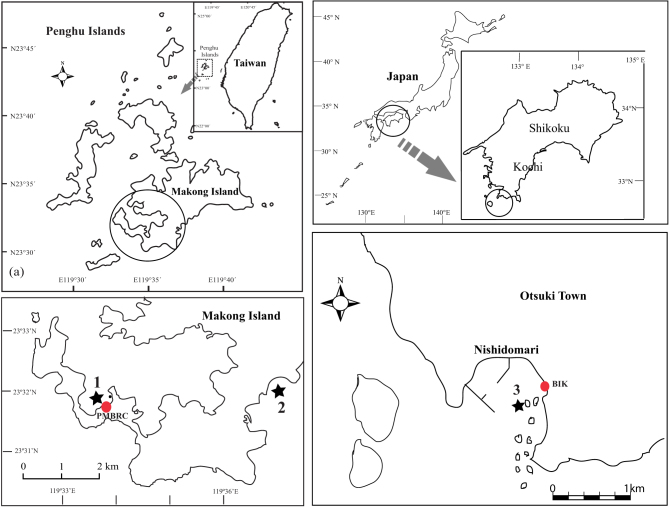
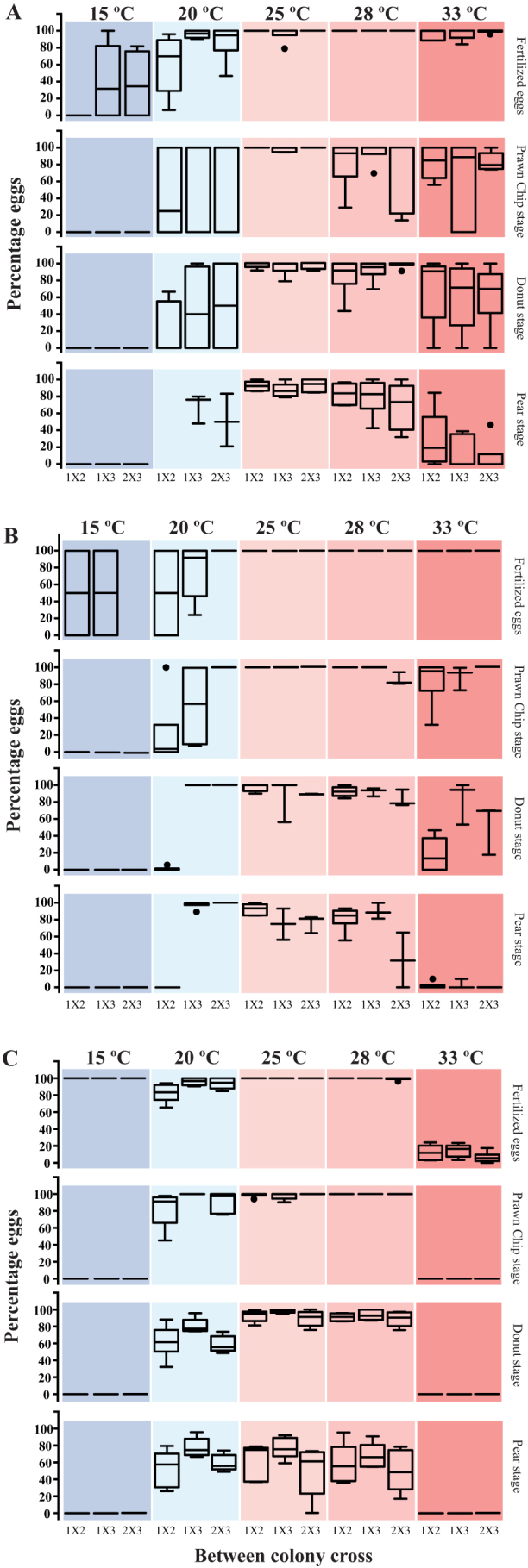
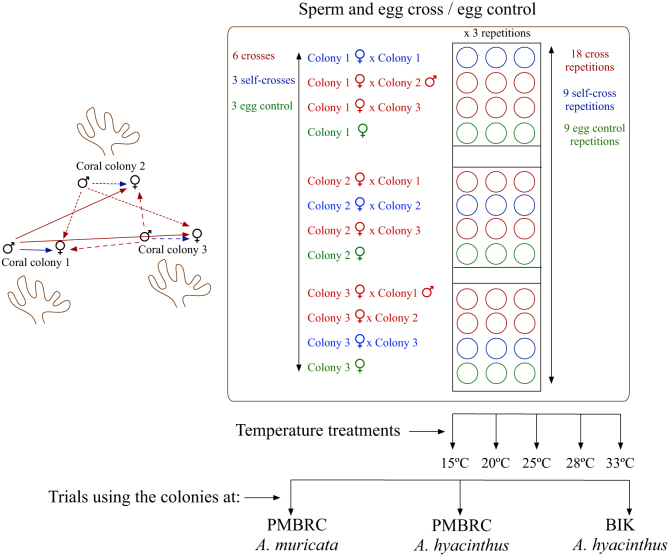
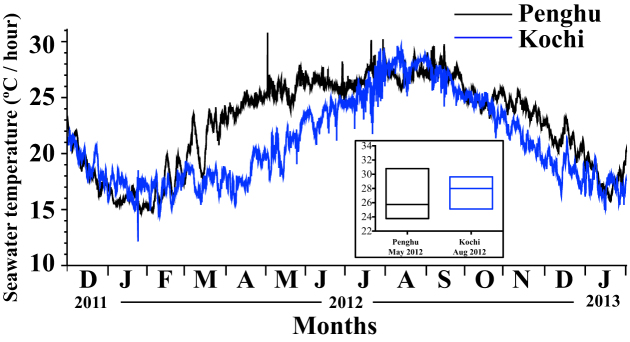
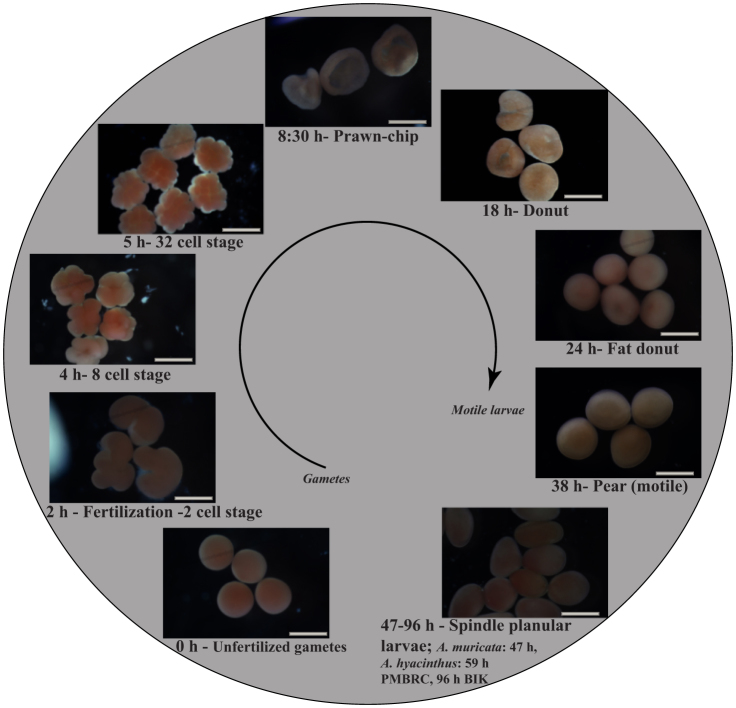
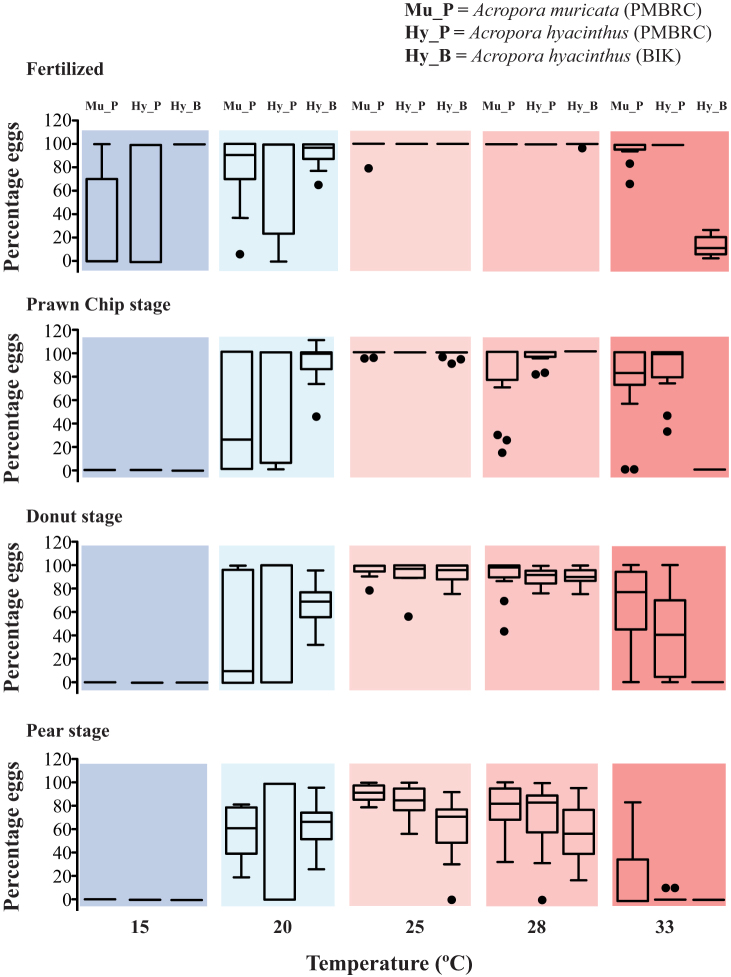
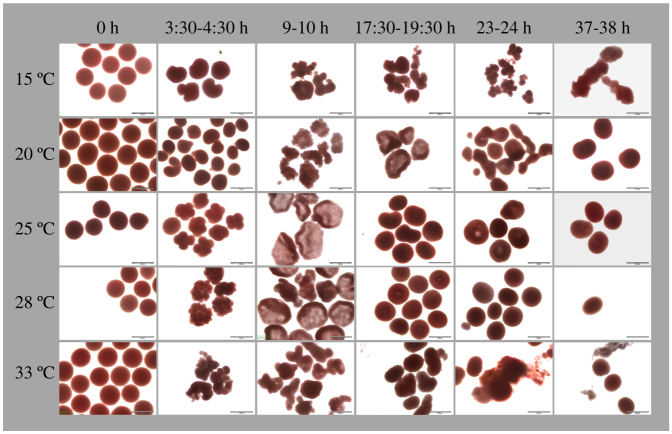
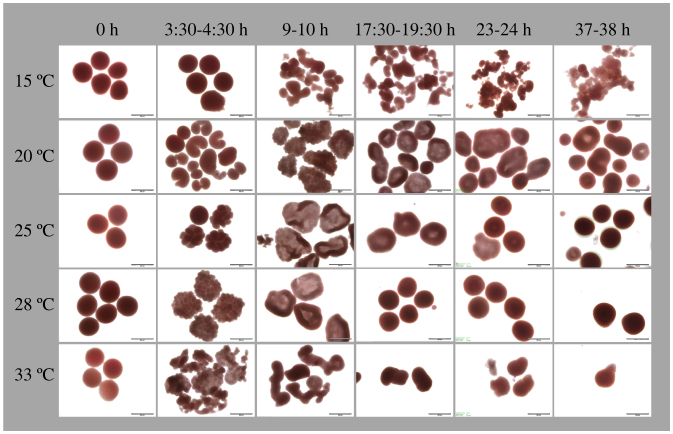
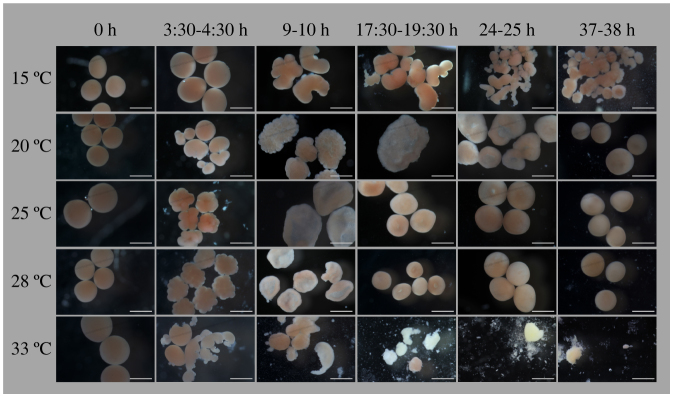
Marine invertebrates are particularly vulnerable to climatic anomalies in early life history stages because of the time spent in the water column. Studies have focused on the effect of seawater temperature on fertilization, development, and larval stages in corals; however, none of them show comparative results along an environmental gradient. In this study, we show that temperatures in the range of 15-33 °C have strong effects on fertilization rates and embryonic stages of two coral species, Acropora muricata in the subtropical environment and Acropora hyacinthus in subtropical and temperate environments. Deformations after the first cleavage stages were observed at low (15 °C) and high (33 °C) temperatures. Development was delayed by 6-7 h in the slightly non-optimal temperature of 20 °C. We found significant differences in fertilization rates and responses of embryos from different latitudes, with temperate corals being more sensitive to extremely hot temperatures and vice versa. We hypothesize that the coral development is restricted to a narrow temperature range and deviation outside this window could inhibit a species' continuance and ecological success. Thus, it would have significant negative effects on adult populations and communities, playing a role in future of coral reef survival.
海洋无脊椎动物在生命史早期阶段特别容易受到气候异常的影响,因为它们在水体中度过一定时间。研究主要集中在海水温度对珊瑚受精、发育和幼虫阶段的影响;然而,这些研究均未展示沿环境梯度的对比结果。在本研究中,我们发现15至33摄氏度的温度范围对两种珊瑚的受精率和胚胎阶段有强烈影响,这两种珊瑚分别是亚热带环境中的刺枝鹿角珊瑚以及亚热带和温带环境中的风信子鹿角珊瑚。在低温(15摄氏度)和高温(33摄氏度)下观察到第一次卵裂阶段后的变形情况。在略高于最适温度的20摄氏度下,发育延迟了6至7小时。我们发现不同纬度的珊瑚在受精率和胚胎反应方面存在显著差异,温带珊瑚对极热温度更敏感,反之亦然。我们推测,珊瑚发育局限于狭窄的温度范围,超出此范围可能会抑制物种的延续和生态成功。因此,这将对成年种群和群落产生重大负面影响,关乎未来珊瑚礁的生存。