Biodiversity Research Center, Academia Sinica, Nangang, Taipei, Taiwan.
PLoS One. 2013;8(1):e54330. doi: 10.1371/journal.pone.0054330. Epub 2013 Jan 14.
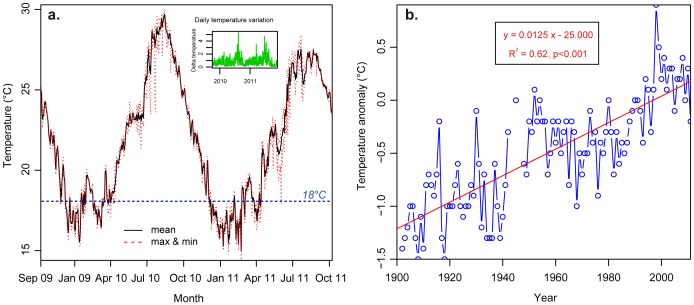
Seawater temperature is the main factor restricting shallow-water zooxanthellate coral reefs to low latitudes. As temperatures increase, coral species and perhaps reefs may move into higher-latitude waters, increasing the chances of coral reef ecosystems surviving despite global warming. However, there is a growing need to understand the structure of these high-latitude coral communities in order to analyze their future dynamics and to detect any potential changes.
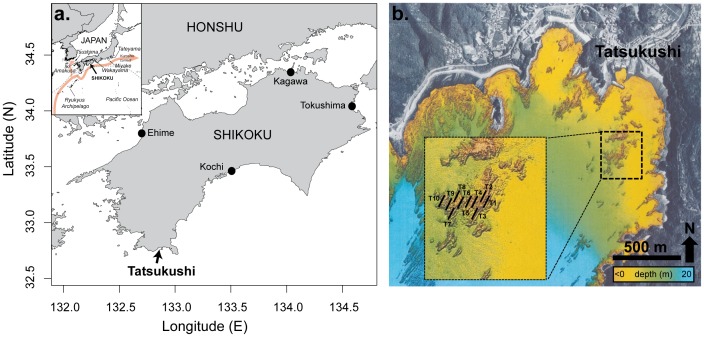
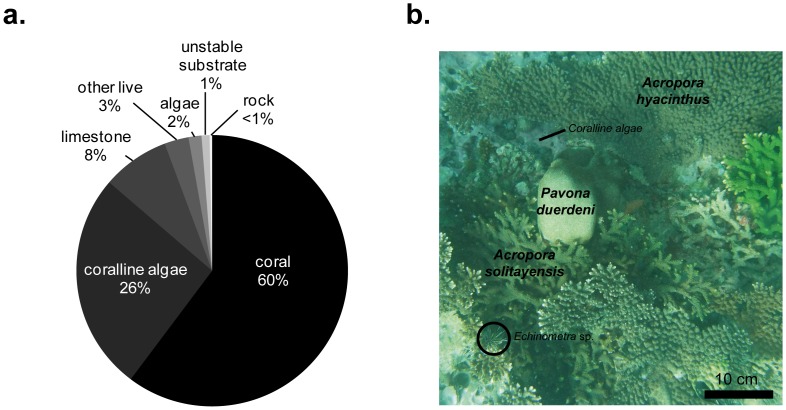
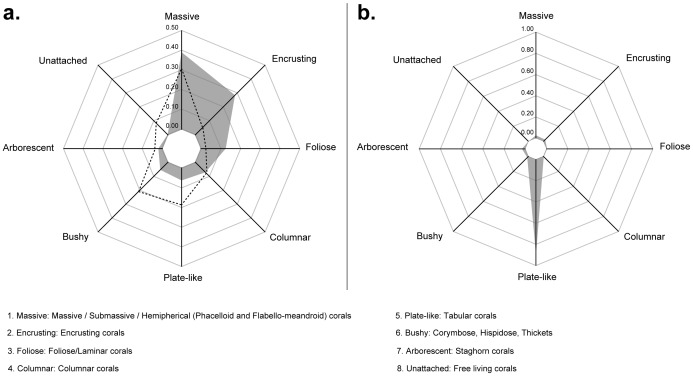
METHODOLOGY/PRINCIPAL FINDINGS: The high-latitude (32.75°N) community surveyed was located at Tatsukushi, Shikoku Island, Japan. Coral cover was 60±2% and was composed of 73 scleractinian species partitioned into 7 functional groups. Although only 6% of species belonged to the 'plate-like' functional group, it was the major contributor to species coverage. This was explained by the dominance of plate-like species such as Acropora hyacinthus and A. solitaryensis. Comparison with historical data suggests a relatively recent colonization/development of A. hyacinthus in this region and a potential increase in coral diversity over the last century. Low coverage of macroalgae (2% of the benthic cover) contrasted with the low abundance of herbivorous fishes, but may be reasonably explained by the high density of sea urchins (12.9±3.3 individuals m⁻²).
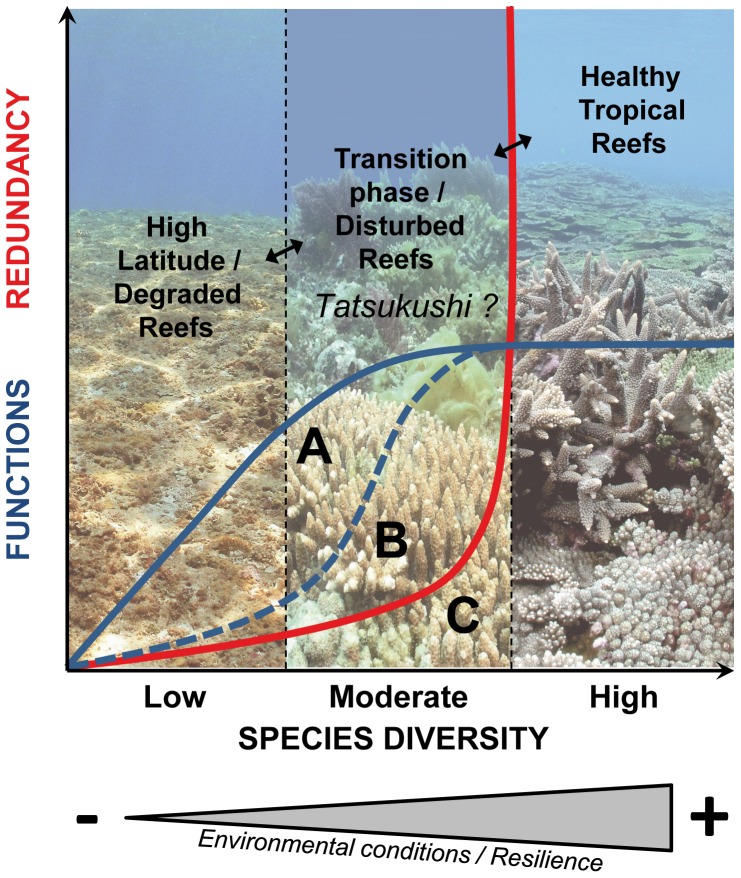
CONCLUSIONS/SIGNIFICANCE: The structure and composition of this benthic community are relatively remarkable for a site where winter temperature can durably fall below the accepted limit for coral reef development. Despite limited functionalities and functional redundancy, the current benthic structure might provide a base upon which a reef could eventually develop, as characterized by opportunistic and pioneer frame-building species. In addition to increasing seawater temperatures, on-going management actions and sea urchin density might also explain the observed state of this community. A focus on such 'marginal' communities should be a priority, as they can provide important insights into how tropical corals might cope with environmental changes.
海水温度是限制浅水共生珊瑚礁分布在低纬度地区的主要因素。随着温度的升高,珊瑚物种可能会向高纬度水域迁移,从而增加珊瑚礁生态系统在全球变暖背景下生存的机会。然而,人们越来越需要了解这些高纬度珊瑚群落的结构,以便分析它们的未来动态,并检测任何潜在的变化。
方法/主要发现:本研究调查的高纬度(32.75°N)群落位于日本四国岛的 Tatsukushi。珊瑚覆盖率为 60±2%,由 73 种石珊瑚物种组成,分为 7 个功能组。尽管只有 6%的物种属于“板状”功能组,但它是物种覆盖率的主要贡献者。这可以解释为板状物种(如 Acropora hyacinthus 和 A. solitaryensis)的优势。与历史数据的比较表明,A. hyacinthus 在该地区相对较新的定殖/发展,以及上个世纪珊瑚多样性的潜在增加。低覆盖率的大型藻类(底栖生物覆盖率的 2%)与草食性鱼类的低丰度形成鲜明对比,但这可能是由于海胆的高密度(12.9±3.3 个/m²)而合理解释。
结论/意义:对于一个冬季温度可持续低于珊瑚礁发育可接受极限的地点,这个底栖群落的结构和组成相对显著。尽管功能有限且功能冗余,但当前的底栖结构可能为一个最终可能发展的珊瑚礁提供基础,这是由机会主义和先锋框架构建物种所决定的。除了不断上升的海水温度外,正在进行的管理行动和海胆密度也可能解释了该群落的现状。关注这些“边缘”群落应该是当务之急,因为它们可以为热带珊瑚如何应对环境变化提供重要的见解。