Afify Ali, Galizia C Giovanni
Neurobiology, University of Konstanz, 78457 Konstanz, Germany.
Parasit Vectors. 2014 Jul 9;7:315. doi: 10.1186/1756-3305-7-315.
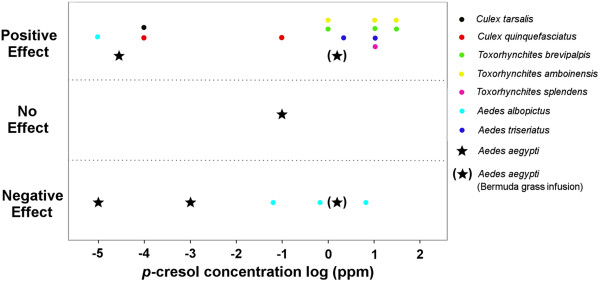
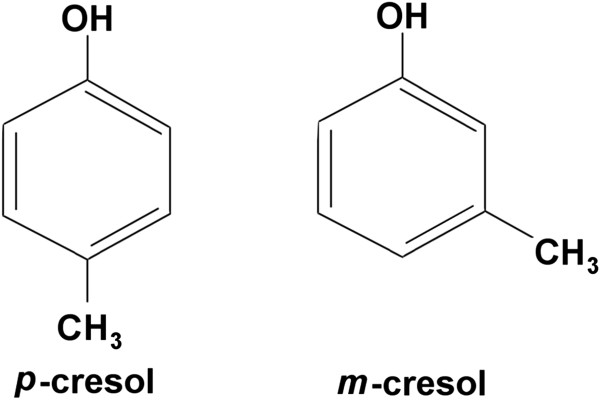
p-cresol (4-methylphenol) and its isomer m-cresol (3-methylphenol) have been shown to activate the same sensilla in Aedes aegypti (Linnaeus) mosquitoes. Whereas p-cresol has been suggested to play a role in oviposition site choice, the behavioral significance of m-cresol is unknown.
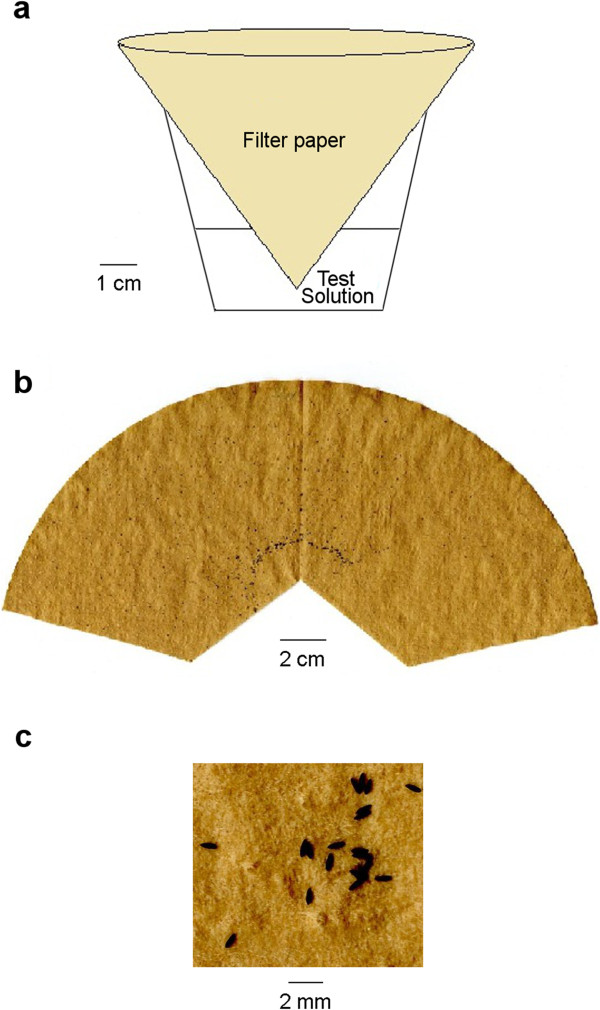
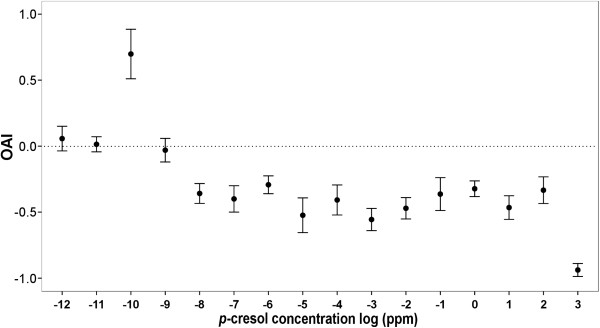
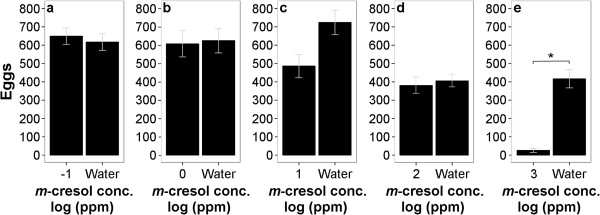
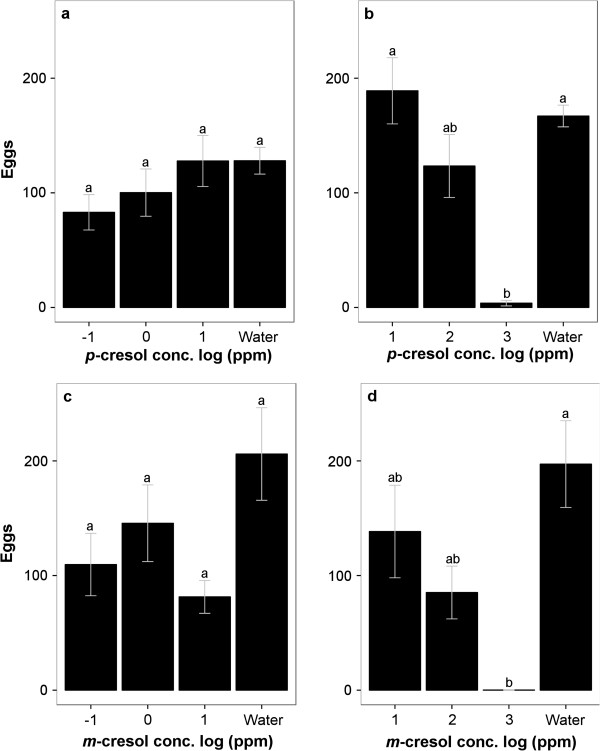
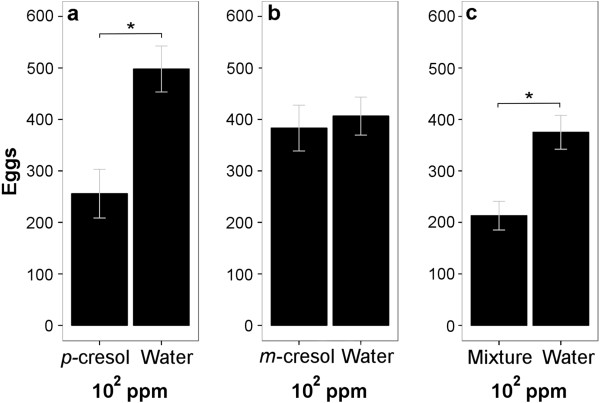
Here, we assayed the oviposition behavior of Aedes aegypti towards p-cresol and m-cresol using cage assay. Specifically we tested different concentrations of p-cresol (10-12-103 ppm) and m-cresol (10-1-103 ppm), the 1:1 mixture of the two compounds at 102 ppm, and the two individual compounds at 102 ppm together in the same cage.
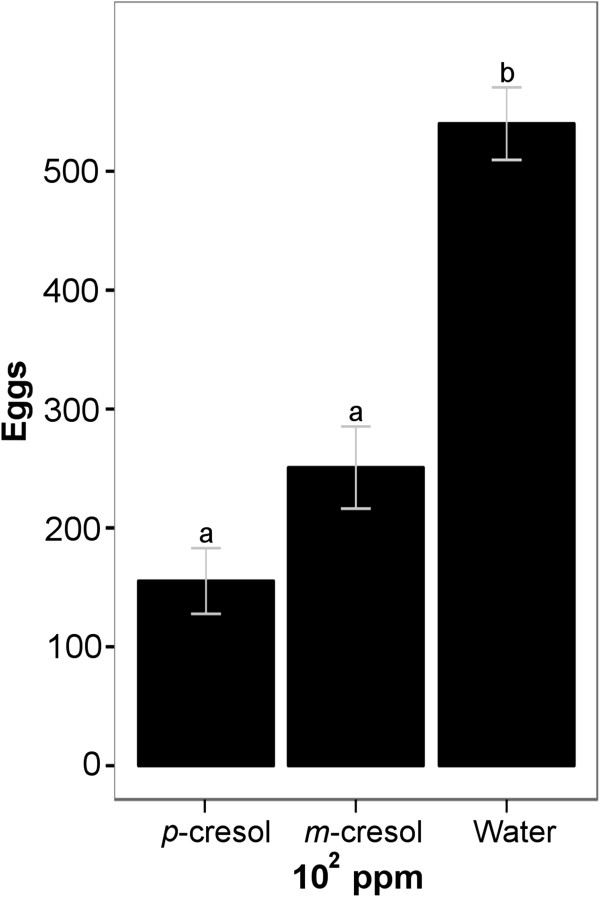
We show that (1) p-cresol is a stimulant at a low concentration and deterrent over a broad range of higher concentrations (10-8-103 ppm), while m-cresol was behaviorally ineffective, except for a deterrent effect at the highest concentration (103 ppm) (2) in concentration choice tests (different concentrations tested against each other), both compounds were deterrent only at the highest concentration (3) a 1:1 mixture of both compounds exhibited a deterrent effect on oviposition (4) when presented in separate cups but together in the same cage, p-cresol and m-cresol (102 ppm) both received significantly less eggs than water alone.
Our results suggest that p-cresol is a strong oviposition deterrent with a stimulant effect at only a very low concentration, while m-cresol is not a deterrent per se. However, in the presence of p-cresol in the vicinity, m-cresol acts as a deterrent. This finding adds a new twist to the possible interactions of different odors in oviposition site choice: not only the source itself, but nearby odors also influence a mosquito's choice.
对甲酚(4 - 甲基苯酚)及其异构体间甲酚(3 - 甲基苯酚)已被证明能激活埃及伊蚊(林奈)蚊子的相同感觉器。虽然有人提出对甲酚在产卵地点选择中起作用,但间甲酚的行为意义尚不清楚。
在此,我们使用笼子试验测定了埃及伊蚊对 对甲酚和间甲酚的产卵行为。具体而言,我们测试了不同浓度的对甲酚(10^-12 - 10^3 ppm)和间甲酚(10^-1 - 10^3 ppm)、两种化合物以 10^2 ppm 混合的 1:1 混合物,以及两种化合物在 10^2 ppm 单独放置于同一笼子中的情况。
我们发现:(1)对甲酚在低浓度时是一种刺激物,在较宽范围的较高浓度(10^-8 - 10^3 ppm)时是一种驱避剂,而间甲酚在行为上无效,除了在最高浓度(10^3 ppm)时有驱避作用;(2)在浓度选择试验(相互测试不同浓度)中,两种化合物仅在最高浓度时具有驱避作用;(3)两种化合物的 1:1 混合物对产卵表现出驱避作用;(4)当分别置于不同杯子但在同一笼子中时,对甲酚和间甲酚(10^2 ppm)所接收的卵均明显少于单独的水。
我们的结果表明,对甲酚是一种强烈的产卵驱避剂,仅在极低浓度时有刺激作用,而间甲酚本身并非驱避剂。然而,在对甲酚存在的附近区域,间甲酚起到驱避作用。这一发现为产卵地点选择中不同气味可能的相互作用增添了新的情况:不仅源本身,附近的气味也会影响蚊子的选择。