Yano Hiroshi, Thakur Archana, Tomaszewski Elyse N, Choi Minsig, Deol Abhinav, Lum Lawrence G
Departments of Oncology, Wayne State University and Barbara Ann Karmanos Cancer Institute, 740,1 Hudson Webber Cancer Research Center, 4100 John R,, Detroit, MI 48201, USA.
J Transl Med. 2014 Jul 9;12:191. doi: 10.1186/1479-5876-12-191.
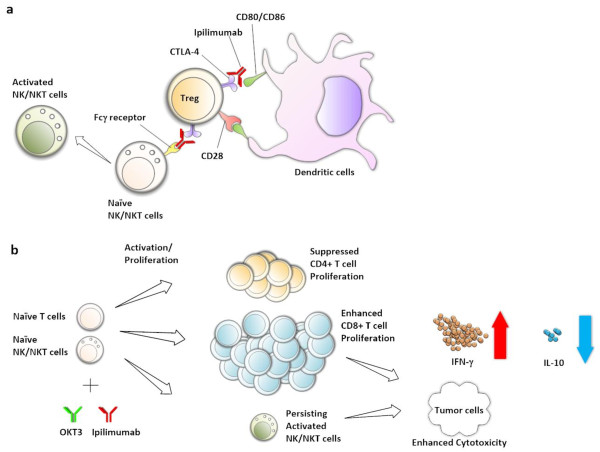
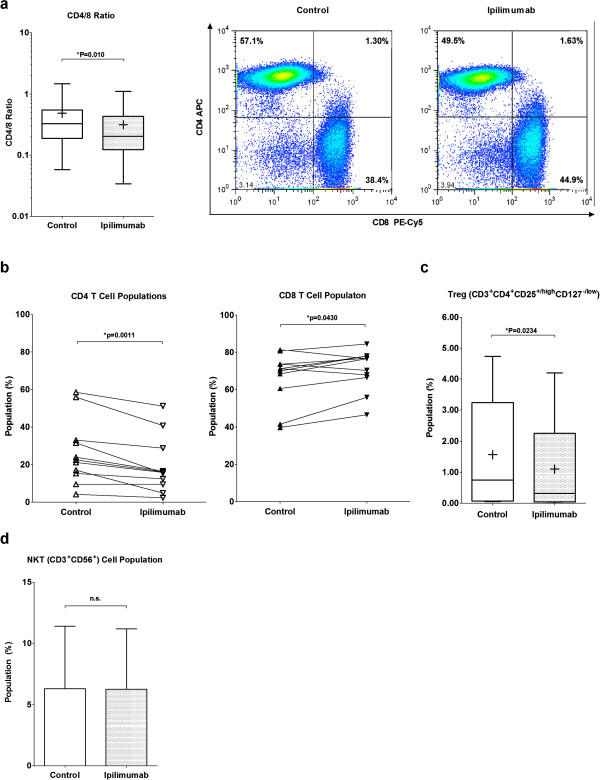
Ipilimumab is an antagonistic monoclonal antibody against cytotoxic T-lymphocyte antigen-4 (CTLA-4) that enhances antitumor immunity by inhibiting immunosuppressive activity of regulatory T cells (Treg). In this study, we investigated whether inhibiting Treg activity with ipilimumab during ex vivo T cell expansion could augment anti-CD3-driven T cell proliferation and enhance bispecific antibody (BiAb)-redirected antitumor cytotoxicity of activated T cells (ATC).
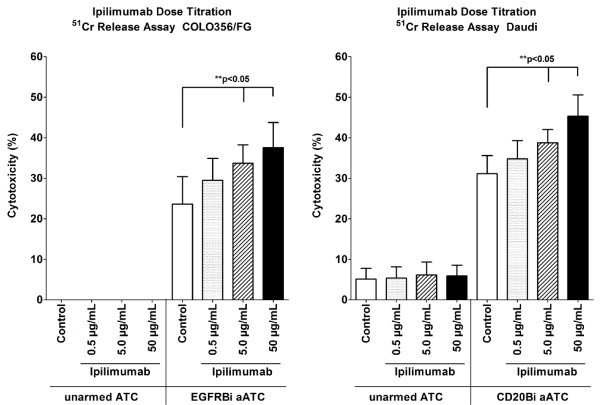
PBMC from healthy individuals were stimulated with anti-CD3 monoclonal antibody with or without ipilimumab and expanded for 10-14 days. ATC were harvested and armed with anti-CD3 x anti-EGFR BiAb (EGFRBi) or anti-CD3 x anti-CD20 BiAb (CD20Bi) to test for redirected cytotoxicity against COLO356/FG pancreatic cancer cell line or Burkitt's lymphoma cell line (Daudi).
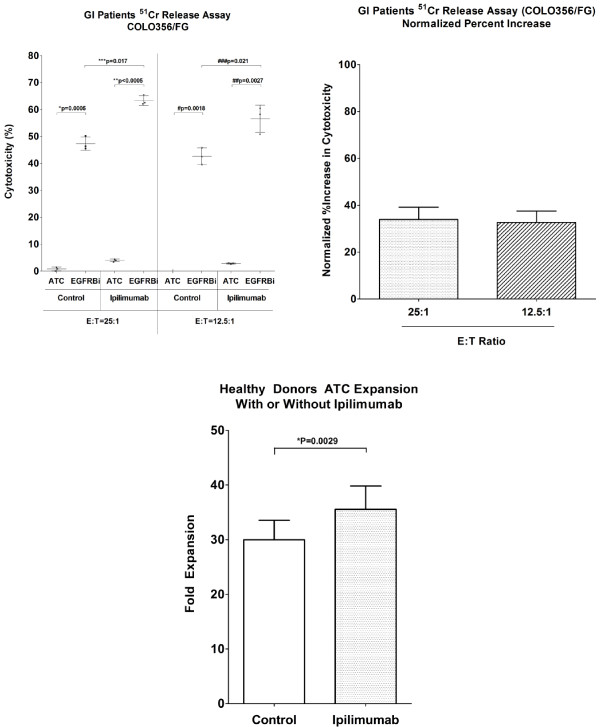
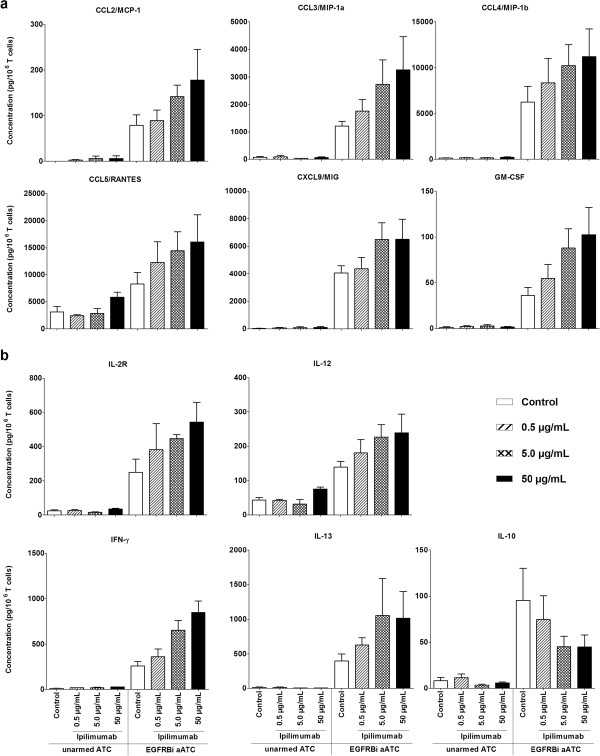
In PBMC from healthy individuals, the addition of ipilimumab at the initiation of culture significantly enhanced T cell proliferation (p = 0.0029). ATC grown in the presence of ipilimumab showed significantly increased mean tumor-specific cytotoxicity at effector:target (E:T) ratio of 25:1 directed at COLO356/FG and Daudi by 37.71% (p < 0.0004) and 27.5% (p < 0.0004), respectively, and increased the secretion of chemokines (CCL2, CCL3, CCL4,CCL5, CXCL9, and granulocyte-macrophage colony stimulating factor(GM-CSF)) and cytokines (IFN-γ, IL-2R, IL-12, and IL-13), while reducing IL-10 secretion.
Expansion of ATC in the presence of ipilimumab significantly improves not only the T cell proliferation but it also enhances cytokine secretion and the specific cytotoxicity of T cells armed with bispecific antibodies.
伊匹单抗是一种针对细胞毒性T淋巴细胞相关抗原4(CTLA-4)的拮抗单克隆抗体,通过抑制调节性T细胞(Treg)的免疫抑制活性来增强抗肿瘤免疫力。在本研究中,我们调查了在体外T细胞扩增过程中用伊匹单抗抑制Treg活性是否能增强抗CD3驱动的T细胞增殖,并增强双特异性抗体(BiAb)重定向的活化T细胞(ATC)的抗肿瘤细胞毒性。
来自健康个体的外周血单个核细胞(PBMC)用抗CD3单克隆抗体刺激,有或没有伊匹单抗,并扩增10-14天。收获ATC并用抗CD3×抗表皮生长因子受体(EGFR)双特异性抗体(EGFRBi)或抗CD3×抗CD20双特异性抗体(CD20Bi)进行武装,以测试针对COLO356/FG胰腺癌细胞系或伯基特淋巴瘤细胞系(Daudi)的重定向细胞毒性。
在来自健康个体的PBMC中,培养开始时添加伊匹单抗显著增强了T细胞增殖(p = 0.0029)。在伊匹单抗存在下培养的ATC在效应细胞:靶细胞(E:T)比例为25:1时,针对COLO356/FG和Daudi的平均肿瘤特异性细胞毒性分别显著增加37.71%(p < 0.0004)和27.5%(p < 0.0004),并增加了趋化因子(CCL2、CCL3、CCL4、CCL5、CXCL9和粒细胞-巨噬细胞集落刺激因子(GM-CSF))和细胞因子(IFN-γ、IL-2R、IL-12和IL-13)的分泌,同时减少IL-10分泌。
在伊匹单抗存在下扩增ATC不仅显著改善了T细胞增殖,还增强了细胞因子分泌以及双特异性抗体武装的T细胞的特异性细胞毒性。