Department of Neurology, University of Florida , Gainesville, FL , USA ; Department of Anesthesiology, University of Florida , Gainesville, FL , USA.
Department of Neurology, University of Florida , Gainesville, FL , USA.
Front Neurol. 2014 Jun 24;5:107. doi: 10.3389/fneur.2014.00107. eCollection 2014.
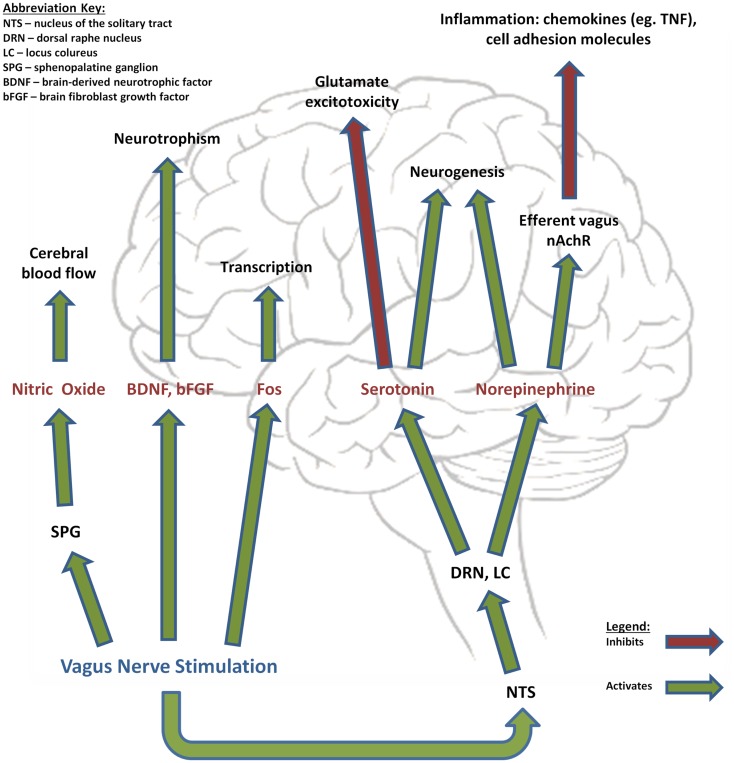
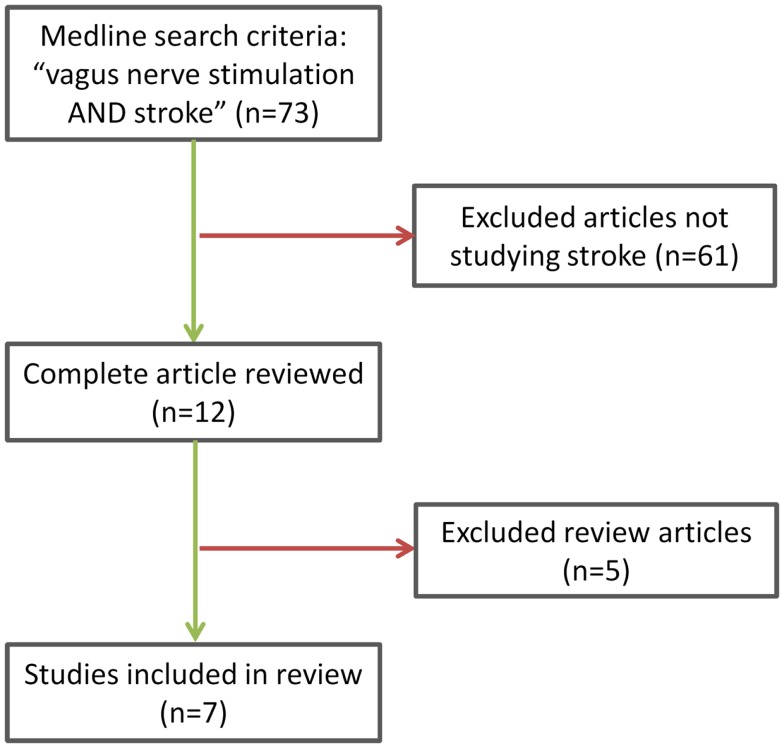
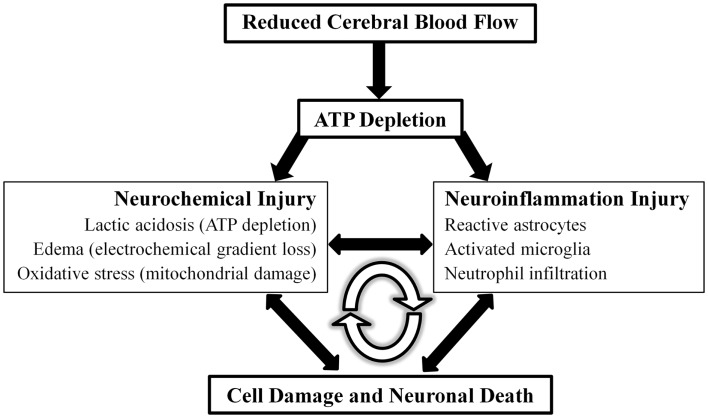
Vagus nerve stimulation (VNS) is currently Food and Drug Administration-approved for treatment of both medically refractory partial-onset seizures and severe, recurrent refractory depression, which has failed to respond to medical interventions. Because of its ability to regulate mechanisms well-studied in neuroscience, such as norepinephrine and serotonin release, the vagus nerve may play an important role in regulating cerebral blood flow, edema, inflammation, glutamate excitotoxicity, and neurotrophic processes. There is strong evidence that these same processes are important in stroke pathophysiology. We reviewed the literature for the role of VNS in improving ischemic stroke outcomes by performing a systematic search for publications in Medline (1966-2014) with keywords "VNS AND stroke" in subject headings and key words with no language restrictions. Of the 73 publications retrieved, we identified 7 studies from 3 different research groups that met our final inclusion criteria of research studies addressing the role of VNS in ischemic stroke. Results from these studies suggest that VNS has promising efficacy in reducing stroke volume and attenuating neurological deficits in ischemic stroke models. Given the lack of success in Phase III trials for stroke neuroprotection, it is important to develop new therapies targeting different neuroprotective pathways. Further studies of the possible role of VNS, through normally physiologically active mechanisms, in ischemic stroke therapeutics should be conducted in both animal models and clinical studies. In addition, recent advent of a non-invasive, transcutaneous VNS could provide the potential for easier clinical translation.
迷走神经刺激(VNS)目前已获得美国食品和药物管理局(FDA)批准,用于治疗药物难治性部分发作性癫痫和严重、反复发作性难治性抑郁症,这些疾病对药物干预没有反应。由于它能够调节神经科学中研究得很好的机制,如去甲肾上腺素和血清素的释放,迷走神经可能在调节脑血流、水肿、炎症、谷氨酸兴奋毒性和神经营养过程中发挥重要作用。有强有力的证据表明,这些相同的过程在中风病理生理学中很重要。我们通过在 Medline(1966-2014 年)中进行主题标题和关键词(无语言限制)的“VNS AND stroke”的关键词系统搜索,为 VNS 通过改善缺血性中风结局的作用审查了文献。在检索到的 73 篇出版物中,我们确定了来自 3 个不同研究小组的 7 项研究符合我们的最终纳入标准,即研究 VNS 在缺血性中风中的作用的研究。这些研究的结果表明,VNS 在减少中风体积和减轻缺血性中风模型中的神经功能缺损方面具有有希望的疗效。鉴于在中风神经保护的 III 期试验中缺乏成功,开发针对不同神经保护途径的新疗法非常重要。应在动物模型和临床研究中进一步研究 VNS 通过正常生理活性机制在缺血性中风治疗中的可能作用。此外,最近出现的非侵入性、经皮 VNS 可能为更易于临床转化提供了潜力。