Watson Laboratory, Biology Department, Woods Hole Oceanographic Institution, Woods Hole MA, USA.
Marine Biological Laboratory, The Ecosystems Center, Woods Hole MA, USA.
Front Microbiol. 2014 Jun 24;5:309. doi: 10.3389/fmicb.2014.00309. eCollection 2014.
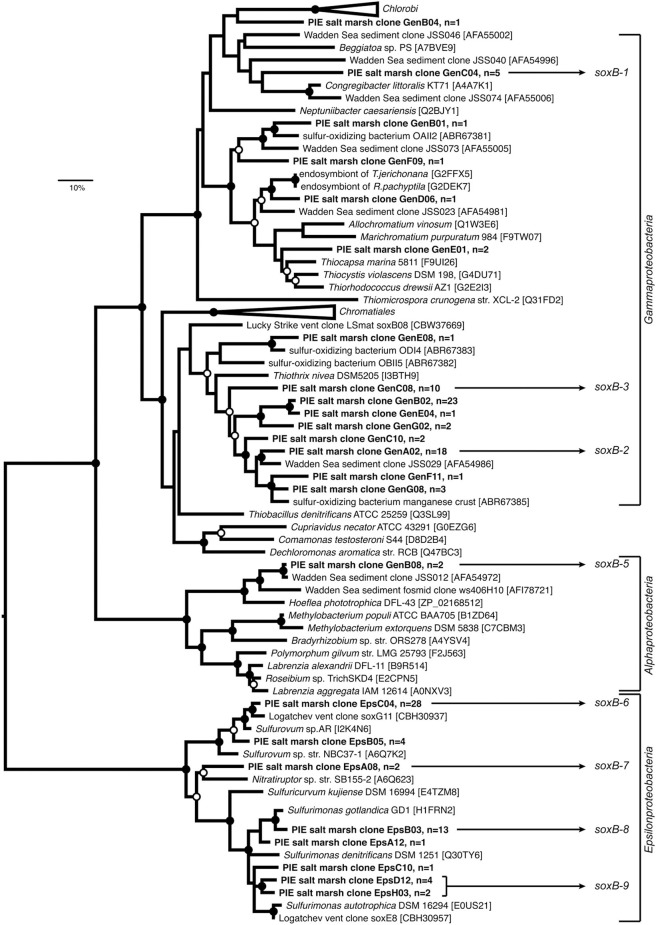
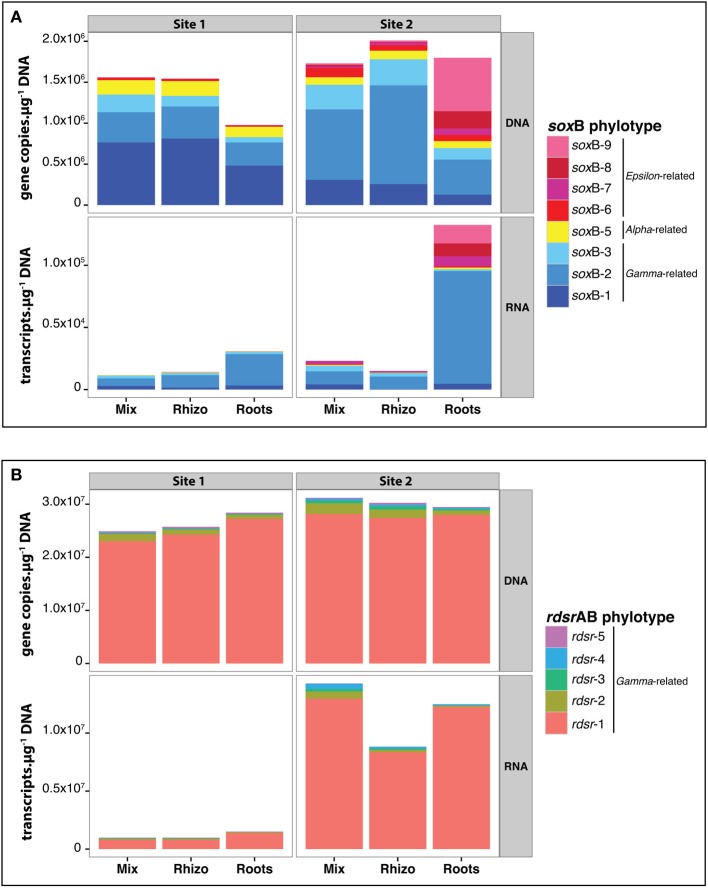
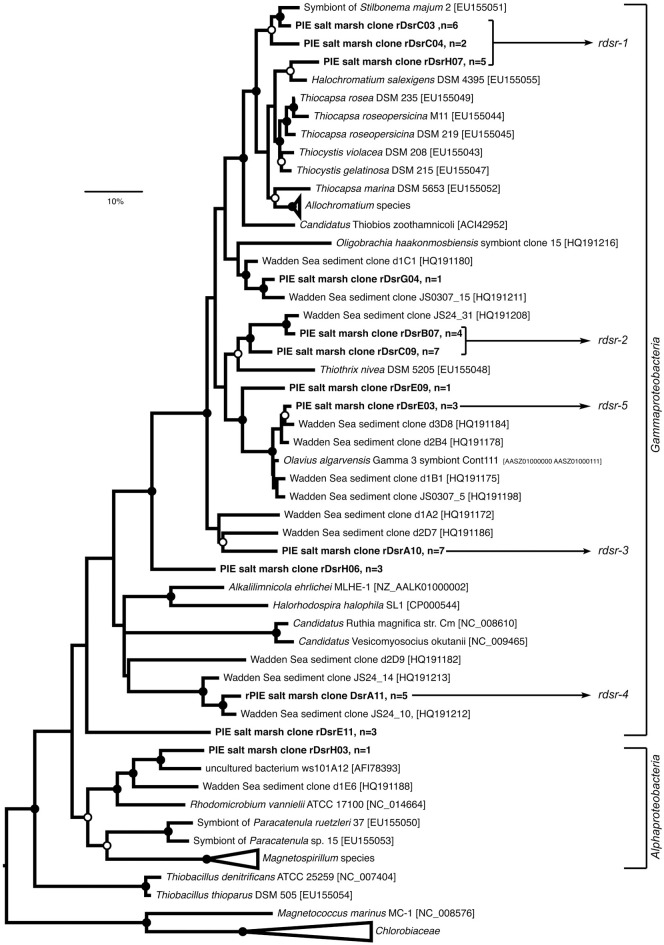
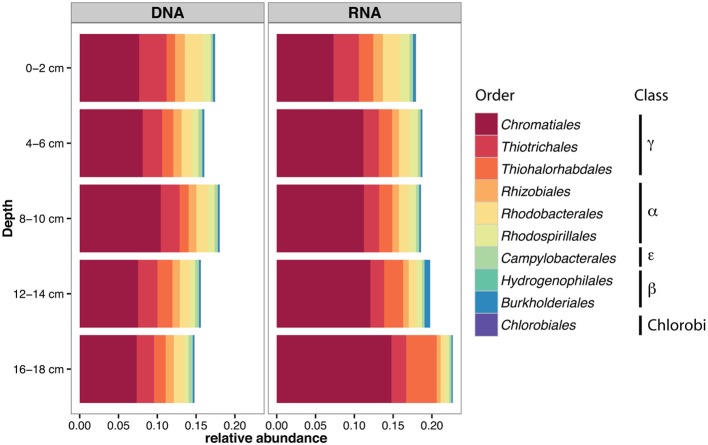
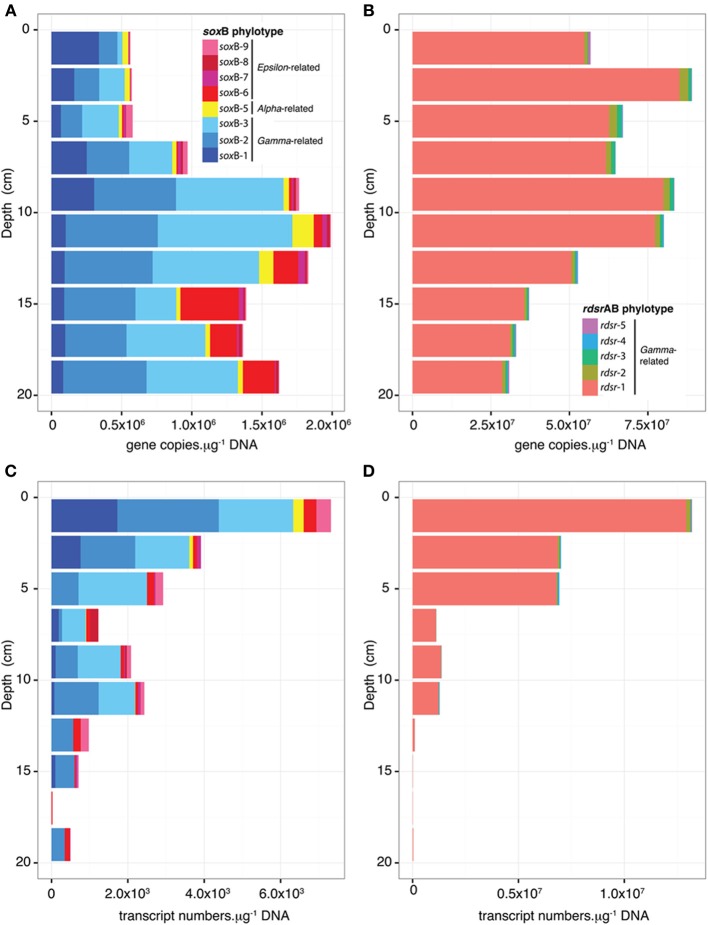
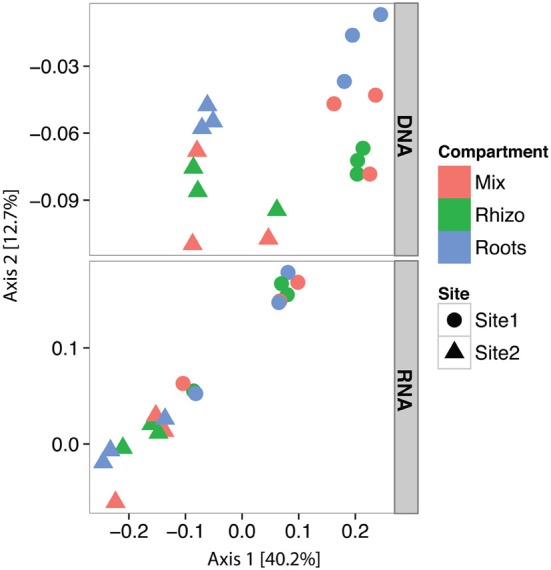
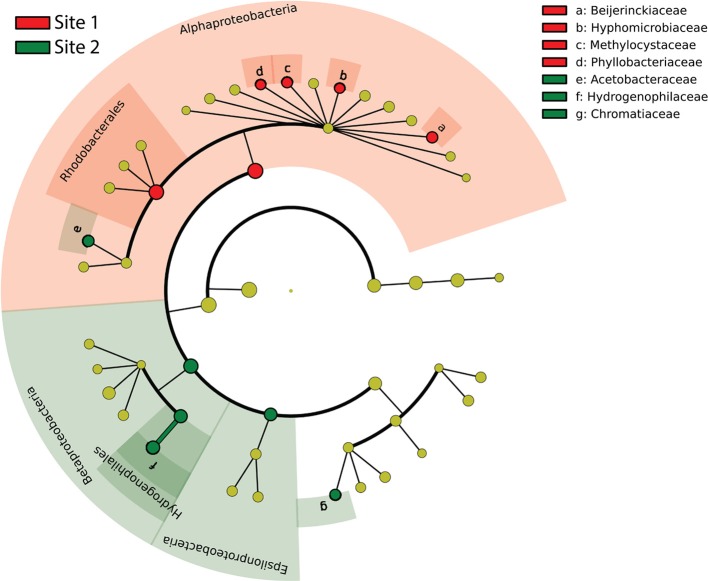
Salt marshes are highly productive ecosystems hosting an intense sulfur (S) cycle, yet little is known about S-oxidizing microorganisms in these ecosystems. Here, we studied the diversity and transcriptional activity of S-oxidizers in salt marsh sediments colonized by the plant Spartina alterniflora, and assessed variations with sediment depth and small-scale compartments within the rhizosphere. We combined next-generation amplicon sequencing of 16S rDNA and rRNA libraries with phylogenetic analyses of marker genes for two S-oxidation pathways (soxB and rdsrAB). Gene and transcript numbers of soxB and rdsrAB phylotypes were quantified simultaneously, using newly designed (RT)-qPCR assays. We identified a diverse assemblage of S-oxidizers, with Chromatiales and Thiotrichales being dominant. The detection of transcripts from S-oxidizers was mostly confined to the upper 5 cm sediments, following the expected distribution of root biomass. A common pool of species dominated by Gammaproteobacteria transcribed S-oxidation genes across roots, rhizosphere, and surrounding sediment compartments, with rdsrAB transcripts prevailing over soxB. However, the root environment fine-tuned the abundance and transcriptional activity of the S-oxidizing community. In particular, the global transcription of soxB was higher on the roots compared to mix and rhizosphere samples. Furthermore, the contribution of Epsilonproteobacteria-related S-oxidizers tended to increase on Spartina roots compared to surrounding sediments. These data shed light on the under-studied oxidative part of the sulfur cycle in salt marsh sediments and indicate small-scale heterogeneities are important factors shaping abundance and potential activity of S-oxidizers in the rhizosphere.
盐沼是生产力极高的生态系统,拥有强烈的硫(S)循环,但人们对这些生态系统中的 S 氧化微生物知之甚少。在这里,我们研究了植物互花米草(Spartina alterniflora)定殖的盐沼沉积物中 S 氧化微生物的多样性和转录活性,并评估了它们随沉积物深度和根际小范围隔室的变化。我们结合了 16S rDNA 和 rRNA 文库的下一代扩增子测序,以及两种 S 氧化途径(soxB 和 rdsrAB)的标记基因的系统发育分析。使用新设计的(RT)-qPCR 测定法,同时定量了 soxB 和 rdsrAB 类群的基因和转录物数量。我们鉴定出了一个多样化的 S 氧化菌组合,其中 Chromatiales 和 Thiotrichales 占主导地位。S 氧化菌的转录物检测主要局限于上 5 cm 的沉积物,这符合根生物量的预期分布。以 gammaproteobacteria 为主的物种共同池转录了 S 氧化基因,跨越了根、根际和周围沉积物隔室,rdsrAB 转录物超过 soxB。然而,根际环境可以微调 S 氧化菌群落的丰度和转录活性。特别是,与混合和根际样品相比,soxB 的全局转录在根上更高。此外,与周围沉积物相比,与 epsilonproteobacteria 相关的 S 氧化菌在互花米草根上的贡献趋于增加。这些数据揭示了盐沼沉积物中硫循环中被低估的氧化部分,并表明小规模异质性是塑造根际 S 氧化菌丰度和潜在活性的重要因素。