Georgia Institute of Technology, School of Biological Sciences, Atlanta, GA, 30332, USA.
French Associates Institute for Agriculture and Biotechnology of Drylands, Ben-Gurion, University of the Negev, Beer Sheva, Israel.
Microbiome. 2022 Mar 1;10(1):37. doi: 10.1186/s40168-021-01187-7.
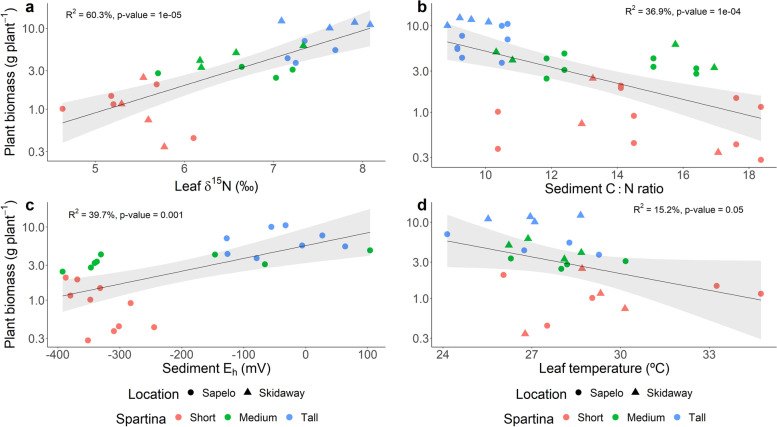
Salt marshes are dominated by the smooth cordgrass Spartina alterniflora on the US Atlantic and Gulf of Mexico coastlines. Although soil microorganisms are well known to mediate important biogeochemical cycles in salt marshes, little is known about the role of root microbiomes in supporting the health and productivity of marsh plant hosts. Leveraging in situ gradients in aboveground plant biomass as a natural laboratory, we investigated the relationships between S. alterniflora primary productivity, sediment redox potential, and the physiological ecology of bulk sediment, rhizosphere, and root microbial communities at two Georgia barrier islands over two growing seasons.
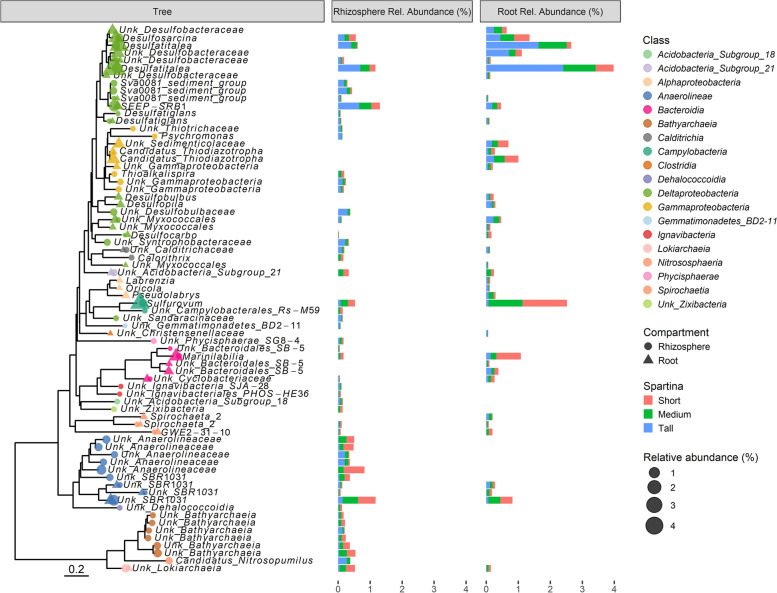
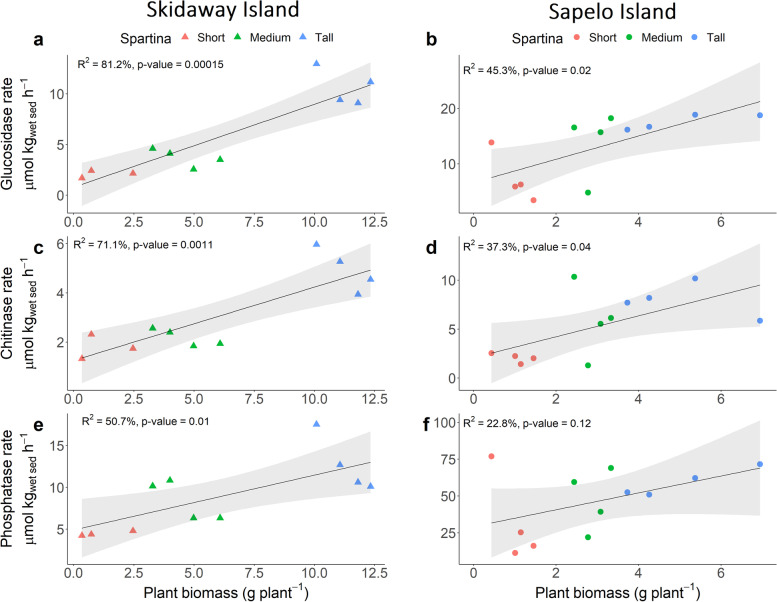
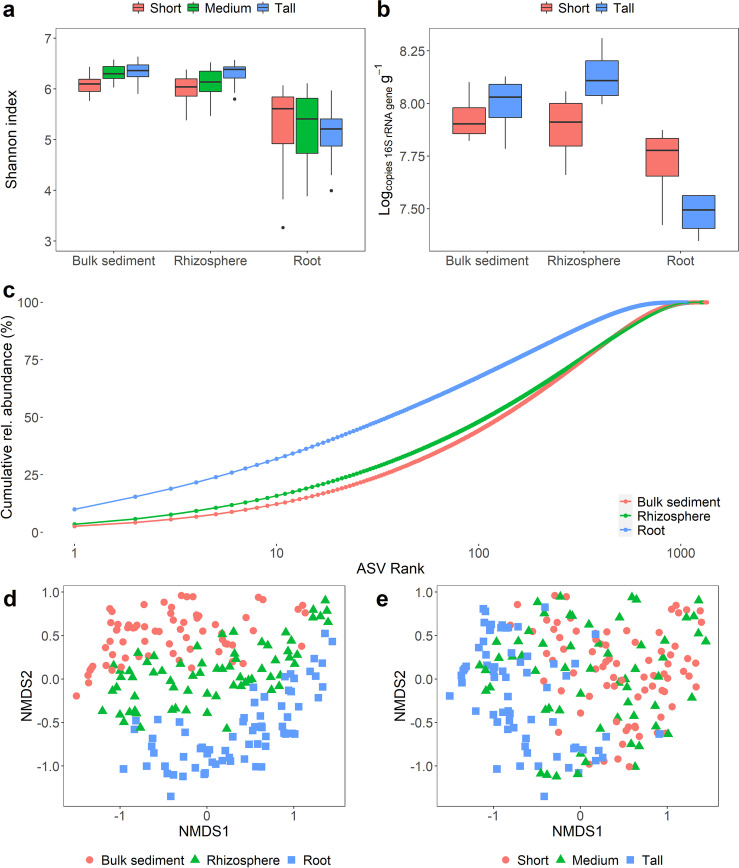
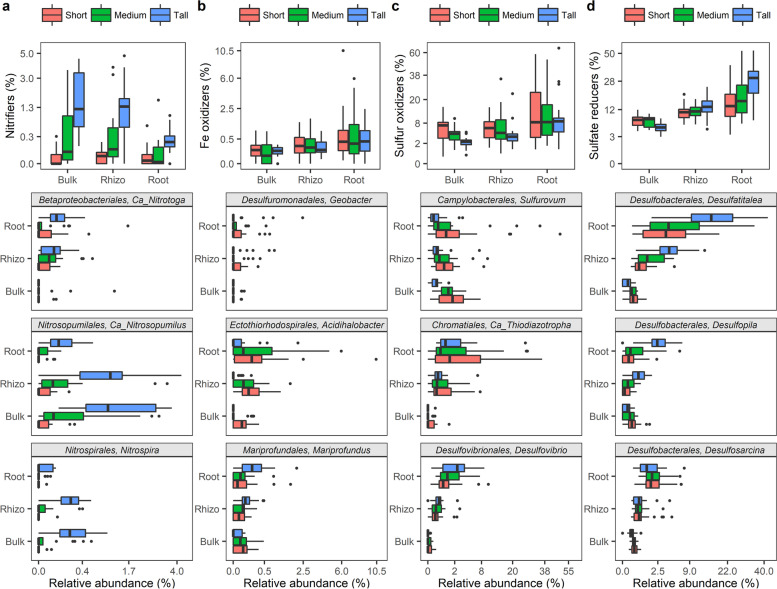
A marked decrease in prokaryotic alpha diversity with high abundance and increased phylogenetic dispersion was found in the S. alterniflora root microbiome. Significantly higher rates of enzymatic organic matter decomposition, as well as the relative abundances of putative sulfur (S)-oxidizing, sulfate-reducing, and nitrifying prokaryotes correlated with plant productivity. Moreover, these functional guilds were overrepresented in the S. alterniflora rhizosphere and root core microbiomes. Core microbiome bacteria from the Candidatus Thiodiazotropha genus, with the metabolic potential to couple S oxidation with C and N fixation, were shown to be highly abundant in the root and rhizosphere of S. alterniflora.
The S. alterniflora root microbiome is dominated by highly active and competitive species taking advantage of available carbon substrates in the oxidized root zone. Two microbially mediated mechanisms are proposed to stimulate S. alterniflora primary productivity: (i) enhanced microbial activity replenishes nutrients and terminal electron acceptors in higher biomass stands, and (ii) coupling of chemolithotrophic S oxidation with carbon (C) and nitrogen (N) fixation by root- and rhizosphere-associated prokaryotes detoxifies sulfide in the root zone while potentially transferring fixed C and N to the host plant. Video Abstract.
盐沼主要由美国大西洋和墨西哥湾沿岸的互花米草 Spartina alterniflora 组成。尽管土壤微生物在盐沼中对重要的生物地球化学循环起着很好的介导作用,但对于根微生物组在支持沼泽植物宿主的健康和生产力方面的作用却知之甚少。利用地上植物生物量的原位梯度作为天然实验室,我们在两个佐治亚州的障壁岛两个生长季节调查了互花米草初级生产力、沉积物氧化还原电位以及散装沉积物、根际和根微生物群落的生理生态学之间的关系。
在互花米草根微生物组中发现了明显的原核生物α多样性下降,其特征是丰度高且系统发育分散度增加。酶促有机物分解的速率显著提高,以及假定的硫(S)氧化、硫酸盐还原和硝化原核生物的相对丰度与植物生产力相关。此外,这些功能类群在互花米草根际和根核心微生物组中过度表达。具有将 S 氧化与 C 和 N 固定相结合的代谢潜力的 Candidatus Thiodiazotropha 属核心微生物组细菌在互花米草根和根际中高度丰富。
互花米草根微生物组主要由高度活跃和有竞争力的物种组成,它们利用氧化根区中的可用碳底物。提出了两种微生物介导的机制来刺激互花米草的初级生产力:(i)增强微生物活性在高生物量的地方补充养分和末端电子受体,(ii)通过根际相关的原核生物将化能自养 S 氧化与碳(C)和氮(N)固定偶联,在根区解毒硫化物,同时将固定的 C 和 N 潜在地转移到宿主植物上。