Peiris Heshan, Dubach Daphne, Jessup Claire F, Unterweger Petra, Raghupathi Ravinarayan, Muyderman Hakan, Zanin Mark P, Mackenzie Kimberly, Pritchard Melanie A, Keating Damien J
Molecular and Cellular Neuroscience Group, Department of Human Physiology and Centre for Neuroscience, Flinders University, Adelaide, SA 5042, Australia.
Department of Biochemistry and Molecular Biology, Monash University, Melbourne, VIC 3800, Australia.
Oxid Med Cell Longev. 2014;2014:520316. doi: 10.1155/2014/520316. Epub 2014 Jun 9.
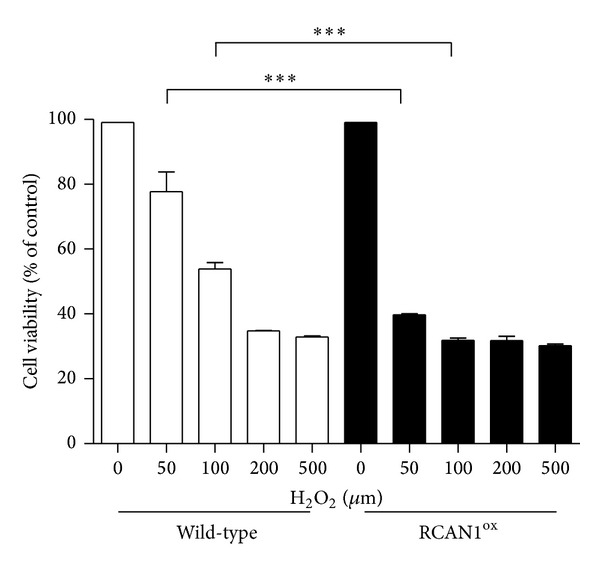
Mitochondria are the primary site of cellular energy generation and reactive oxygen species (ROS) accumulation. Elevated ROS levels are detrimental to normal cell function and have been linked to the pathogenesis of neurodegenerative disorders such as Down's syndrome (DS) and Alzheimer's disease (AD). RCAN1 is abundantly expressed in the brain and overexpressed in brain of DS and AD patients. Data from nonmammalian species indicates that increased RCAN1 expression results in altered mitochondrial function and that RCAN1 may itself regulate neuronal ROS production. In this study, we have utilized mice overexpressing RCAN1 (RCAN1(ox)) and demonstrate an increased susceptibility of neurons from these mice to oxidative stress. Mitochondria from these mice are more numerous and smaller, indicative of mitochondrial dysfunction, and mitochondrial membrane potential is altered under conditions of oxidative stress. We also generated a PC12 cell line overexpressing RCAN1 (PC12(RCAN1)). Similar to RCAN1(ox) neurons, PC12(RCAN1) cells have an increased susceptibility to oxidative stress and produce more mitochondrial ROS. This study demonstrates that increasing RCAN1 expression alters mitochondrial function and increases the susceptibility of neurons to oxidative stress in mammalian cells. These findings further contribute to our understanding of RCAN1 and its potential role in the pathogenesis of neurodegenerative disorders such as AD and DS.
线粒体是细胞能量产生和活性氧(ROS)积累的主要场所。升高的ROS水平对正常细胞功能有害,并与诸如唐氏综合征(DS)和阿尔茨海默病(AD)等神经退行性疾病的发病机制有关。RCAN1在大脑中大量表达,并且在DS和AD患者的大脑中过表达。来自非哺乳动物物种的数据表明,RCAN1表达增加会导致线粒体功能改变,并且RCAN1本身可能调节神经元ROS的产生。在本研究中,我们利用了过表达RCAN1的小鼠(RCAN1(ox)),并证明这些小鼠的神经元对氧化应激的易感性增加。这些小鼠的线粒体数量更多且体积更小,表明线粒体功能障碍,并且在氧化应激条件下线粒体膜电位发生改变。我们还构建了一个过表达RCAN1的PC12细胞系(PC12(RCAN1))。与RCAN1(ox)神经元相似,PC12(RCAN1)细胞对氧化应激的易感性增加,并产生更多的线粒体ROS。本研究表明,增加RCAN1表达会改变线粒体功能,并增加哺乳动物细胞中神经元对氧化应激的易感性。这些发现进一步有助于我们理解RCAN1及其在诸如AD和DS等神经退行性疾病发病机制中的潜在作用。