Floderer Melanie, Prchal-Murphy Michaela, Vizzardelli Caterina
Laboratory of Tumour Immunology, St. Anna Children's Cancer Research Institute, Vienna, Austria.
Institute of Pharmacology and Toxicology, Department for Biomedical Science, University of Veterinary Medicine Vienna, Vienna, Austria.
PLoS One. 2014 Jul 10;9(7):e101881. doi: 10.1371/journal.pone.0101881. eCollection 2014.
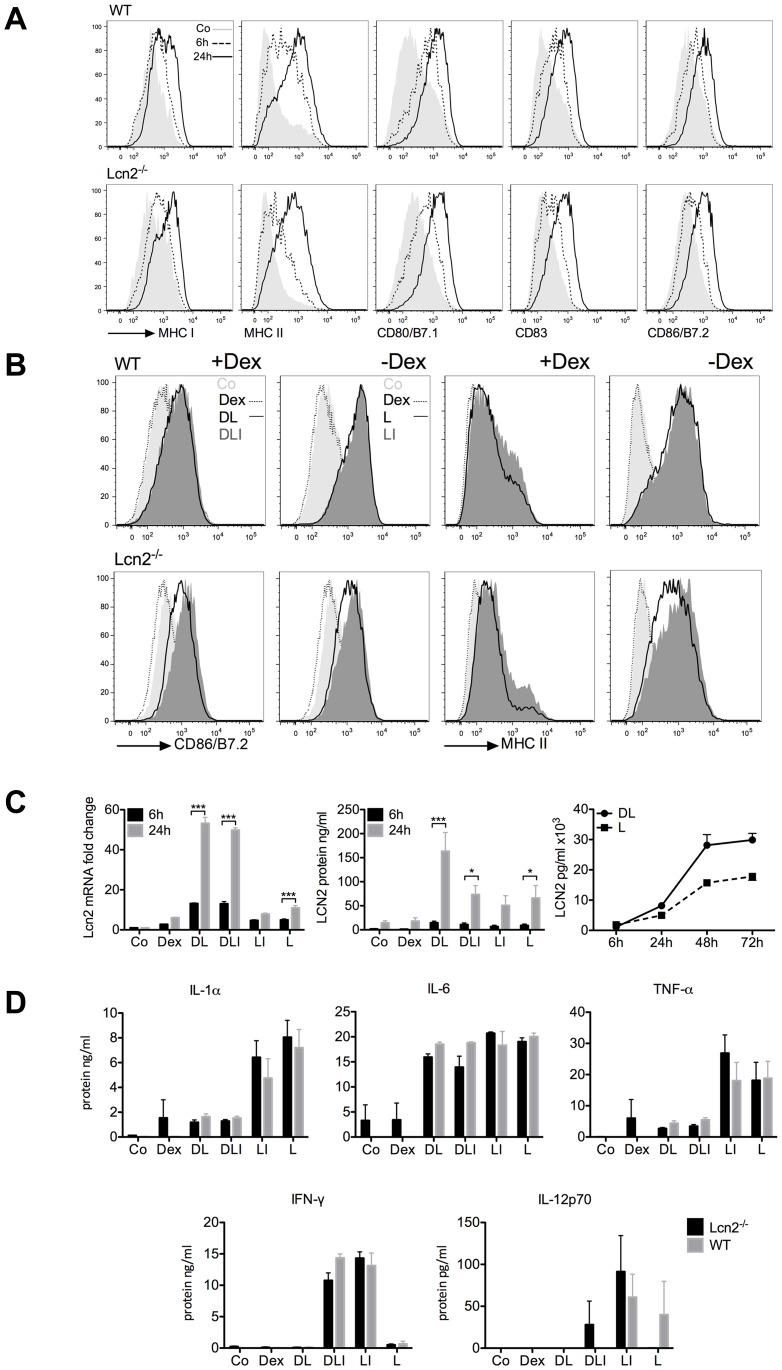
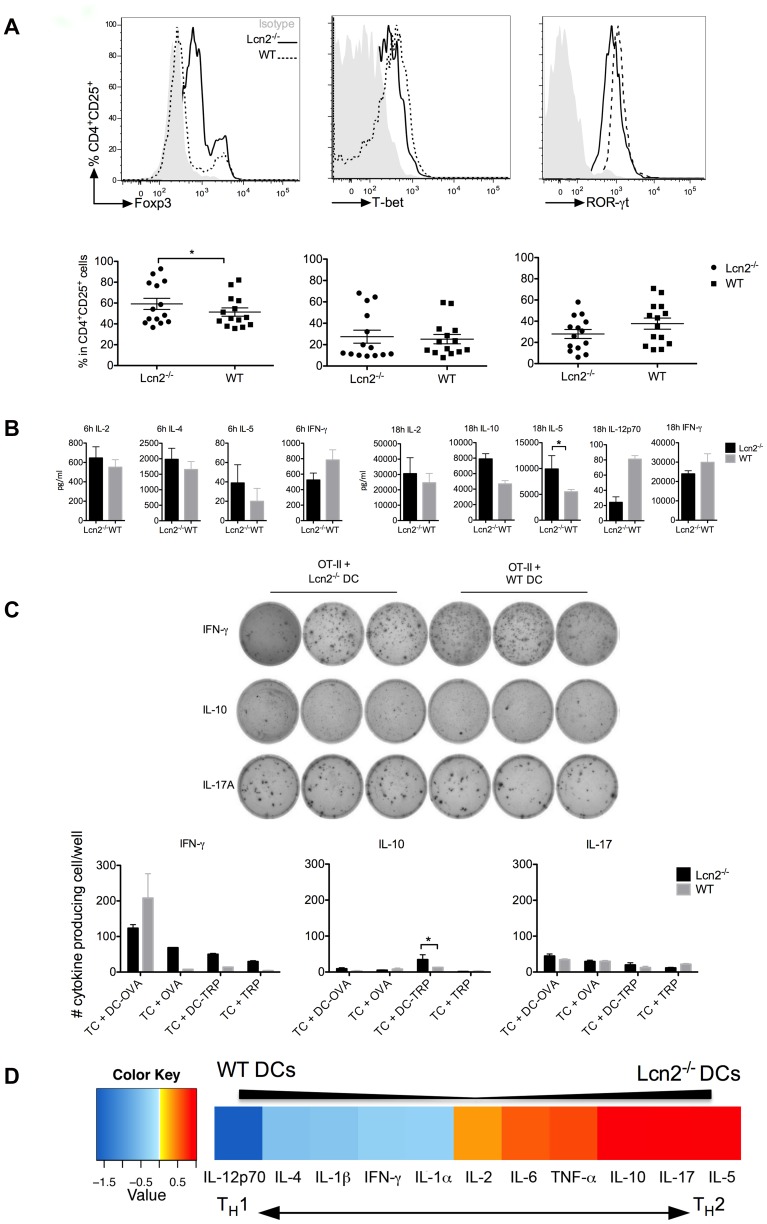
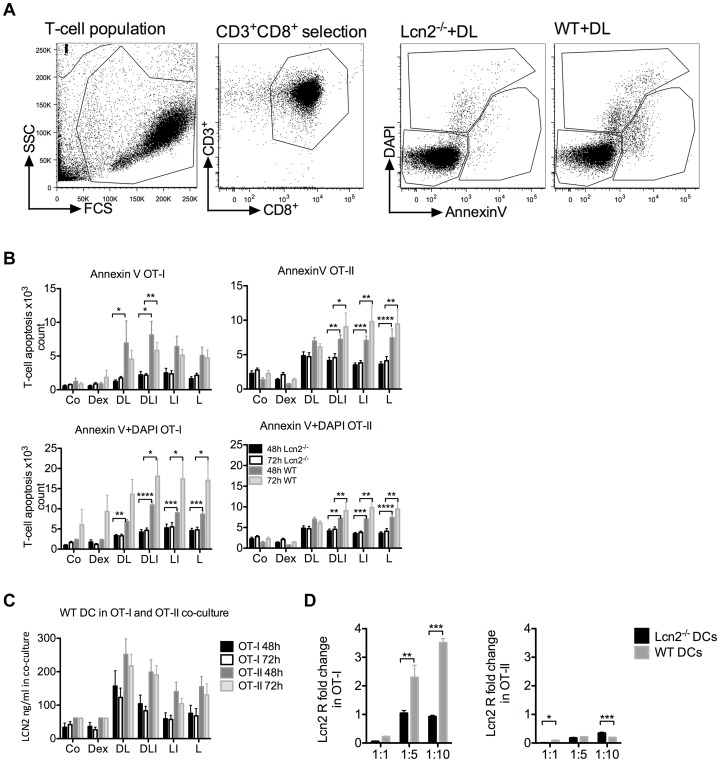
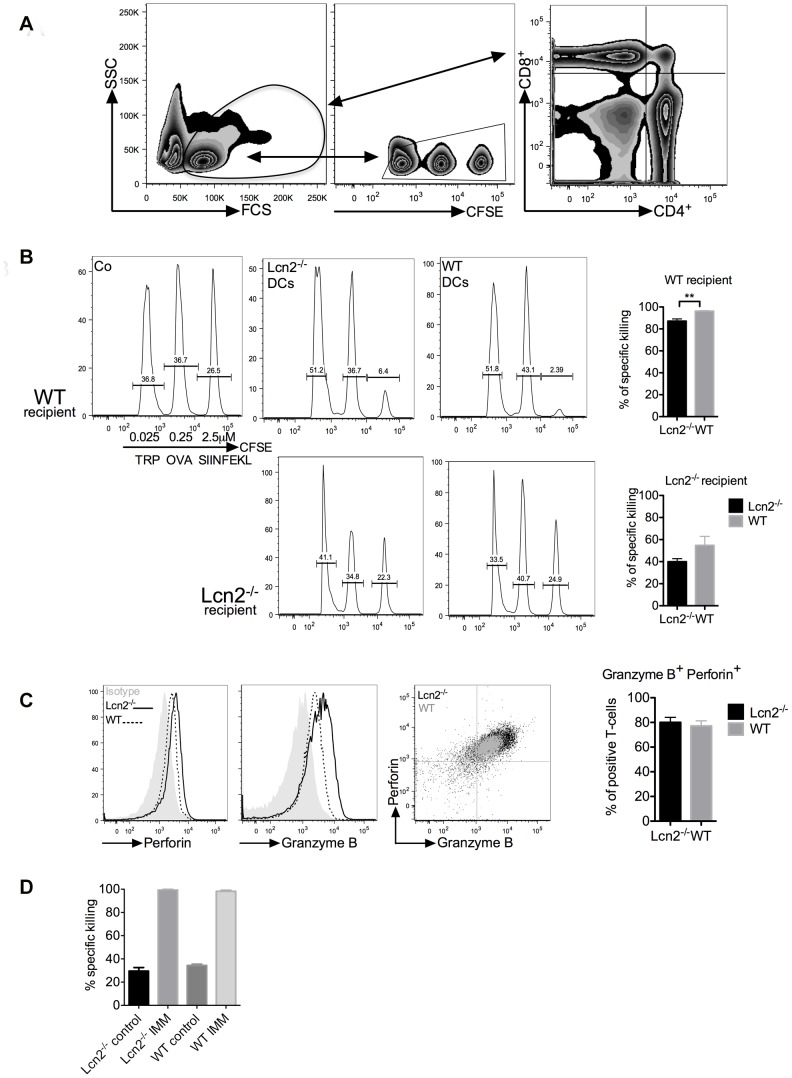
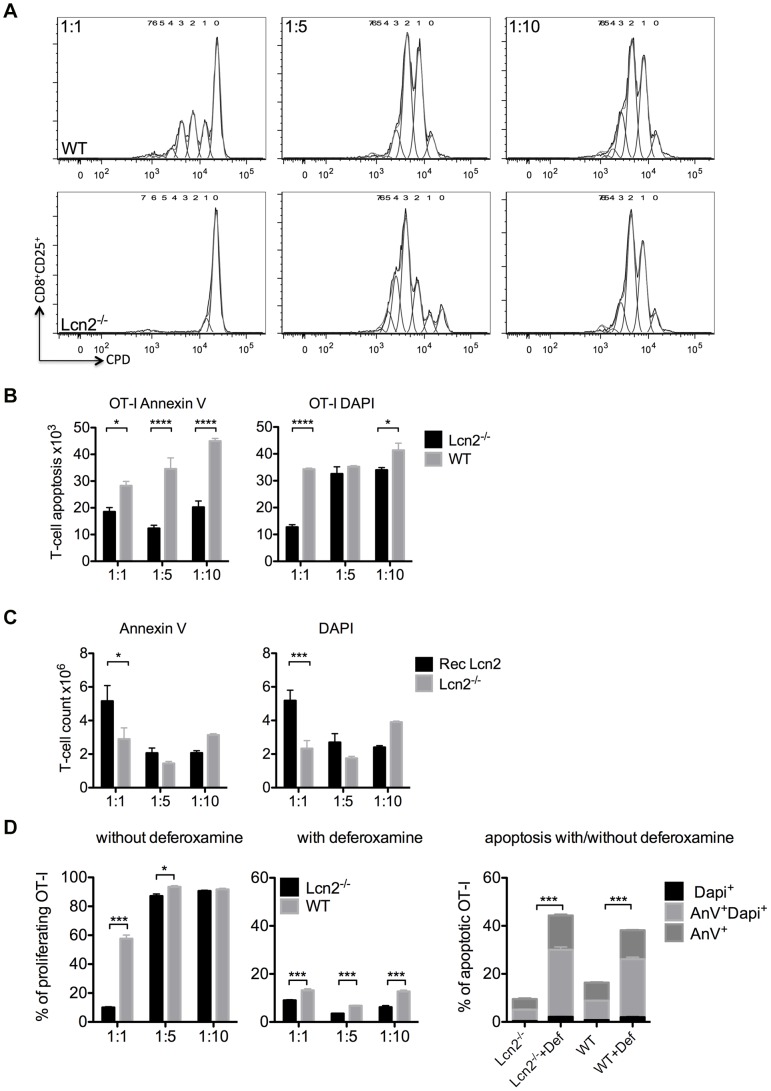
Lipocalin 2 (LCN2), which is highly expressed by dendritic cells (DCs) when treated with dexamethasone (Dex) and lipopolysaccharide (LPS), plays a key role in the defence against bacteria and is also involved in the autocrine apoptosis of T-cells. However, the function of LCN2 when secreted by DCs is unknown: this is a critical gap in our understanding of the regulation of innate and adaptive immune systems. Tolerance, stimulation and suppression are functions of DCs that facilitate the fine-tuning of the immune responses and which are possibly influenced by LCN2 secretion. We therefore examined the role of LCN2 in DC/T-cell interaction. WT or Lcn2-/- bone marrow-derived DCs were stimulated with LPS or LPS+IFN-γ with and without Dex and subsequently co-cultured with T-cells from ovalbumin-specific TCR transgenic (OT-I and OT-II) mice. We found that CD8+ T-cell apoptosis was highly reduced when Lcn2-/- DCs were compared with WT. An in vivo CTL assay, using LPS-treated DCs, showed diminished killing ability in mice that had received Lcn2-/- DCs compared with WT DCs. As a consequence, we analysed T-cell proliferation and found that LCN2 participates in T-cell-priming in a dose-dependent manner and promotes a TH1 microenvironment. DC-secreted LCN2, whose function has previously been unknown, may in fact have an important role in regulating the balance between TH1 and TH2. Our results yield insights into DC-secreted LCN2 activity, which could play a pivotal role in cellular immune therapy and in regulating immune responses.
脂联素2(LCN2)在受到地塞米松(Dex)和脂多糖(LPS)处理时,会由树突状细胞(DCs)高表达,它在抵御细菌方面发挥关键作用,并且还参与T细胞的自分泌凋亡。然而,DCs分泌的LCN2的功能尚不清楚:这是我们对先天和适应性免疫系统调节理解中的一个关键空白。耐受性、刺激和抑制是DCs的功能,有助于对免疫反应进行微调,并且可能受到LCN2分泌的影响。因此,我们研究了LCN2在DC/T细胞相互作用中的作用。用LPS或LPS+IFN-γ刺激野生型(WT)或Lcn2基因敲除(Lcn2-/-)的骨髓来源的DCs,有或没有Dex,随后与来自卵清蛋白特异性TCR转基因(OT-I和OT-II)小鼠的T细胞共培养。我们发现,与WT相比,Lcn2-/- DCs存在时,CD8+ T细胞凋亡显著减少。使用LPS处理的DCs进行的体内CTL试验表明,与WT DCs相比,接受Lcn2-/- DCs的小鼠的杀伤能力减弱。因此,我们分析了T细胞增殖,发现LCN2以剂量依赖的方式参与T细胞启动,并促进TH1微环境。DC分泌的LCN2,其功能此前未知,实际上可能在调节TH1和TH2之间的平衡中发挥重要作用。我们的结果揭示了DC分泌的LCN2活性,其可能在细胞免疫治疗和调节免疫反应中起关键作用。