Kahn Tatyana G, Stenberg Per, Pirrotta Vincenzo, Schwartz Yuri B
Department of Molecular Biology, Umeå University, Umeå, Sweden; Department of Molecular Biology and Biochemistry, Rutgers University, Piscataway, New Jersey, United States of America.
Department of Molecular Biology, Umeå University, Umeå, Sweden; Computational Life Science Cluster (CLiC), Umeå University, Umeå, Sweden.
PLoS Genet. 2014 Jul 10;10(7):e1004495. doi: 10.1371/journal.pgen.1004495. eCollection 2014 Jul.
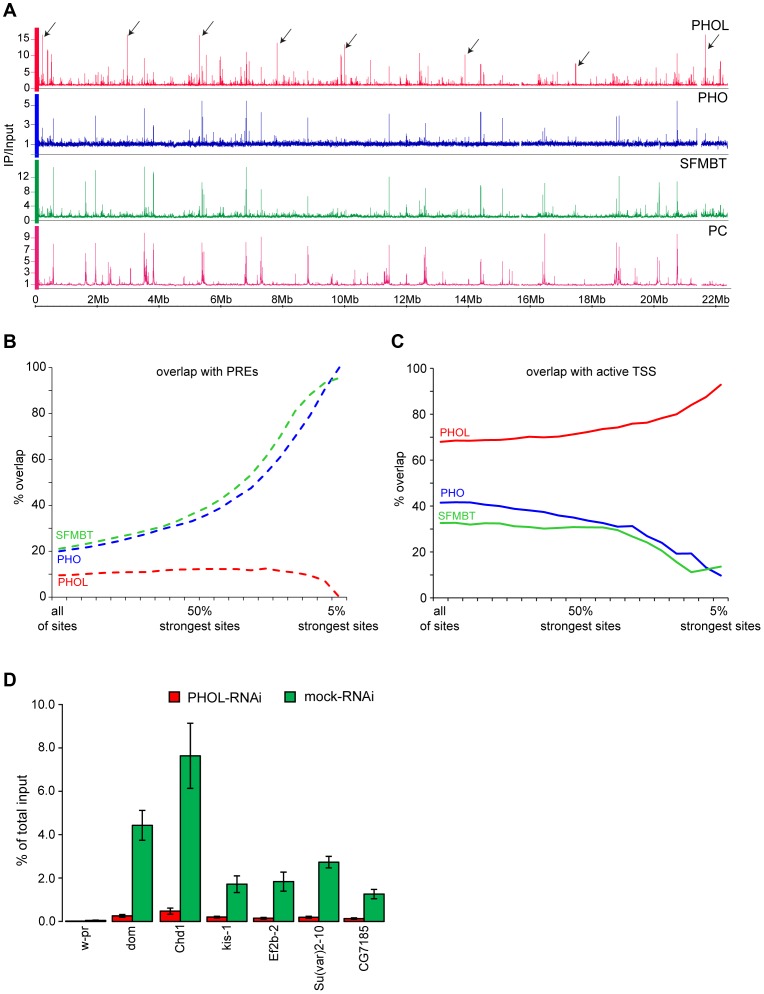
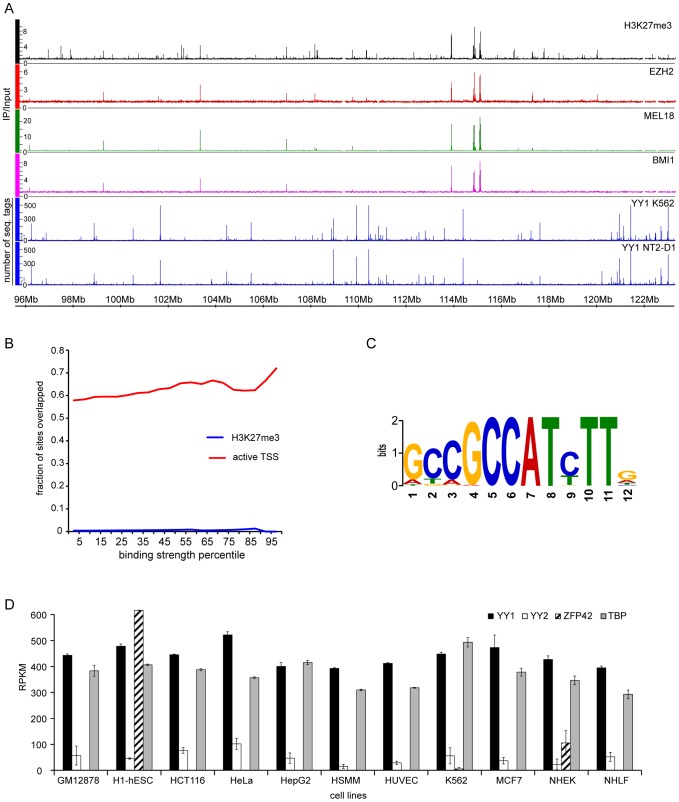
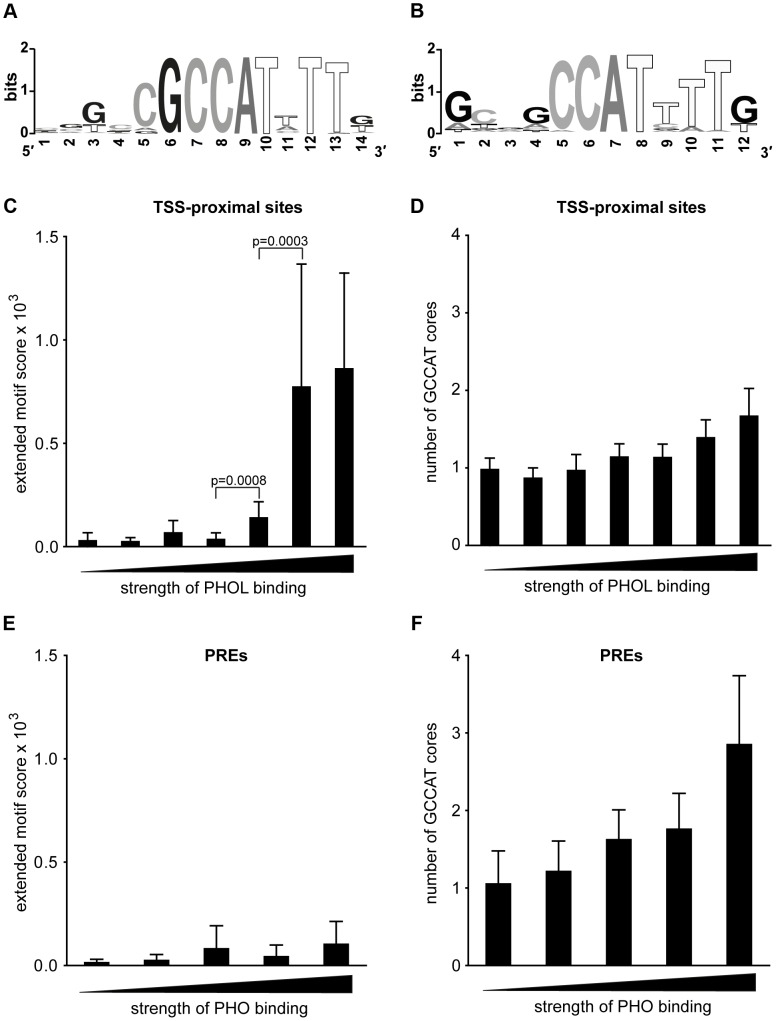
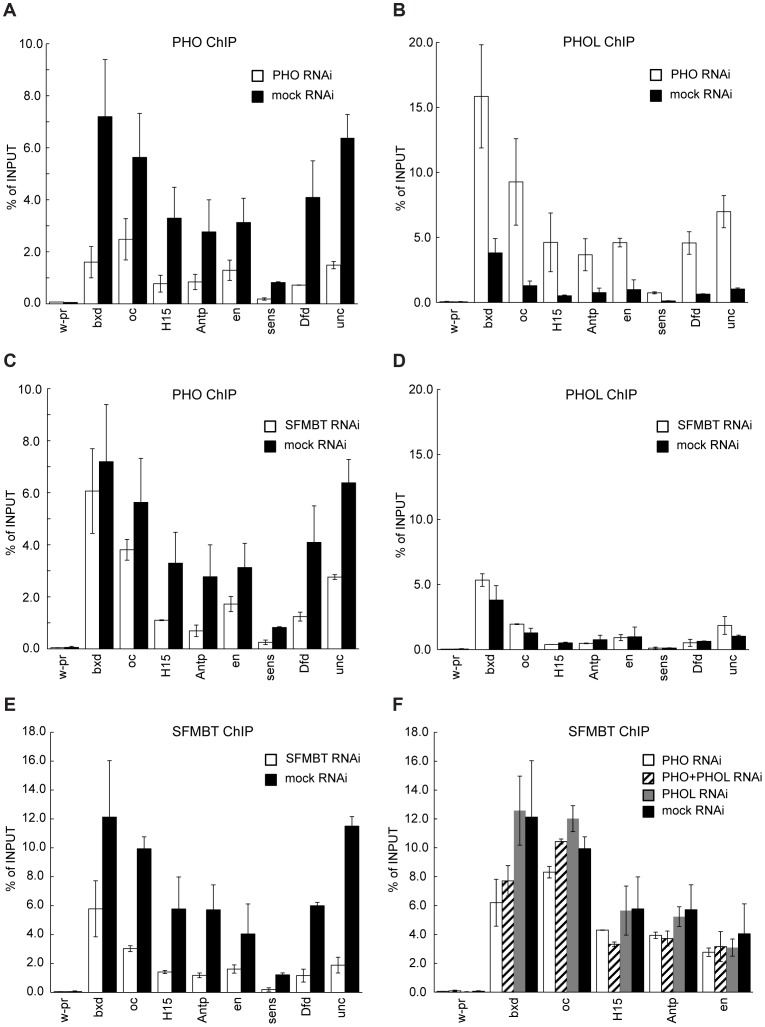
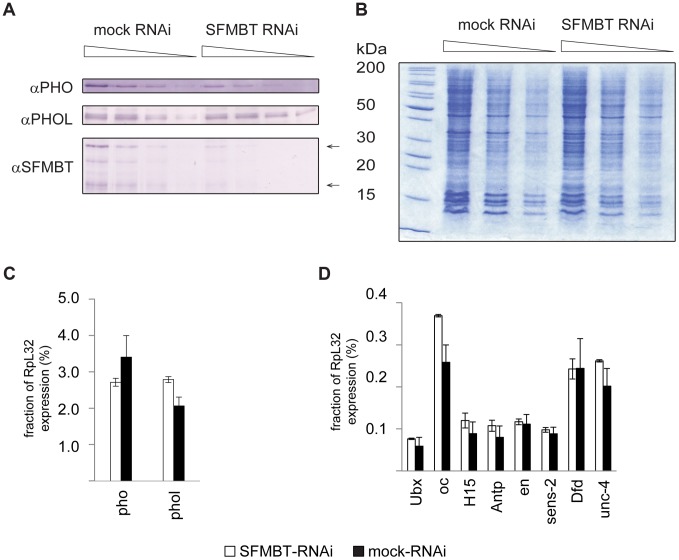
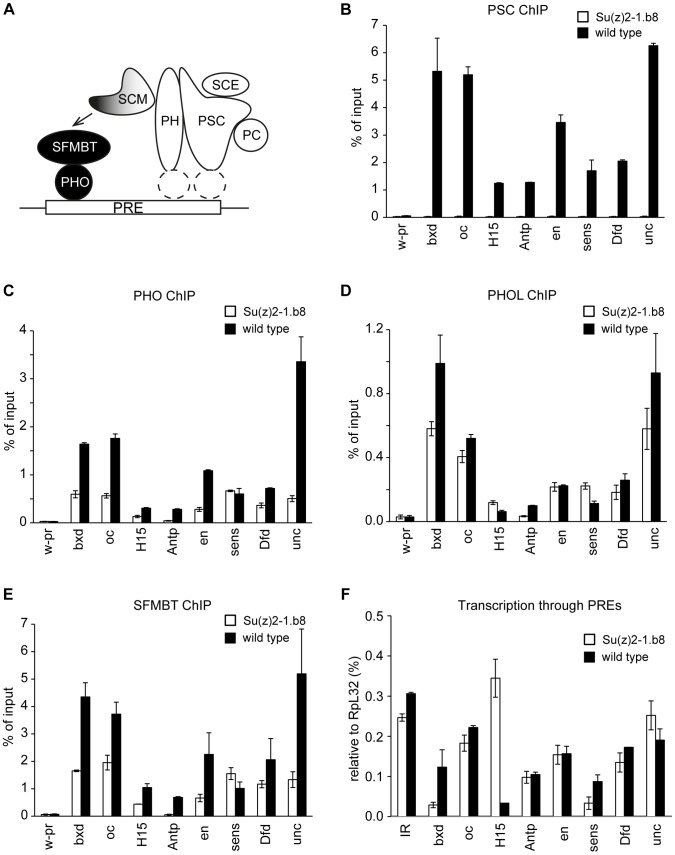
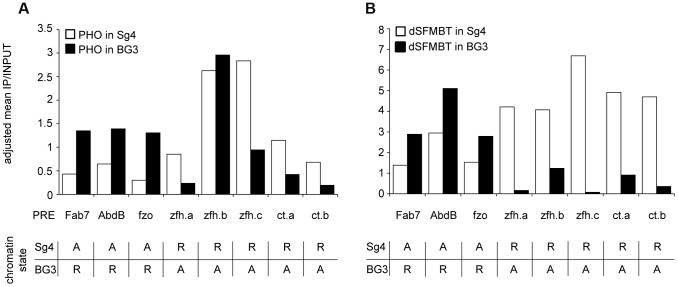
Polycomb Group (PcG) proteins are epigenetic repressors that control metazoan development and cell differentiation. In Drosophila, PcG proteins form five distinct complexes targeted to genes by Polycomb Response Elements (PREs). Of all PcG complexes PhoRC is the only one that contains a sequence-specific DNA binding subunit (PHO or PHOL), which led to a model that places PhoRC at the base of the recruitment hierarchy. Here we demonstrate that in vivo PHO is preferred to PHOL as a subunit of PhoRC and that PHO and PHOL associate with PREs and a subset of transcriptionally active promoters. Although the binding to the promoter sites depends on the quality of recognition sequences, the binding to PREs does not. Instead, the efficient recruitment of PhoRC to PREs requires the SFMBT subunit and crosstalk with Polycomb Repressive Complex 1. We find that human YY1 protein, the ortholog of PHO, binds sites at active promoters in the human genome but does not bind most PcG target genes, presumably because the interactions involved in the targeting to Drosophila PREs are lost in the mammalian lineage. We conclude that the recruitment of PhoRC to PREs is based on combinatorial interactions and propose that such a recruitment strategy is important to attenuate the binding of PcG proteins when the target genes are transcriptionally active. Our findings allow the appropriate placement of PhoRC in the PcG recruitment hierarchy and provide a rationale to explain why YY1 is unlikely to serve as a general recruiter of mammalian Polycomb complexes despite its reported ability to participate in PcG repression in flies.
多梳蛋白组(PcG)是一类表观遗传抑制因子,可控制后生动物的发育和细胞分化。在果蝇中,PcG蛋白形成五种不同的复合物,这些复合物通过多梳反应元件(PREs)靶向基因。在所有的PcG复合物中,PhoRC是唯一包含序列特异性DNA结合亚基(PHO或PHOL)的复合物,这导致了一种将PhoRC置于招募层级底部的模型。在这里,我们证明在体内,PHO作为PhoRC的亚基比PHOL更受青睐,并且PHO和PHOL与PREs以及一部分转录活跃的启动子相关联。虽然与启动子位点的结合取决于识别序列的质量,但与PREs的结合则不然。相反,PhoRC向PREs的有效招募需要SFMBT亚基以及与多梳抑制复合物1的相互作用。我们发现,人类YY1蛋白是PHO的直系同源物,它结合人类基因组中活跃启动子的位点,但不结合大多数PcG靶基因,推测是因为在哺乳动物谱系中,参与靶向果蝇PREs的相互作用已经丧失。我们得出结论,PhoRC向PREs的招募基于组合相互作用,并提出这样的招募策略对于在靶基因转录活跃时减弱PcG蛋白的结合很重要。我们的研究结果确定了PhoRC在PcG招募层级中的适当位置,并提供了一个理由来解释为什么YY1尽管在果蝇中具有参与PcG抑制的能力,但不太可能作为哺乳动物多梳复合物的一般招募因子。