• 文献检索
  • 文档翻译
  • 深度研究
  • 学术资讯
  • Suppr Zotero 插件Zotero 插件
  • 邀请有礼
  • 套餐&价格
  • 历史记录
应用&插件
Suppr Zotero 插件Zotero 插件浏览器插件Mac 客户端Windows 客户端微信小程序
定价
高级版会员购买积分包购买API积分包
服务
文献检索文档翻译深度研究API 文档MCP 服务
关于我们
关于 Suppr公司介绍联系我们用户协议隐私条款
关注我们

Suppr 超能文献

核心技术专利:CN118964589B侵权必究
粤ICP备2023148730 号-1Suppr @ 2026

文献检索

告别复杂PubMed语法,用中文像聊天一样搜索,搜遍4000万医学文献。AI智能推荐,让科研检索更轻松。

立即免费搜索

文件翻译

保留排版,准确专业,支持PDF/Word/PPT等文件格式,支持 12+语言互译。

免费翻译文档

深度研究

AI帮你快速写综述,25分钟生成高质量综述,智能提取关键信息,辅助科研写作。

立即免费体验

一项单病例研究,旨在探究强制性诱导失语症疗法对命名缺陷的影响。

A Single-subject Study to Examine the Effects of Constrained-induced Aphasia Therapy on Naming Deficit.

作者信息

Kavian Shohre, Khatoonabadi Ahmad Reza, Ansari Noureddin Nakhostin, Saadati Mahsa, Shaygannejad Vahid

机构信息

Department of Speech Therapy, School of Rehabilitation, Tehran University of Medical Sciences, Tehran, Iran.

Department of Physiotherapy, School of Rehabilitation, Tehran University of Medical Sciences, Tehran, Iran.

出版信息

Int J Prev Med. 2014 Jun;5(6):782-6.

PMID:25013699
原文链接:https://pmc.ncbi.nlm.nih.gov/articles/PMC4085932/
Abstract

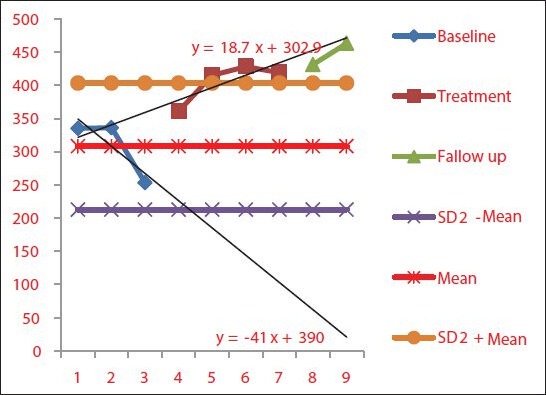
Aphasia is prevalent in people following stroke, which can have a significant impact on the quality of life of the patients with stroke. One of the new methods for treatment of patients with aphasia is constraint-induced aphasia therapy (CIAT). The aim of this study was to investigate the efficacy of CIAT on naming deficits in individuals with chronic aphasia. This study had a prospective, single-subject study with A-B-A design. The CIAT was administered to two patients with chronic aphasia. Participants were a 57-year-old male and a 45-year-old female and had a stroke 60 and 36 months ago, respectively. In this study, the naming test was used as the outcome measure. The naming test was administered in three baseline sessions with 1 week interval between tests (phase A). Patients received CIAT for four consecutive weeks (3 days/week). Four measurements were taken during the treatment phase (phase B). In follow-up phase (phase A) two other measurements were performed. Visual analysis consisting of level, regression line, and variability were used to determine the effects of CIAT on naming. Both participants increased scores on naming test after phase A and B. The mean of the naming score improved from the baseline to the intervention phase in both participants. There was a positive trend in naming scores during the treatment phase compared with the trend in the baseline demonstrated by both participants. The results of this study showed that the CIAT can be effective in improving the naming deficit in patients with chronic post-stroke aphasia.

摘要

失语症在中风患者中很常见,这会对中风患者的生活质量产生重大影响。治疗失语症患者的新方法之一是强制性失语症治疗(CIAT)。本研究的目的是调查CIAT对慢性失语症患者命名缺陷的疗效。本研究采用前瞻性单受试者A-B-A设计。CIAT应用于两名慢性失语症患者。参与者分别是一名57岁男性和一名45岁女性,分别在60个月和36个月前中风。在本研究中,命名测试用作结果指标。命名测试在三个基线阶段进行,测试之间间隔1周(A阶段)。患者连续四周接受CIAT治疗(每周3天)。在治疗阶段(B阶段)进行了四次测量。在随访阶段(A阶段)进行了另外两次测量。使用包括水平、回归线和变异性的视觉分析来确定CIAT对命名的影响。在A阶段和B阶段后,两名参与者的命名测试得分均有所提高。两名参与者从基线到干预阶段的命名得分平均值均有所提高。与两名参与者在基线阶段的趋势相比,治疗阶段的命名得分呈上升趋势。本研究结果表明,CIAT对改善慢性中风后失语症患者的命名缺陷有效。

https://cdn.ncbi.nlm.nih.gov/pmc/blobs/de88/4085932/20c6f6daf2a5/IJPVM-5-782-g004.jpg
https://cdn.ncbi.nlm.nih.gov/pmc/blobs/de88/4085932/1f3c56422980/IJPVM-5-782-g002.jpg
https://cdn.ncbi.nlm.nih.gov/pmc/blobs/de88/4085932/20c6f6daf2a5/IJPVM-5-782-g004.jpg
https://cdn.ncbi.nlm.nih.gov/pmc/blobs/de88/4085932/1f3c56422980/IJPVM-5-782-g002.jpg
https://cdn.ncbi.nlm.nih.gov/pmc/blobs/de88/4085932/20c6f6daf2a5/IJPVM-5-782-g004.jpg

相似文献

1
A Single-subject Study to Examine the Effects of Constrained-induced Aphasia Therapy on Naming Deficit.一项单病例研究,旨在探究强制性诱导失语症疗法对命名缺陷的影响。
Int J Prev Med. 2014 Jun;5(6):782-6.
2
Effect of type of language therapy on expressive language skills in patients with post-stroke aphasia.语言治疗类型对中风后失语症患者表达性语言技能的影响。
Int J Lang Commun Disord. 2018 Jul;53(4):825-835. doi: 10.1111/1460-6984.12390. Epub 2018 May 10.
3
Constraint-induced or multi-modal personalized aphasia rehabilitation (COMPARE): A randomized controlled trial for stroke-related chronic aphasia.强制性诱导或多模态个性化失语症康复治疗(COMPARE):针对与中风相关的慢性失语症的随机对照试验。
Int J Stroke. 2019 Dec;14(9):972-976. doi: 10.1177/1747493019870401. Epub 2019 Sep 7.
4
Constrained versus unconstrained intensive language therapy in two individuals with chronic, moderate-to-severe aphasia and apraxia of speech: behavioral and fMRI outcomes.约束性与非约束性强化语言治疗对 2 名慢性中重度失语症和言语失用症患者的行为和 fMRI 结果的影响。
Am J Speech Lang Pathol. 2012 May;21(2):S65-87. doi: 10.1044/1058-0360(2012/11-0113). Epub 2012 Jan 31.
5
Constraint-induced Aphasia Therapy Improves the Use of Spoken Language and Word-finding Ability in Chronic Subcortical Aphasia: A Case Report.强制性失语症疗法改善慢性皮质下失语症患者的口语使用和找词能力:一例报告
Prog Rehabil Med. 2022 Nov 23;7:20220060. doi: 10.2490/prm.20220060. eCollection 2022.
6
Constraint-Induced Aphasia Therapy for Treatment of Chronic Post-Stroke Aphasia: A Randomized, Blinded, Controlled Pilot Trial.强制性诱导失语症疗法治疗慢性中风后失语症:一项随机、盲法、对照试验性研究
Med Sci Monit. 2015 Sep 24;21:2861-9. doi: 10.12659/MSM.894291.
7
Neuroimaging Correlates of Post-Stroke Aphasia Rehabilitation in a Pilot Randomized Trial of Constraint-Induced Aphasia Therapy.在一项关于强制性失语症治疗的试点随机试验中,中风后失语症康复的神经影像学关联。
Med Sci Monit. 2017 Jul 18;23:3489-3507. doi: 10.12659/msm.902301.
8
Memantine and constraint-induced aphasia therapy in chronic poststroke aphasia.美金刚与强制性失语症疗法治疗慢性脑卒中后失语症
Ann Neurol. 2009 May;65(5):577-85. doi: 10.1002/ana.21597.
9
A feasibility study of combined intermittent theta burst stimulation and modified constraint-induced aphasia therapy in chronic post-stroke aphasia.联合间歇性θ波爆发刺激与改良强制性失语症疗法治疗慢性脑卒中后失语症的可行性研究
Restor Neurol Neurosci. 2018;36(4):503-518. doi: 10.3233/RNN-180812.
10
Results of the COMPARE trial of Constraint-induced or Multimodality Aphasia Therapy compared with usual care in chronic post-stroke aphasia.中风后慢性失语症患者的约束诱导或多模式失语症疗法与常规护理对比的COMPARE试验结果。
J Neurol Neurosurg Psychiatry. 2022 Jun;93(6):573-581. doi: 10.1136/jnnp-2021-328422. Epub 2022 Apr 8.

引用本文的文献

1
Progress in the clinical application of constraint-induced therapy following stroke since 2014.2014年以来中风后强制性诱导疗法的临床应用进展
Front Neurol. 2023 May 19;14:1170420. doi: 10.3389/fneur.2023.1170420. eCollection 2023.
2
Comparison of the Effects of Video Modeling and Clinician Modeling on Naming Deficiency in Aphasic Patients.视频示范与临床医生示范对失语症患者命名缺陷影响的比较
Galen Med J. 2019 Jan 1;8:e1158. doi: 10.31661/gmj.v0i0.1158. eCollection 2019.
3
Constraint-induced aphasia therapy in post-stroke aphasia rehabilitation: A systematic review and meta-analysis of randomized controlled trials.

本文引用的文献

1
A review of Constraint-Induced Therapy applied to aphasia rehabilitation in stroke patients.对应用于中风患者失语症康复的强制性诱导疗法的综述。
Dement Neuropsychol. 2009 Oct-Dec;3(4):275-282. doi: 10.1590/S1980-57642009DN30400003.
2
Constrained versus unconstrained intensive language therapy in two individuals with chronic, moderate-to-severe aphasia and apraxia of speech: behavioral and fMRI outcomes.约束性与非约束性强化语言治疗对 2 名慢性中重度失语症和言语失用症患者的行为和 fMRI 结果的影响。
Am J Speech Lang Pathol. 2012 May;21(2):S65-87. doi: 10.1044/1058-0360(2012/11-0113). Epub 2012 Jan 31.
3
First decade of research on constrained-induced treatment approaches for aphasia rehabilitation.
中风后失语症康复中的强制性诱导失语症治疗:随机对照试验的系统评价和荟萃分析
PLoS One. 2017 Aug 28;12(8):e0183349. doi: 10.1371/journal.pone.0183349. eCollection 2017.
4
The effects of intensive language therapy in aphasic patients.
Iran J Neurol. 2017 Jan 5;16(1):43-44.
约束诱导治疗方法在失语症康复研究的第一个十年。
Arch Phys Med Rehabil. 2012 Jan;93(1 Suppl):S35-45. doi: 10.1016/j.apmr.2011.06.040.
4
Neuroscience insights improve neurorehabilitation of poststroke aphasia.神经科学研究进展促进脑卒中后失语症的神经康复。
Nat Rev Neurol. 2011 Feb;7(2):86-97. doi: 10.1038/nrneurol.2010.201.
5
Constraint-induced aphasia therapy stimulates language recovery in patients with chronic aphasia after ischemic stroke.强制性失语症疗法可促进缺血性中风后慢性失语症患者的语言恢复。
Med Sci Monit. 2008 May;14(5):CR243-250.
6
Changes in language-specific brain activation after therapy for aphasia using magnetoencephalography: a case study.使用脑磁图对失语症患者进行治疗后特定语言脑激活的变化:一项病例研究。
Neurocase. 2007 Jun;13(3):169-77. doi: 10.1080/13554790701448200.
7
Intensive language training in the rehabilitation of chronic aphasia: efficient training by laypersons.慢性失语症康复中的强化语言训练:外行人的有效训练
J Int Neuropsychol Soc. 2007 Sep;13(5):846-53. doi: 10.1017/S1355617707071111.
8
The learned nonuse phenomenon: implications for rehabilitation.习得性废用现象:对康复的启示
Eura Medicophys. 2006 Sep;42(3):241-56.
9
Therapy-related reorganization of language in both hemispheres of patients with chronic aphasia.慢性失语症患者双侧半球与治疗相关的语言重组。
Neuroimage. 2005 Nov 1;28(2):481-9. doi: 10.1016/j.neuroimage.2005.06.038. Epub 2005 Aug 15.
10
Poststroke aphasia : epidemiology, pathophysiology and treatment.中风后失语症:流行病学、病理生理学及治疗
Drugs Aging. 2005;22(2):163-82. doi: 10.2165/00002512-200522020-00006.