Giraudeau Patrick, Frydman Lucio
Chimie et Interdisciplinarité: Synthèse, Analyse, Modélisation, UMR 6230, Université de Nantes, 44322 Nantes Cedex 03, France; email:
Annu Rev Anal Chem (Palo Alto Calif). 2014;7:129-61. doi: 10.1146/annurev-anchem-071213-020208.
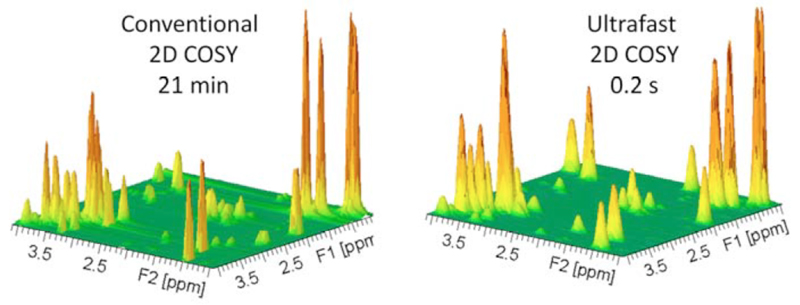
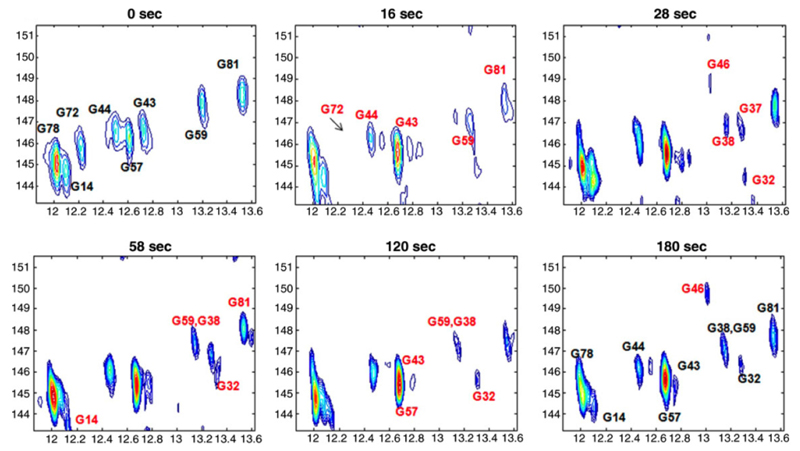
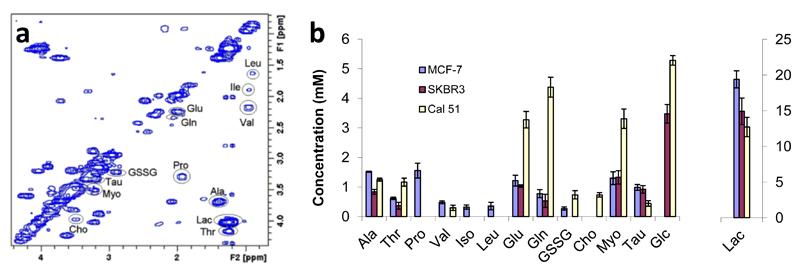
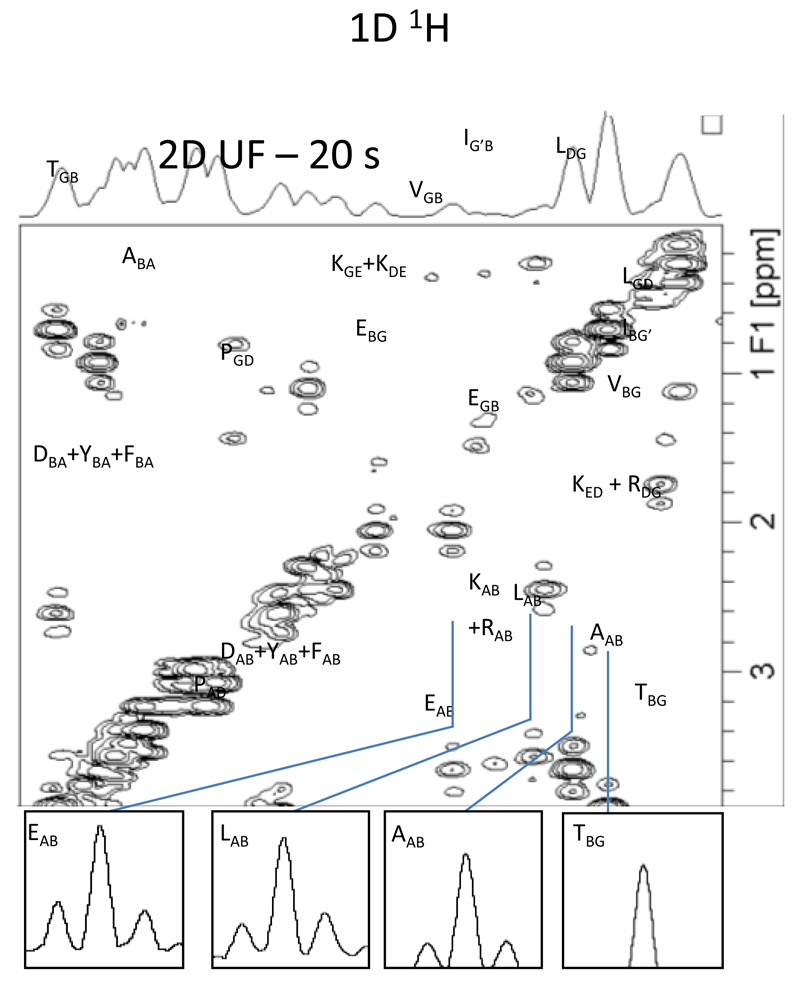
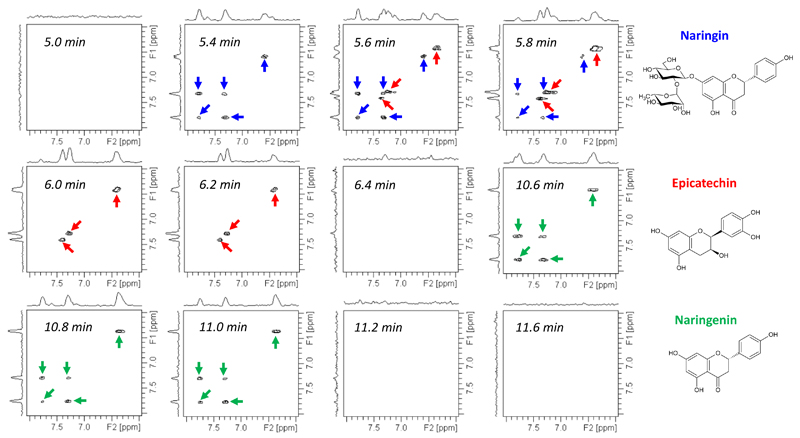
Two-dimensional nuclear magnetic resonance (2D NMR) spectroscopy is widely used in chemical and biochemical analyses. Multidimensional NMR is also witnessing increased use in quantitative and metabolic screening applications. Conventional 2D NMR experiments, however, are affected by inherently long acquisition durations, arising from their need to sample the frequencies involved along their indirect domains in an incremented, scan-by-scan nature. A decade ago, a so-called ultrafast (UF) approach was proposed, capable of delivering arbitrary 2D NMR spectra involving any kind of homo- or heteronuclear correlation, in a single scan. During the intervening years, the performance of this subsecond 2D NMR methodology has been greatly improved, and UF 2D NMR is rapidly becoming a powerful analytical tool experiencing an expanded scope of applications. This review summarizes the principles and main developments that have contributed to the success of this approach and focuses on applications that have been recently demonstrated in various areas of analytical chemistry--from the real-time monitoring of chemical and biochemical processes, to extensions in hyphenated techniques and in quantitative applications.
二维核磁共振(2D NMR)光谱在化学和生化分析中被广泛应用。多维NMR在定量和代谢筛选应用中的使用也日益增加。然而,传统的二维核磁共振实验受到其固有的长采集时间的影响,这是由于它们需要以逐次扫描、逐步增加的方式对间接域中涉及的频率进行采样。十年前,一种所谓的超快(UF)方法被提出,它能够在单次扫描中给出涉及任何类型同核或异核相关性的任意二维核磁共振谱。在这期间,这种亚秒级二维核磁共振方法的性能有了很大提高,超快二维核磁共振正迅速成为一种强大的分析工具,其应用范围不断扩大。本综述总结了促成该方法成功的原理和主要进展,并重点介绍了最近在分析化学各个领域所展示的应用——从化学和生化过程的实时监测到联用技术和定量应用的扩展。