AlKhatib Zainab, Lagedroste Marcel, Fey Iris, Kleinschrodt Diana, Abts André, Smits Sander H J
Institute of Biochemistry, Heinrich Heine University Düsseldorf, Düsseldorf, Germany.
PLoS One. 2014 Jul 11;9(7):e102246. doi: 10.1371/journal.pone.0102246. eCollection 2014.
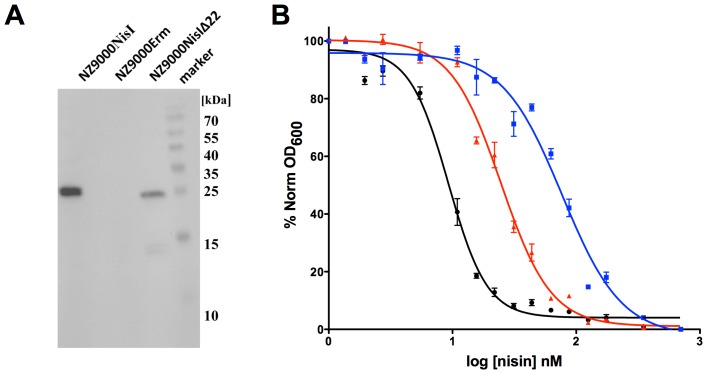
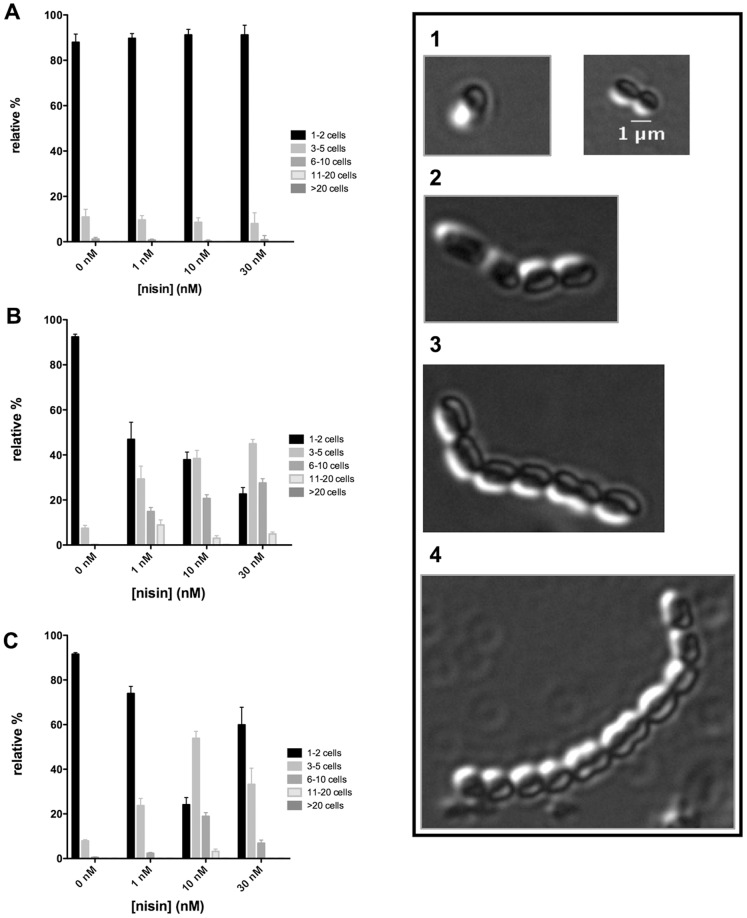
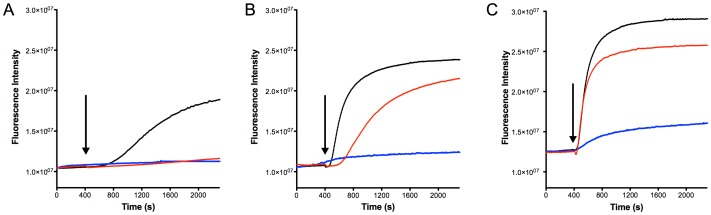
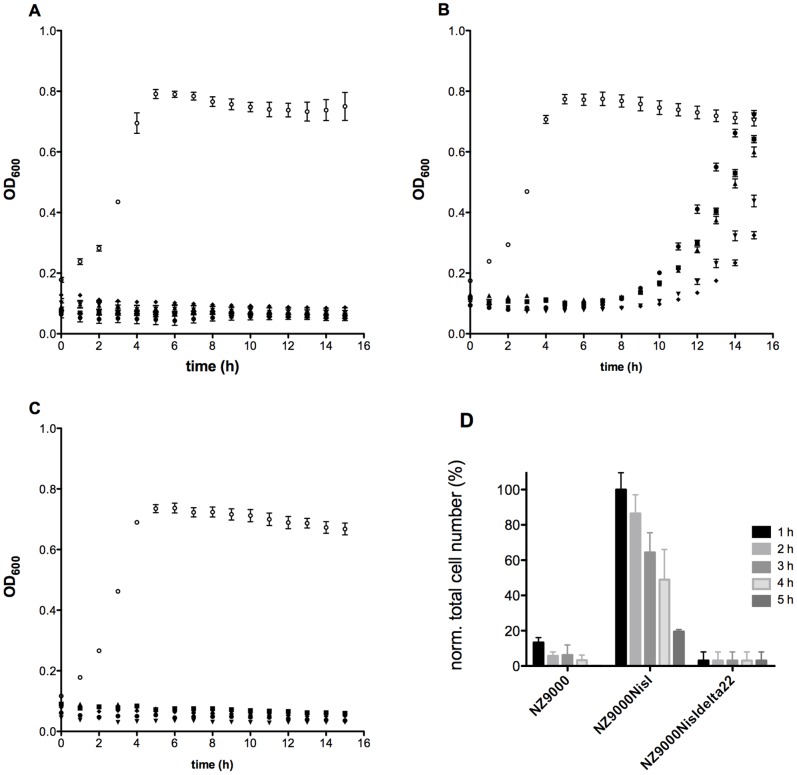
Nisin, a 3.4 kDa antimicrobial peptide produced by some Lactococcus lactis strains is the most prominent member of the lantibiotic family. Nisin can inhibit cell growth and penetrates the target Gram-positive bacterial membrane by binding to Lipid II, an essential cell wall synthesis precursor. The assembled nisin-Lipid II complex forms pores in the target membrane. To gain immunity against its own-produced nisin, Lactococcus lactis is expressing two immunity protein systems, NisI and NisFEG. Here, we show that the NisI expressing strain displays an IC50 of 73 ± 10 nM, an 8-10-fold increase when compared to the non-expressing sensitive strain. When the nisin concentration is raised above 70 nM, the cells expressing full-length NisI stop growing rather than being killed. NisI is inhibiting nisin mediated pore formation, even at nisin concentrations up to 1 µM. This effect is induced by the C-terminus of NisI that protects Lipid II. Its deletion showed pore formation again. The expression of NisI in combination with externally added nisin mediates an elongation of the chain length of the Lactococcus lactis cocci. While the sensitive strain cell-chains consist mainly of two cells, the NisI expressing cells display a length of up to 20 cells. Both results shed light on the immunity of lantibiotic producer strains, and their survival in high levels of their own lantibiotic in the habitat.
乳链菌肽是由某些乳酸乳球菌菌株产生的一种3.4 kDa抗菌肽,是羊毛硫抗生素家族中最突出的成员。乳链菌肽可抑制细胞生长,并通过与细胞壁合成必需前体脂质II结合穿透目标革兰氏阳性细菌膜。组装好的乳链菌肽-脂质II复合物在目标膜上形成孔。为了获得对自身产生的乳链菌肽的免疫能力,乳酸乳球菌表达两种免疫蛋白系统,即NisI和NisFEG。在此,我们表明表达NisI的菌株的IC50为73±10 nM,与不表达的敏感菌株相比增加了8至10倍。当乳链菌肽浓度提高到70 nM以上时,表达全长NisI的细胞停止生长而不是被杀死。即使在高达1 µM的乳链菌肽浓度下,NisI也能抑制乳链菌肽介导的孔形成。这种效应是由保护脂质II的NisI的C末端诱导的。其缺失再次显示出孔形成。NisI的表达与外部添加的乳链菌肽相结合介导了乳酸乳球菌球菌链长度的延长。敏感菌株的细胞链主要由两个细胞组成,而表达NisI的细胞显示出长达20个细胞的长度。这两个结果都揭示了羊毛硫抗生素产生菌株的免疫能力,以及它们在栖息地中高水平自身羊毛硫抗生素环境下的生存情况。