Engel Annette Summers, Gupta Axita A
Department of Geology and Geophysics, Louisiana State University, Baton Rouge, Louisiana, United States of America; Department of Earth and Planetary Sciences, University of Tennessee, Knoxville, Tennessee, United States of America.
Department of Geology and Geophysics, Louisiana State University, Baton Rouge, Louisiana, United States of America.
PLoS One. 2014 Jul 18;9(7):e102934. doi: 10.1371/journal.pone.0102934. eCollection 2014.
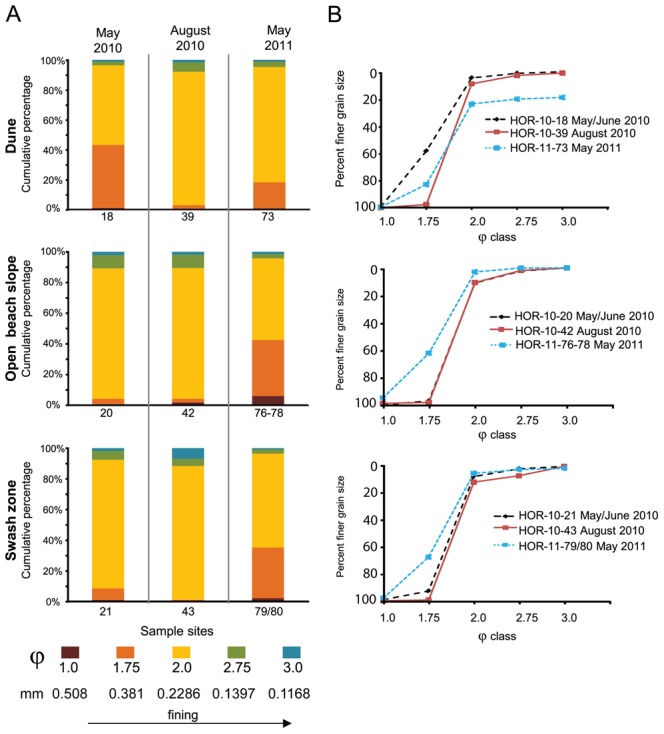
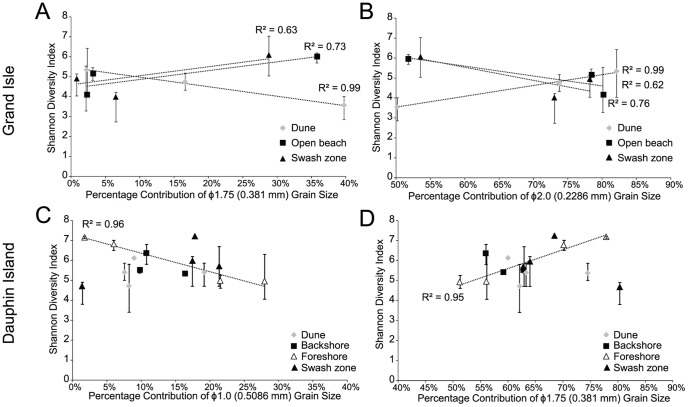
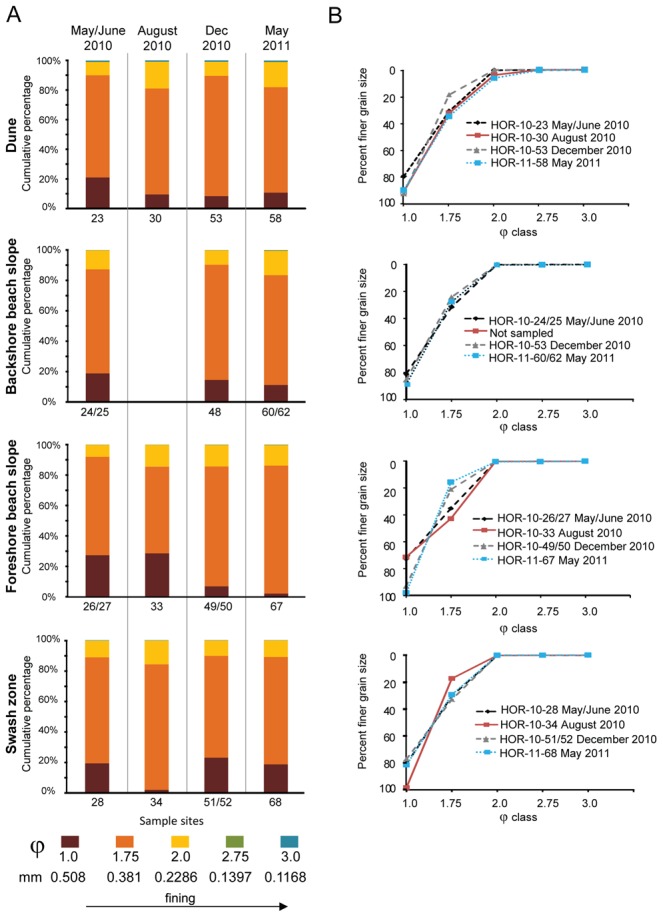
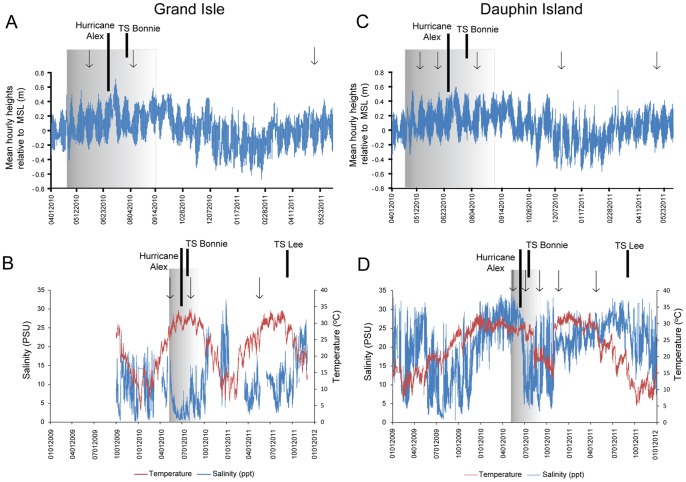
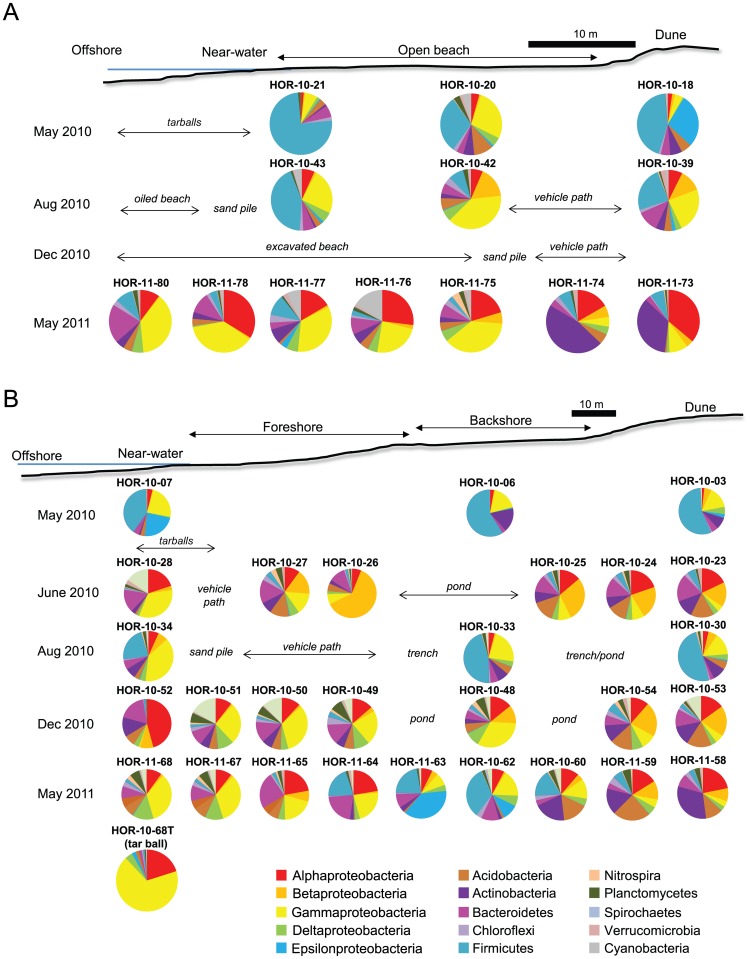
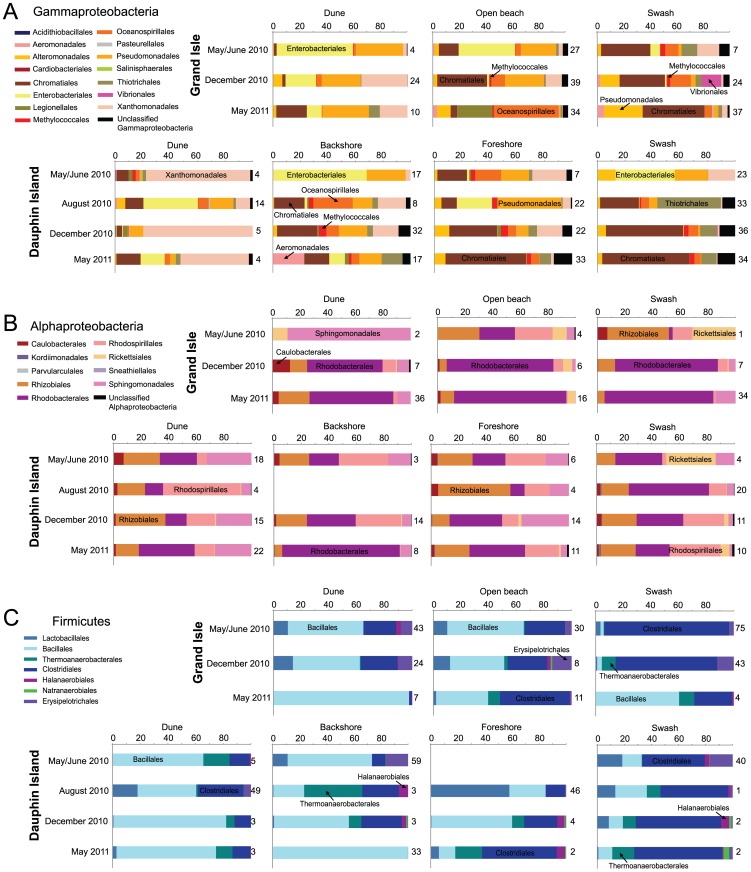
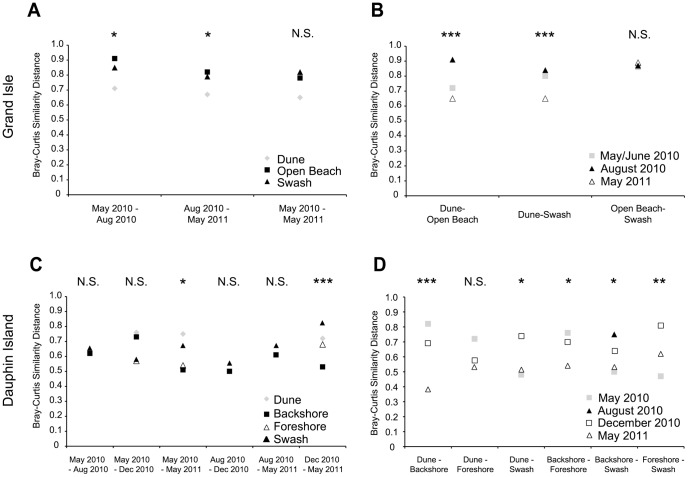
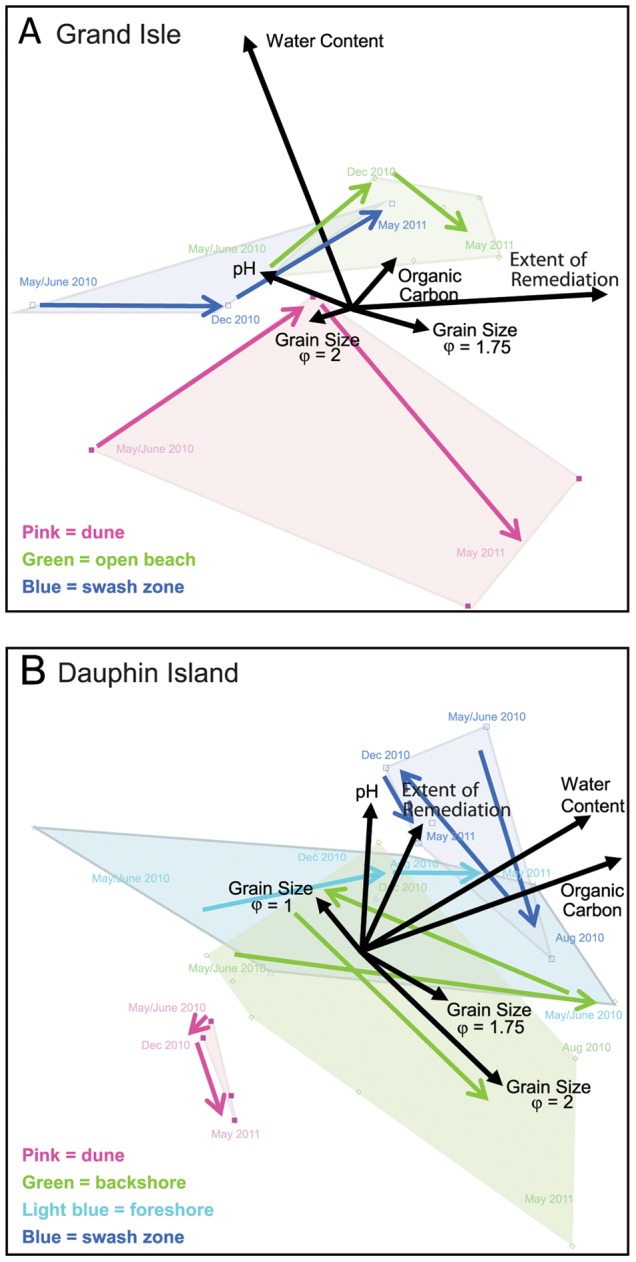
Sandy beaches support a wide variety of underappreciated biodiversity that is critical to coastal ecosystems. Prior to the 2010 Deepwater Horizon oil spill, the diversity and function of supratidal beach sediment microbial communities along Gulf of Mexico coastlines were not well understood. As such, it was unclear if microbial community compositional changes would occur following exposure to beached oil, if indigenous communities could biodegrade oil, or how cleanup efforts, such as sand washing and sediment redistribution, would impact microbial ecosystem resiliency. Transects perpendicular to the shoreline were sampled from public beaches on Grand Isle, Louisiana, and Dauphin Island, Alabama, over one year. Prior to oil coming onshore, elevated levels of bacteria associated with fecal contamination were detected (e.g., Enterobacteriales and Campylobacterales). Over time, significant shifts within major phyla were identified (e.g., Proteobacteria, Firmicutes, Actinobacteria) and fecal indicator groups were replaced by taxa affiliated with open-ocean and marine systems (e.g., Oceanospirillales, Rhodospirillales, and Rhodobacterales). These new bacterial groups included putative hydrocarbon degraders, similar to those identified near the oil plume offshore. Shifts in the microbial community composition strongly correlated to more poorly sorted sediment and grain size distributional changes. Natural oceanographic processes could not account for the disrupted sediment, especially from the backshore well above the maximum high-tide levels recorded at these sites. Sand washing and tilling occurred on both open beaches from August through at least December 2010, which were mechanisms that could replace fecal indicator groups with open-ocean groups. Consequently, remediation efforts meant to return beaches to pre-spill compositions caused a regime shift that may have added potential ecosystem function, like hydrocarbon degradation, to the sediment. Future research will need to assess the persistence and impact of the newly formed microbial communities to the overall sandy beach ecosystems.
沙滩拥有各种未得到充分重视的生物多样性,而这些生物多样性对沿海生态系统至关重要。在2010年“深水地平线”漏油事件之前,墨西哥湾沿岸潮上带沙滩沉积物微生物群落的多样性和功能并未得到充分了解。因此,尚不清楚接触到搁浅石油后微生物群落组成是否会发生变化,本地群落是否能够对石油进行生物降解,或者诸如洗沙和沉积物重新分布等清理工作将如何影响微生物生态系统的恢复力。在一年多的时间里,从路易斯安那州格兰德艾尔岛和阿拉巴马州多芬岛的公共海滩采集了垂直于海岸线的样带。在石油上岸之前,检测到与粪便污染相关的细菌水平升高(例如肠杆菌目和弯曲杆菌目)。随着时间的推移,主要门类中出现了显著变化(例如变形菌门、厚壁菌门、放线菌门),粪便指示菌群被与公海和海洋系统相关的分类群所取代(例如海洋螺菌目、红螺菌目和红杆菌目)。这些新的细菌类群包括假定的烃降解菌,类似于在近海油羽附近发现的那些。微生物群落组成的变化与分选性更差的沉积物和粒度分布变化密切相关。自然海洋学过程无法解释沉积物的破坏,特别是来自这些地点记录的最高高潮位以上后滨的沉积物破坏。2010年至少8月至12月期间,在两个开阔海滩上都进行了洗沙和翻耕,这些措施可能会用公海类群取代粪便指示菌群。因此,旨在使海滩恢复到溢油前组成的修复工作导致了一种状态转变,这可能为沉积物增加了潜在的生态系统功能,如烃降解。未来的研究需要评估新形成的微生物群落对整个沙滩生态系统的持久性和影响。