Doyle Shawn M, Whitaker Emily A, De Pascuale Veronica, Wade Terry L, Knap Anthony H, Santschi Peter H, Quigg Antonietta, Sylvan Jason B
Department of Oceanography, Texas A&M University, College Station, TX, United States.
Geochemical and Environmental Research Group, Texas A&M University, College Station, TX, United States.
Front Microbiol. 2018 Apr 11;9:689. doi: 10.3389/fmicb.2018.00689. eCollection 2018.
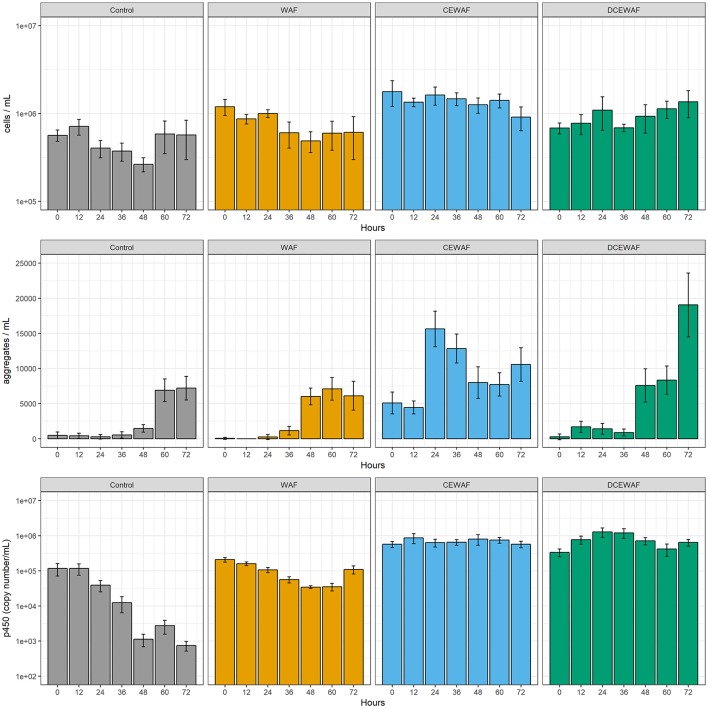
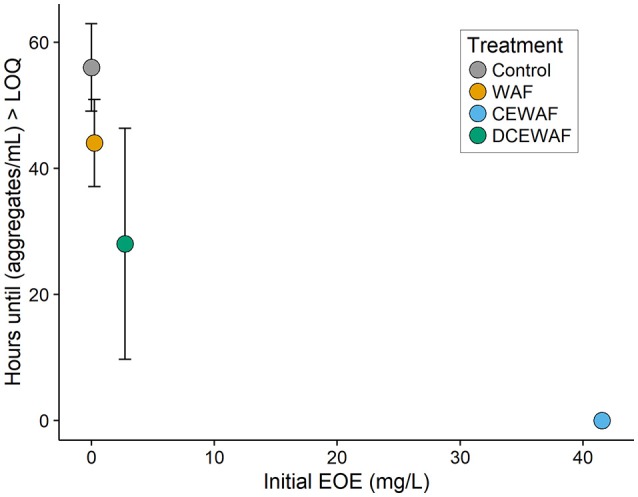
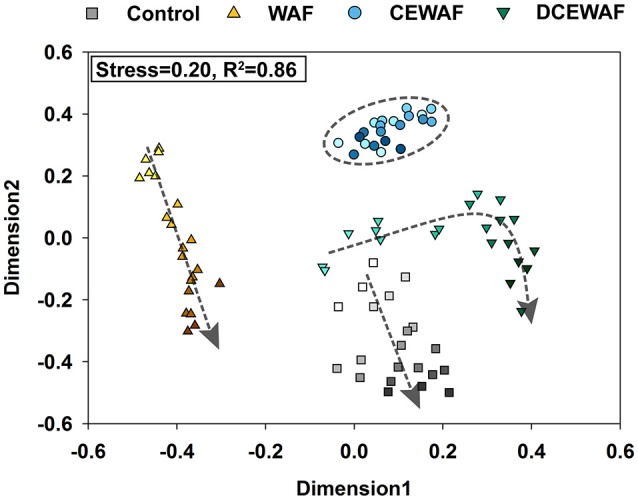
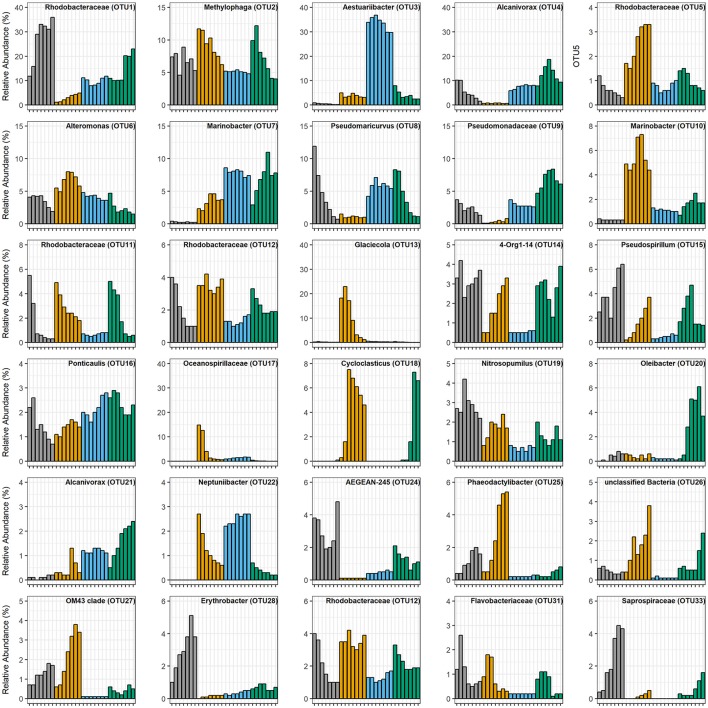
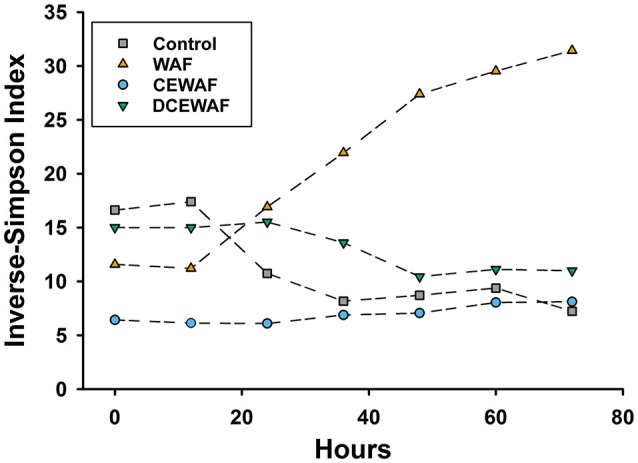
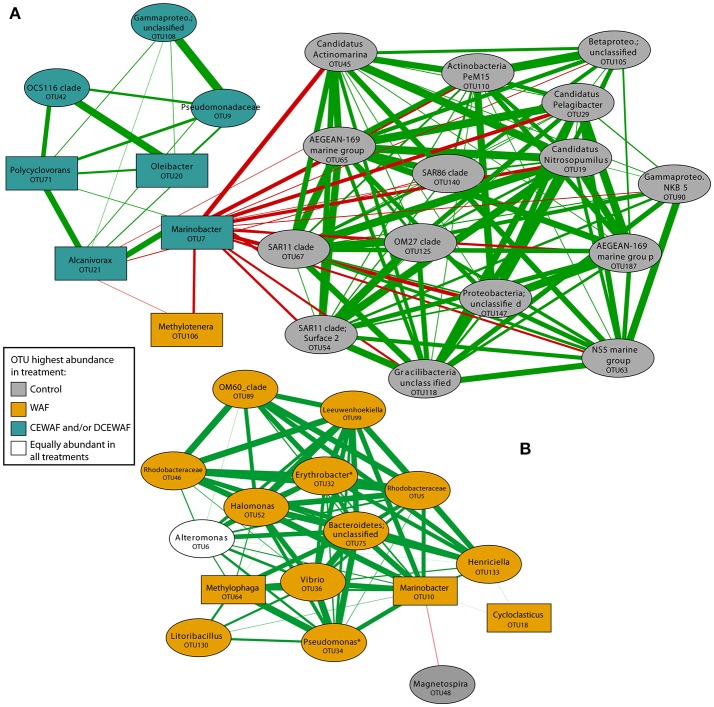
During the Deepwater Horizon (DWH) oil spill, massive quantities of oil were deposited on the seafloor via a large-scale marine oil-snow sedimentation and flocculent accumulation (MOSSFA) event. The role of chemical dispersants (e.g., Corexit) applied during the DWH oil spill clean-up in helping or hindering the formation of this MOSSFA event are not well-understood. Here, we present the first experiment related to the DWH oil spill to specifically investigate the relationship between microbial community structure, oil and Corexit®, and marine oil-snow in coastal surface waters. We observed the formation of micron-scale aggregates of microbial cells around droplets of oil and dispersant and found that their rate of formation was directly related to the concentration of oil within the water column. These micro-aggregates are potentially important precursors to the formation of larger marine oil-snow particles. Therefore, our observation that Corexit® significantly enhanced their formation suggests dispersant application may play a role in the development of MOSSFA events. We also observed that microbial communities in marine surface waters respond to oil and oil plus Corexit® differently and much more rapidly than previously measured, with major shifts in community composition occurring within only a few hours of experiment initiation. In the oil-amended treatments without Corexit®, this manifested as an increase in community diversity due to the outgrowth of several putative aliphatic- and aromatic-hydrocarbon degrading genera, including phytoplankton-associated taxa. In contrast, microbial community diversity was reduced in mesocosms containing chemically dispersed oil. Importantly, different consortia of hydrocarbon degrading bacteria responded to oil and chemically dispersed oil, indicating that functional redundancy in the pre-spill community likely results in hydrocarbon consumption in both undispersed and dispersed oils, but by different bacterial taxa. Taken together, these data improve our understanding of how dispersants influence the degradation and transport of oil in marine surface waters following an oil spill and provide valuable insight into the early response of complex microbial communities to oil exposure.
在“深水地平线”(DWH)漏油事件期间,大量石油通过大规模海洋油雪沉降与絮凝堆积(MOSSFA)事件沉积在海底。在DWH漏油事件清理过程中使用的化学分散剂(如Corexit)对这一MOSSFA事件形成的促进或阻碍作用尚不清楚。在此,我们展示了首个与DWH漏油事件相关的实验,专门研究沿海表层水体中微生物群落结构、石油与Corexit®以及海洋油雪之间的关系。我们观察到在油滴和分散剂周围形成了微米级的微生物细胞聚集体,并发现它们的形成速率与水柱中石油浓度直接相关。这些微聚集体可能是形成更大海洋油雪颗粒的重要前体。因此,我们观察到Corexit®显著增强了它们的形成这一现象表明,分散剂的使用可能在MOSSFA事件的发展中发挥作用。我们还观察到,海洋表层水体中的微生物群落对石油以及石油加Corexit®的反应不同,且比之前测量的速度要快得多,在实验开始仅几小时内群落组成就发生了重大变化。在未添加Corexit®的油添加处理中,这表现为群落多样性增加是由于几个假定的脂肪族和芳香族碳氢化合物降解属(包括与浮游植物相关的分类群)的生长。相比之下,在含有化学分散油的中宇宙中微生物群落多样性降低。重要的是,不同的碳氢化合物降解细菌群落对石油和化学分散油有不同反应,这表明溢油前群落中的功能冗余可能导致未分散油和分散油中的碳氢化合物都被消耗,但消耗的是不同的细菌分类群。综上所述,这些数据增进了我们对分散剂如何影响溢油后海洋表层水体中石油的降解和运输的理解,并为复杂微生物群落对石油暴露的早期反应提供了有价值的见解。