Paul Ian M, Williams Jennifer S, Anzman-Frasca Stephanie, Beiler Jessica S, Makova Kateryna D, Marini Michele E, Hess Lindsey B, Rzucidlo Susan E, Verdiglione Nicole, Mindell Jodi A, Birch Leann L
Department of Pediatrics, HS83, Penn State College of Medicine, 500 University Dr,, Hershey 17033, PA, USA.
BMC Pediatr. 2014 Jul 18;14:184. doi: 10.1186/1471-2431-14-184.
Because early life growth has long-lasting metabolic and behavioral consequences, intervention during this period of developmental plasticity may alter long-term obesity risk. While modifiable factors during infancy have been identified, until recently, preventive interventions had not been tested. The Intervention Nurses Starting Infants Growing on Healthy Trajectories (INSIGHT). Study is a longitudinal, randomized, controlled trial evaluating a responsive parenting intervention designed for the primary prevention of obesity. This "parenting" intervention is being compared with a home safety control among first-born infants and their parents. INSIGHT's central hypothesis is that responsive parenting and specifically responsive feeding promotes self-regulation and shared parent-child responsibility for feeding, reducing subsequent risk for overeating and overweight.
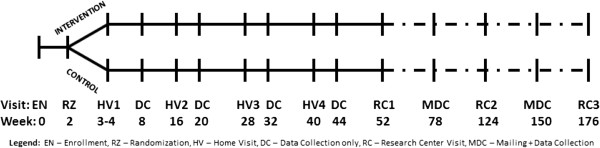
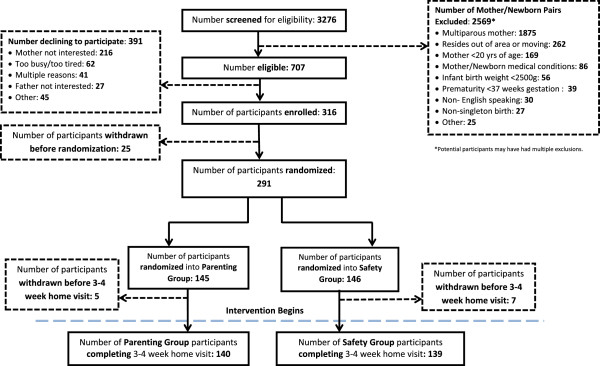
METHODS/DESIGN: 316 first-time mothers and their full-term newborns were enrolled from one maternity ward. Two weeks following delivery, dyads were randomly assigned to the "parenting" or "safety" groups. Subsequently, research nurses conduct study visits for both groups consisting of home visits at infant age 3-4, 16, 28, and 40 weeks, followed by annual clinic-based visits at 1, 2, and 3 years. Both groups receive intervention components framed around four behavior states: Sleeping, Fussy, Alert and Calm, and Drowsy. The main study outcome is BMI z-score at age 3 years; additional outcomes include those related to patterns of infant weight gain, infant sleep hygiene and duration, maternal responsiveness and soothing strategies for infant/toddler distress and fussiness, maternal feeding style and infant dietary content and physical activity. Maternal outcomes related to weight status, diet, mental health, and parenting sense of competence are being collected. Infant temperament will be explored as a moderator of parenting effects, and blood is collected to obtain genetic predictors of weight status. Finally, second-born siblings of INSIGHT participants will be enrolled in an observation-only study to explore parenting differences between siblings, their effect on weight outcomes, and carryover effects of INSIGHT interventions to subsequent siblings.
With increasing evidence suggesting the importance of early life experiences on long-term health trajectories, the INSIGHT trial has the ability to inform future obesity prevention efforts in clinical settings.
NCT01167270. Registered 21 July 2010.
由于生命早期的生长具有长期的代谢和行为后果,在这个发育可塑性时期进行干预可能会改变长期肥胖风险。虽然已经确定了婴儿期的可改变因素,但直到最近,预防性干预措施尚未得到测试。“干预护士启动婴儿健康成长轨迹”(INSIGHT)研究是一项纵向、随机、对照试验,评估一种为肥胖一级预防设计的响应式育儿干预措施。这种“育儿”干预措施正在与初生男婴及其父母中的家庭安全对照组进行比较。INSIGHT的核心假设是,响应式育儿,特别是响应式喂养,能促进自我调节以及父母与孩子在喂养方面的共同责任,降低后续暴饮暴食和超重的风险。
方法/设计:从一个产科病房招募了316名初产妇及其足月新生儿。分娩后两周,将母婴对随机分配到“育儿”组或“安全”组。随后,研究护士对两组进行研究访视,包括在婴儿3 - 4周、16周、28周和40周时进行家访,随后在1岁、2岁和3岁时进行年度门诊访视。两组都接受围绕四种行为状态构建的干预内容:睡眠、烦躁、警觉平静和困倦。主要研究结局是3岁时的BMI z评分;其他结局包括与婴儿体重增加模式、婴儿睡眠卫生和时长、母亲的响应能力以及针对婴儿/幼儿痛苦和烦躁的安抚策略、母亲的喂养方式以及婴儿饮食内容和身体活动相关的结局。正在收集与母亲体重状况、饮食、心理健康和育儿能力感相关的结局。将探索婴儿气质作为育儿效果的调节因素,并采集血液以获得体重状况的基因预测指标。最后,INSIGHT参与者的二胎兄弟姐妹将被纳入一项仅观察性研究,以探索兄弟姐妹之间的育儿差异、其对体重结局的影响以及INSIGHT干预对后续兄弟姐妹的延续效应。
越来越多的证据表明生命早期经历对长期健康轨迹的重要性,INSIGHT试验有能力为未来临床环境中的肥胖预防工作提供信息。
NCT01167270。2010年7月21日注册。