Mackert Gina Alicia, Hirche Christoph, Harhaus Helmut, Kotsougiani Dimitra, Hoener Bernd, Kneser Ulrich, Harhaus Leila
Department for Hand-, Plastic- and Reconstructive Surgery - Burn Care Center - BG-Trauma Clinic Ludwigshafen, Department for Plastic Surgery of the University of Heidelberg, Ludwig-Guttmann-Str, 13, 67071 Ludwigshafen, Germany.
BMC Musculoskelet Disord. 2014 Jul 21;15:245. doi: 10.1186/1471-2474-15-245.
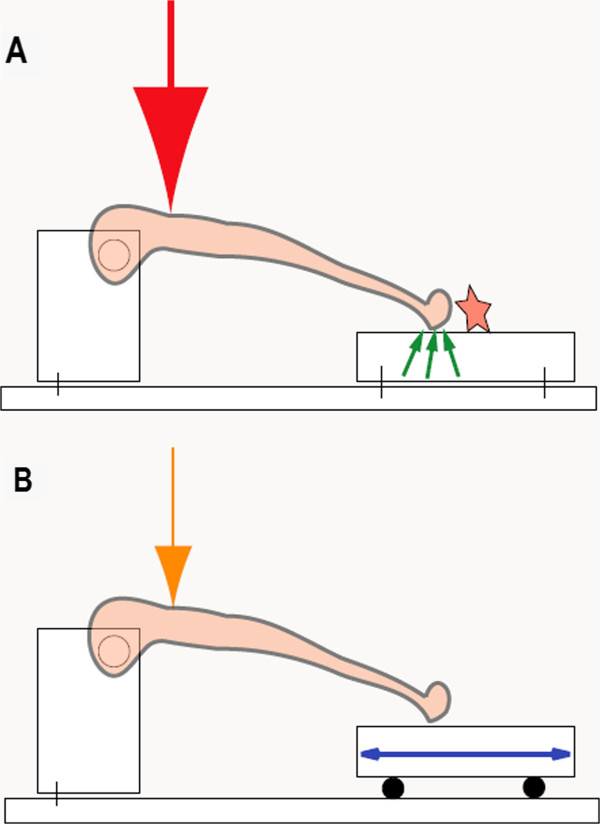
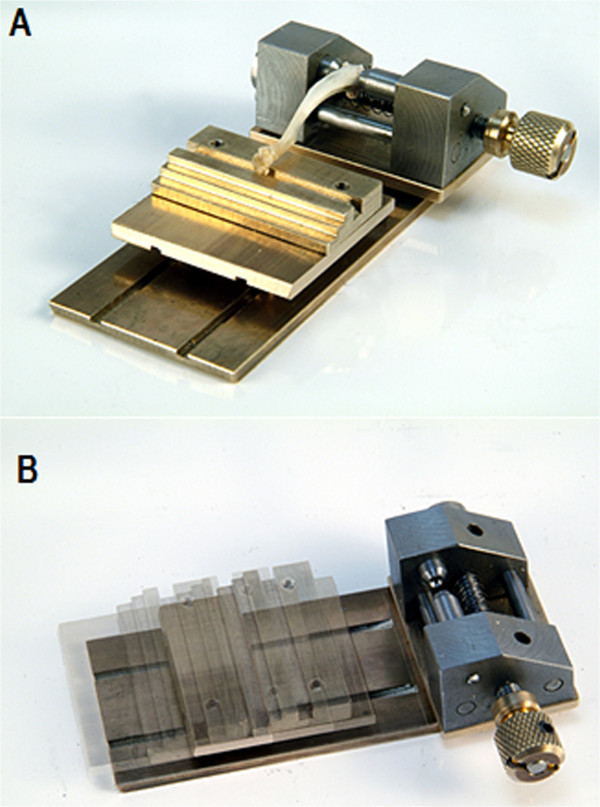
Biomechanical testing is an essential component of bone research. In order to test the metaphyseal region of long bones, a typical location for the nowadays increasing field of osteoporotic bone changes, three-point bending and breaking test devices are suitable and widely used. The aim of our study was to increase the effectiveness of this method by using a newly developed ball-mounted platform design. This new design eliminates the negative effects of friction, present in previous studies, caused by the lengthening of the distal tibia along its diaphyseal axis while sliding over the surface of a fixed aluminum block.
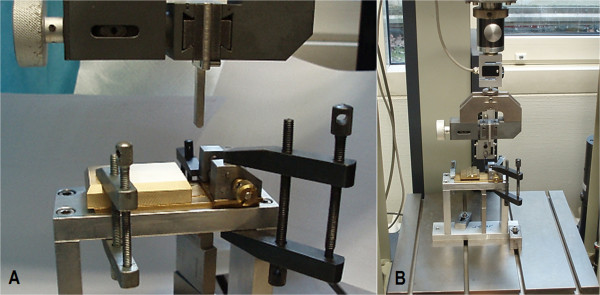
70 tibiae of 35 twelve week old, female Sprague Dawley rats were separated into two groups for a metaphyseal bending/breaking test. Group 1 was made up of the rat's right tibiae, Group 2 of the left tibiae. Group 1 was tested on a solid metal block according to previously established testing devices whereas Group 2 was tested on the newly designed device: the resistance-free gliding, ball-mounted platform. Stiffness (N/mm), yield Load (N), and failure Load (N) were registered. In the evaluation of both testing procedures, the results of the right and left tibiae were compared according to the rat they originated from.
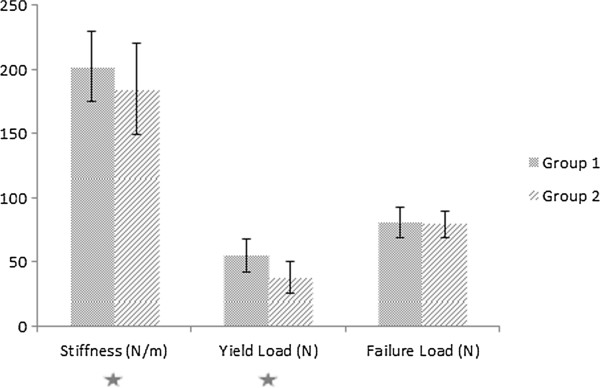
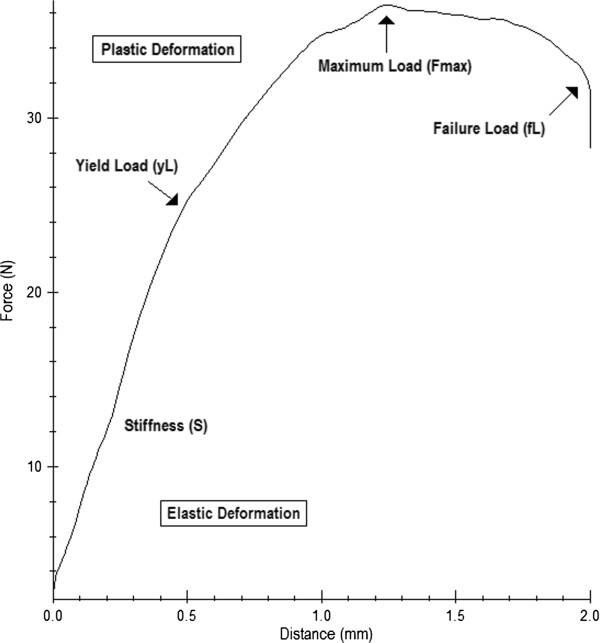
Stiffness (S) showed highly significant differences (p = 0.002) with 202.25 ± 27.010 N/mm SD (Group 1) and 184.66 ± 35.875 N/mm SD (Group 2). Yield Load (yL) showed highly significant differences (p < 0.001) with 55.31 ± 13.074 N SD (Group1) and 37.17 ± 12.464 N SD (Group2). The mean failure Load (fL) did not differ significantly (p < 0.231) between Group 1: 81.34 ± 11.972 N SD and Group 2: 79.63 ± 10.345 N SD.
We therefore conclude that, used in the three-point bending/breaking test, the mobile, ball-mounted platform device is able to efficiently eliminate the influence of friction in terms of stiffness and yield load. Failure Load was not affected. We suggest that the new ball-mounted platform device, when compared to other existing techniques, generates more accurate test results when used in the three-point bending/breaking test of the metaphysis of long bones.
生物力学测试是骨骼研究的重要组成部分。为了测试长骨的干骺端区域,这是如今骨质疏松性骨变化日益增多的一个典型部位,三点弯曲和断裂测试装置是适用且广泛使用的。我们研究的目的是通过使用新开发的球座平台设计来提高这种方法的有效性。这种新设计消除了先前研究中存在的摩擦负面影响,这种摩擦是由于胫骨远端沿其骨干轴线在固定铝块表面滑动时延长而产生的。
将35只12周龄雌性斯普拉格 - 道利大鼠的70根胫骨分为两组进行干骺端弯曲/断裂测试。第1组由大鼠的右胫骨组成,第2组由左胫骨组成。第1组根据先前建立的测试装置在实心金属块上进行测试,而第2组在新设计的装置上进行测试:无阻力滑动球座平台。记录刚度(N/mm)、屈服载荷(N)和破坏载荷(N)。在评估这两种测试程序时,根据胫骨所来自的大鼠比较左右胫骨的结果。
刚度(S)显示出高度显著差异(p = 0.002),第1组为202.25±27.010 N/mm标准差,第2组为184.66±35.875 N/mm标准差。屈服载荷(yL)显示出高度显著差异(p < 0.001),第1组为55.31±13.074 N标准差,第2组为37.17±12.464 N标准差。第1组平均破坏载荷(fL)为81.34±11.972 N标准差,第2组为79.63±10.345 N标准差,两组之间无显著差异(p < 0.231)。
因此,我们得出结论,在三点弯曲/断裂测试中使用的可移动球座平台装置能够在刚度和屈服载荷方面有效消除摩擦的影响。破坏载荷不受影响。我们建议,与其他现有技术相比,新的球座平台装置在用于长骨干骺端的三点弯曲/断裂测试时能产生更准确的测试结果。