Jones E Ellen, Dworski Shaalee, Canals Daniel, Casas Josefina, Fabrias Gemma, Schoenling Drew, Levade Thierry, Denlinger Chadrick, Hannun Yusuf A, Medin Jeffrey A, Drake Richard R
Department of Cell and Molecular Pharmacology and MUSC Proteomics Center, Medical University of South Carolina , 173 Ashley Avenue, Charleston, South Carolina 29425, United States.
Anal Chem. 2014 Aug 19;86(16):8303-11. doi: 10.1021/ac501937d. Epub 2014 Aug 8.
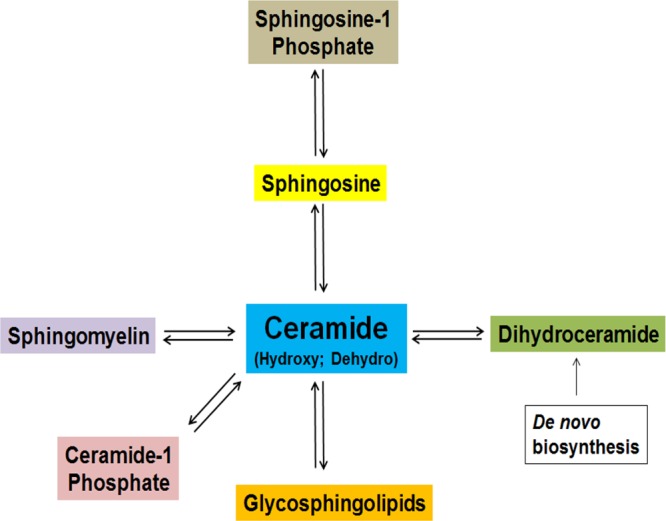
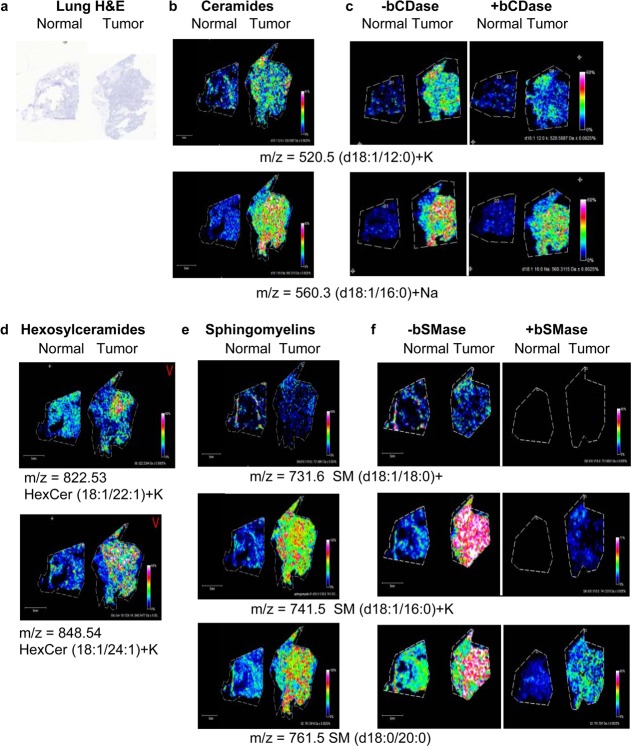
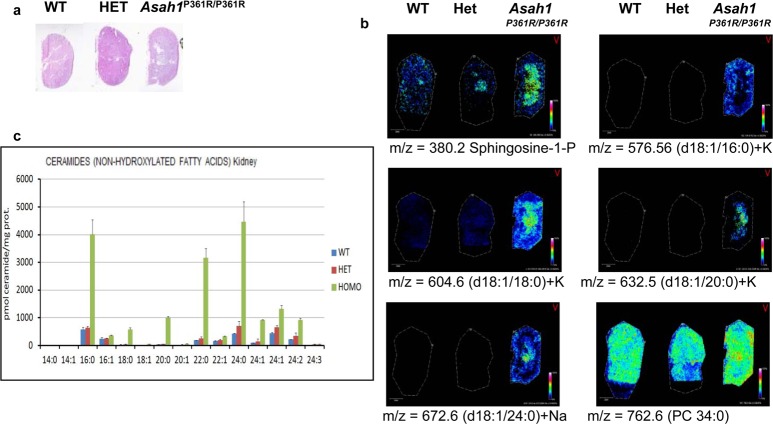
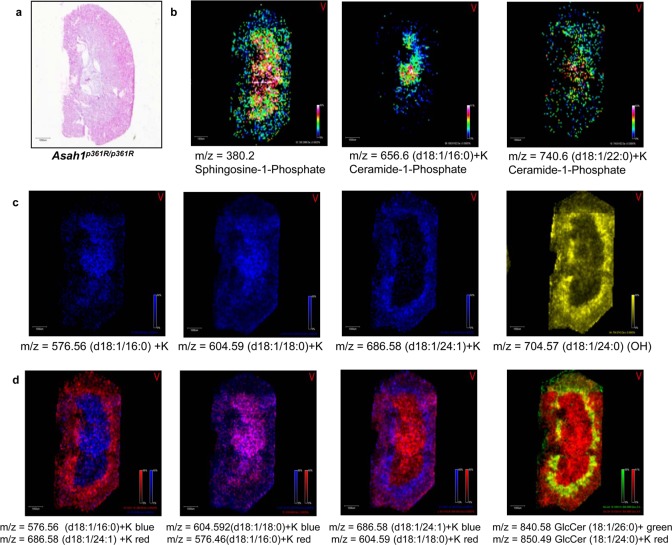
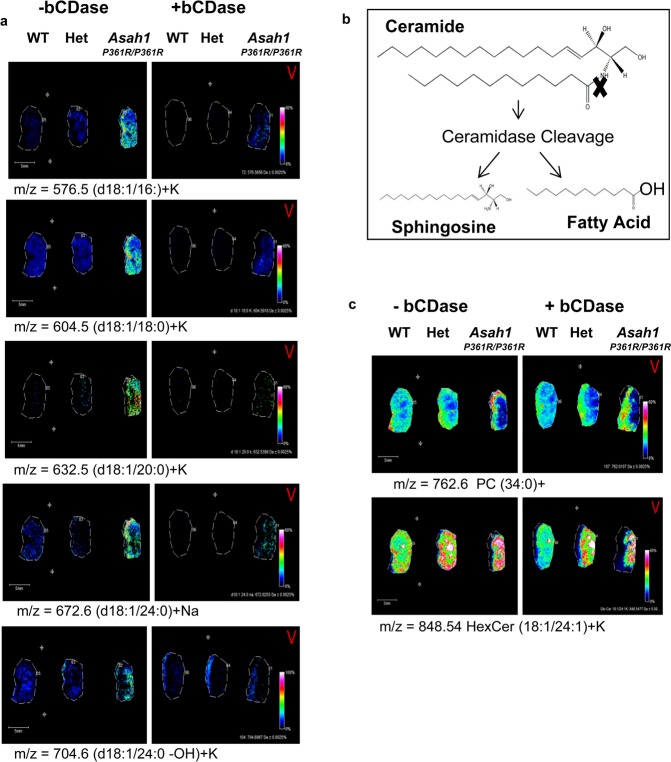
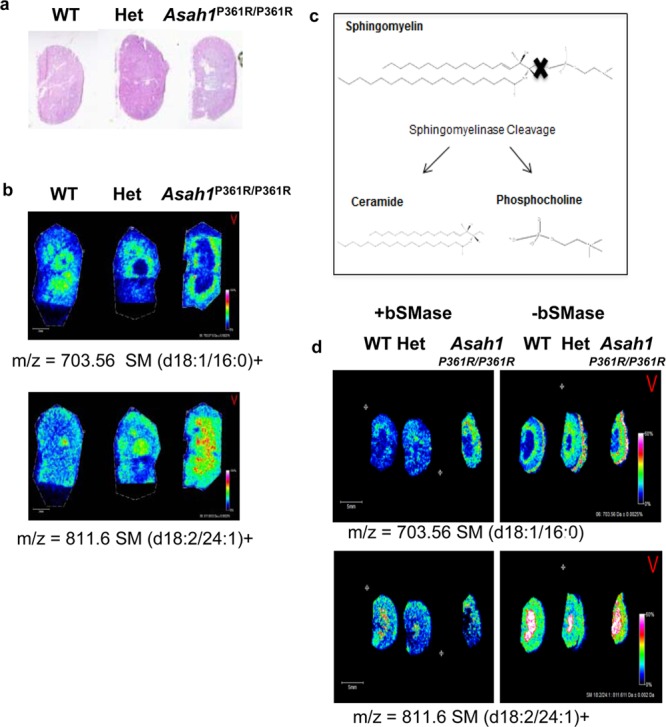
A novel MALDI-FTICR imaging mass spectrometry (MALDI-IMS) workflow is described for on-tissue detection, spatial localization, and structural confirmation of low abundance bioactive ceramides and other sphingolipids. Increasingly, altered or elevated levels of sphingolipids, sphingolipid metabolites, and sphingolipid metabolizing enzymes have been associated with a variety of disorders such as diabetes, obesity, lysosomal storage disorders, and cancer. Ceramide, which serves as a metabolic hub in sphingolipid metabolism, has been linked to cancer signaling pathways and to metabolic regulation with involvement in autophagy, cell-cycle arrest, senescence, and apoptosis. Using kidney tissues from a new Farber disease mouse model in which ceramides of all acyl chain lengths and other sphingolipid metabolites accumulate in tissues, specific ceramides and sphingomyelins were identified by on-tissue isolation and fragmentation, coupled with an on-tissue digestion by ceramidase or sphingomyelinase. Multiple glycosphingolipid species were also detected. The newly generated library of sphingolipid ions was then applied to MALDI-IMS of human lung cancer tissues. Multiple tumor specific ceramide and sphingomyelin species were detected and confirmed by on-tissue enzyme digests and structural confirmation. High-resolution MALDI-IMS in combination with novel on-tissue ceramidase and sphingomyelinase enzyme digestions makes it now possible to rapidly visualize the distribution of bioactive ceramides and sphingomyelin in tissues.
本文描述了一种新型基质辅助激光解吸电离傅里叶变换离子回旋共振成像质谱(MALDI-IMS)工作流程,用于在组织上检测、空间定位以及对低丰度生物活性神经酰胺和其他鞘脂进行结构确认。越来越多的研究表明,鞘脂、鞘脂代谢产物以及鞘脂代谢酶水平的改变或升高与多种疾病相关,如糖尿病、肥胖症、溶酶体贮积症和癌症。神经酰胺作为鞘脂代谢的一个代谢枢纽,与癌症信号通路以及参与自噬、细胞周期停滞、衰老和凋亡的代谢调节有关。利用一种新的法伯病小鼠模型的肾脏组织(在该模型中,所有酰基链长度的神经酰胺和其他鞘脂代谢产物都在组织中积累),通过组织上的分离和碎片化,结合神经酰胺酶或鞘磷脂酶的组织消化,鉴定出了特定的神经酰胺和鞘磷脂。还检测到了多种糖鞘脂种类。然后将新生成的鞘脂离子库应用于人类肺癌组织的MALDI-IMS分析。通过组织上的酶消化和结构确认,检测并确认了多种肿瘤特异性神经酰胺和鞘磷脂种类。高分辨率MALDI-IMS与新型组织上的神经酰胺酶和鞘磷脂酶消化相结合,使得现在能够快速可视化生物活性神经酰胺和鞘磷脂在组织中的分布。