Banin R M, Hirata B K S, Andrade I S, Zemdegs J C S, Clemente A P G, Dornellas A P S, Boldarine V T, Estadella D, Albuquerque K T, Oyama L M, Ribeiro E B, Telles M M
Departamento de Ciências Biológicas, Universidade Federal de São Paulo, Diadema, SP, Brasil.
Disciplina de Fisiologia da Nutrição, Departamento de Fisiologia, Universidade Federal de São Paulo, São Paulo, SP, Brasil.
Braz J Med Biol Res. 2014 Sep;47(9):780-8. doi: 10.1590/1414-431x20142983. Epub 2014 Jul 25.
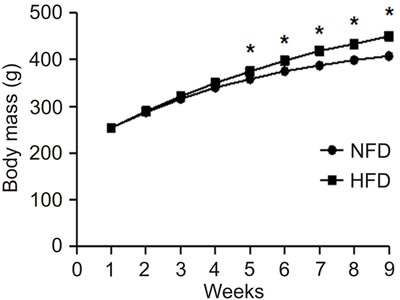
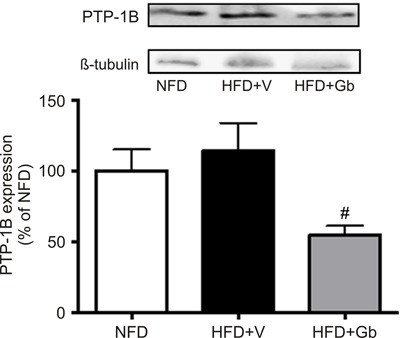
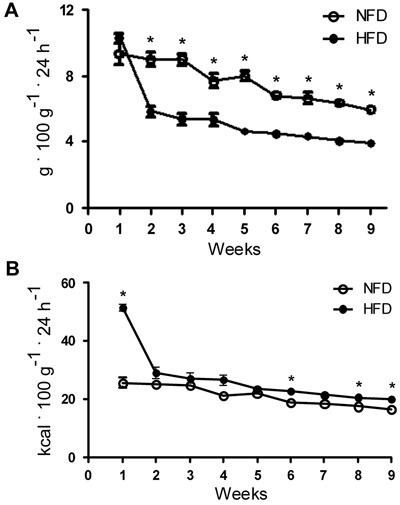
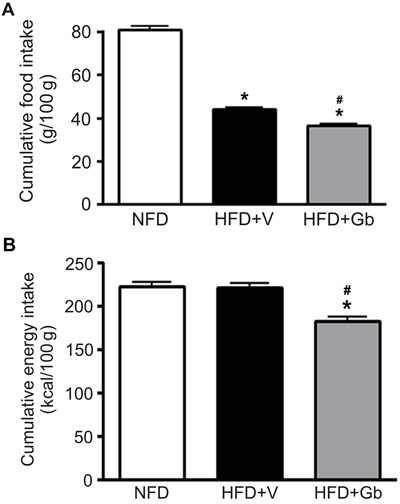
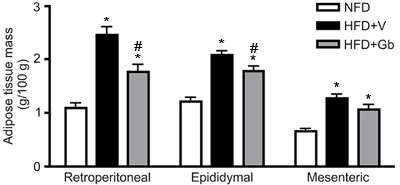
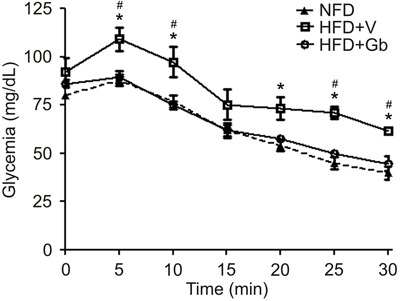
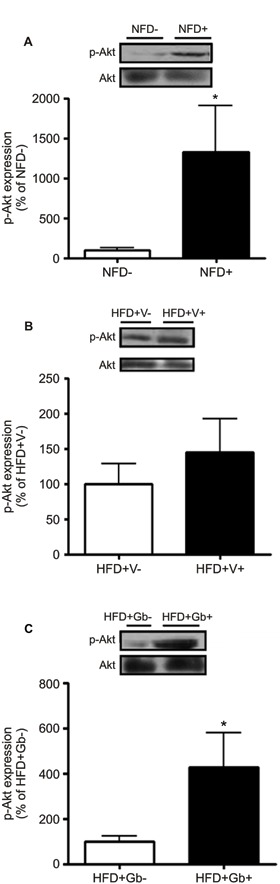
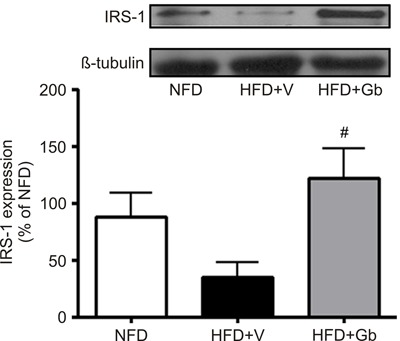
Ginkgo biloba extract (GbE) has been indicated as an efficient medicine for the treatment of diabetes mellitus type 2. It remains unclear if its effects are due to an improvement of the insulin signaling cascade, especially in obese subjects. The aim of the present study was to evaluate the effect of GbE on insulin tolerance, food intake, body adiposity, lipid profile, fasting insulin, and muscle levels of insulin receptor substrate 1 (IRS-1), protein tyrosine phosphatase 1B (PTP-1B), and protein kinase B (Akt), as well as Akt phosphorylation, in diet-induced obese rats. Rats were fed with a high-fat diet (HFD) or a normal fat diet (NFD) for 8 weeks. After that, the HFD group was divided into two groups: rats gavaged with a saline vehicle (HFD+V), and rats gavaged with 500 mg/kg of GbE diluted in the saline vehicle (HFD+Gb). NFD rats were gavaged with the saline vehicle only. At the end of the treatment, the rats were anesthetized, insulin was injected into the portal vein, and after 90s, the gastrocnemius muscle was removed. The quantification of IRS-1, Akt, and Akt phosphorylation was performed using Western blotting. Serum levels of fasting insulin and glucose, triacylglycerols and total cholesterol, and LDL and HDL fractions were measured. An insulin tolerance test was also performed. Ingestion of a hyperlipidic diet promoted loss of insulin sensitivity and also resulted in a significant increase in body adiposity, plasma triacylglycerol, and glucose levels. In addition, GbE treatment significantly reduced food intake and body adiposity while it protected against hyperglycemia and dyslipidemia in diet-induced obesity rats. It also enhanced insulin sensitivity in comparison to HFD+V rats, while it restored insulin-induced Akt phosphorylation, increased IRS-1, and reduced PTP-1B levels in gastrocnemius muscle. The present findings suggest that G. biloba might be efficient in preventing and treating obesity-induced insulin signaling impairment.
银杏叶提取物(GbE)已被证明是治疗2型糖尿病的一种有效药物。其作用是否归因于胰岛素信号级联反应的改善尚不清楚,尤其是在肥胖受试者中。本研究的目的是评估GbE对饮食诱导的肥胖大鼠的胰岛素耐受性、食物摄入量、身体肥胖程度、血脂谱、空腹胰岛素以及胰岛素受体底物1(IRS-1)、蛋白酪氨酸磷酸酶1B(PTP-1B)和蛋白激酶B(Akt)的肌肉水平,以及Akt磷酸化的影响。大鼠分别用高脂饮食(HFD)或正常脂肪饮食(NFD)喂养8周。之后,将HFD组分为两组:用生理盐水灌胃的大鼠(HFD+V),以及用在生理盐水中稀释的500 mg/kg GbE灌胃的大鼠(HFD+Gb)。NFD大鼠仅用生理盐水灌胃。在治疗结束时,将大鼠麻醉,向门静脉注射胰岛素,90秒后,取出腓肠肌。使用蛋白质印迹法对IRS-1、Akt和Akt磷酸化进行定量分析。测量空腹胰岛素和葡萄糖、三酰甘油和总胆固醇以及低密度脂蛋白和高密度脂蛋白组分的血清水平。还进行了胰岛素耐受性试验。摄入高脂饮食会导致胰岛素敏感性丧失,还会导致身体肥胖、血浆三酰甘油和葡萄糖水平显著升高。此外,GbE治疗可显著减少饮食诱导的肥胖大鼠的食物摄入量和身体肥胖程度,同时预防高血糖和血脂异常。与HFD+V大鼠相比,它还增强了胰岛素敏感性,同时恢复了胰岛素诱导的Akt磷酸化,增加了IRS-1,并降低了腓肠肌中PTP-1B的水平。目前的研究结果表明,银杏可能对预防和治疗肥胖诱导的胰岛素信号损伤有效。