Department of Geriatric Medicine and Radboud Alzheimer Center, Radboud University Medical Center Nijmegen, Gelderland, Netherlands.
Front Aging Neurosci. 2014 Jul 21;6:165. doi: 10.3389/fnagi.2014.00165. eCollection 2014.
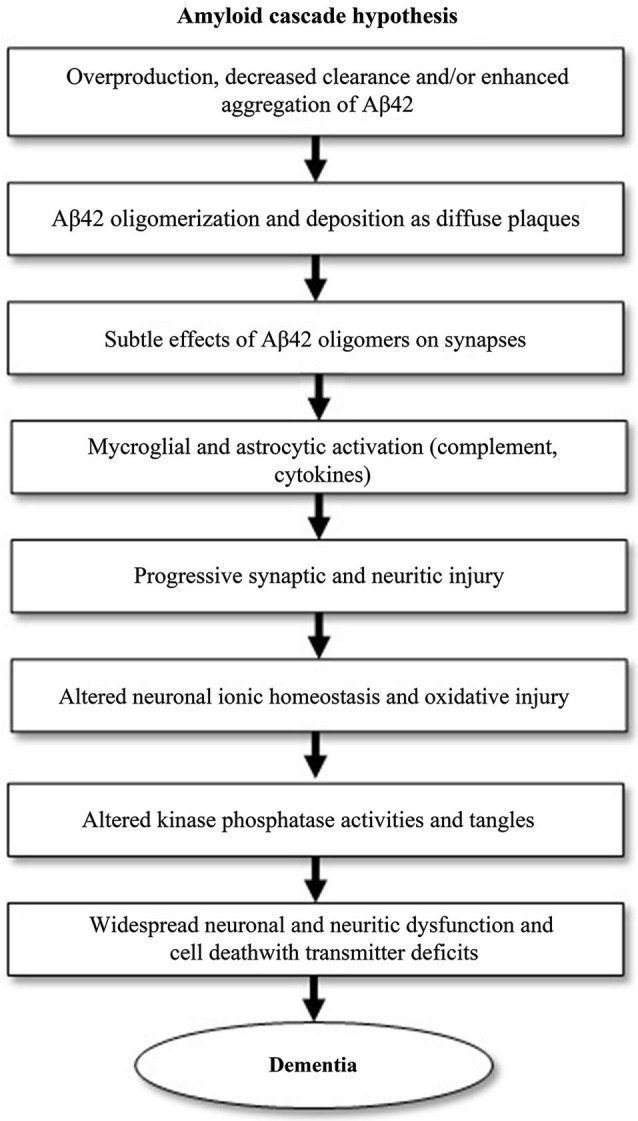
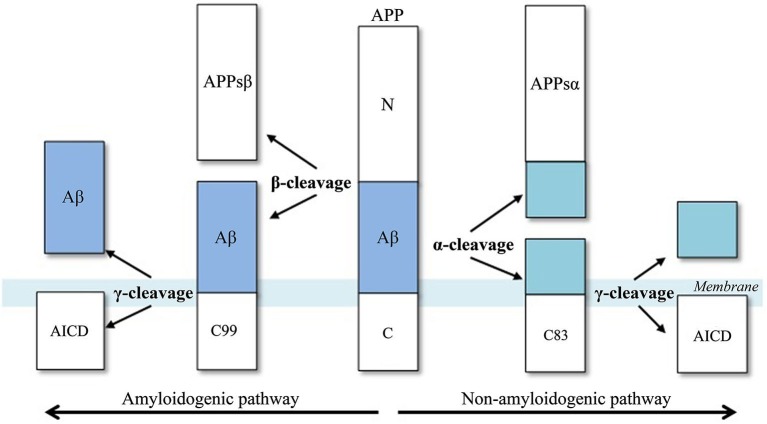
Alzheimer's disease (AD) and vascular dementia are responsible for up to 90% of dementia cases. According to the World Health Organization (WHO), a staggering number of 35.6 million people are currently diagnosed with dementia. Blocking disease progression or preventing AD altogether is desirable for both social and economic reasons and recently focus has shifted to a new and promising drug: the β-secretase inhibitor. Much of AD research has investigated the amyloid cascade hypothesis, which postulates that AD is caused by changes in amyloid beta (Aβ) stability and aggregation. Blocking Aβ production by inhibiting the first protease required for its generation, β-secretase/BACE1, may be the next step in blocking AD progression. In April 2012, promising phase I data on inhibitor MK-8931 was presented. This drug reduced Aβ cerebral spinal fluids (CSF) levels up to 92% and was well tolerated by patients. In March 2013 data was added from a one week trial in 32 mild to moderate AD patients, showing CSF Aβ levels decreased up to 84%. However, β-site APP cleaving enzyme 1 (BACE1) inhibitors require further research. First, greatly reducing Aβ levels through BACE1 inhibition may have harmful side effects. Second, BACE1 inhibitors have yet to pass clinical trial phase II/III and no data on possible side effects on AD patients are available. And third, there remains doubt about the clinical efficacy of BACE1 inhibitors. In moderate AD patients, Aβ plaques have already been formed. BACE1 inhibitors prevent production of new Aβ plaques, but hypothetically do not influence already existing Aβ peptides. Therefore, BACE1 inhibitors are potentially better at preventing AD instead of having therapeutic use.
阿尔茨海默病(AD)和血管性痴呆占痴呆症病例的 90%。根据世界卫生组织(WHO)的数据,目前有 3560 万人被诊断患有痴呆症,这一数字令人震惊。出于社会和经济原因,阻止疾病进展或完全预防 AD 是理想的,最近的重点已经转移到一种新的、有前途的药物上:β-分泌酶抑制剂。许多 AD 研究都调查了淀粉样蛋白级联假说,该假说认为 AD 是由淀粉样蛋白β(Aβ)稳定性和聚集的变化引起的。通过抑制其生成所需的第一种蛋白酶β-分泌酶/BACE1,阻断 Aβ的产生,可能是阻止 AD 进展的下一步。2012 年 4 月,公布了关于抑制剂 MK-8931 的有希望的 I 期数据。该药物使 Aβ脑脊髓液(CSF)水平降低了 92%,且患者耐受性良好。2013 年 3 月,在 32 名轻度至中度 AD 患者进行的为期一周的试验中增加了数据,显示 CSF Aβ水平降低了 84%。然而,β-位点 APP 切割酶 1(BACE1)抑制剂需要进一步研究。首先,通过 BACE1 抑制大大降低 Aβ水平可能会产生有害的副作用。其次,BACE1 抑制剂尚未通过 II/III 期临床试验,也没有关于对 AD 患者可能产生的副作用的数据。第三,BACE1 抑制剂的临床疗效仍存在疑问。在中度 AD 患者中,Aβ斑块已经形成。BACE1 抑制剂可以防止新的 Aβ斑块的产生,但理论上不会影响已经存在的 Aβ肽。因此,BACE1 抑制剂更适合预防 AD,而不是具有治疗用途。