State Key Laboratory of Molecular Developmental Biology, Institute of Genetics and Developmental Biology, Chinese Academy of Sciences and National Center for Plant Gene Research Beijing, China ; University of Chinese Academy of Sciences Beijing, China.
State Key Laboratory of Molecular Developmental Biology, Institute of Genetics and Developmental Biology, Chinese Academy of Sciences and National Center for Plant Gene Research Beijing, China.
Front Genet. 2014 Jul 22;5:228. doi: 10.3389/fgene.2014.00228. eCollection 2014.
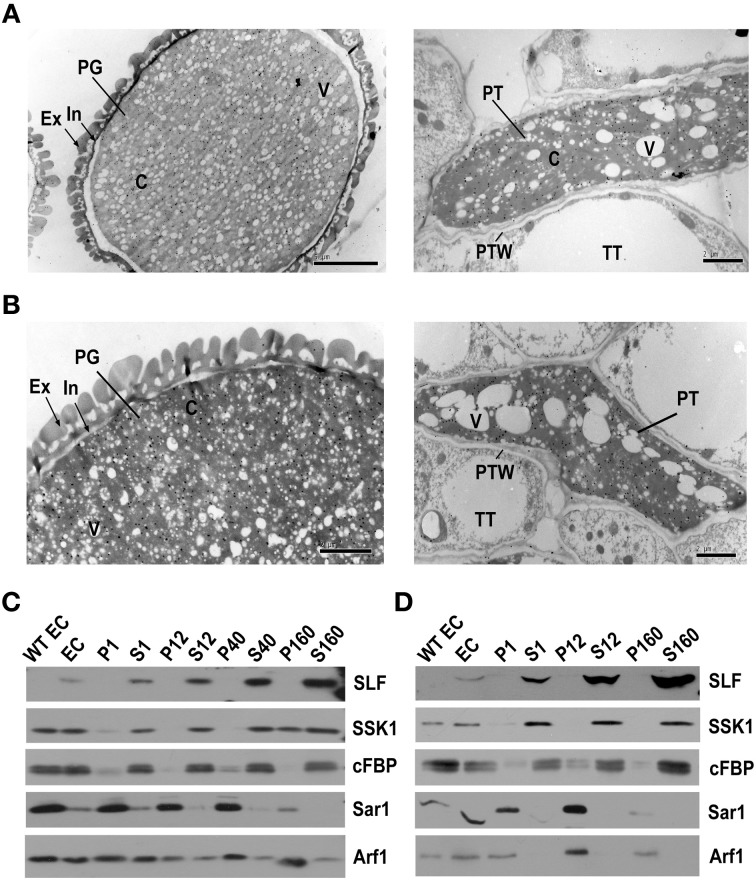
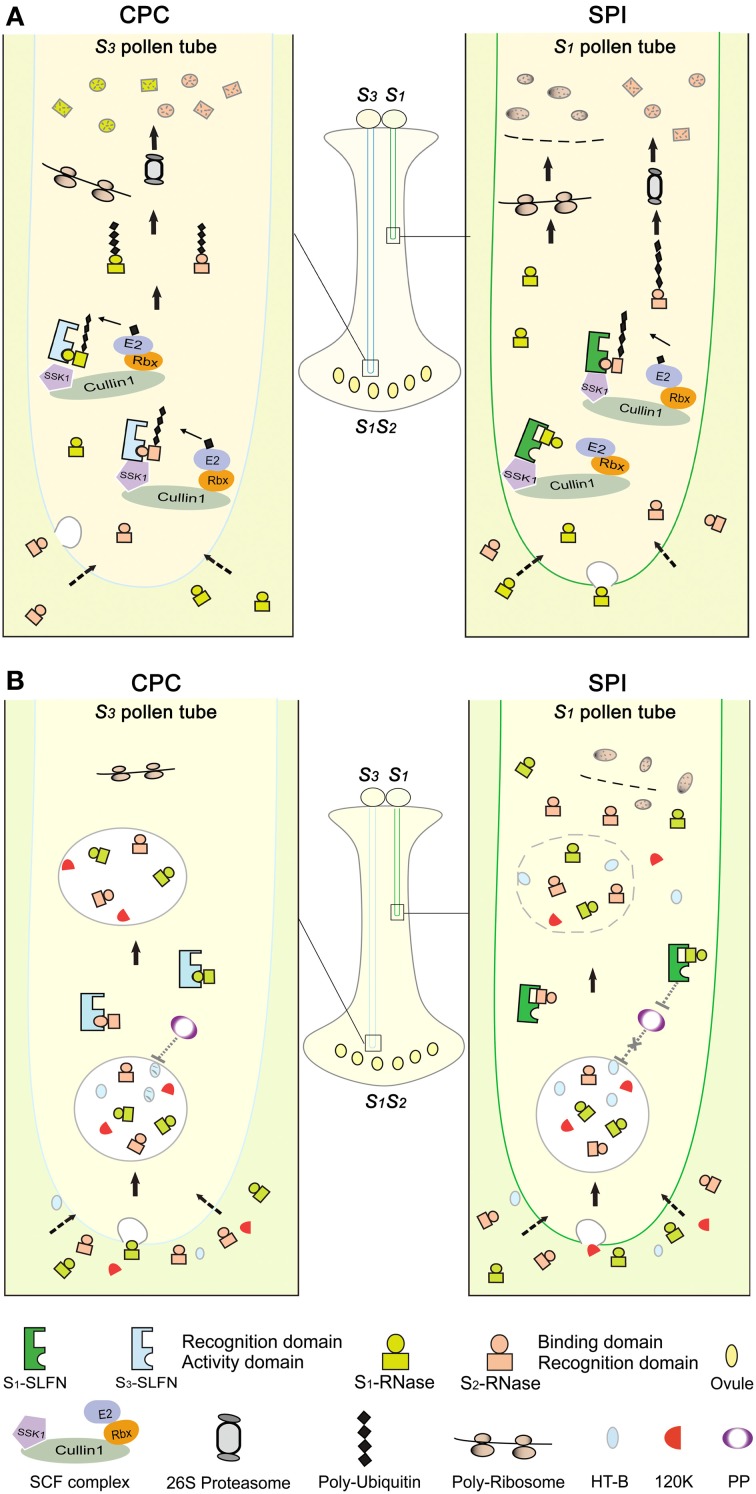
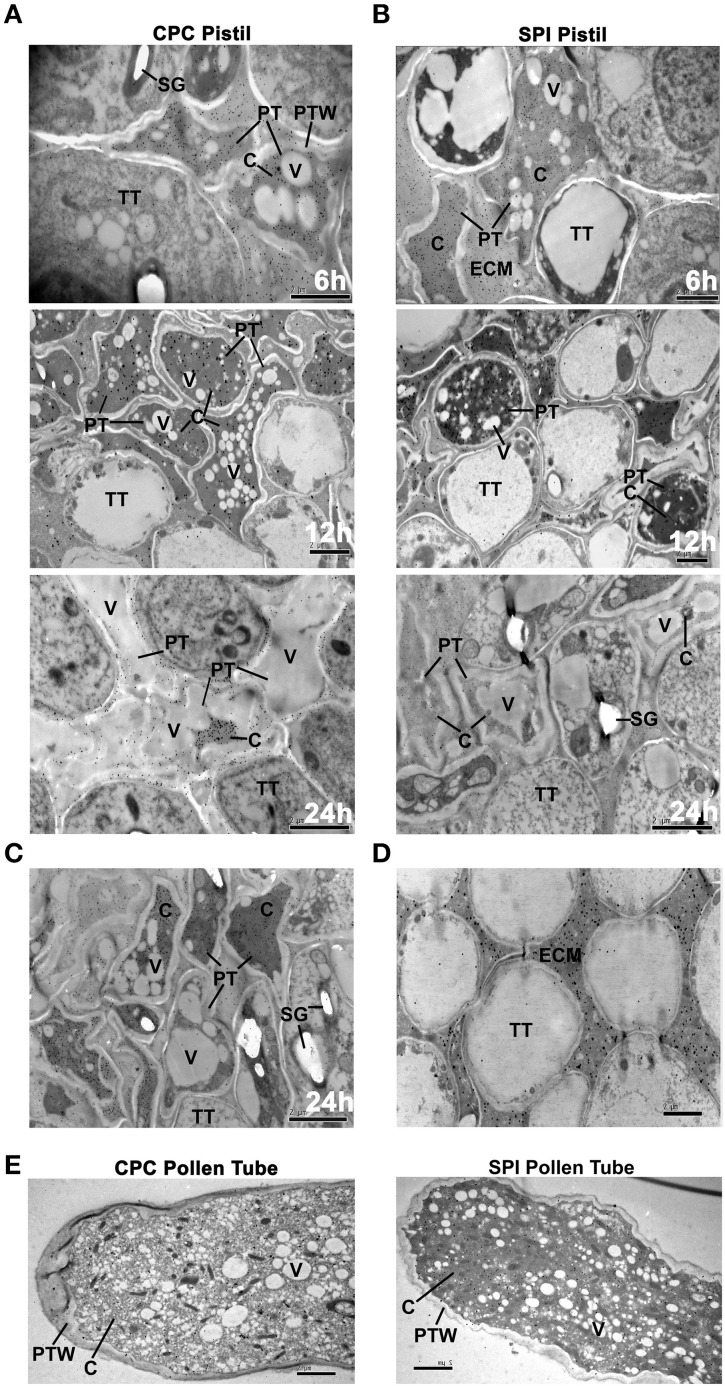
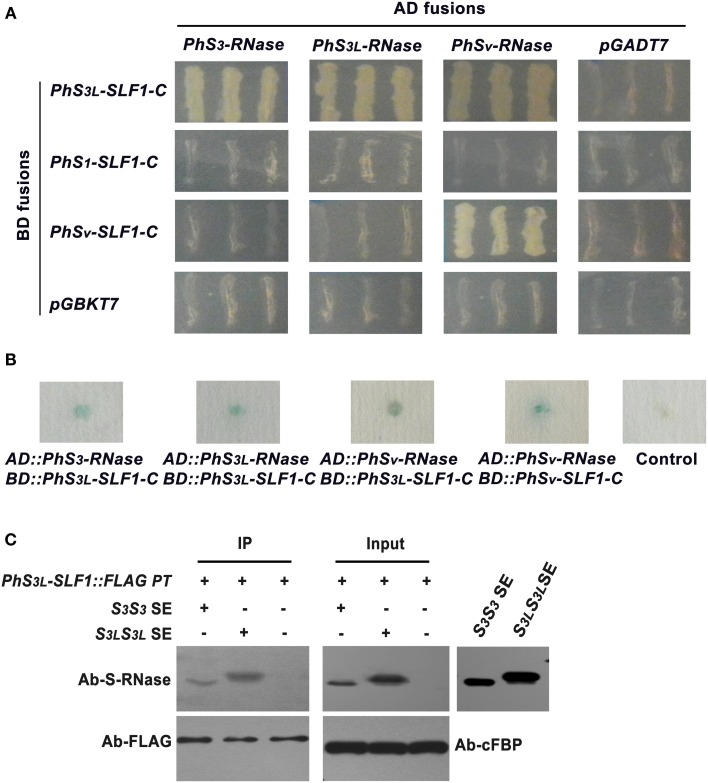
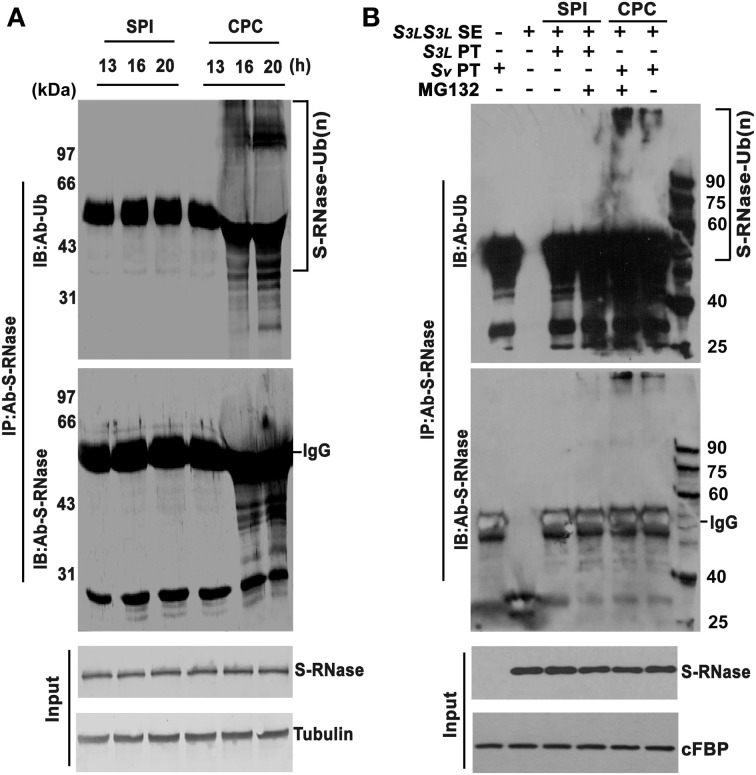
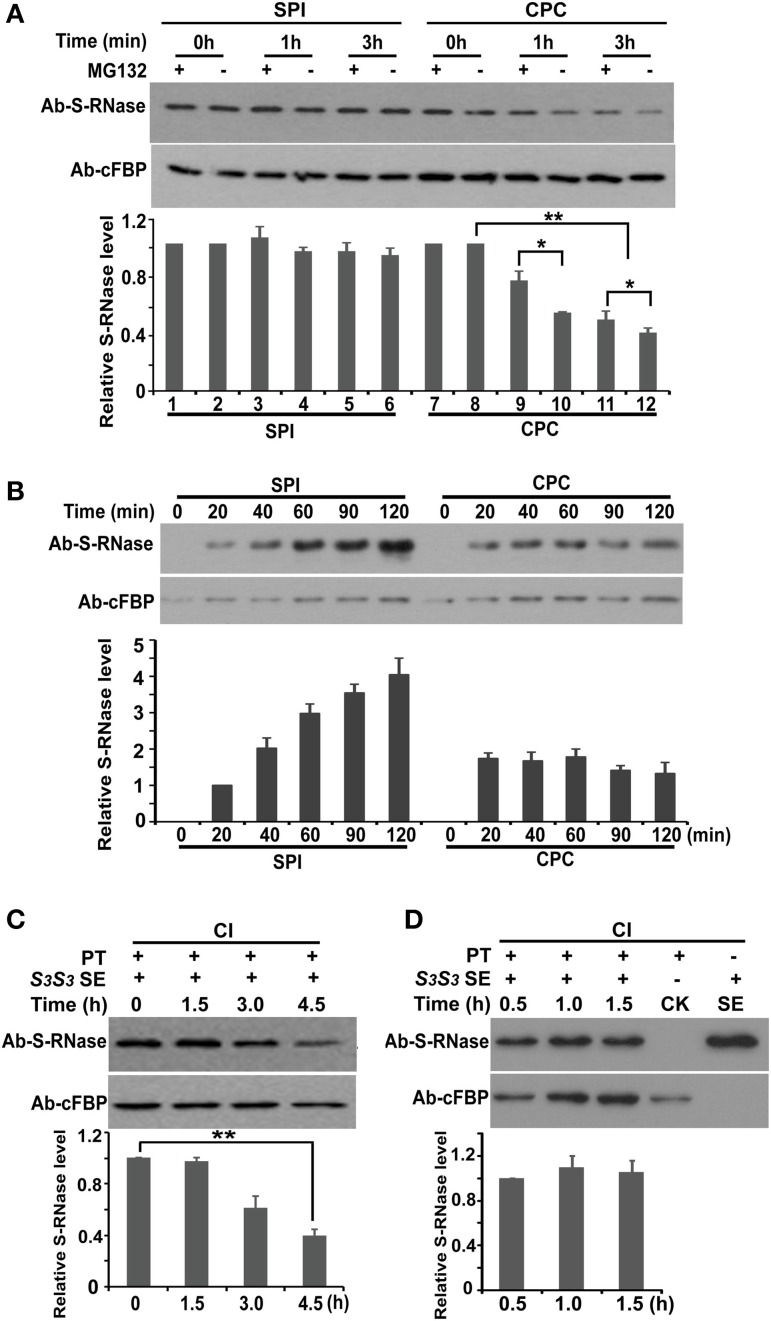
Many flowering plants adopt self-incompatibility (SI) to maintain their genetic diversity. In species of Solanaceae, Plantaginaceae, and Rosaceae, SI is genetically controlled by a single S-locus with multiple haplotypes. The S-locus has been shown to encode S-RNases expressed in pistil and multiple SLF (S-locus F-box) proteins in pollen controlling the female and male specificity of SI, respectively. S-RNases appear to function as a cytotoxin to reject self-pollen. In addition, SLFs have been shown to form SCF (SKP1/Cullin1/F-box) complexes to serve as putative E3 ubiquitin ligase to interact with S-RNases. Previously, two different mechanisms, the S-RNase degradation and the S-RNase compartmentalization, have been proposed as the restriction mechanisms of S-RNase cytotoxicity allowing compatible pollination. In this study, we have provided several lines of evidence in support of the S-RNase degradation mechanism by a combination of cellular, biochemical and molecular biology approaches. First, both immunogold labeling and subcellular fractionation assays showed that two key pollen SI factors, PhS3L-SLF1 and PhSSK1 (SLF-interacting SKP1-like1) from Petunia hybrida, a Solanaceous species, are co-localized in cytosols of both pollen grains and tubes. Second, PhS3L-RNases are mainly detected in the cytosols of both self and non-self-pollen tubes after pollination. Third, we found that PhS-RNases selectively interact with PhSLFs by yeast two-hybrid and co-immunoprecipitation assays. Fourth, S-RNases are specifically degraded in compatible pollen tubes by non-self SLF action. Taken together, our results demonstrate that SCF(SLF-mediated) non-self S-RNase degradation occurs in the cytosol of pollen tube through the ubiquitin/26S proteasome system serving as the major mechanism to neutralize S-RNase cytotoxicity during compatible pollination in P. hybrida.
许多开花植物采用自交不亲和(SI)来维持其遗传多样性。在茄科、车前科和蔷薇科的物种中,SI 是由单个 S 基因座上的多个单倍型遗传控制的。S 基因座已被证明编码在雌蕊中表达的 S-RNases 和在花粉中表达的多个 SLF(S 基因座 F-box)蛋白,分别控制 SI 的雌性和雄性特异性。S-RNases 似乎作为细胞毒素起作用,以排斥自花粉。此外,已经表明 SLFs 形成 SCF(SKP1/Cullin1/F-box)复合物,作为可能的 E3 泛素连接酶与 S-RNases 相互作用。以前,提出了两种不同的机制,即 S-RNase 降解和 S-RNase 区室化,作为 S-RNase 细胞毒性的限制机制,允许亲和授粉。在这项研究中,我们通过细胞、生化和分子生物学方法的组合提供了几条证据支持 S-RNase 降解机制。首先,免疫金标记和亚细胞分级分析均表明,来自茄科植物杂种矮牵牛的两个关键花粉 SI 因子 PhS3L-SLF1 和 PhSSK1(与 SLF 相互作用的 SKP1-like1)在花粉粒和花粉管的胞质溶胶中共同定位。其次,授粉后,PhS3L-RNases 主要在自花粉管和非自花粉管的胞质溶胶中检测到。第三,我们发现 PhS-RNases 通过酵母双杂交和共免疫沉淀实验选择性地与 PhSLFs 相互作用。第四,非自我 SLF 作用特异性地在亲和花粉管中降解 S-RNases。综上所述,我们的结果表明,在 P. hybrida 中,通过泛素/26S 蛋白酶体系统,SCF(SLF 介导)非自我 S-RNase 降解发生在花粉管的胞质溶胶中,作为在亲和授粉过程中中和 S-RNase 细胞毒性的主要机制。