Usongo Valentine, Drolet Marc
Département de microbiologie, infectiologie et immunologie, Université de Montréal, Succ. Centre-ville, Montréal, Québec, Canada.
PLoS Genet. 2014 Aug 7;10(8):e1004543. doi: 10.1371/journal.pgen.1004543. eCollection 2014 Aug.
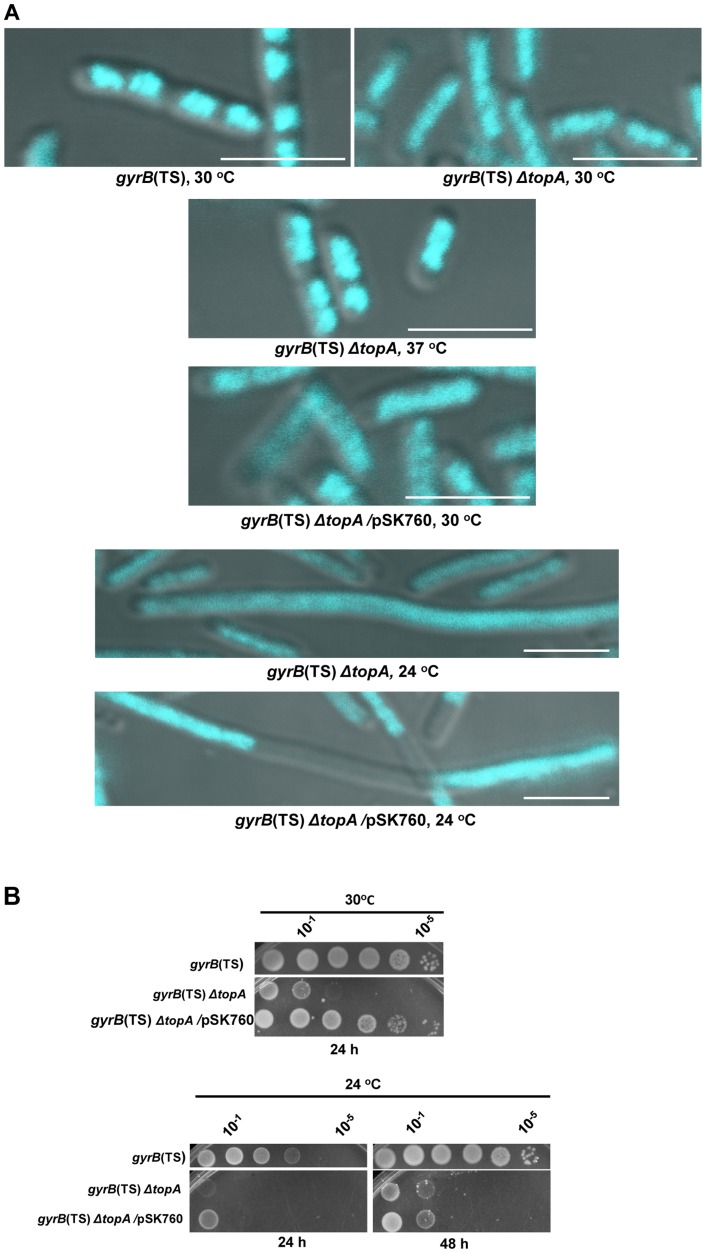
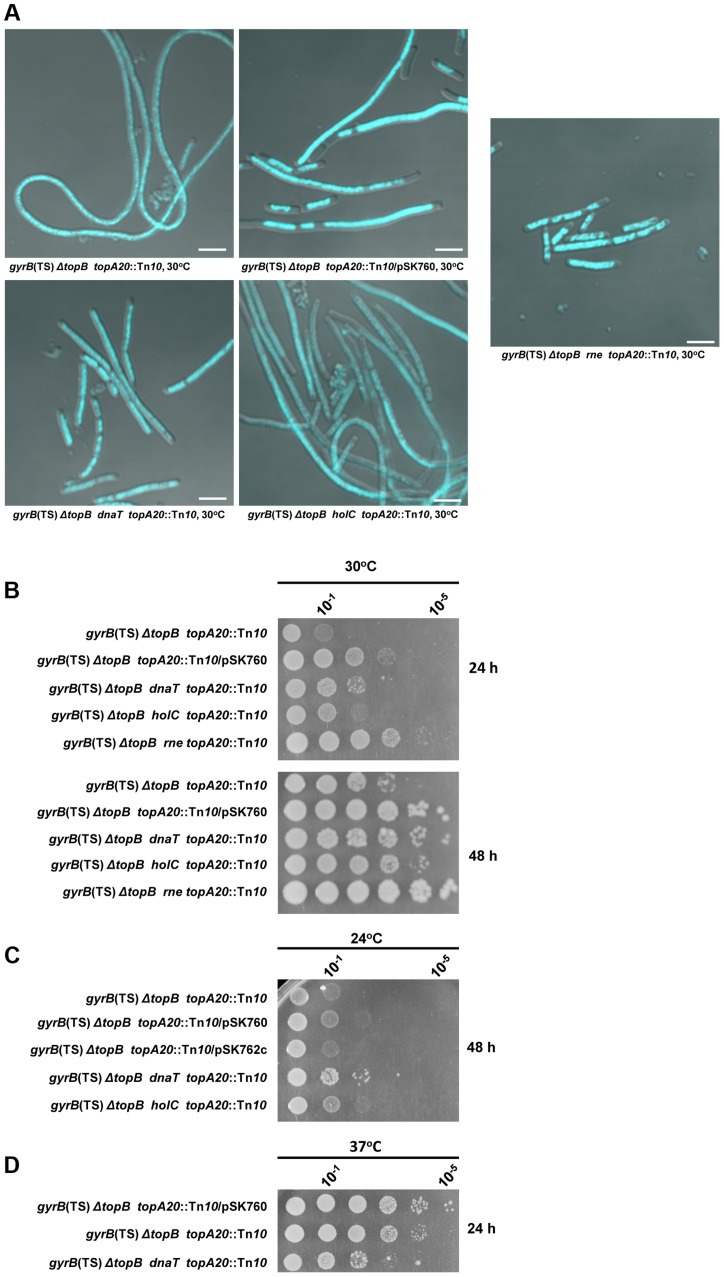
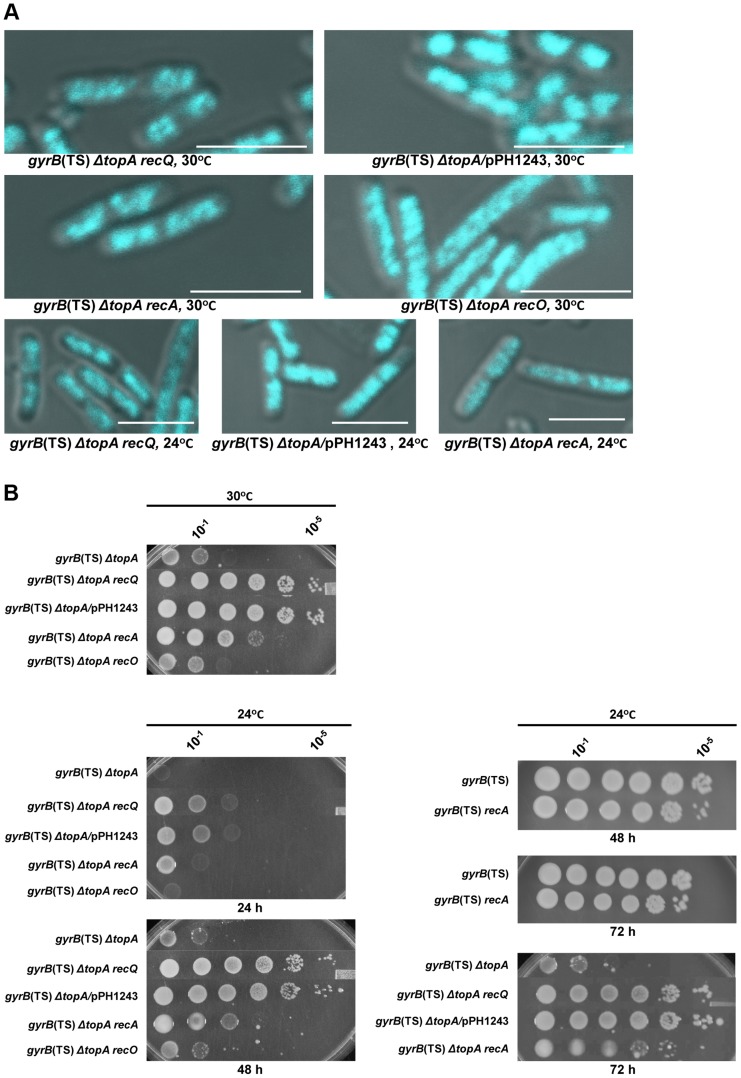
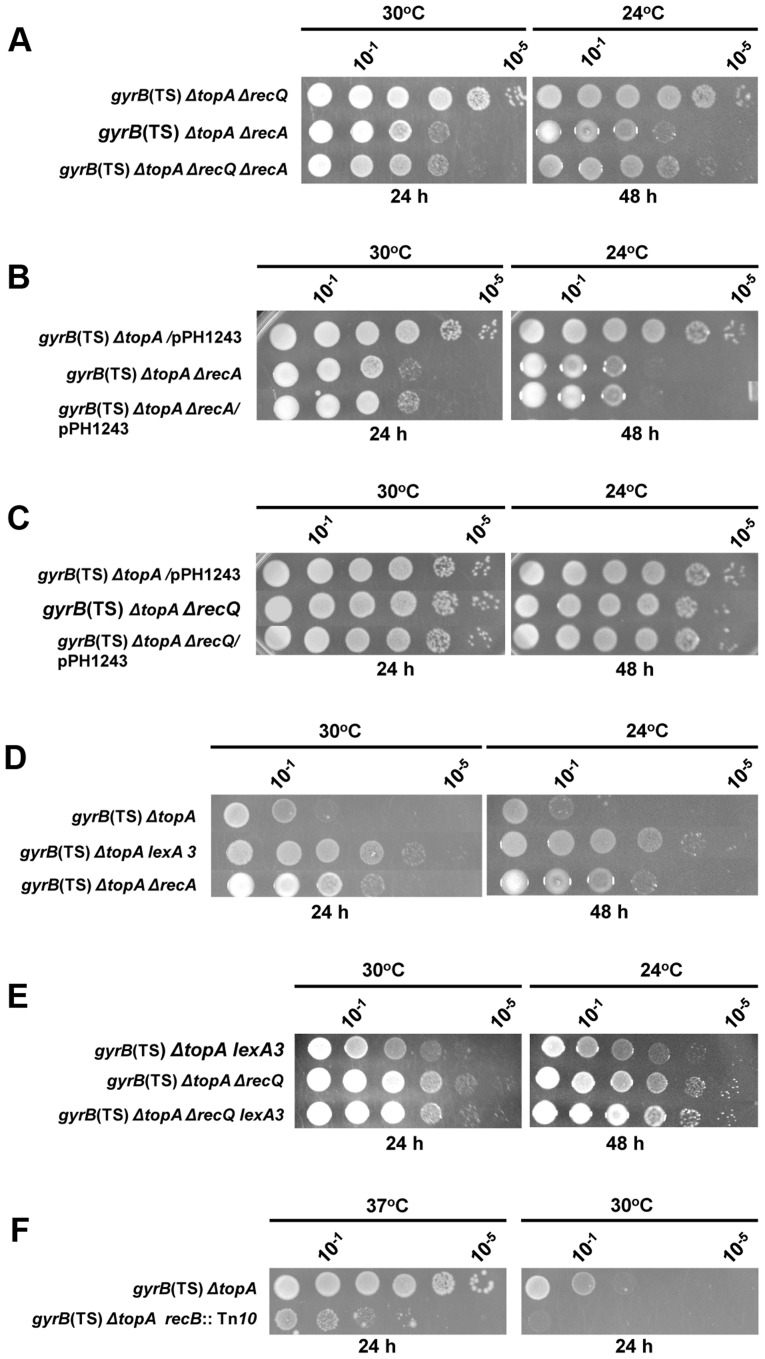
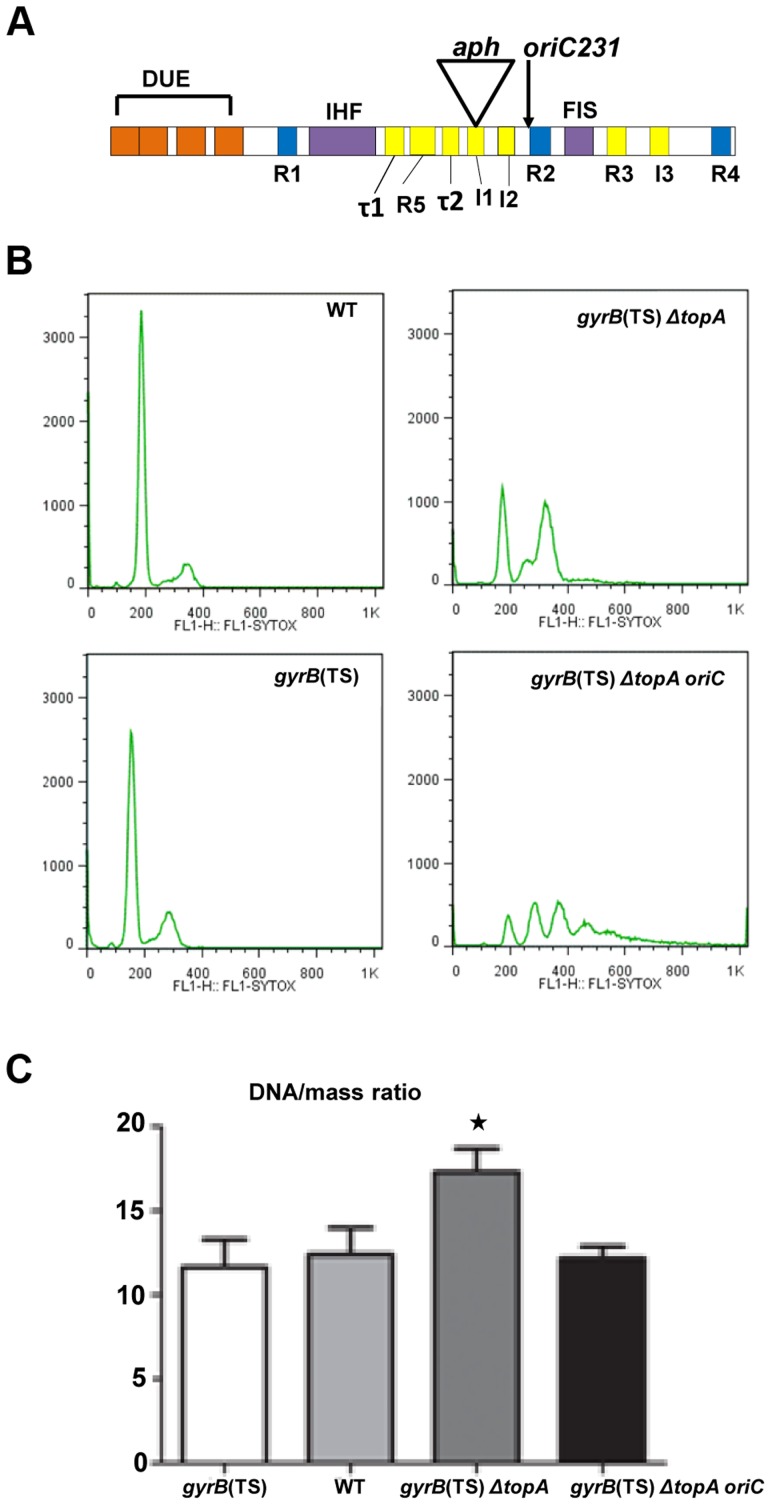
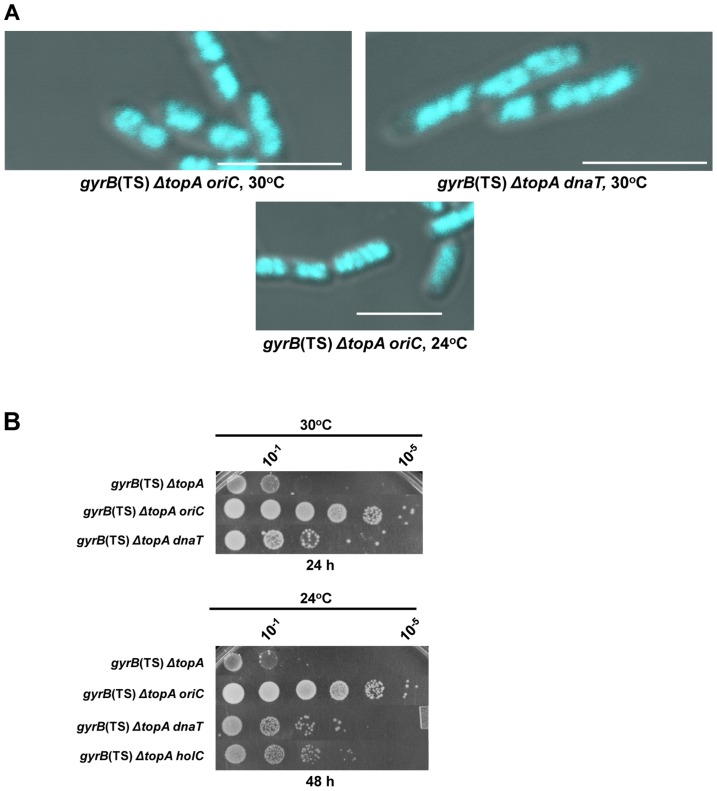
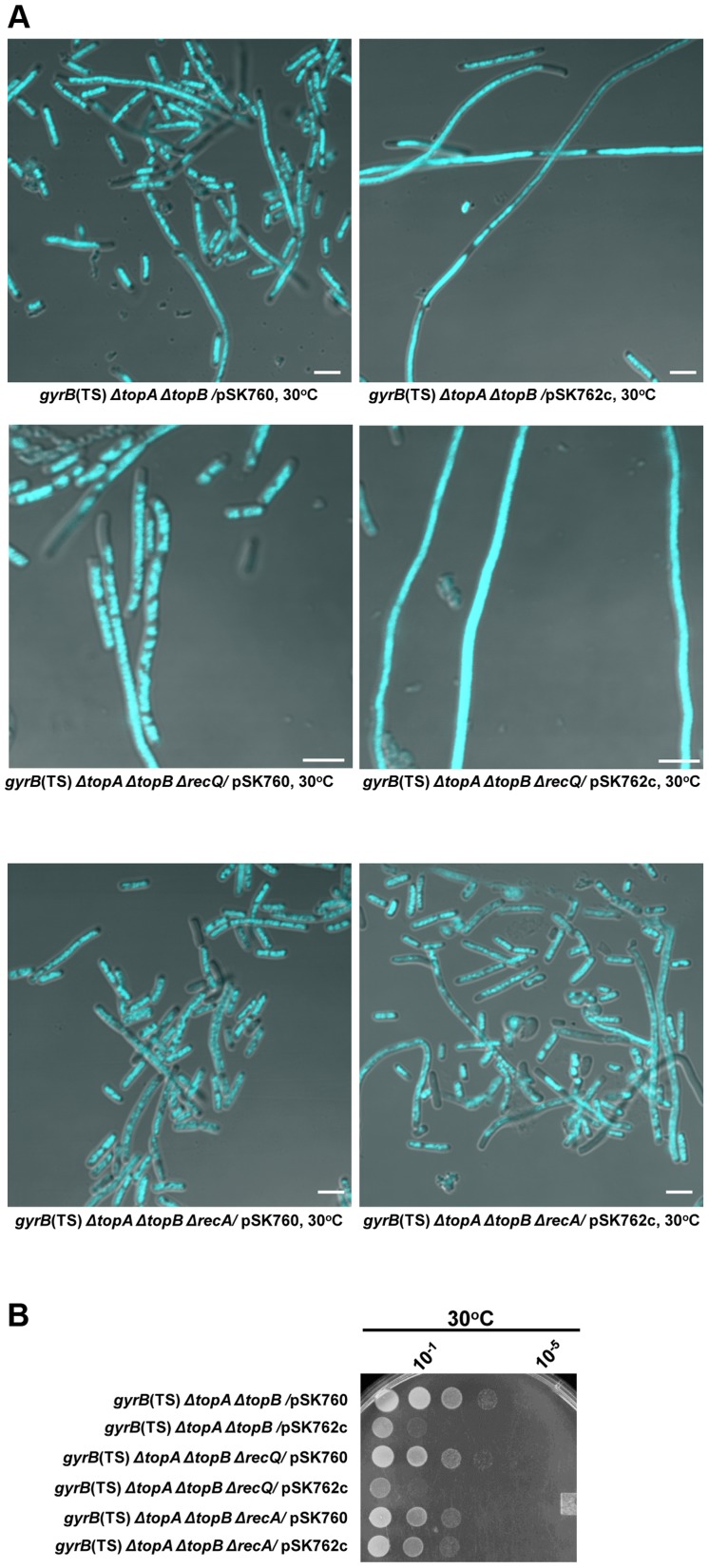
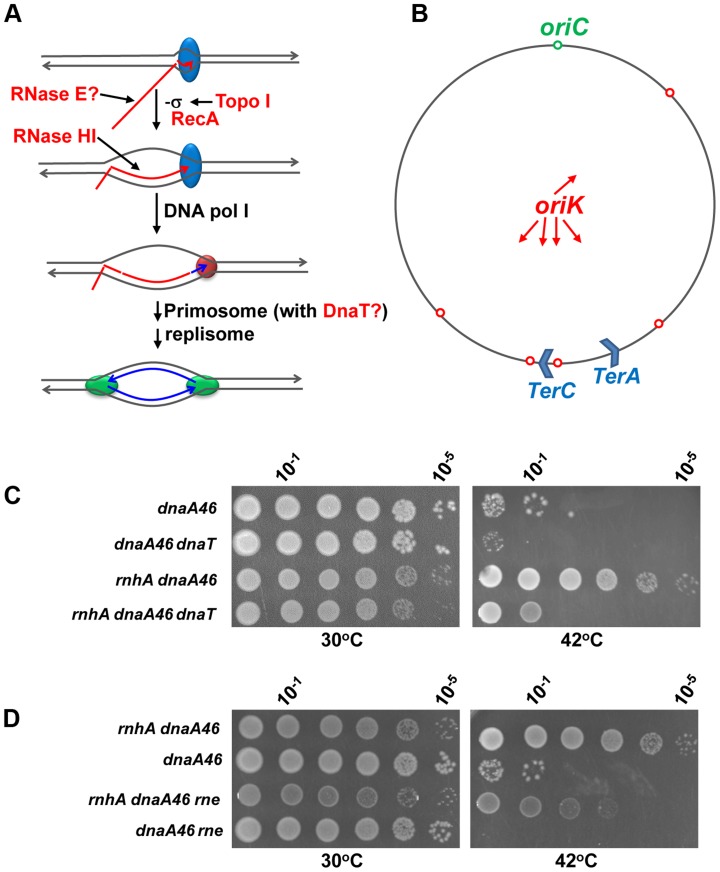
In eukaryotes, type 1A topoisomerases (topos) act with RecQ-like helicases to maintain the stability of the genome. Despite having been the first type 1A enzymes to be discovered, much less is known about the involvement of the E. coli topo I (topA) and III (topB) enzymes in genome maintenance. These enzymes are thought to have distinct cellular functions: topo I regulates supercoiling and R-loop formation, and topo III is involved in chromosome segregation. To better characterize their roles in genome maintenance, we have used genetic approaches including suppressor screens, combined with microscopy for the examination of cell morphology and nucleoid shape. We show that topA mutants can suffer from growth-inhibitory and supercoiling-dependent chromosome segregation defects. These problems are corrected by deleting recA or recQ but not by deleting recJ or recO, indicating that the RecF pathway is not involved. Rather, our data suggest that RecQ acts with a type 1A topo on RecA-generated recombination intermediates because: 1-topo III overproduction corrects the defects and 2-recQ deletion and topo IIII overproduction are epistatic to recA deletion. The segregation defects are also linked to over-replication, as they are significantly alleviated by an oriC::aph suppressor mutation which is oriC-competent in topA null but not in isogenic topA+ cells. When both topo I and topo III are missing, excess supercoiling triggers growth inhibition that correlates with the formation of extremely long filaments fully packed with unsegregated and diffuse DNA. These phenotypes are likely related to replication from R-loops as they are corrected by overproducing RNase HI or by genetic suppressors of double topA rnhA mutants affecting constitutive stable DNA replication, dnaT::aph and rne::aph, which initiates from R-loops. Thus, bacterial type 1A topos maintain the stability of the genome (i) by preventing over-replication originating from oriC (topo I alone) and R-loops and (ii) by acting with RecQ.
在真核生物中,1A型拓扑异构酶(拓扑酶)与类RecQ解旋酶共同作用以维持基因组的稳定性。尽管大肠杆菌拓扑异构酶I(topA)和III(topB)是最早被发现的1A型酶,但关于它们在基因组维持中的作用却知之甚少。这些酶被认为具有不同的细胞功能:拓扑异构酶I调节超螺旋和R环形成,而拓扑异构酶III参与染色体分离。为了更好地表征它们在基因组维持中的作用,我们采用了包括抑制子筛选在内的遗传方法,并结合显微镜检查细胞形态和类核形状。我们发现,topA突变体可能会出现生长抑制和超螺旋依赖性染色体分离缺陷。通过删除recA或recQ可以纠正这些问题,但删除recJ或recO则不能,这表明RecF途径不参与其中。相反,我们的数据表明,RecQ与1A型拓扑酶共同作用于RecA产生的重组中间体,原因如下:1. 拓扑异构酶III的过量表达可纠正缺陷;2. recQ缺失和拓扑异构酶III的过量表达对recA缺失具有上位性。分离缺陷也与过度复制有关,因为oriC::aph抑制子突变可显著缓解这些缺陷,该突变在topA缺失的细胞中具有oriC功能,但在同基因的topA+细胞中则不具有。当拓扑异构酶I和III都缺失时,过量的超螺旋会引发生长抑制,这与形成充满未分离和分散DNA的极长细丝相关。这些表型可能与R环的复制有关,因为通过过量表达RNase HI或通过影响组成型稳定DNA复制的双topA rnhA突变体(dnaT::aph和rne::aph)的遗传抑制子可以纠正这些表型,这些突变体从R环开始。因此,细菌1A型拓扑酶通过(i)防止源自oriC(仅拓扑异构酶I)和R环的过度复制以及(ii)与RecQ共同作用来维持基因组的稳定性。