Perkins Diana O, Jeffries Clark D, Addington Jean, Bearden Carrie E, Cadenhead Kristin S, Cannon Tyrone D, Cornblatt Barbara A, Mathalon Daniel H, McGlashan Thomas H, Seidman Larry J, Tsuang Ming T, Walker Elaine F, Woods Scott W, Heinssen Robert
Department of Psychiatry, University of North Carolina, Chapel Hill, NC;
Renaissance Computing Institute, University of North Carolina, Chapel Hill, NC;
Schizophr Bull. 2015 Mar;41(2):419-28. doi: 10.1093/schbul/sbu099. Epub 2014 Aug 6.
A barrier to preventative treatments for psychosis is the absence of accurate identification of persons at highest risk. A blood test that could substantially increase diagnostic accuracy would enhance development of psychosis prevention interventions.
The North American Prodrome Longitudinal Study project is a multisite endeavor that aims to better understand predictors and mechanisms for the development of psychosis. In this study, we measured expression of plasma analytes reflecting inflammation, oxidative stress, hormones, and metabolism. A "greedy algorithm" selected analytes that best distinguished persons with clinical high-risk symptoms who developed psychosis (CHR-P; n = 32) from unaffected comparison (UC) subjects (n = 35) and from those who did not develop psychosis during a 2-year follow-up (CHR-NP; n = 40).
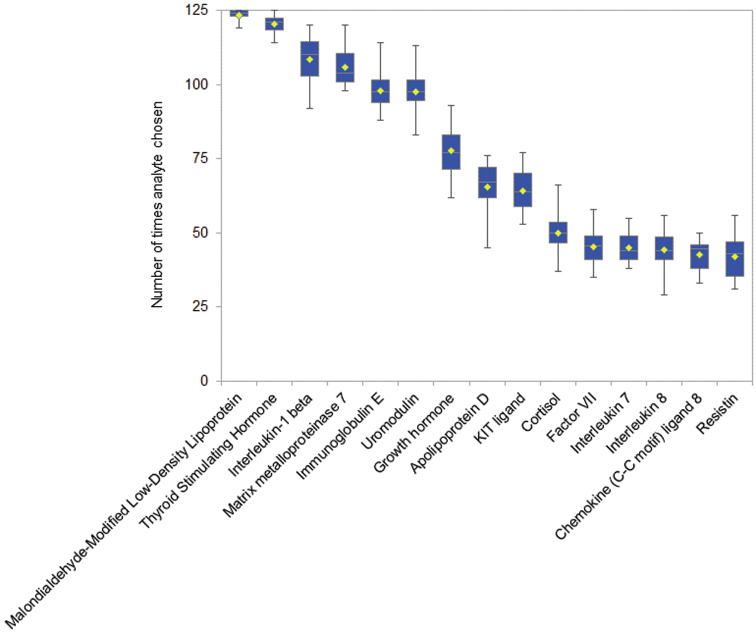
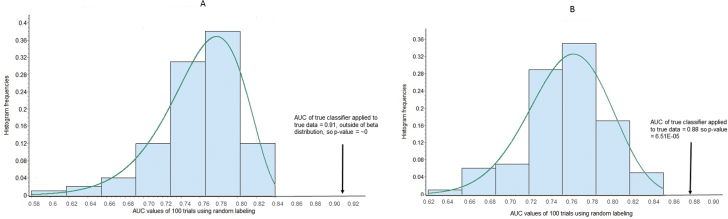
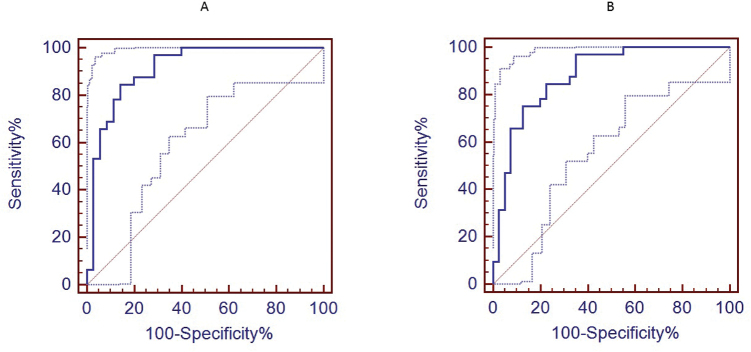
The classifier included 15 analytes (selected from 117), with an area under the receiver operating curve for CHR-P vs UC of 0.91 and CHR-P vs CHR-NP of 0.88. Randomly scrambled group membership followed by reconstructions of the entire classifier method yielded consistently weak classifiers, indicating that the true classifier is highly unlikely to be a chance occurrence. Such randomization methods robustly imply the assays contain consistent information distinguishing the groups which was not obscured by the data normalization method and was revealed by classifier construction. These results support the hypothesis that inflammation, oxidative stress, and dysregulation of hypothalamic-pituitary axes may be prominent in the earliest stages of psychosis.
If confirmed in other groups of persons at elevated risk of psychosis, a multiplex blood assay has the potential for high clinical utility.
精神病预防性治疗的一个障碍是缺乏对高危人群的准确识别。一项能够大幅提高诊断准确性的血液检测将促进精神病预防干预措施的发展。
北美前驱期纵向研究项目是一项多中心研究,旨在更好地了解精神病发展的预测因素和机制。在本研究中,我们测量了反映炎症、氧化应激、激素和代谢的血浆分析物的表达。一种“贪婪算法”选择了最能区分出现精神病的临床高危症状患者(CHR-P;n = 32)与未受影响的对照(UC)受试者(n = 35)以及在2年随访期间未出现精神病的患者(CHR-NP;n = 40)的分析物。
该分类器包括15种分析物(从117种中选出),CHR-P与UC的受试者工作特征曲线下面积为0.91,CHR-P与CHR-NP的受试者工作特征曲线下面积为0.88。随机打乱组成员身份,然后重建整个分类器方法,得到的分类器始终较弱,这表明真正的分类器极不可能是偶然出现的。这种随机化方法有力地表明,这些检测包含区分各组的一致信息,该信息未被数据归一化方法掩盖,并在分类器构建过程中得以揭示。这些结果支持了以下假设:炎症、氧化应激和下丘脑-垂体轴失调可能在精神病的最早阶段较为突出。
如果在其他精神病高危人群中得到证实,多重血液检测具有很高的临床应用潜力。