Xu Qin, Gong Qin
Postal address: Department of Biomedical Engineering, Medical School, Tsinghua University, Beijing 100084, China.
Biomed Eng Online. 2014 Aug 9;13:114. doi: 10.1186/1475-925X-13-114.
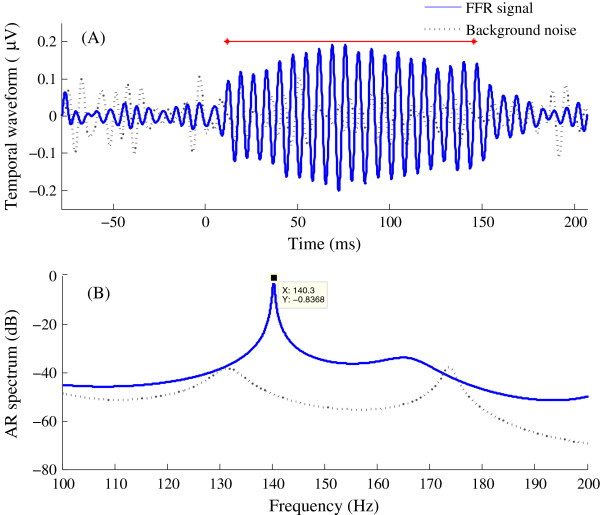
The present study investigated whether the frequency-following response (FFR) of the auditory brainstem can represent individual frequency-discrimination ability.
We measured behavioral frequency-difference limens (FDLs) in normal hearing young adults. Then FFRs were evoked by two pure tones, whose frequency difference was no larger than behavioral FDL. Discrimination of FFRs to individual frequencies was conducted as the neural representation of stimulus frequency difference. Participants were 15 Chinese college students (ages 19-25; 3 males, 12 females) with normal hearing characteristics.
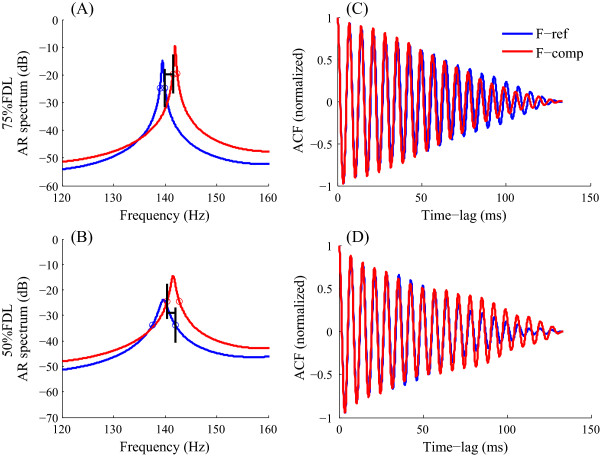
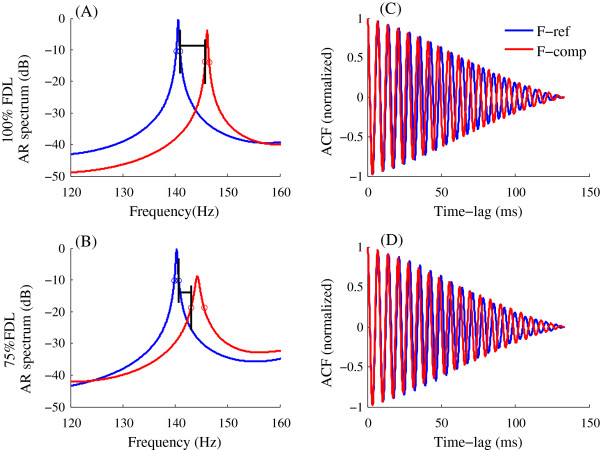
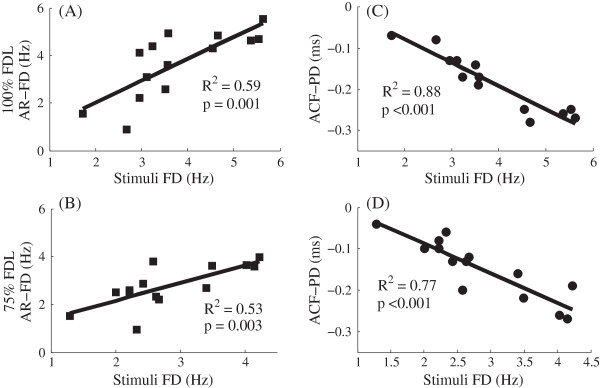
According to discriminative neural representations of individual frequencies, FFRs accurately reflected individual FDLs and detected stimulus-frequency differences smaller than behavioral threshold (e.g., 75% of FDL).
These results suggest that when a frequency difference cannot be behaviorally distinguished, there is still a possibility of it being detected physiologically.
本研究调查了听觉脑干的频率跟随反应(FFR)是否能够代表个体的频率辨别能力。
我们测量了听力正常的年轻成年人的行为频率差异阈限(FDL)。然后用两个纯音诱发FFR,其频率差异不大于行为FDL。对个体频率的FFR辨别作为刺激频率差异的神经表征进行。参与者为15名具有正常听力特征的中国大学生(年龄19 - 25岁;男性3名,女性12名)。
根据个体频率的辨别性神经表征,FFR准确反映了个体FDL,并检测到小于行为阈值(如FDL的75%)的刺激频率差异。
这些结果表明,当频率差异在行为上无法区分时,仍有可能在生理上被检测到。