eHealth and Biomedical Applications, Vicomtech-IK4, Mikeletegi Pasealekua 57, 20009 San Sebastián, Spain ; Laboratorio de CAD CAM CAE, Universidad EAFIT, Carrera 49 No. 7 Sur-50, 050022 Medellín, Colombia.
eHealth and Biomedical Applications, Vicomtech-IK4, Mikeletegi Pasealekua 57, 20009 San Sebastián, Spain.
Biomed Res Int. 2014;2014:821908. doi: 10.1155/2014/821908. Epub 2014 Jul 8.
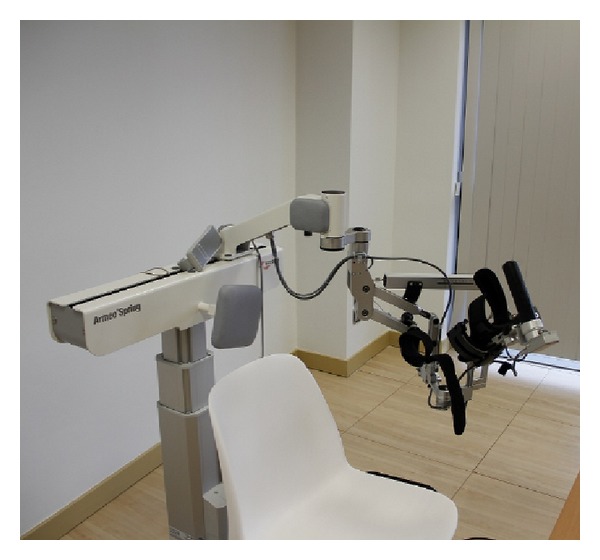
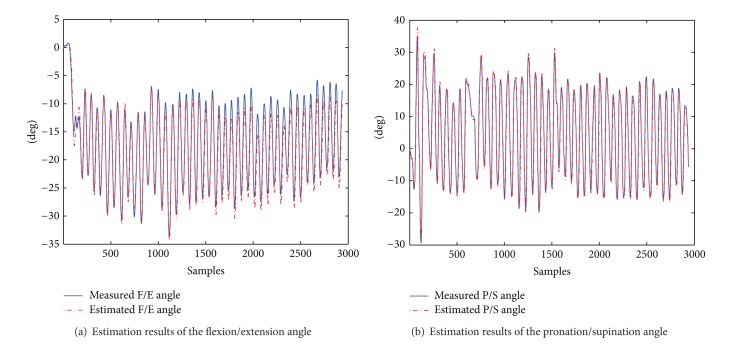
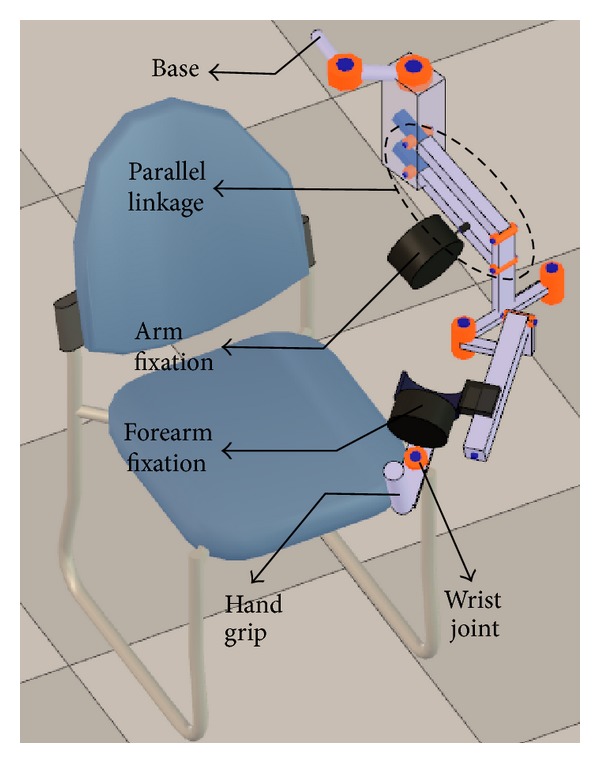
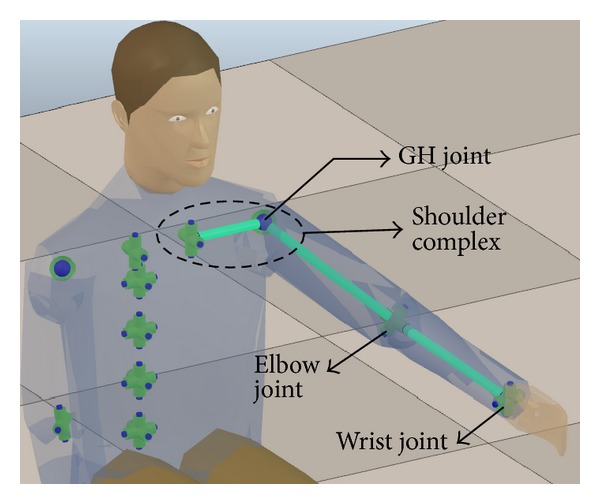
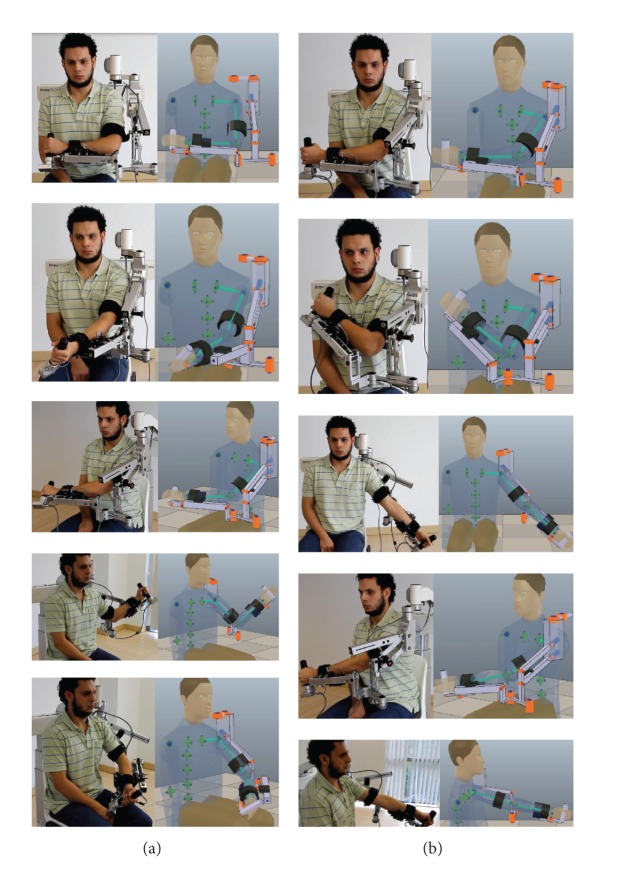
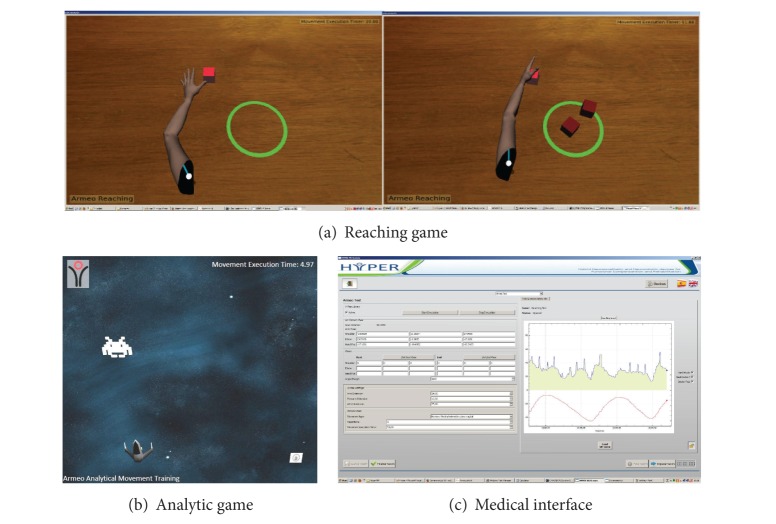
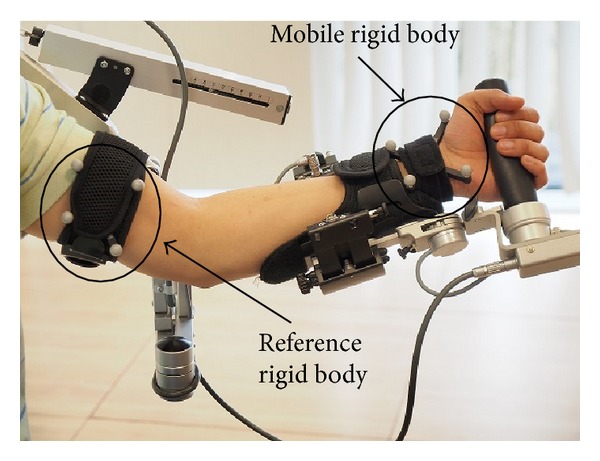
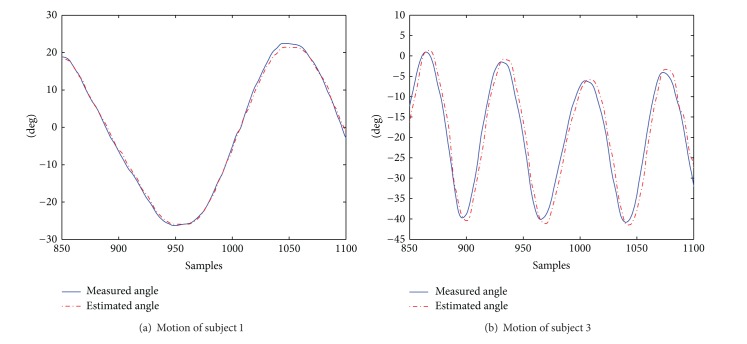
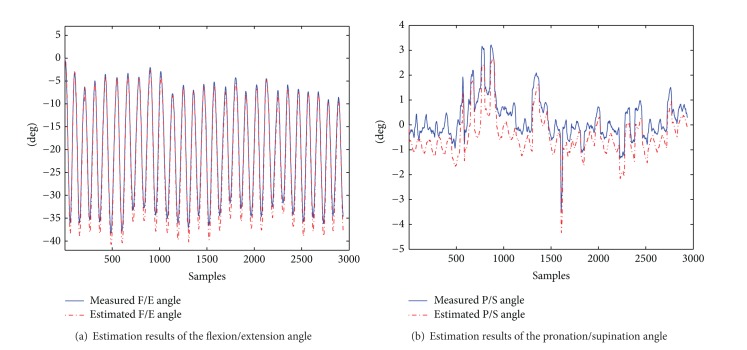
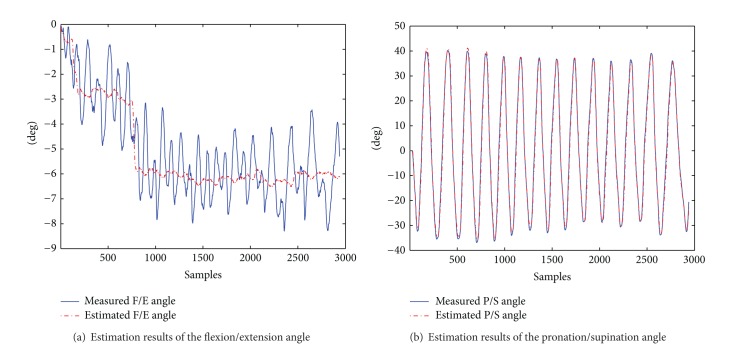
New motor rehabilitation therapies include virtual reality (VR) and robotic technologies. In limb rehabilitation, limb posture is required to (1) provide a limb realistic representation in VR games and (2) assess the patient improvement. When exoskeleton devices are used in the therapy, the measurements of their joint angles cannot be directly used to represent the posture of the patient limb, since the human and exoskeleton kinematic models differ. In response to this shortcoming, we propose a method to estimate the posture of the human limb attached to the exoskeleton. We use the exoskeleton joint angles measurements and the constraints of the exoskeleton on the limb to estimate the human limb joints angles. This paper presents (a) the mathematical formulation and solution to the problem, (b) the implementation of the proposed solution on a commercial exoskeleton system for the upper limb rehabilitation, (c) its integration into a rehabilitation VR game platform, and (d) the quantitative assessment of the method during elbow and wrist analytic training. Results show that this method properly estimates the limb posture to (i) animate avatars that represent the patient in VR games and (ii) obtain kinematic data for the patient assessment during elbow and wrist analytic rehabilitation.
新型运动康复治疗包括虚拟现实 (VR) 和机器人技术。在肢体康复中,肢体姿势需要 (1) 在 VR 游戏中提供肢体的真实表示,以及 (2) 评估患者的改善情况。当外骨骼设备用于治疗时,不能直接使用它们的关节角度测量值来表示患者肢体的姿势,因为人体和外骨骼运动学模型不同。针对这一缺点,我们提出了一种估计附接到外骨骼的人体肢体姿势的方法。我们使用外骨骼关节角度测量值和外骨骼对肢体的约束来估计人体肢体关节角度。本文介绍了 (a) 问题的数学公式和解决方案,(b) 在上肢康复用商业外骨骼系统上实现所提出的解决方案,(c) 将其集成到康复 VR 游戏平台中,以及 (d) 在肘部和手腕分析训练期间对该方法进行定量评估。结果表明,该方法可以正确估计肢体姿势,(i) 在 VR 游戏中为代表患者的化身进行动画处理,以及 (ii) 在肘部和手腕分析康复期间为患者评估获取运动学数据。