Ni Guangjian, Elliott Stephen J, Ayat Mohammad, Teal Paul D
Institute of Sound and Vibration Research, University of Southampton, Southampton SO17 1BJ, UK.
School of Engineering and Computer Science, Victoria University of Wellington, P.O. Box 600, Wellington 6140, New Zealand.
Biomed Res Int. 2014;2014:150637. doi: 10.1155/2014/150637. Epub 2014 Jul 23.
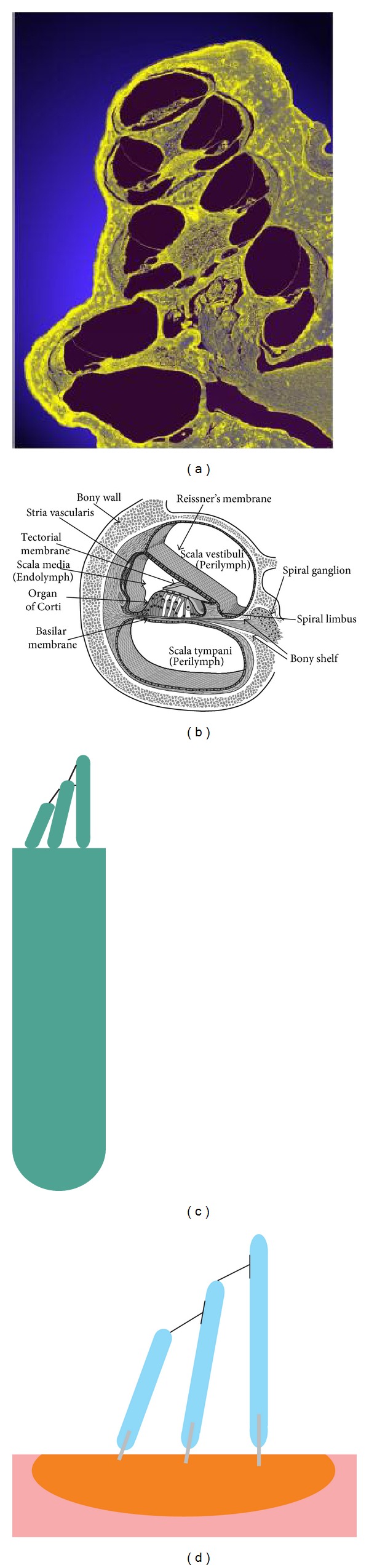
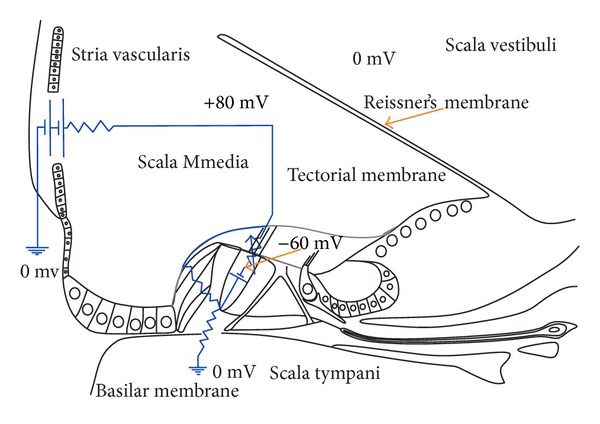
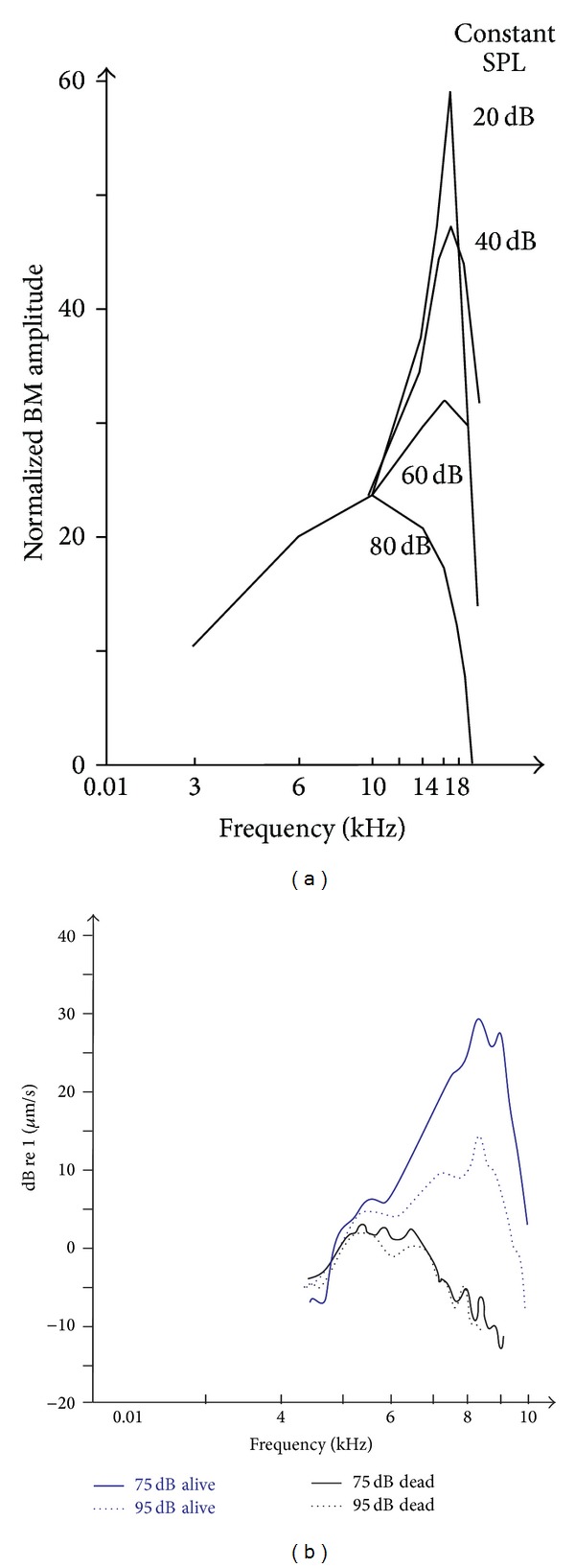
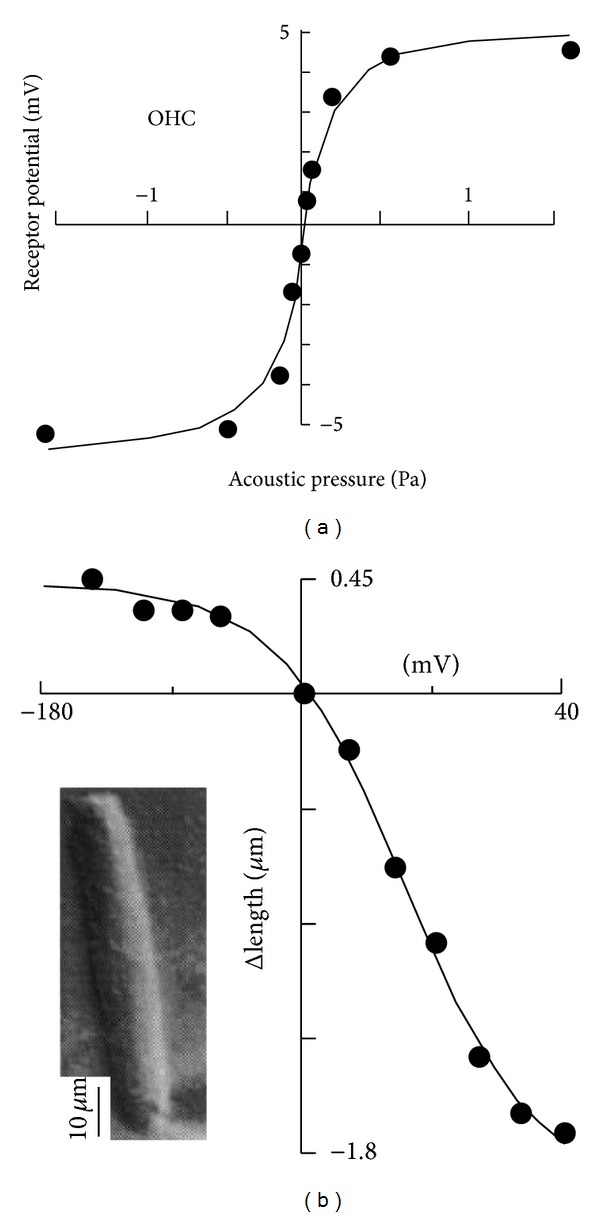
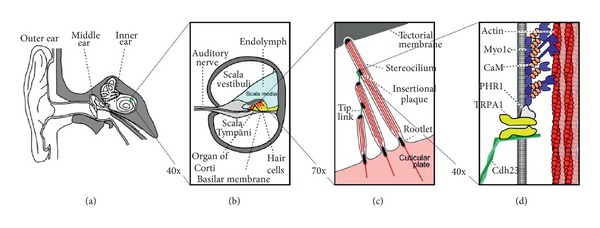
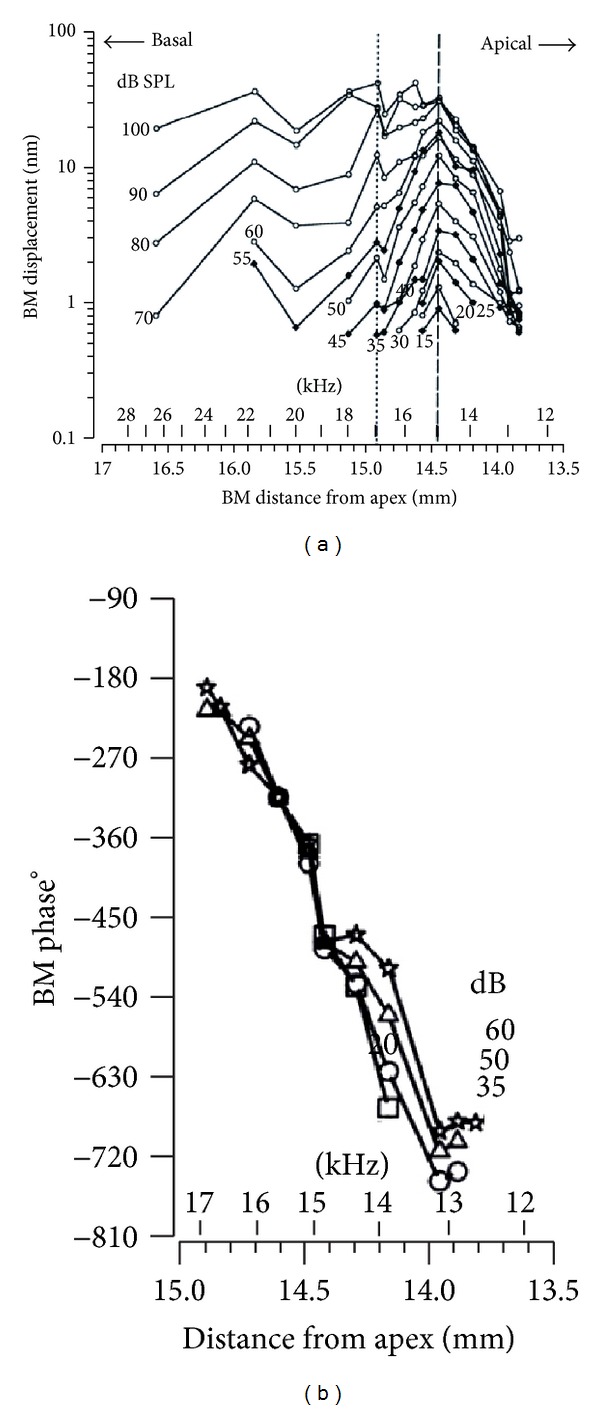
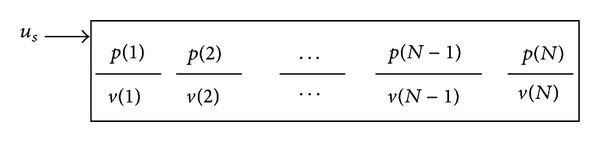
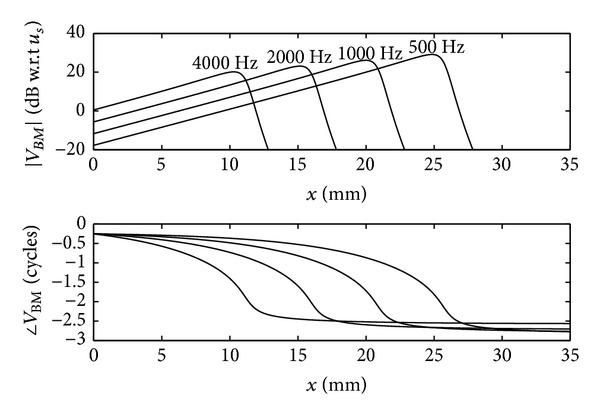
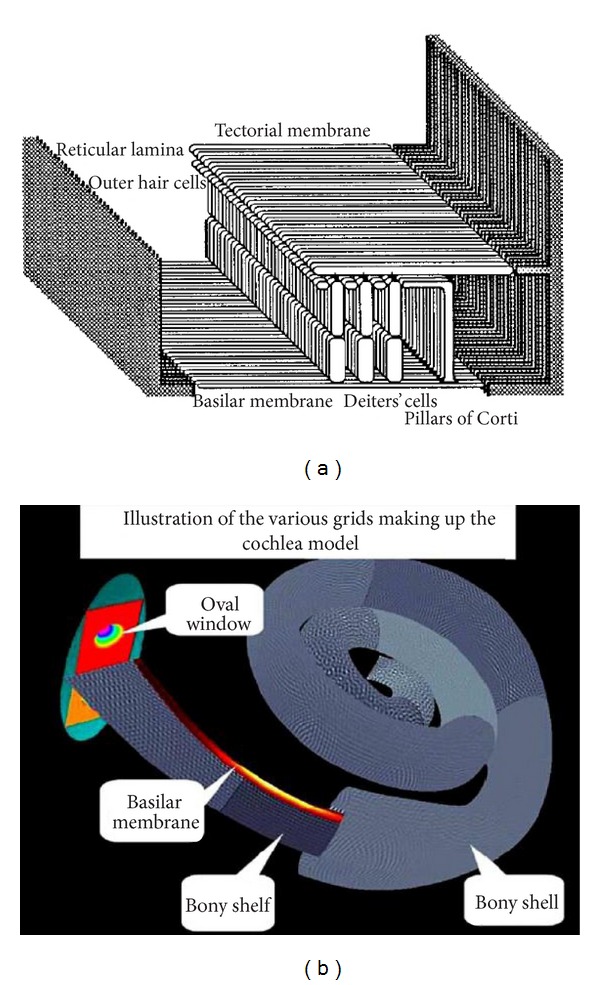
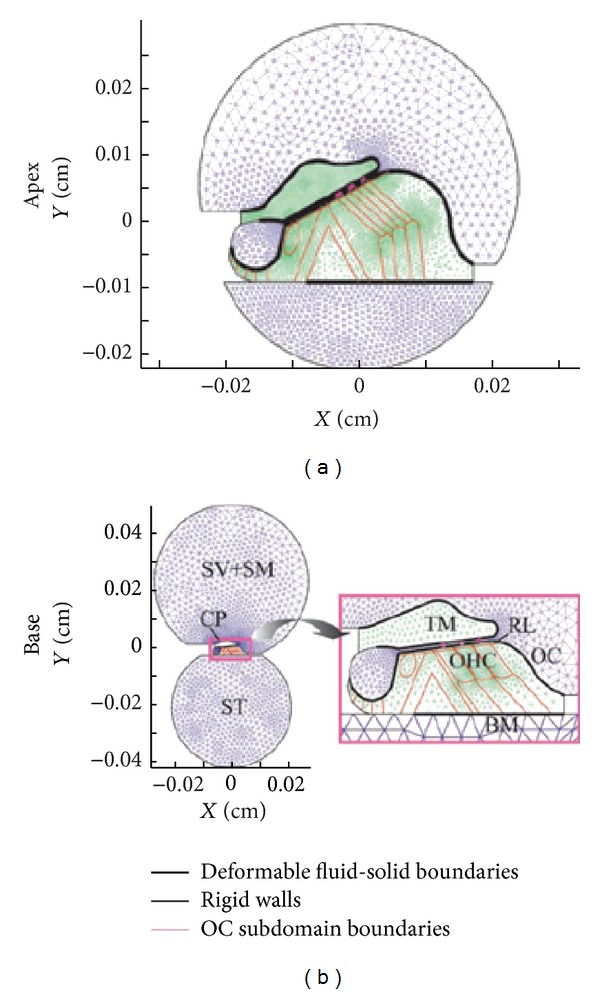
The cochlea plays a crucial role in mammal hearing. The basic function of the cochlea is to map sounds of different frequencies onto corresponding characteristic positions on the basilar membrane (BM). Sounds enter the fluid-filled cochlea and cause deflection of the BM due to pressure differences between the cochlear fluid chambers. These deflections travel along the cochlea, increasing in amplitude, until a frequency-dependent characteristic position and then decay away rapidly. The hair cells can detect these deflections and encode them as neural signals. Modelling the mechanics of the cochlea is of help in interpreting experimental observations and also can provide predictions of the results of experiments that cannot currently be performed due to technical limitations. This paper focuses on reviewing the numerical modelling of the mechanical and electrical processes in the cochlea, which include fluid coupling, micromechanics, the cochlear amplifier, nonlinearity, and electrical coupling.
耳蜗在哺乳动物听力中起着至关重要的作用。耳蜗的基本功能是将不同频率的声音映射到基底膜(BM)上相应的特征位置。声音进入充满液体的耳蜗,由于耳蜗液腔之间的压力差导致基底膜发生偏转。这些偏转沿着耳蜗传播,振幅不断增加,直到到达与频率相关的特征位置,然后迅速衰减。毛细胞能够检测到这些偏转并将其编码为神经信号。对耳蜗力学进行建模有助于解释实验观察结果,还能对由于技术限制目前无法进行的实验结果做出预测。本文重点回顾耳蜗中机械和电过程的数值建模,其中包括流体耦合、微观力学、耳蜗放大器、非线性以及电耦合。