Legeai Fabrice, Gimenez Sylvie, Duvic Bernard, Escoubas Jean-Michel, Gosselin Grenet Anne-Sophie, Blanc Florence, Cousserans François, Séninet Imène, Bretaudeau Anthony, Mutuel Doriane, Girard Pierre-Alain, Monsempes Christelle, Magdelenat Ghislaine, Hilliou Frédérique, Feyereisen René, Ogliastro Mylène, Volkoff Anne-Nathalie, Jacquin-Joly Emmanuelle, d'Alençon Emmanuelle, Nègre Nicolas, Fournier Philippe
INRA, UMR1333, DGIMI, Montpellier, France.
BMC Genomics. 2014 Aug 23;15(1):704. doi: 10.1186/1471-2164-15-704.
Spodoptera frugiperda (Noctuidae) is a major agricultural pest throughout the American continent. The highly polyphagous larvae are frequently devastating crops of importance such as corn, sorghum, cotton and grass. In addition, the Sf9 cell line, widely used in biochemistry for in vitro protein production, is derived from S. frugiperda tissues. Many research groups are using S. frugiperda as a model organism to investigate questions such as plant adaptation, pest behavior or resistance to pesticides.
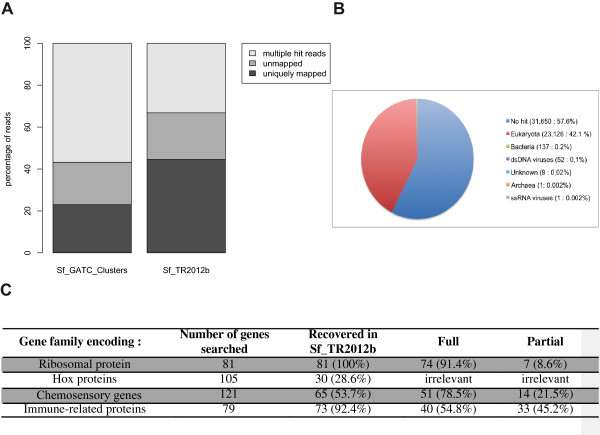
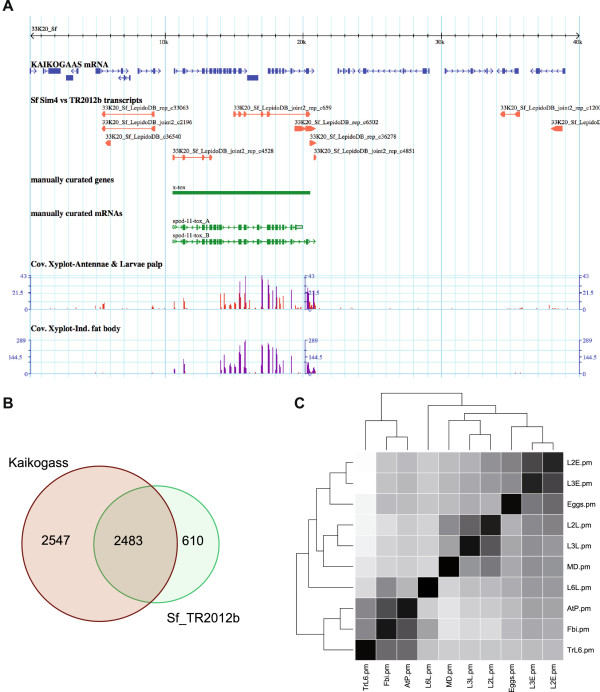
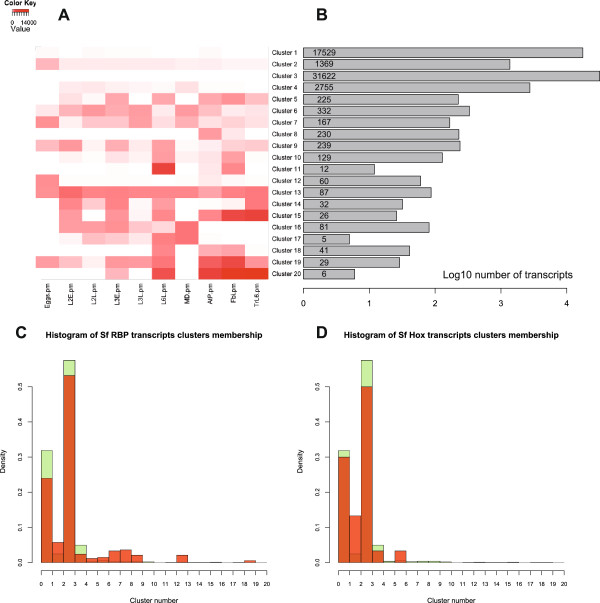
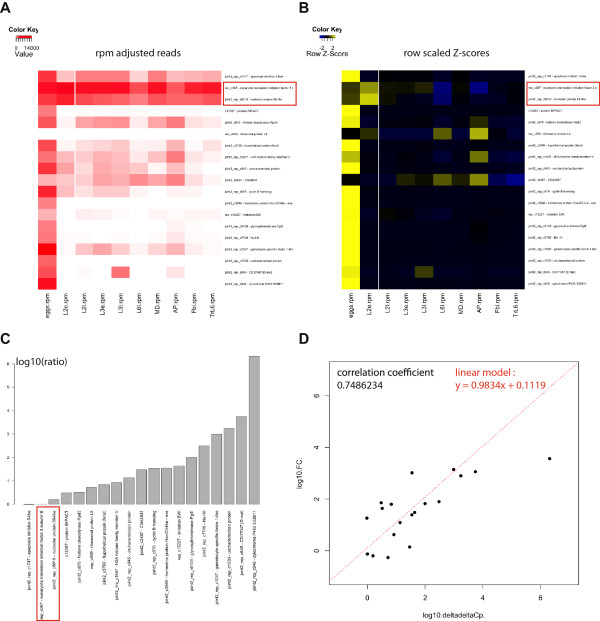
In this study, we constructed a reference transcriptome assembly (Sf_TR2012b) of RNA sequences obtained from more than 35 S. frugiperda developmental time-points and tissue samples. We assessed the quality of this reference transcriptome by annotating a ubiquitous gene family--ribosomal proteins--as well as gene families that have a more constrained spatio-temporal expression and are involved in development, immunity and olfaction. We also provide a time-course of expression that we used to characterize the transcriptional regulation of the gene families studied.
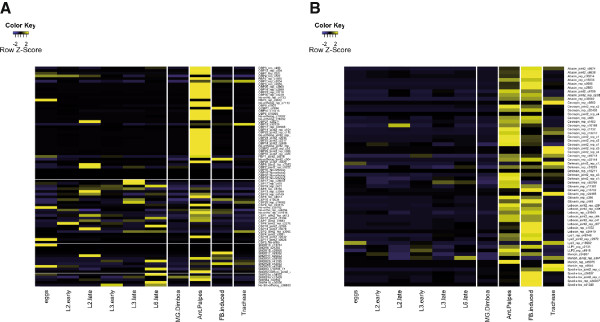
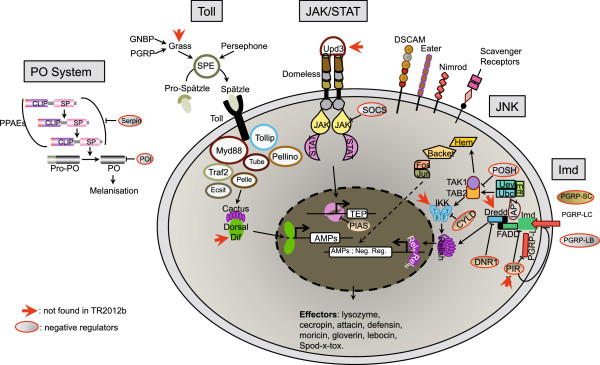
We conclude that the Sf_TR2012b transcriptome is a valid reference transcriptome. While its reliability decreases for the detection and annotation of genes under strong transcriptional constraint we still recover a fair percentage of tissue-specific transcripts. That allowed us to explore the spatial and temporal expression of genes and to observe that some olfactory receptors are expressed in antennae and palps but also in other non related tissues such as fat bodies. Similarly, we observed an interesting interplay of gene families involved in immunity between fat bodies and antennae.
草地贪夜蛾(夜蛾科)是整个美洲大陆的主要农业害虫。这种高度多食性的幼虫经常对玉米、高粱、棉花和牧草等重要作物造成毁灭性破坏。此外,广泛用于生物化学领域进行体外蛋白质生产的Sf9细胞系源自草地贪夜蛾组织。许多研究小组将草地贪夜蛾用作模式生物,以研究植物适应性、害虫行为或对杀虫剂的抗性等问题。
在本研究中,我们构建了一个参考转录组组装(Sf_TR2012b),它来自35多个草地贪夜蛾发育时间点和组织样本的RNA序列。我们通过注释一个普遍存在的基因家族——核糖体蛋白,以及时空表达更受限制且参与发育、免疫和嗅觉的基因家族,来评估这个参考转录组的质量。我们还提供了一个表达时间进程,用于表征所研究基因家族的转录调控。
我们得出结论,Sf_TR2012b转录组是一个有效的参考转录组。虽然在检测和注释受到强转录限制的基因时其可靠性会降低,但我们仍然回收了相当比例的组织特异性转录本。这使我们能够探索基因的时空表达,并观察到一些嗅觉受体不仅在触角和触须中表达,也在其他非相关组织如脂肪体中表达。同样,我们观察到脂肪体和触角中参与免疫的基因家族之间存在有趣的相互作用。