Howard Jonathan M, Sanford Jeremy R
Department of Molecular, Cellular and Developmental Biology, University of California Santa Cruz, Santa Cruz, CA, USA.
Wiley Interdiscip Rev RNA. 2015 Jan-Feb;6(1):93-110. doi: 10.1002/wrna.1260. Epub 2014 Aug 22.
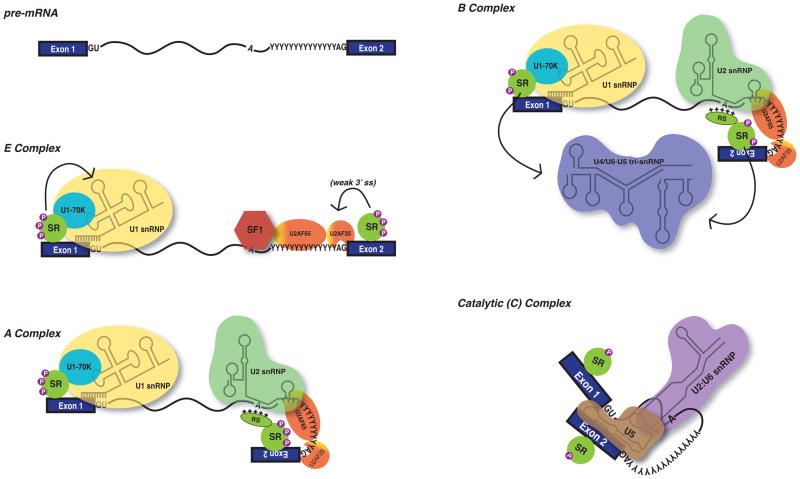
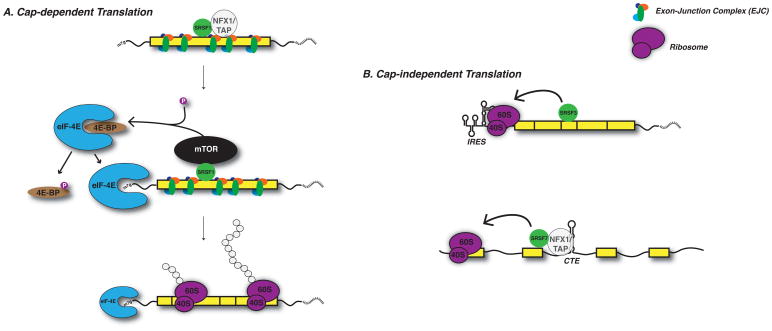
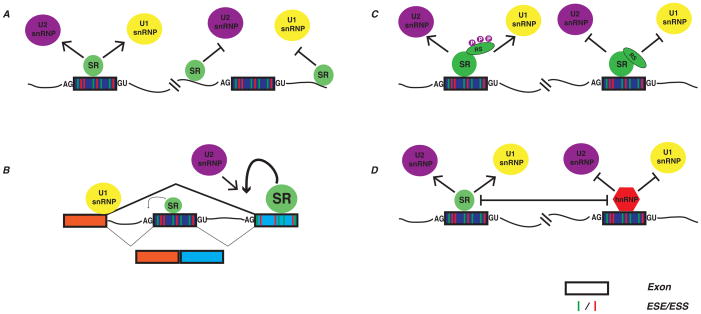
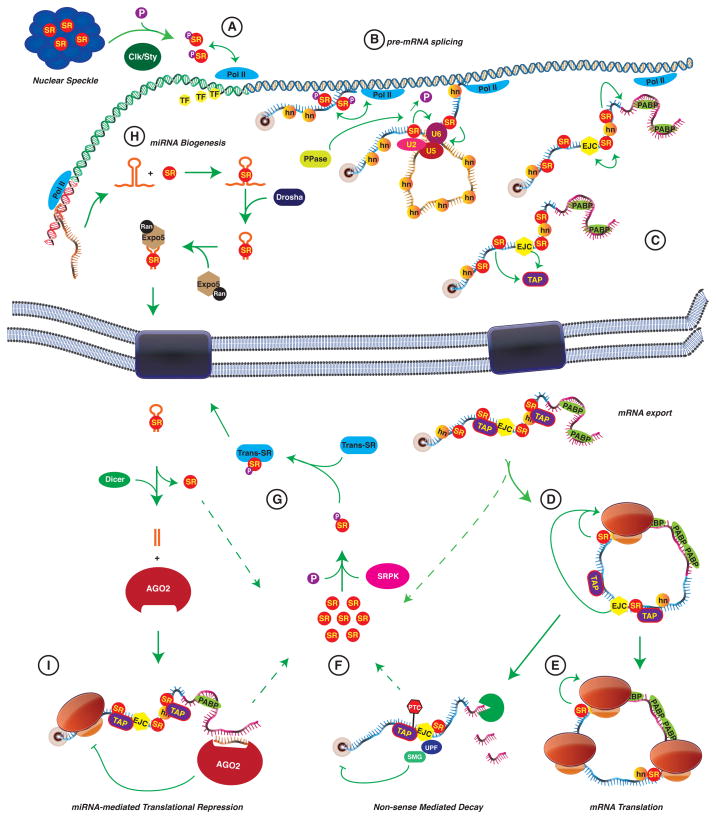
Serine and arginine-rich (SR) proteins play multiple roles in the eukaryotic gene expression pathway. Initially described as constitutive and alternative splicing factors, now it is clear that SR proteins are key determinants of exon identity and function as molecular adaptors, linking the pre-messenger RNA (pre-mRNA) to the splicing machinery. In addition, now SR proteins are implicated in many aspects of mRNA and noncoding RNA (ncRNA) processing well beyond splicing. These unexpected roles, including RNA transcription, export, translation, and decay, may prove to be the rule rather than the exception. To simply define, this family of RNA-binding proteins as splicing factors belies the broader roles of SR proteins in post-transcriptional gene expression.
富含丝氨酸和精氨酸(SR)的蛋白质在真核基因表达途径中发挥多种作用。最初被描述为组成型和可变剪接因子,现在很清楚,SR蛋白质是外显子识别的关键决定因素,并作为分子衔接子发挥作用,将前体信使RNA(pre-mRNA)与剪接机制联系起来。此外,现在SR蛋白质还参与了远不止剪接的mRNA和非编码RNA(ncRNA)加工的许多方面。这些意想不到的作用,包括RNA转录、输出、翻译和降解,可能被证明是常态而非例外。简单地将这个RNA结合蛋白家族定义为剪接因子,掩盖了SR蛋白质在转录后基因表达中的更广泛作用。