Peng Weijun, Yang Jingjing, Yang Bo, Wang Lexing, Xiong Xin-gui, Liang Qinghua
Institute of Integrated Medicine, Xiangya Hospital, Central South University, No. 87 Xiangya Road, Changsha, Hunan 410008, China ; Key Laboratory of Chinese Gan of State Administration of Traditional Chinese Medicine, Changsha 410008, China.
Institute of Integrated Medicine, Xiangya Hospital, Central South University, No. 87 Xiangya Road, Changsha, Hunan 410008, China.
Biomed Res Int. 2014;2014:261409. doi: 10.1155/2014/261409. Epub 2014 Jul 23.
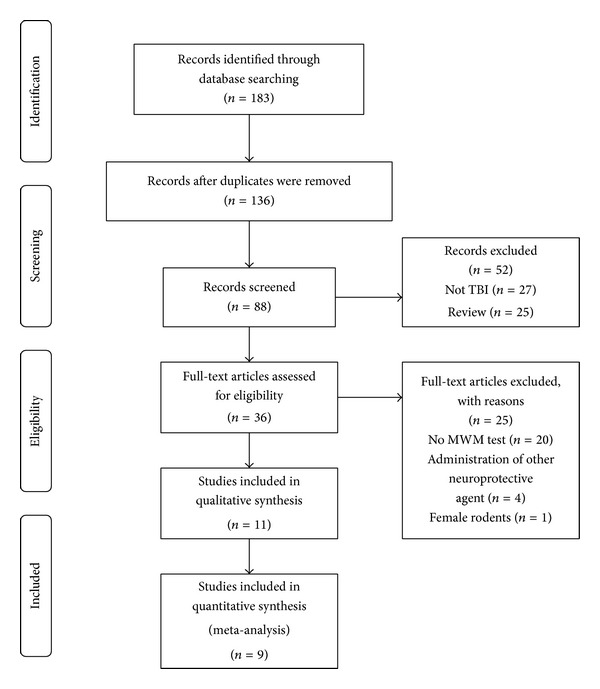
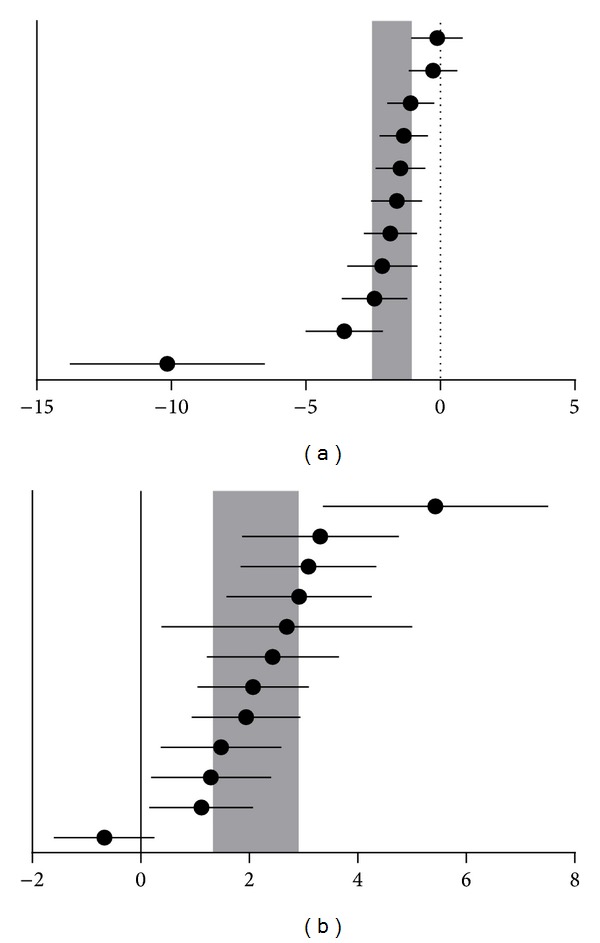
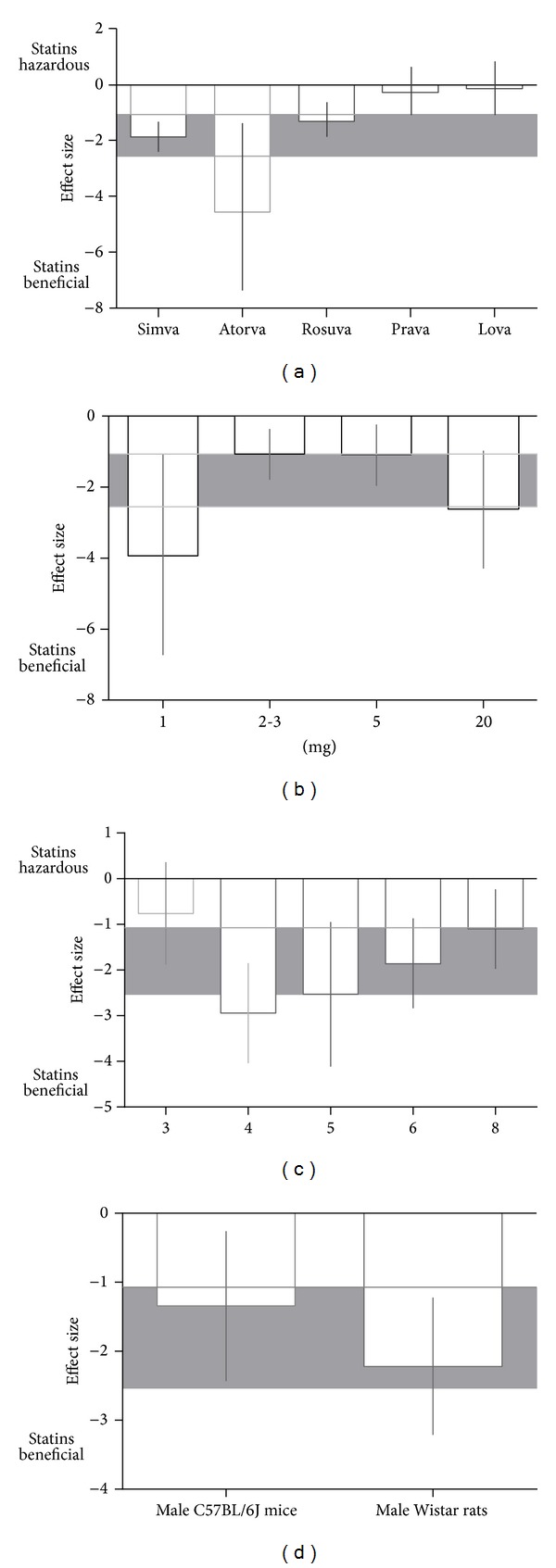
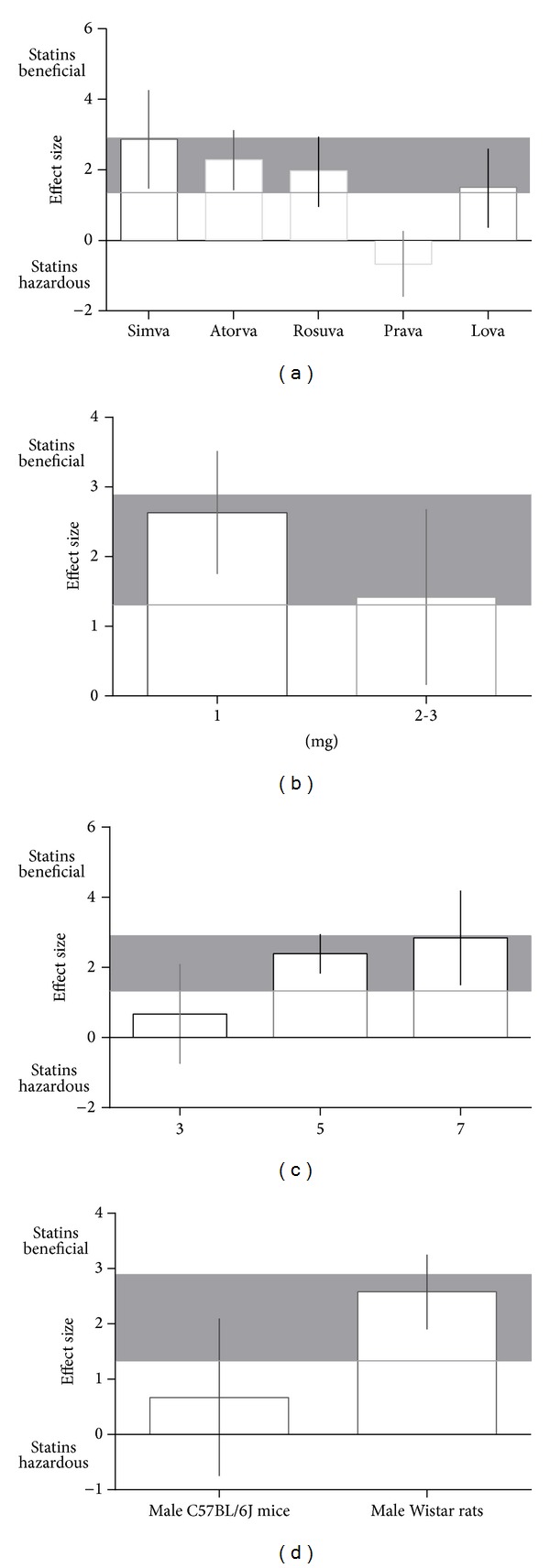
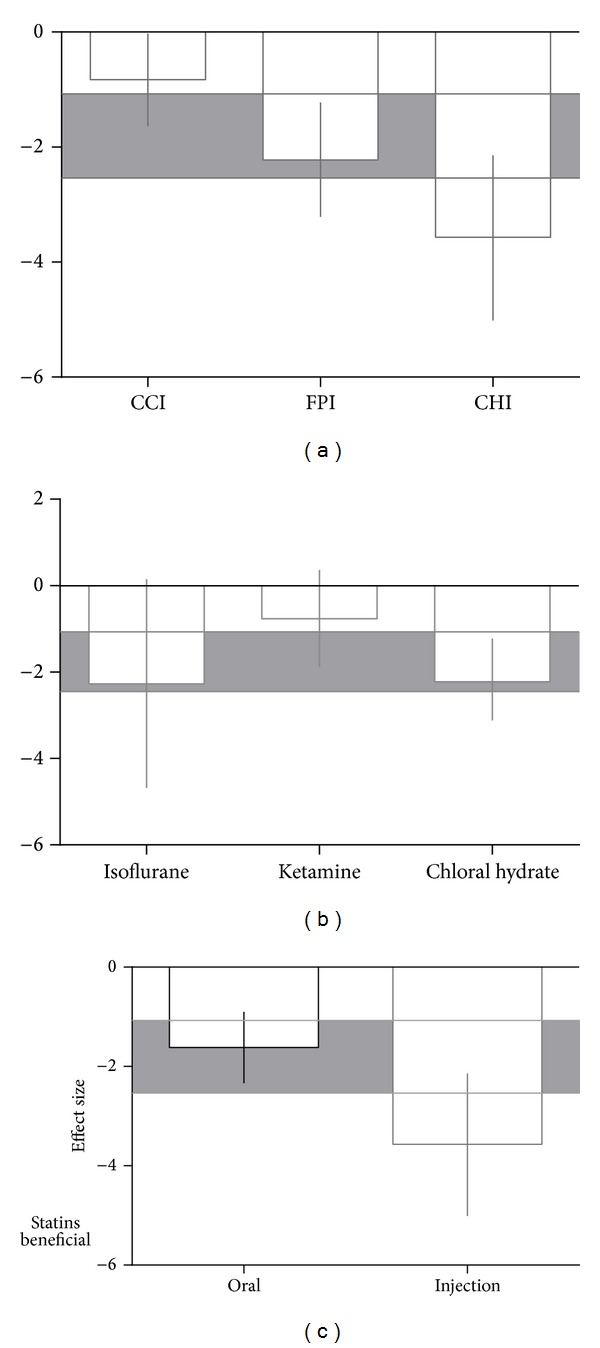
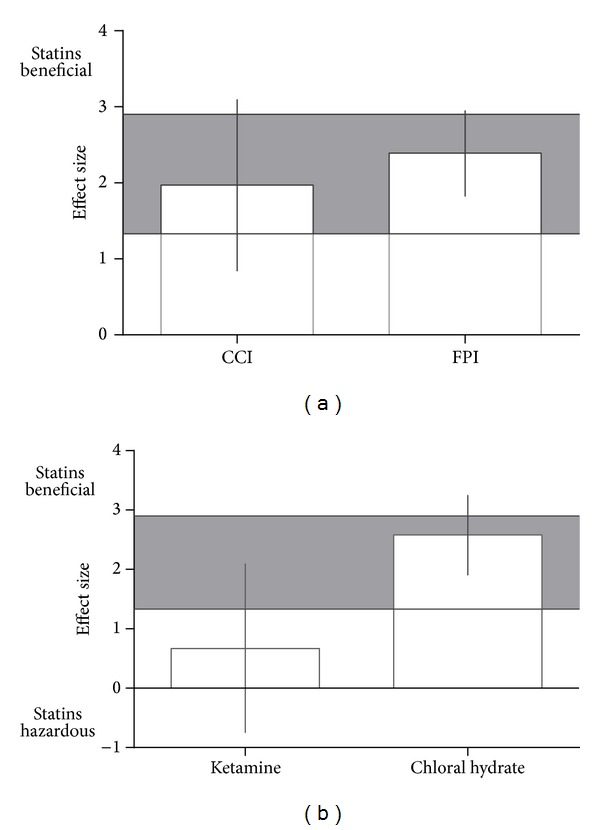
The efficacy of statin treatment on cognitive decline is controversial, and the effect of statins on cognitive deficits in individuals with traumatic brain injury (TBI) has yet to be investigated. Therefore, we systematically reviewed the effect of statins on cognitive deficits in adult male rodents after TBI. After identifying eligible studies by searching four electronic databases on February 28, 2014, we assessed study quality, evaluated the efficacy of statin treatment, and performed stratified metaregression and metaregression to assess the influence of study design on statin efficacy. Eleven studies fulfilled our inclusion criteria from a total of 183 publications. The overall methodological quality of these studies was poor. Meta-analysis showed that statins exert statistically significant positive effects on cognitive performance after TBI. Stratified analysis showed that atorvastatin has the greatest effect on acquisition memory, simvastatin has the greatest effect on retention memory, and statin effects on acquisition memory are higher in closed head injury models. Metaregression analysis further showed that that animal species, study quality, and anesthetic agent impact statin effects on retention memory. We conclude that statins might reduce cognitive deficits after TBI. However, additional well-designed and well-reported animal studies are needed to inform further clinical study.
他汀类药物治疗对认知功能衰退的疗效存在争议,且他汀类药物对创伤性脑损伤(TBI)个体认知缺陷的影响尚未得到研究。因此,我们系统回顾了他汀类药物对成年雄性啮齿动物TBI后认知缺陷的影响。在通过检索四个电子数据库确定符合条件的研究后,我们评估了研究质量,评估了他汀类药物治疗的疗效,并进行了分层Meta回归和Meta回归以评估研究设计对他汀类药物疗效的影响。从总共183篇出版物中筛选出11项符合我们纳入标准的研究。这些研究的整体方法学质量较差。Meta分析表明,他汀类药物对TBI后的认知表现具有统计学显著的积极影响。分层分析表明,阿托伐他汀对获取记忆的影响最大,辛伐他汀对保留记忆的影响最大,且在闭合性颅脑损伤模型中他汀类药物对获取记忆的影响更高。Meta回归分析进一步表明,动物物种、研究质量和麻醉剂会影响他汀类药物对保留记忆的作用。我们得出结论,他汀类药物可能会减少TBI后的认知缺陷。然而,需要更多设计良好且报告充分的动物研究为进一步的临床研究提供信息。