Ingolia Nicholas T, Brar Gloria A, Stern-Ginossar Noam, Harris Michael S, Talhouarne Gaëlle J S, Jackson Sarah E, Wills Mark R, Weissman Jonathan S
Department of Embryology, Carnegie Institution for Science, Baltimore, MD 21218, USA.
Department of Cellular and Molecular Pharmacology, Howard Hughes Medical Institute, Center for RNA Systems Biology, California Institute for Quantitative Biosciences, University of California, San Francisco, San Francisco, CA 94158, USA.
Cell Rep. 2014 Sep 11;8(5):1365-79. doi: 10.1016/j.celrep.2014.07.045. Epub 2014 Aug 21.
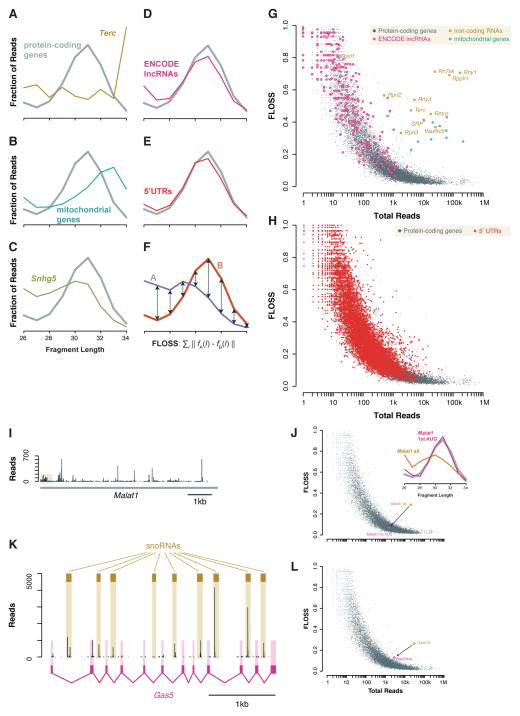
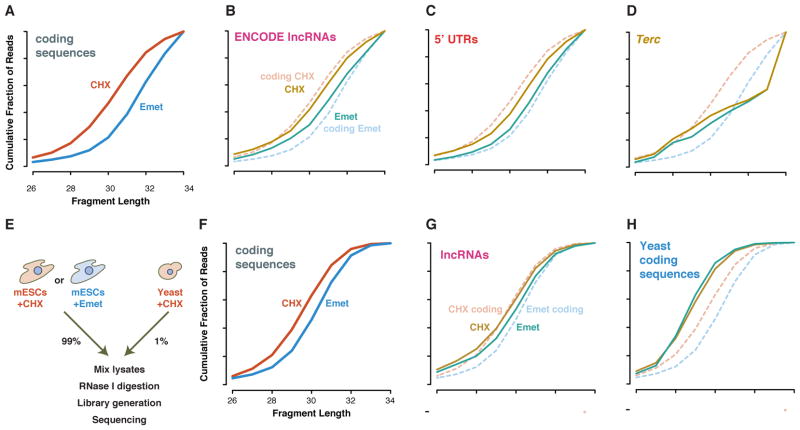
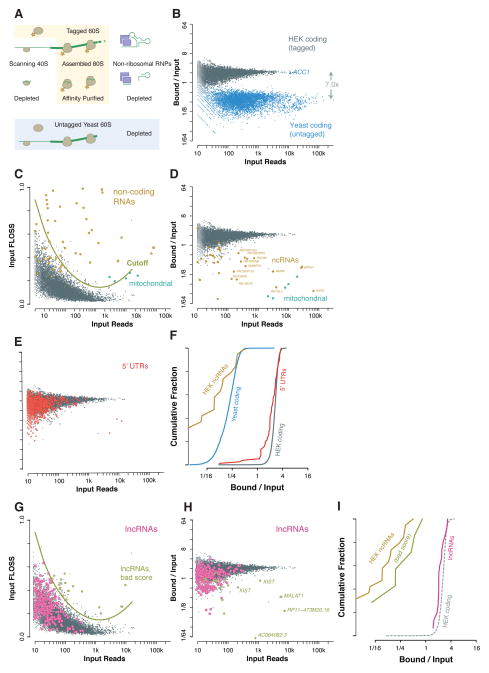
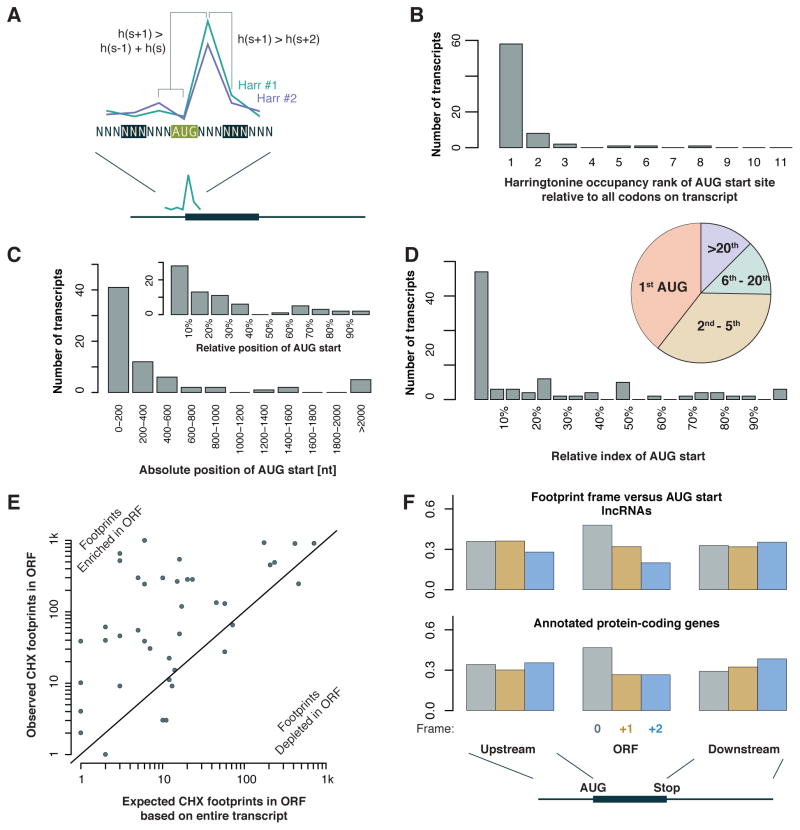
Ribosome profiling suggests that ribosomes occupy many regions of the transcriptome thought to be noncoding, including 5' UTRs and long noncoding RNAs (lncRNAs). Apparent ribosome footprints outside of protein-coding regions raise the possibility of artifacts unrelated to translation, particularly when they occupy multiple, overlapping open reading frames (ORFs). Here, we show hallmarks of translation in these footprints: copurification with the large ribosomal subunit, response to drugs targeting elongation, trinucleotide periodicity, and initiation at early AUGs. We develop a metric for distinguishing between 80S footprints and nonribosomal sources using footprint size distributions, which validates the vast majority of footprints outside of coding regions. We present evidence for polypeptide production beyond annotated genes, including the induction of immune responses following human cytomegalovirus (HCMV) infection. Translation is pervasive on cytosolic transcripts outside of conserved reading frames, and direct detection of this expanded universe of translated products enables efforts at understanding how cells manage and exploit its consequences.
核糖体谱分析表明,核糖体占据了转录组中许多被认为是非编码的区域,包括5'非翻译区(UTR)和长链非编码RNA(lncRNA)。蛋白质编码区之外明显的核糖体足迹增加了与翻译无关的假象的可能性,尤其是当它们占据多个重叠的开放阅读框(ORF)时。在这里,我们展示了这些足迹中的翻译特征:与大核糖体亚基共纯化、对靶向延伸的药物的反应、三核苷酸周期性以及在早期AUG处起始。我们开发了一种使用足迹大小分布来区分80S足迹和非核糖体来源的指标,该指标验证了编码区之外的绝大多数足迹。我们提供了超出注释基因的多肽产生的证据,包括人巨细胞病毒(HCMV)感染后免疫反应的诱导。在保守阅读框之外的胞质转录本上,翻译是普遍存在的,直接检测这个扩展的翻译产物领域有助于理解细胞如何管理和利用其后果。