Valsechi Marina Curado, Oliveira Ana Beatriz Bortolozo, Conceição André Luis Giacometti, Stuqui Bruna, Candido Natalia Maria, Provazzi Paola Jocelan Scarin, de Araújo Luiza Ferreira, Silva Wilson Araújo, Calmon Marilia de Freitas, Rahal Paula
Department of Biology, Instituto de Biociências, Letras e Ciências Exatas - IBILCE/UNESP, Rua Cristóvão Colombo, 2265, 15054-000 São José do Rio Preto, SP, Brazil.
BMC Cancer. 2014 Aug 29;14:631. doi: 10.1186/1471-2407-14-631.
Glypican 3 (GPC3) is a member of the family of glypican heparan sulfate proteoglycans (HSPGs). The GPC3 gene may play a role in controlling cell migration, negatively regulating cell growth and inducing apoptosis. GPC3 is downregulated in several cancers, which can result in uncontrolled cell growth and can also contribute to the malignant phenotype of some tumors. The purpose of this study was to analyze the mechanism of action of the GPC3 gene in clear cell renal cell carcinoma.
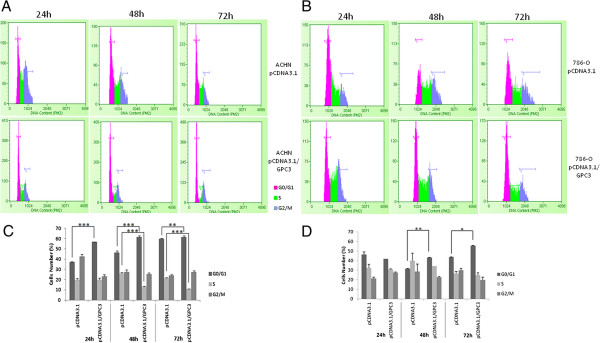
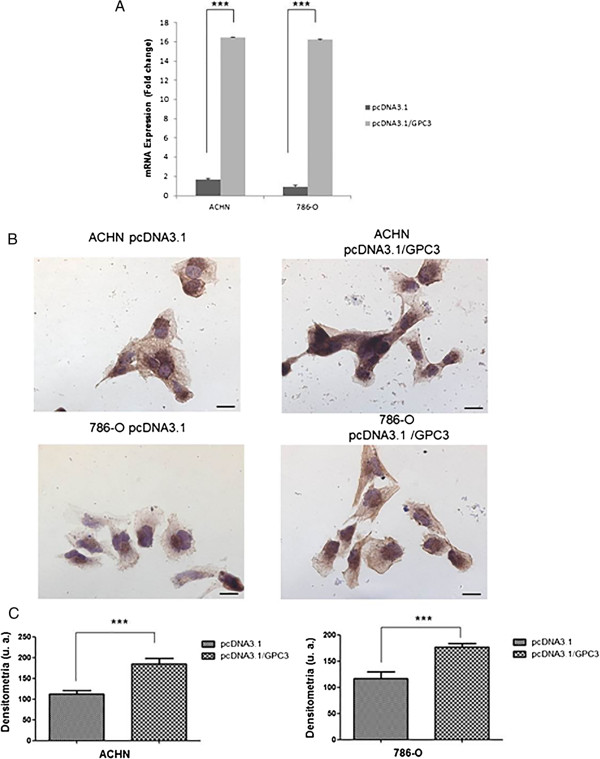
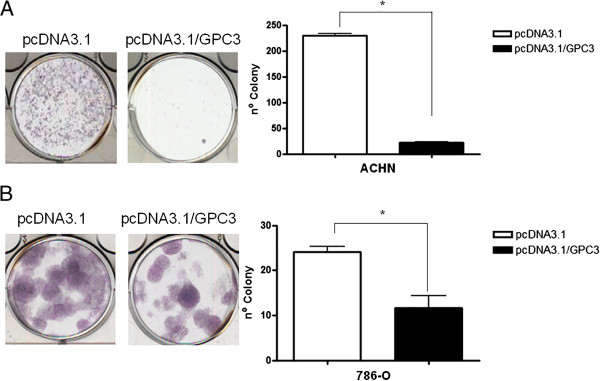
Five clear cell renal cell carcinoma cell lines and carcinoma samples were used to analyze GPC3 mRNA expression (qRT-PCR). Then, representative cell lines, one primary renal carcinoma (786-O) and one metastatic renal carcinoma (ACHN), were chosen to carry out functional studies. We constructed a GPC3 expression vector and transfected the renal carcinoma cell lines, 786-O and ACHN. GPC3 overexpression was analyzed using qRT-PCR and immunocytochemistry. We evaluated cell proliferation using MTT and colony formation assays. Flow cytometry was used to evaluate apoptosis and perform cell cycle analyses.
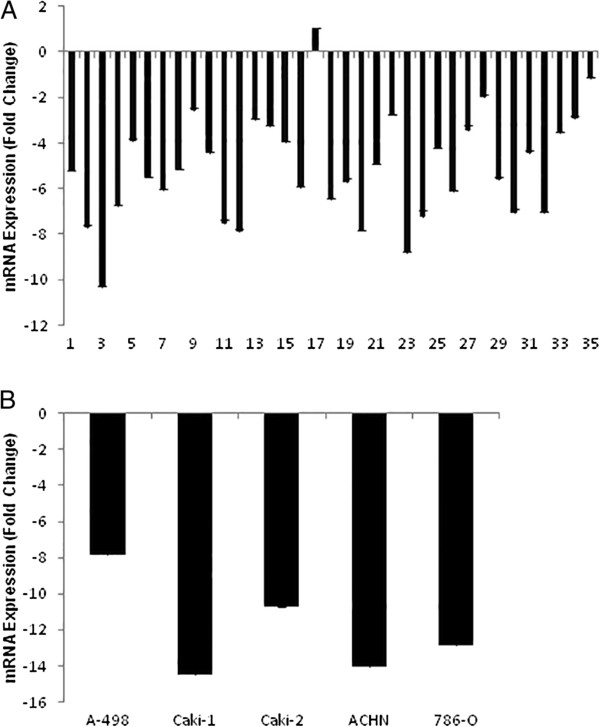
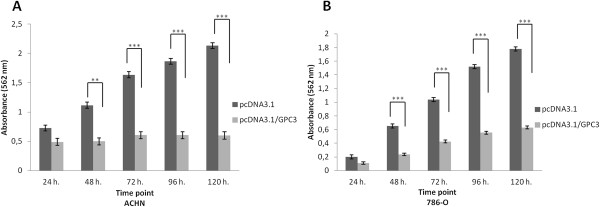
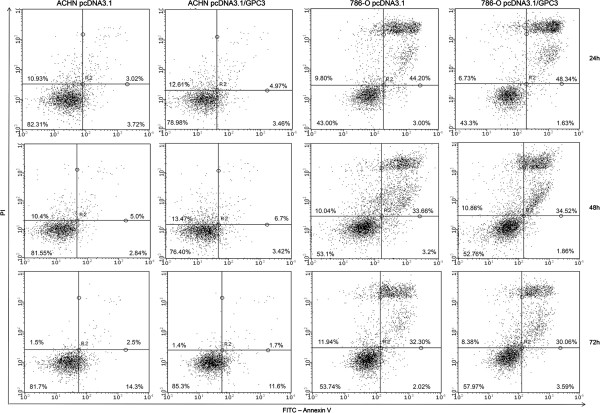
We observed that GPC3 is downregulated in clear cell renal cell carcinoma samples and cell lines compared with normal renal samples. GPC3 mRNA expression and protein levels in 786-O and ACHN cell lines increased after transfection with the GPC3 expression construct, and the cell proliferation rate decreased in both cell lines following overexpression of GPC3. Further, apoptosis was not induced in the renal cell carcinoma cell lines overexpressing GPC3, and there was an increase in the cell population during the G1 phase in the cell cycle.
We suggest that the GPC3 gene reduces the rate of cell proliferation through cell cycle arrest during the G1 phase in renal cell carcinoma.
磷脂酰肌醇蛋白聚糖3(GPC3)是硫酸乙酰肝素蛋白聚糖(HSPG)家族的成员。GPC3基因可能在控制细胞迁移、负向调节细胞生长和诱导细胞凋亡中发挥作用。GPC3在多种癌症中表达下调,这可导致细胞生长失控,也可促成某些肿瘤的恶性表型。本研究的目的是分析GPC3基因在肾透明细胞癌中的作用机制。
使用五种肾透明细胞癌细胞系和癌组织样本分析GPC3 mRNA表达(qRT-PCR)。然后,选择具有代表性的细胞系,一种原发性肾癌(786-O)和一种转移性肾癌(ACHN)进行功能研究。我们构建了GPC3表达载体并转染肾癌细胞系786-O和ACHN。使用qRT-PCR和免疫细胞化学分析GPC3的过表达情况。我们使用MTT和集落形成试验评估细胞增殖。流式细胞术用于评估细胞凋亡并进行细胞周期分析。
我们观察到,与正常肾组织样本相比,GPC3在肾透明细胞癌样本和细胞系中表达下调。用GPC3表达构建体转染后,786-O和ACHN细胞系中的GPC3 mRNA表达和蛋白水平增加,并且在GPC3过表达后,两种细胞系中的细胞增殖率均降低。此外,过表达GPC3的肾癌细胞系未诱导细胞凋亡,并且细胞周期中G1期的细胞群体增加。
我们认为GPC3基因通过使肾癌细胞周期停滞在G1期来降低细胞增殖率。