Gedye Craig A, Hussain Ali, Paterson Joshua, Smrke Alannah, Saini Harleen, Sirskyj Danylo, Pereira Keira, Lobo Nazleen, Stewart Jocelyn, Go Christopher, Ho Jenny, Medrano Mauricio, Hyatt Elzbieta, Yuan Julie, Lauriault Stevan, Meyer Mona, Kondratyev Maria, van den Beucken Twan, Jewett Michael, Dirks Peter, Guidos Cynthia J, Danska Jayne, Wang Jean, Wouters Bradly, Neel Benjamin, Rottapel Robert, Ailles Laurie E
Princess Margaret Cancer Centre, University Health Network, Toronto, ON, Canada.
Dept. of Medical Biophysics, University of Toronto, Toronto, ON, Canada.
PLoS One. 2014 Aug 29;9(8):e105602. doi: 10.1371/journal.pone.0105602. eCollection 2014.
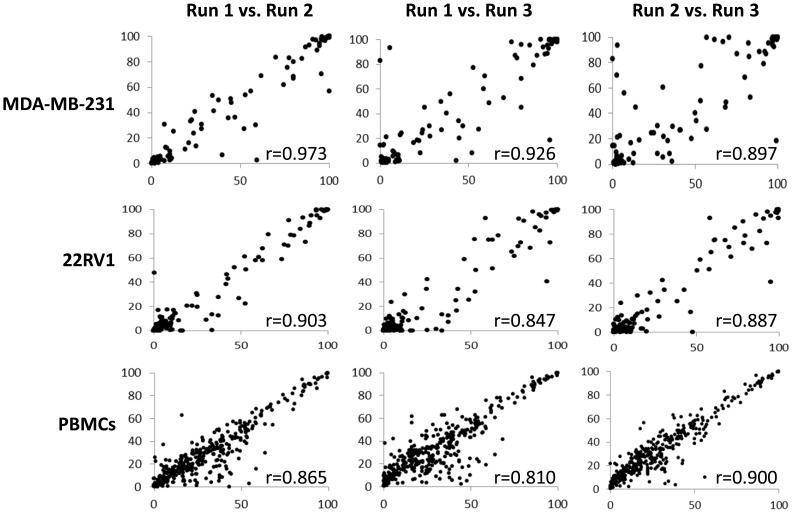
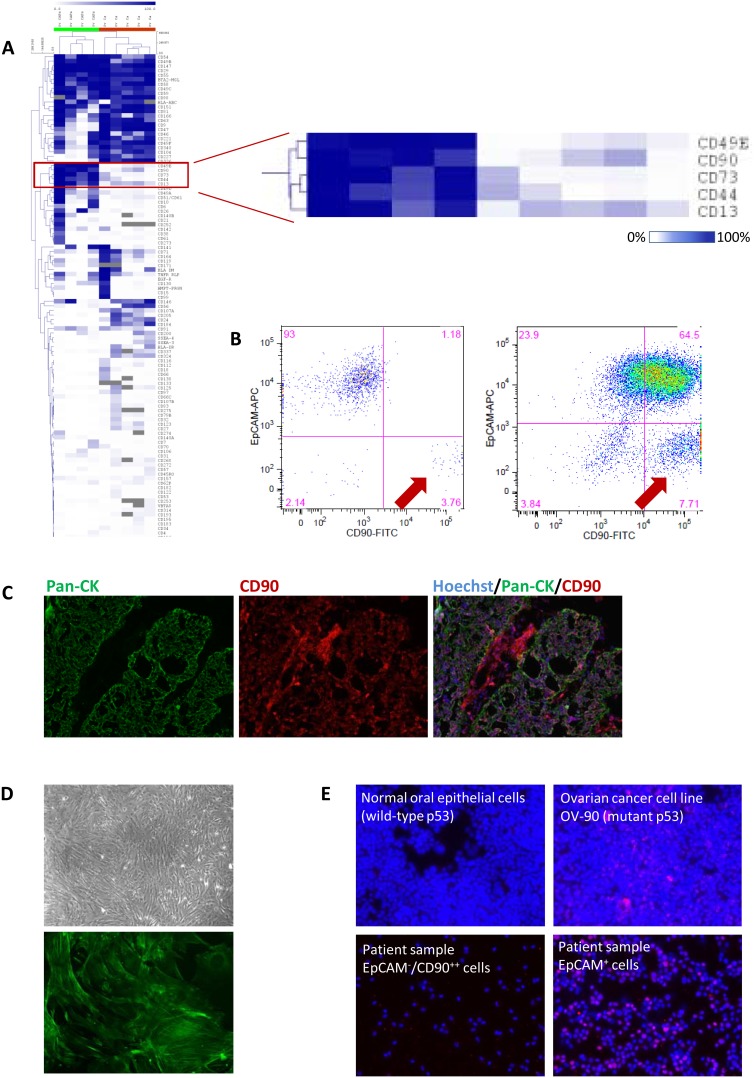
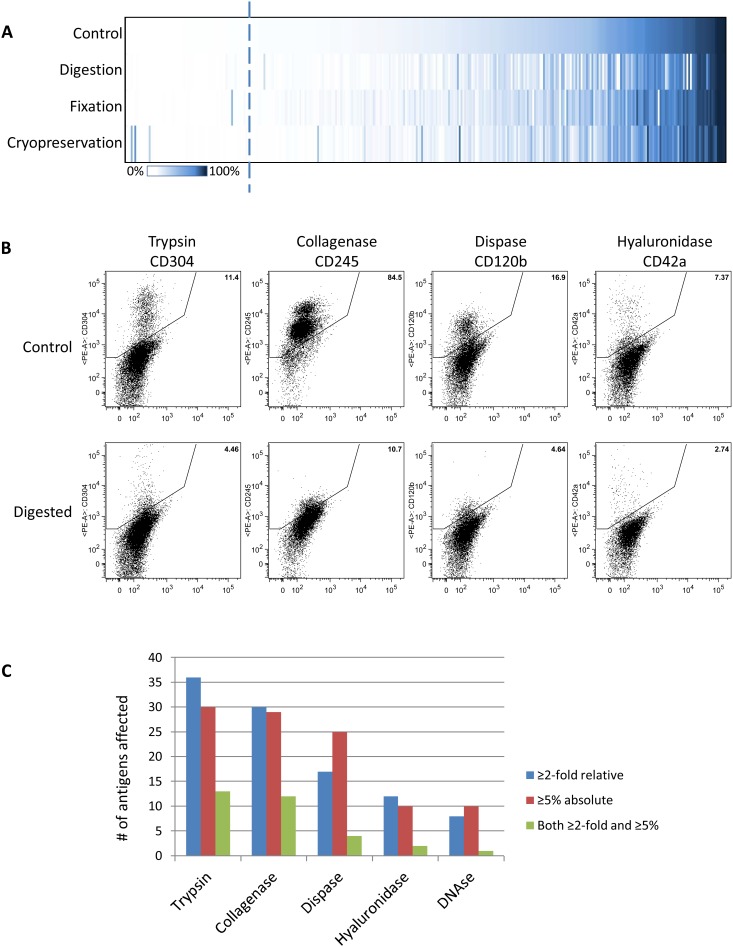
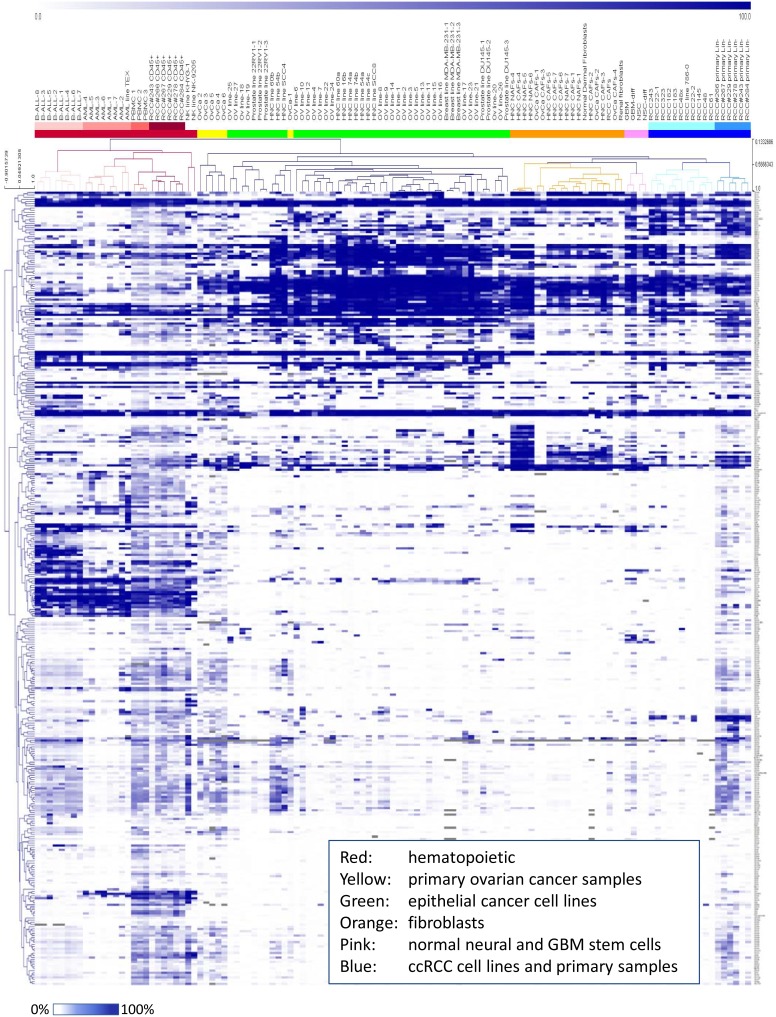
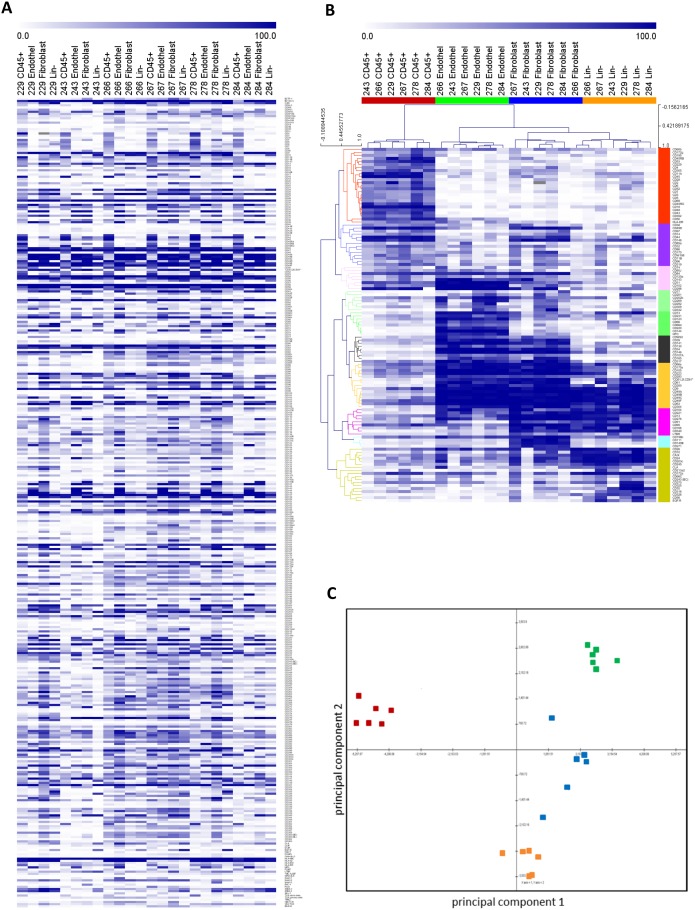
Cell surface proteins have a wide range of biological functions, and are often used as lineage-specific markers. Antibodies that recognize cell surface antigens are widely used as research tools, diagnostic markers, and even therapeutic agents. The ability to obtain broad cell surface protein profiles would thus be of great value in a wide range of fields. There are however currently few available methods for high-throughput analysis of large numbers of cell surface proteins. We describe here a high-throughput flow cytometry (HT-FC) platform for rapid analysis of 363 cell surface antigens. Here we demonstrate that HT-FC provides reproducible results, and use the platform to identify cell surface antigens that are influenced by common cell preparation methods. We show that multiple populations within complex samples such as primary tumors can be simultaneously analyzed by co-staining of cells with lineage-specific antibodies, allowing unprecedented depth of analysis of heterogeneous cell populations. Furthermore, standard informatics methods can be used to visualize, cluster and downsample HT-FC data to reveal novel signatures and biomarkers. We show that the cell surface profile provides sufficient molecular information to classify samples from different cancers and tissue types into biologically relevant clusters using unsupervised hierarchical clustering. Finally, we describe the identification of a candidate lineage marker and its subsequent validation. In summary, HT-FC combines the advantages of a high-throughput screen with a detection method that is sensitive, quantitative, highly reproducible, and allows in-depth analysis of heterogeneous samples. The use of commercially available antibodies means that high quality reagents are immediately available for follow-up studies. HT-FC has a wide range of applications, including biomarker discovery, molecular classification of cancers, or identification of novel lineage specific or stem cell markers.
细胞表面蛋白具有广泛的生物学功能,常被用作谱系特异性标志物。识别细胞表面抗原的抗体被广泛用作研究工具、诊断标志物甚至治疗药物。因此,能够获得广泛的细胞表面蛋白谱在众多领域都具有巨大价值。然而,目前用于大量细胞表面蛋白高通量分析的方法很少。我们在此描述了一种用于快速分析363种细胞表面抗原的高通量流式细胞术(HT-FC)平台。在此我们证明HT-FC能提供可重复的结果,并使用该平台鉴定受常见细胞制备方法影响的细胞表面抗原。我们表明,通过用谱系特异性抗体对细胞进行共染色,可以同时分析复杂样本(如原发性肿瘤)中的多个细胞群体,从而实现对异质细胞群体前所未有的深度分析。此外,标准信息学方法可用于可视化、聚类和下采样HT-FC数据,以揭示新的特征和生物标志物。我们表明,细胞表面谱提供了足够的分子信息,可通过无监督层次聚类将来自不同癌症和组织类型的样本分类为生物学上相关的簇。最后,我们描述了一种候选谱系标志物的鉴定及其后续验证。总之,HT-FC结合了高通量筛选的优点以及一种灵敏、定量、高度可重复且能对异质样本进行深入分析的检测方法。使用市售抗体意味着高质量试剂可立即用于后续研究。HT-FC具有广泛的应用,包括生物标志物发现、癌症的分子分类或新型谱系特异性或干细胞标志物的鉴定。